How to Withdraw Money from an Online Casino: Methods, Steps & Tips

Withdrawing from an online casino should feel simple. In practice, delays, limits, and verification rules slow you down.
This guide shows you how to cash out your winnings. You will learn the main withdrawal methods, the exact steps most casinos use, and what to check before you submit a request.
- Methods: bank transfer, cards, e-wallets, crypto, and prepaid options.
- Steps: request setup, method matching, confirmations, and payout times.
- Tips: how to avoid rejections, reduce delays, and pick the fastest option for your country.
Many casinos also require identity checks before they pay. Use this KYC verification guide to prepare your documents and avoid last-minute hold ups.
In het kort:
- Match your withdrawal method to your deposit method, casinos often require it.
- Expect KYC checks before payout, upload ID and proof of address early.
- Use the right method for your goal, e-wallets and crypto usually pay faster than bank transfers.
- Check limits and fees before you request, minimums, maximums, and currency conversion can cut your net payout.
- Enter details once, then double-check them, wrong IBAN, wallet address, or card info triggers delays and rejections.
- Confirm bonus and wagering rules first, unfinished wagering blocks withdrawals.
- Track each stage, request submitted, casino review, payment processing, funds received.
- Know typical timing, casino review can take 0 to 72 hours, payment networks add extra time.
- Use one account in your name only, mismatched names or shared accounts often fail checks.
- If a request fails, fix the cause fast, see common reasons withdrawals get rejected.
How Online Casino Withdrawals Work (What to Expect)
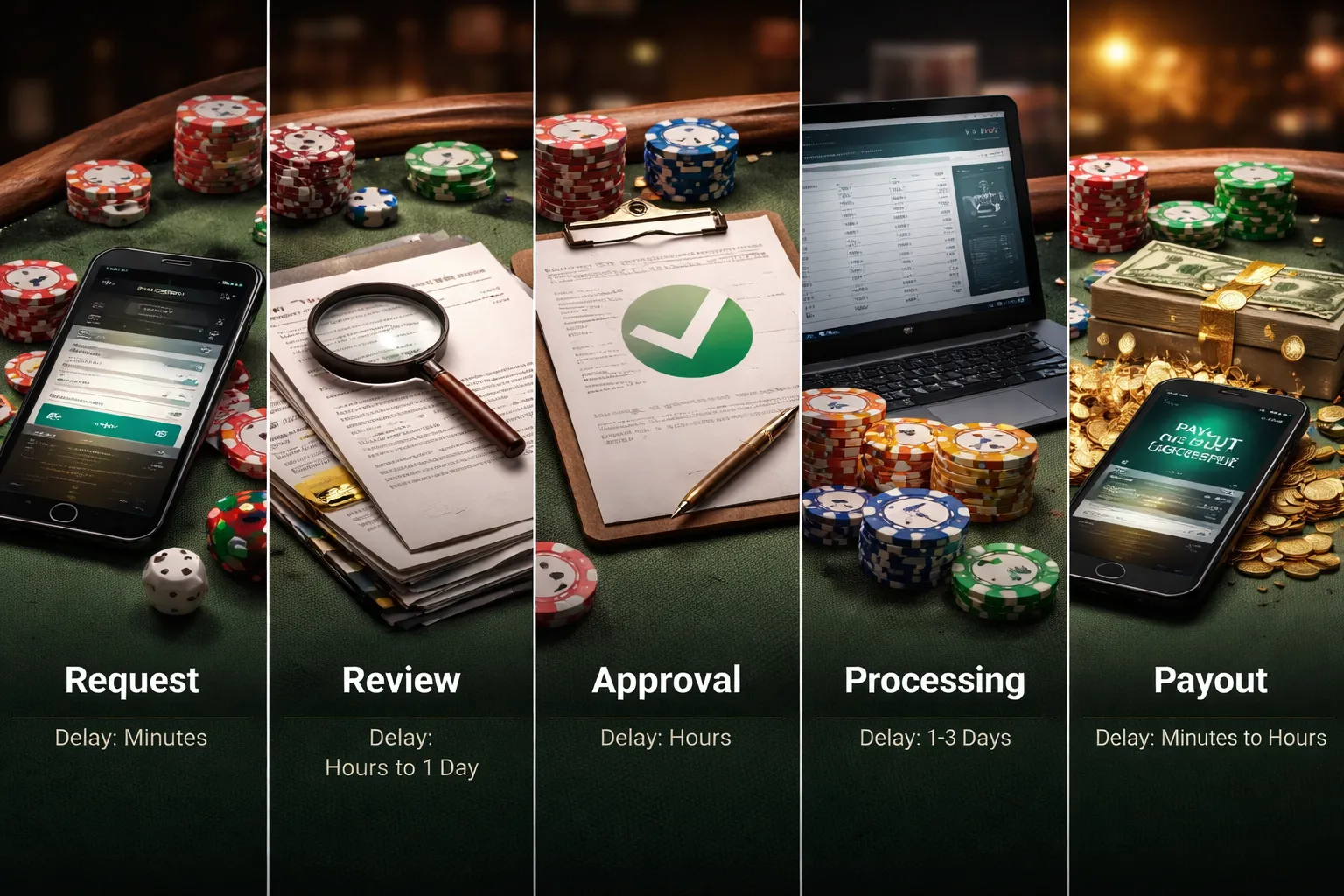
The Withdrawal Lifecycle, From Request to Payout
- Request: You pick a method, enter the amount, and submit. The casino locks the amount so you cannot wager it.
- Review: The casino checks your account, your bonus terms, and your payment details. Your withdrawal may show as pending.
- Approval: The casino approves the request and queues it for payment. Some casinos batch payouts at set times each day.
- Processing: The casino sends the payment to the provider, bank, card network, or blockchain.
- Payout: The funds land in your account or wallet. Your bank or provider may hold it for extra checks.
Most delays happen in review and in external processing. You control both by keeping your profile clean and your payment method consistent.
Why Casinos Run Withdrawal Checks
- Fraud prevention: Stops stolen cards, hacked accounts, and chargeback abuse. Casinos look for device changes, odd login patterns, and mismatched payment data.
- AML compliance: Casinos must monitor large or unusual transactions and confirm the source of funds in some cases.
- Responsible gambling controls: Some withdrawals trigger checks if your account shows risk flags, recent limit changes, or self exclusion history.
- Bonus and wagering rules: The casino confirms you finished wagering and followed game restrictions. A violation can void winnings or delay payout.
If you need to submit documents, follow a fast path with this guide on how to verify your identity at an online casino.
Typical Timeframes by Payment Type, And What “Pending” Means
“Pending” usually means the casino has your request but has not completed its review. It can also mean the casino approved it and the payment sits in a batch queue. Once the casino marks it paid, the clock shifts to the payment network.
| Withdrawal method | Casino review time | Provider or bank processing | What to expect |
|---|---|---|---|
| Crypto | 0 to 72 hours | Minutes to a few hours, depends on confirmations and wallet | Fast after approval. Delays come from casino review, network congestion, or wrong wallet address. |
| E-wallets | 0 to 72 hours | Minutes to 24 hours | Often same day after approval. Some wallets add compliance holds. |
| Bank transfer | 0 to 72 hours | 1 to 5 business days | Slowest path. Weekends and bank cutoffs add time. |
| Cards | 0 to 72 hours | 1 to 7 business days, sometimes longer | Many casinos cannot pay out to some cards. You may need a fallback method for withdrawals. |
Timeframes vary by casino, country, and your account history. First withdrawals often take longer because the casino runs deeper checks.
Payment Method Matching, Name, Country, Currency, Ownership
- Name match: Your casino profile name must match your bank or wallet. Nicknames and swapped first and last names can fail.
- Ownership: Use only accounts in your name. Do not use a friend’s card, shared wallet, or business bank account unless the casino allows it.
- Country match: Your residence, IP history, and bank country should align. Cross border patterns can trigger review.
- Currency match: If you deposit in one currency and withdraw in another, expect conversion and possible extra checks.
- Method matching: Many casinos follow a “return to source” rule. They send withdrawals back to the same method you used to deposit, up to the deposit amount, then use an alternate method for the rest.
Keep one verified method as your default. Avoid switching methods midstream, especially during a bonus cycle.
Before You Withdraw: Eligibility Checklist
Confirm Your Balance Type, Cash vs Bonus vs Locked Funds
Open your cashier and split your balance into three buckets.
- Cash balance. Money you can usually withdraw right away, after standard checks.
- Bonus balance. Bonus funds, or winnings tied to a bonus. You cannot cash this out until you meet the bonus rules.
- Locked or pending funds. Deposits waiting to clear, chargeback risk holds, or winnings under review. You cannot withdraw these until the casino releases them.
Look for labels like “withdrawable,” “real,” “bonus,” “locked,” “pending,” or “restricted.” If the casino shows a “withdrawable amount,” use that number, not your total balance.
Meet Wagering Requirements and Check Max Cashout Caps
Read the bonus terms tied to your last promotion. Focus on the numbers that block withdrawals.
- Wagering requirement. You must wager a set multiple before the casino unlocks bonus-linked winnings.
- Contribution rules. Some games count less toward wagering. Table games often contribute 0% to 20%.
- Max cashout. Some bonuses cap withdrawals, for example “max cashout 5x bonus” or a fixed amount. Anything above the cap can get removed.
- Time limits. Bonuses can expire. If they expire, the casino can void bonus funds and related winnings.
Check your “bonus progress” meter, or your promotion page. If you cannot find it, contact support before you submit a withdrawal. Keep the reply.
Check Minimum and Maximum Withdrawal Limits, Plus Daily and Weekly Caps
Match your withdrawal amount to the casino and payment method limits. Casinos often set limits in three layers.
- Method minimum. Some methods reject small withdrawals.
- Per transaction maximum. You may need to split a large cashout into parts.
- Time-based caps. Daily, weekly, or monthly limits can delay the rest of your payout.
If you hit a cap, do not spam multiple requests. You can trigger extra reviews. For details on how caps work across time windows, see online casino withdrawal limits.
Verify Your Account and Payment Method Ownership to Prevent Reversals
Do your verification before you request a payout. It cuts delays and reduces the risk of a reversal.
- Identity. Name, date of birth, and address must match your documents.
- Proof of address. Utility bill or bank statement, usually dated within 90 days.
- Payment ownership. The card, bank account, or wallet must be in your name. Shared cards and third-party wallets often fail.
- Card checks. Some casinos ask for a photo of the card with middle digits covered, or a bank statement showing the last 4 digits.
Use one account per person and one set of details. If your name differs between your casino profile and your bank, fix it before you withdraw.
Review Restricted Countries, Banking Rules, and Currency Conversion Impacts
Confirm you can legally and technically receive the funds where you live.
- Country and region restrictions. Casinos can block withdrawals if you travel or log in from a restricted location.
- Banking rails. Some banks reject gambling-related transfers. Some e-wallets do not support gambling merchants in certain countries.
- Currency mismatch. If you deposit in one currency and withdraw in another, you can pay FX spreads and fees. You may also trigger extra checks.
- Intermediary fees. Bank wires can lose money to correspondent banks. Your casino may not control these deductions.
Keep your account currency, deposit method, and withdrawal method aligned. It reduces conversions, rejections, and compliance holds.
Step-by-Step: How to Withdraw Money from an Online Casino
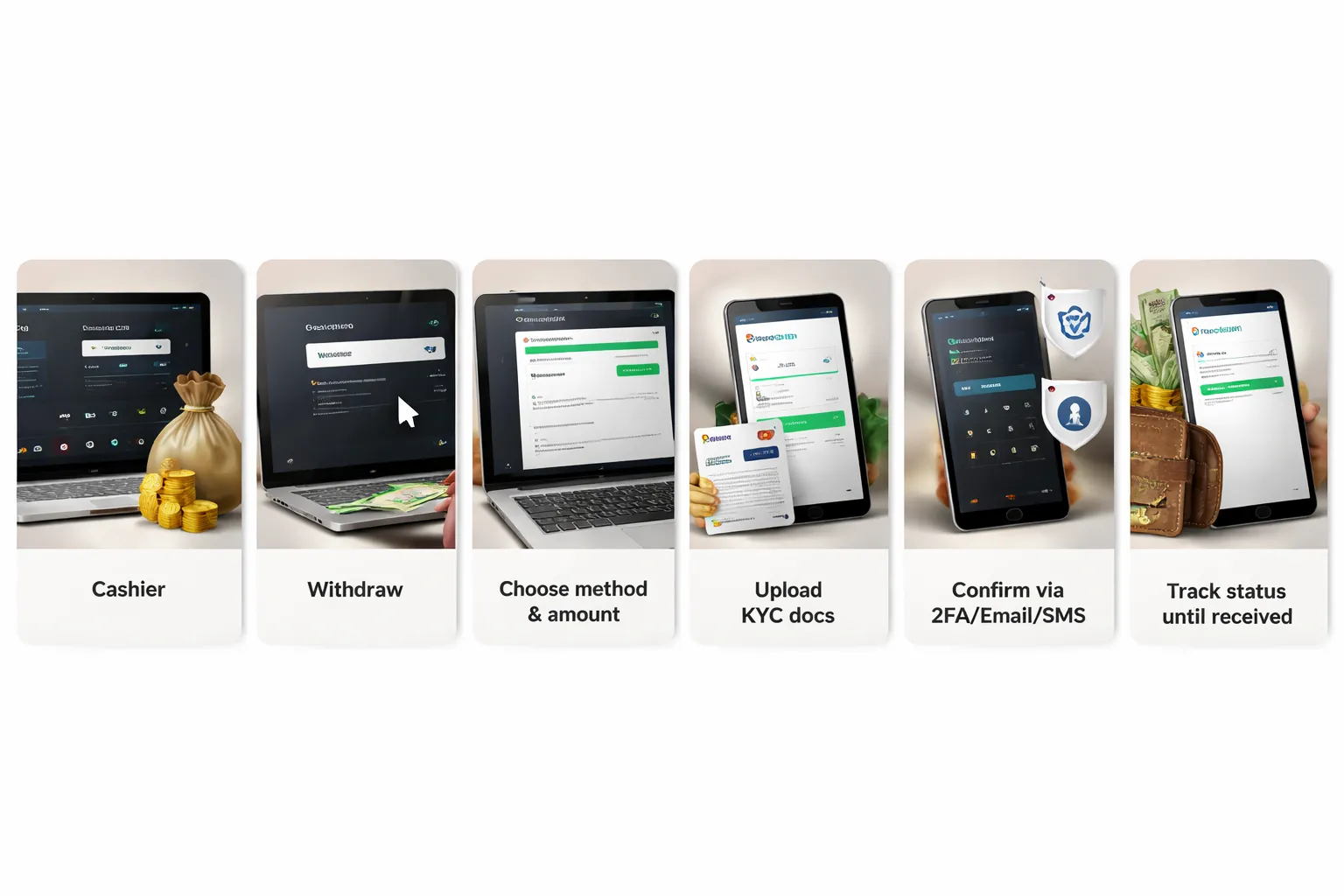
1) Open the cashier and find withdrawals
Log in to your casino account.
Go to Cashier, Banking, or Wallet.
Select Withdraw.
- Check your available to withdraw balance. It can differ from your total balance if you have active bonuses, pending bets, or locked funds.
- Review the minimum and maximum payout limits shown in the cashier.
- Confirm your account currency before you continue.
2) Pick a method and set the amount
Choose a withdrawal method you can receive money with.
- Match your deposit method when possible. Many casinos must return funds to the original source first.
- Use one method per request unless the cashier supports splitting payouts.
- Set the amount with fees in mind. Bank wires can include intermediary fees. Some e-wallets charge a fixed fee. Crypto payouts can vary by network fee.
- Stay inside limits. If you need to withdraw more than the max, plan multiple requests.
Enter your withdrawal amount.
3) Complete KYC and upload documents
If the casino asks for verification, do it before you submit or right after you submit.
- Provide your legal name, date of birth, and address exactly as your documents show.
- Upload clear images. Show all corners. Avoid glare. Use a current document.
- Common requests include ID, proof of address, and payment method proof.
- Fix mismatches fast. Name differences, old addresses, and cropped images cause delays.
For deeper details, read online casino KYC requirements.
4) Confirm the withdrawal request
Submit the request in the cashier.
Complete any security step the casino prompts.
- 2FA app code, if enabled.
- Email confirmation link.
- SMS one-time code.
Do not start another withdrawal until you see the first request logged in your transaction history.
5) Track status and confirm receipt
Open Transaction History or Withdrawals to track progress.
- Pending. The casino has your request but has not approved it yet.
- Processing. The casino approved it and sent it to the payment provider.
- Paid or Completed. The casino marked it sent. Your bank or wallet may still need time to post it.
- Rejected. Open the reason, fix the issue, then resubmit.
After it lands, check your bank statement, e-wallet ledger, or crypto transaction ID. Save the receipt and the withdrawal reference.
Withdrawal Methods Compared (Speed, Fees, Limits, Pros & Cons)
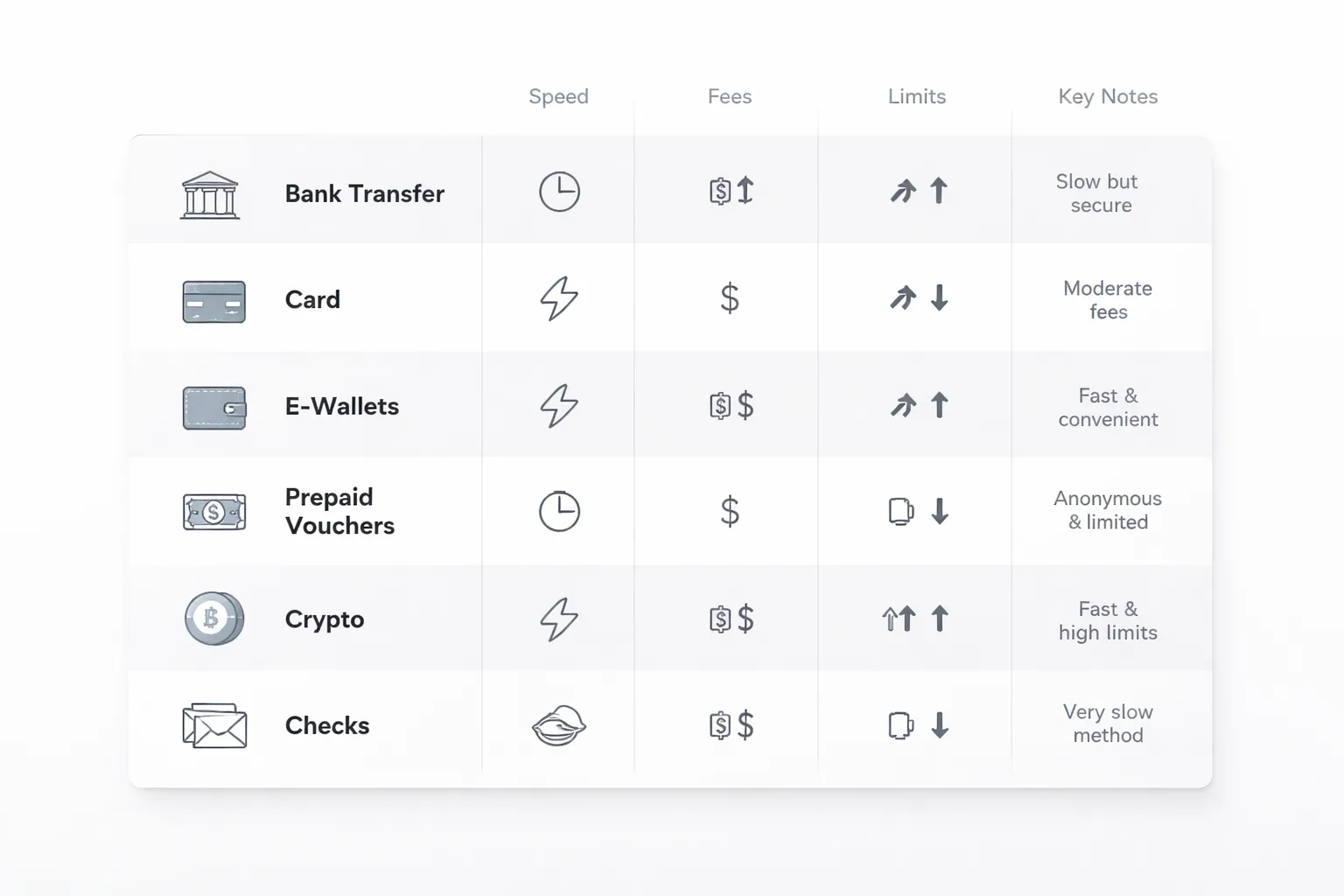
Withdrawal Methods Compared (Speed, Fees, Limits, Pros and Cons)
Casinos usually pay fastest to the same “rail” you used to deposit. Match your withdrawal method to your deposit method when you can. It cuts reviews and reduces rejection risk.
| Method | Typical casino approval time | Typical delivery time after approval | Common fees | Typical limits | Best for |
|---|---|---|---|---|---|
| E-wallets (PayPal, Skrill, Neteller) | Minutes to 24 hours | Instant to 24 hours | Usually no casino fee, wallet may charge transfer or FX | Medium to high, depends on casino tier | Fast cashouts |
| Crypto (BTC, ETH, USDT) | Minutes to 24 hours | 10 minutes to a few hours, depends on network | Network fee, exchange fees if you cash out | Medium to very high | Speed, higher limits, fewer banking delays |
| Debit or credit card | Hours to 48 hours | 1 to 7 business days | Usually no casino fee | Low to medium | Simple payouts to your card |
| Bank transfer or wire | 24 to 72 hours | 1 to 5 business days, wires can land faster | Bank fees possible, intermediary fees on wires | High | Large withdrawals |
| Prepaid vouchers and cash services | Varies, often 24 to 72 hours | Same day to several days | Service fees are common | Low to medium | When you cannot use cards or banks |
| Checks and local banking rails | Several days | 1 to 3 weeks for checks, local rails vary | Mailing and bank deposit fees possible | Medium to high | Fallback options in limited regions |
Bank Transfer and Wire
- Speed: Slow. Expect business day timing, plus bank cutoffs.
- Fees: Your bank may charge incoming fees. Wires can add intermediary bank fees.
- Limits: Usually the highest. Best fit for five figure withdrawals and VIP cashouts.
- Pros: Works for large amounts. Clear paper trail for taxes and records.
- Cons: More details required. Name, address, IBAN, SWIFT, routing, account number. One typo can send you into a long trace.
Use bank transfer when you need high limits and you can wait. Use wire when you need the same, but faster settlement and you accept extra fees.
Debit and Credit Card Withdrawals
- Availability: Not all casinos support card payouts. Some support deposit by card but pay out by bank or wallet.
- How payouts work: Many card withdrawals post as a reversal or refund, up to your deposit total on that card. Winnings above that often go to another method.
- Speed: Often 1 to 7 business days after casino approval. Banks can hold refunds longer.
- Fees: Casinos usually do not charge. Your bank can still charge FX.
- Limits: Often lower. You can hit daily or monthly caps fast.
- Pros: Simple. No new account needed.
- Cons: Slower posting. Refund rules limit where winnings can go. Some issuers decline gambling related credits.
E-wallets (PayPal, Skrill, Neteller)
- Speed: Fast. Many payouts land the same day after approval.
- Fees: Casinos often cover payout fees. Wallet providers may charge for transfers to your bank card or bank account.
- Limits: Medium to high. Higher tiers often need extra verification.
- Verification: Expect wallet KYC. ID, address, and sometimes a card or bank link. Do it before you withdraw.
- Pros: Quick access to funds. Good control. You can move money to your bank later.
- Cons: Wallet accounts can freeze if your name, country, or documents do not match. Some casinos restrict bonuses to certain wallets.
Prepaid Vouchers and Cash Services
- What it includes: Voucher brands, cash pickup networks, and regional cash payment services.
- Reality check: Many voucher products support deposits only. When withdrawals exist, they often route through a linked wallet or a bank transfer.
- Speed: Varies by provider and region.
- Fees: Common. You may pay to withdraw, to pick up cash, or to convert currency.
- Limits: Often low. These services focus on small amounts.
- Pros: Useful if you cannot use cards or you avoid bank links.
- Cons: Tight limits. Fewer supported casinos. Extra steps and extra fees.
Cryptocurrency (BTC, ETH, USDT)
- Speed: Fast after approval. Delivery depends on network load and required confirmations.
- Confirmations: The casino sends the transaction, then you wait for confirmations before your wallet shows it as spendable.
- Fees: You pay network fees in most cases. You also pay exchange fees if you convert to cash.
- Volatility: BTC and ETH can move fast. USDT and other stablecoins cut price swings but still carry platform and chain risk.
- Address accuracy: You must paste the correct address on the correct network. A wrong chain or address can mean permanent loss.
- Pros: Often high limits. Fewer bank delays. Good tracking via transaction ID.
- Cons: Irreversible sends. You handle wallet security. Some casinos require extra checks for large crypto cashouts.
Checks and Alternative Local Banking Rails
- Who still uses checks: Players in regions with limited banking options, or casinos with legacy payout systems.
- Speed: Slow. Printing, mailing, then bank hold time.
- Fees: Possible courier fees. Your bank may place long holds.
- Local rails: Some casinos use instant transfer schemes or domestic bank networks. These can be fast, but they are region locked.
- Pros: Can work when cards fail and wallets are not supported.
- Cons: Delays, lost mail risk, more manual support tickets.
Which Method Is Best for Your Goal
- Fastest: E-wallets, then crypto. Speed still depends on casino approval.
- Lowest fees: E-wallet payouts often cost less at the casino level. Bank transfers can be cheap domestically. Wires and cash services often cost more.
- Highest limits: Bank transfer or wire, then crypto. Ask support about VIP limits before you request.
- Most private: Crypto can reduce bank visibility, but the casino still verifies your identity and the blockchain stays public. Use a stablecoin if you want less price movement.
If your cashout stays stuck at the same status for too long, see why your online casino withdrawal is pending.
Verification (KYC) & Document Requirements
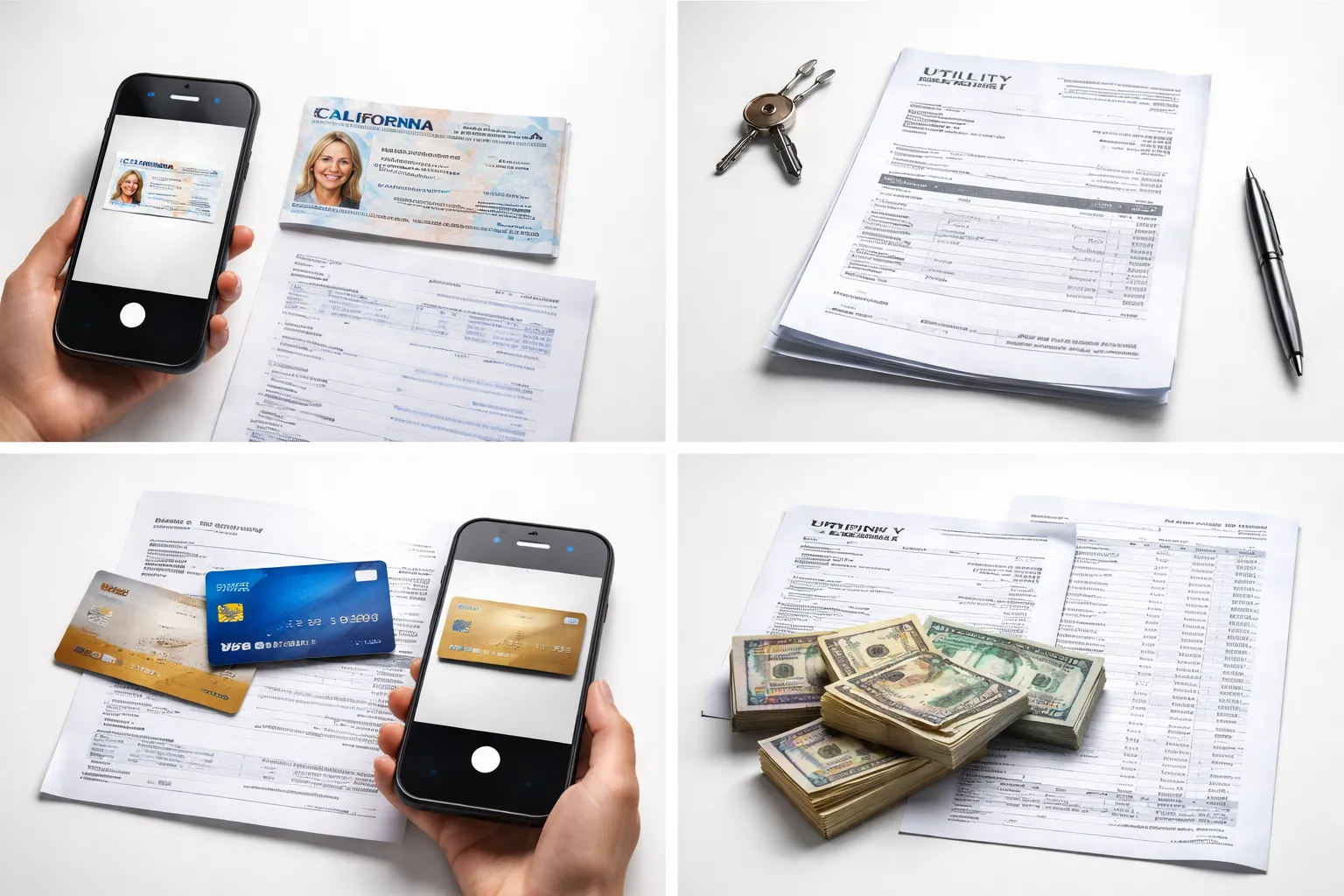
Verification (KYC) and document requirements
Most casinos must verify your identity before they pay out. They call this KYC. You must pass it once, then keep your details consistent on every withdrawal.
Documents casinos usually ask for
- Photo ID. Passport, national ID card, or driver’s license. Send the full document, all corners visible.
- Proof of address. Utility bill, bank statement, tax letter, or government letter. Many casinos require it to be issued within the last 90 days.
- Payment proof. Proof you own the withdrawal method.
- Source of funds or source of wealth. Payslip, bank statements, tax return, benefits letter, or business documents. Some casinos ask for this after higher withdrawals.
| Method | Common payment proof |
|---|---|
| Debit or credit card | Photo of the card showing first 6 and last 4 digits, name, expiry. Hide the CVV. |
| E-wallet | Screenshot of your wallet profile page with your name and email, plus transaction history if requested. |
| Bank transfer | Bank statement or online banking screenshot showing your name, IBAN or account number, and recent transactions. |
| Crypto | Wallet screenshot showing the receiving address, plus a transaction hash when you withdraw. |
How to upload documents and avoid rejections
- Match your account details. Your name, date of birth, and address must match your casino profile. Fix typos before you upload.
- Use clean images. Bright light, no blur, no glare, no fingers covering text. Show all four corners.
- Send color files. Many casinos reject black and white scans.
- Check expiry dates. Expired ID fails. Old address documents fail if they fall outside the date limit.
- Do not edit. Do not crop out edges. Do not alter text. Do not use filters.
- Mask sensitive parts the right way. Hide CVV and full card number. Do not hide your name or the visible digits the casino requests.
- Upload the right format. Use JPG, PNG, or PDF. Keep file sizes within the site limit.
If you want a full checklist, use this guide on how to verify your identity at an online casino.
Common KYC triggers that delay withdrawals
- Your first withdrawal. Many sites hold the first cashout until you verify.
- Large wins or big withdrawal requests. Higher amounts often trigger extra checks.
- Switching payment methods. A new card, new wallet, or new bank can trigger another review.
- Unusual activity. VPN changes, new devices, many failed login attempts, multiple accounts, or fast deposit and withdrawal patterns.
- Bonus and wagering checks. The casino may review game play if your cashout ties to a promotion.
How long verification takes, and what to do if it keeps resetting
- Typical timing. Many casinos approve KYC within 24 to 72 hours, but it can take longer during high volume or when they request source of funds.
- Do not keep reuploading. Each new upload can restart the queue at some casinos.
- Ask what failed. Request the exact rejection reason, the document type they need, and the accepted date range.
- Send one complete set. Upload ID, address proof, and payment proof together if the casino allows it.
- Use the same details everywhere. Keep the same name format across your casino profile, bank, and wallet.
- Escalate with a case ID. Ask support for the verification ticket number and the last action date.
Responsible gambling checks and affordability reviews
In regulated markets, casinos may run extra checks to meet responsible gambling and anti money laundering rules. You may need to confirm your income and spending before they raise limits or process higher withdrawals.
- What they may ask for. Recent bank statements, payslips, tax documents, benefits letters, or proof of savings.
- What triggers it. Higher deposits, higher losses, sharp changes in play, or requests to increase limits.
- What you should do. Send current documents, keep them consistent with your profile, and set limits if gambling starts to strain your budget.
Bonus Terms That Affect Withdrawals (Read This First)

Wagering requirements, explained
A bonus often ties your money to playthrough rules. You must meet them before you can withdraw bonus funds, and sometimes your deposit.
Common terms you will see include:
- Wagering requirement (WR). How much you must bet before cashout.
- Bonus amount vs deposit plus bonus. Some casinos apply WR to the bonus only, others apply it to your deposit and bonus.
- Locked cash. Funds you cannot withdraw until you finish WR or forfeit the bonus.
Simple example. You deposit $100 and claim a 100% bonus, so you get $100 extra. The casino sets 35x wagering on the bonus. You must place $3,500 in bets, 35 x $100, before you can withdraw any bonus-linked winnings.
Game contribution rules, slots vs table games vs live dealer
Casinos rarely count every game the same toward wagering. They set contribution rates, then convert your bets into “wagering progress.”
| Game type | Typical contribution | What it means for you |
|---|---|---|
| Slots | High, often 100% | Your slot bets usually clear WR fastest. |
| Table games | Low, often 0% to 20% | You may need far more betting volume to clear WR. |
| Live dealer | Often 0% to low | Many casinos exclude live games from WR, or count them at a small rate. |
Example. You still need $3,500 of wagering. If roulette contributes 10%, a $50 spin adds only $5 toward WR. You would need $35,000 in roulette bets to finish a $3,500 WR target.
Max bet limits during bonus play, and how you can lose winnings
Most bonuses set a maximum stake per spin or hand while you have active bonus funds. Casinos use it to prevent high-variance “hit and run” play.
- What the rule looks like. “Max bet $5 per spin” or “Max $10 per hand.”
- What happens if you break it. The casino can void bonus winnings, remove the bonus, or cancel your withdrawal.
- How to protect yourself. Set your stake below the limit, keep it there, and watch for autoplay increases or feature buys.
If you plan to play bigger stakes, skip the bonus and play with cash only. You reduce rule risk and keep withdrawals simpler.
Withdrawal restrictions, max cashout, minimum odds, and time limits
Bonuses can cap what you can withdraw and add extra conditions beyond wagering.
- Max cashout. A fixed cap, for example “Max withdrawal is 5x bonus” or “Max $500 from this bonus.” Anything above the cap gets removed.
- Minimum odds. Sports and some hybrid casino offers can require minimum odds per bet and limit low-risk hedging.
- Time limits. You may need to meet WR within a set window, such as 7, 14, or 30 days. Miss it and you lose the bonus and related winnings.
Before you claim, check the promo page and the bonus terms link. If you need a quick refresher on limits and processing rules across methods, use this online casino payment methods comparison.
How to forfeit a bonus safely, and when it makes sense
Forfeiting removes the bonus and resets withdrawal rules to cash play. Do it when the terms block your cashout, the WR is too high, or the max cashout makes the bonus worthless.
- Step 1. Stop playing. Do not place more bets while you decide.
- Step 2. Check what forfeiture deletes. Many casinos remove the bonus and any winnings tied to it.
- Step 3. Go to the bonus section, promo wallet, or cashier, then choose “Forfeit” or “Cancel bonus.”
- Step 4. Confirm your cash balance shows as withdrawable, then submit your withdrawal.
Do not forfeit if you already met WR and the casino shows your funds as withdrawable. Take screenshots of the wagering status and your balance before you withdraw.
Fees, Exchange Rates, and Tax Considerations
Fees: casino, payment provider, and bank charges
Fees can hit your payout in three places. Check all three before you withdraw.
- Casino fees: Many casinos charge nothing for standard withdrawals. Some charge for specific methods, extra withdrawals per month, or “manual processing.” Read the cashier fee table and the terms for your withdrawal method.
- Payment provider fees: E-wallets, card processors, and crypto services may charge withdrawal fees, network fees, or “receive” fees. These often sit outside the casino’s control.
- Intermediary bank charges: Bank transfers can trigger lift fees, correspondent bank fees, and incoming wire fees. You may not see these until your bank posts the deposit.
Reduce fees by using the same method you used to deposit, staying within the casino’s free withdrawal limits, and consolidating small withdrawals into fewer larger ones when rules allow.
Currency conversion: exchange rates and how to cut FX losses
Currency conversion usually costs more than the stated fee. You pay through the spread, not a line item.
- Dynamic exchange rates: Rates change every minute. Casinos and payment providers also add a markup. Your final amount can differ from what you saw at checkout.
- Where conversion happens: Conversion can occur at the casino, at the payment provider, or at your bank. You may pay a spread at more than one step.
- DCC traps: If you see an option like “charge in your home currency,” decline it if the alternative lets your bank or card network convert at a better rate.
Reduce FX losses by keeping your casino wallet in the same currency as your bank or e-wallet, using a multi-currency e-wallet when available, and avoiding unnecessary conversions between deposit and withdrawal.
Tax basics: what changes by country, and what records you may need
Tax rules differ by jurisdiction. Some countries tax winnings, some tax casino operators, and some treat gambling wins as non-taxable for most players.
- Know your local rule: Check the guidance from your tax authority or a local accountant. Do this before you scale up your play.
- When records matter: You may need proof of deposits, withdrawals, net results, and dates. You may also need to explain large transfers into your bank account.
- Withholding: Some jurisdictions or payment rails apply withholding or reporting at certain thresholds. Treat every large payout as potentially reportable.
If you use multiple casinos, keep separate records per site. If you need help with account details, start with your profile and verification setup from your casino account setup.
Withdrawal log: compliance and budgeting
Keep a simple log. It helps if a payment goes missing, if your bank asks questions, or if you need tax support.
| Field | What to record |
|---|---|
| Date and time | Submission time and approval time |
| Casino and username | Site name and your account ID |
| Method | Bank transfer, card, e-wallet, crypto, check |
| Currency and amount requested | Gross amount you withdrew |
| Fees | Casino fee, provider fee, bank fee, network fee |
| Exchange rate and converted amount | Rate used and final amount received |
| Transaction IDs | Withdrawal ID, bank reference, blockchain TXID |
| Status and notes | Pending, approved, paid, reversed, chargebacks, support ticket numbers |
Store screenshots of the cashier confirmation, the casino balance before and after, and the bank or wallet receipt. Keep copies for at least one tax year, longer if your local rules require it.
Common Withdrawal Problems (and How to Fix Them)
Withdrawal pending too long
Most delays come from processing windows, weekend cutoffs, and manual queues.
- Check the casino’s stated payout time. Many sites list separate times for review and for the payment rail.
- Account for weekends and holidays. Bank wires and cards often pause, some e-wallets and crypto do not.
- Look for “pending” vs “processing” vs “paid”. Pending usually means the casino still holds the funds. Paid means it left the casino and your provider now controls the timing.
- Confirm you met wagering rules. Bonus playthrough and max cashout caps can block approval until the system recalculates.
- Check method limits. If your withdrawal exceeds a per-transaction cap, the casino may queue it for splitting or resubmission.
- Do one request at a time. Multiple active requests can reset your place in the queue or trigger extra checks.
- Escalate with evidence. Provide withdrawal ID, timestamp, amount, method, and screenshots of status history.
If your status stays pending beyond the published window, use this guide on why your withdrawal is pending.
Rejected requests
Rejections usually trace back to details, method rules, or missing verification.
- Mismatched details. Name, date of birth, address, or bank account holder does not match your casino profile. Update your profile first, then resubmit.
- Method ineligibility. Some casinos require you to withdraw to the same method you used to deposit, up to the deposited amount. After that, they may pay the remainder via another method.
- Card rules. Many cards only accept “refunds” up to the deposit total. Winnings often go to bank transfer, e-wallet, or crypto.
- Incomplete KYC. Upload clear documents and wait for approval before retrying. Do not keep resubmitting while KYC sits in review.
- Bonus restrictions. Some bonuses restrict withdrawal methods or require a minimum number of deposits. Check bonus terms tied to your account.
Fix the specific reason shown in the cashier notes, then submit a new withdrawal with the same method details.
Partial withdrawals and split payouts
Casinos split payouts to meet limits and payment network rules.
- Per-transaction limits. The method has a cap, so the casino sends multiple smaller payments.
- Risk controls. Large withdrawals can trigger staged approvals, especially for first cashouts or new accounts.
- “Return to source” logic. Deposits go back to the original method first, winnings go to a different method.
- Provider routing. The casino uses more than one processor, so payments arrive separately with different references.
Ask support for the payout breakdown. Get each transaction ID, amount, and sent date. Match them to your bank, wallet, or blockchain records.
Chargebacks, reversals, and closed accounts
These cases carry the highest risk. Handle them carefully and keep everything in writing.
- Stop new deposits and withdrawals. Keep your account stable while you resolve the dispute.
- Do not file a chargeback to “speed things up”. Casinos often freeze accounts after chargebacks and may void bonuses and winnings under their terms.
- If a reversal happens, collect proof. Save the casino status update, bank statement line, and any processor notice. Get the exact reversal reason code if your bank provides one.
- For closed accounts, request a withdrawal path in writing. Ask which method they will use, what documents they need, and the expected timeline.
- Escalate through the right channel. Ask for the payments team, then compliance, then formal complaint channels listed in the casino’s terms.
When you contact support, include your withdrawal ID, deposit IDs linked to the dispute, and the timeline of events.
“Account under review” and AML flags
Casinos must follow anti-money laundering rules. Reviews often start after large or unusual cashouts, new payment methods, or identity mismatches.
- Respond fast and stay consistent. Give direct answers. Do not change stories between tickets.
- Provide standard KYC. Government ID, selfie or liveness check, and proof of address dated within the casino’s allowed window.
- Provide proof of payment method ownership. Screenshot of e-wallet profile, bank letter, or card proof with allowed digits visible and the rest masked.
- Provide source of funds if asked. Recent payslips, bank statements, tax documents, or business records. Send only what they request and redact unrelated balances when possible.
- Explain unusual activity. Large one-off deposits, frequent method changes, VPN use, or multiple devices can trigger checks. Provide dates, locations, and receipts where relevant.
- Ask for a checklist and deadline. Get a clear list of missing items and when they will re-review after you submit.
Keep your uploads clear, complete, and readable. If they reject a document, ask for the exact reason so you can replace it once, not five times.
Safety Checklist: How to Withdraw from Legit Online Casinos

Licensing and regulation, verify the operator before you withdraw
- Find the license details on the casino site. Check the footer, About, or Terms pages. Look for the regulator name and a license number.
- Verify it on the regulator website. Search the regulator register for the exact company name and domain. Match the trading name, legal entity, and URL.
- Check the license status. It should show active, not suspended, revoked, or expired.
- Confirm the operator, not a random brand. Some sites list a license that belongs to a different company. If the domain is not listed, treat it as unlicensed.
- Read the withdrawal terms that affect cashouts. Focus on bonus wagering rules, max cashout limits, withdrawal fees, and minimum withdrawal amounts.
- Save proof. Screenshot the license page and the key terms on the day you request your withdrawal.
Secure payments, protect your account and your payout
- Use HTTPS. The cashier and login pages should show https in the address bar. Do not enter payment details on an http page.
- Turn on 2FA. Use an authenticator app if available. Avoid SMS 2FA when you can.
- Use a strong, unique password. Do not reuse your email or banking passwords.
- Withdraw to an account in your name. Name mismatches often trigger delays and extra checks.
- Avoid public Wi Fi. Use your home network or mobile data for cashier actions.
- Watch for account takeover signs. New devices, password reset emails you did not request, or changed withdrawal details. Lock the account and contact support fast.
- Keep a withdrawal record. Save the request confirmation, timestamp, amount, method, and transaction ID.
Red flags that signal a risky withdrawal
- Unreasonable delays with no date. A legit casino gives a review timeline and updates you if it slips.
- Vague reasons for rejection. You need a specific issue you can fix, not a generic compliance line.
- Terms that change mid process. New fees, new rollover claims, or new document demands that do not match the published rules.
- Pressure tactics. Pushy offers to cancel your withdrawal and keep playing, or threats to close your account if you insist.
- Endless document loops. Repeated requests for the same files, or rejections without clear reasons.
- Cashout caps that appear late. Sudden limits tied to a bonus you did not use, or limits hidden in non standard pages.
Choose reputable payment methods and avoid third party intermediaries
- Use the same method you deposited with. Many casinos follow closed loop rules. They send funds back to the original source first.
- Prefer established rails. Bank transfer, cards where supported, and major e wallets reduce routing issues.
- Avoid third party cashout services. Do not accept “agents” offering to process withdrawals for a fee. This can trigger fraud flags and chargeback risk.
- Do not sell or transfer balances. Trading casino funds with other players can breach terms and freeze your payout.
- Check method limits and fees before you confirm. Review minimums, maximums, and processing times inside the cashier.
- Use a bank account you control. Avoid shared accounts and business accounts unless the casino allows them.
For faster approvals, follow the same document standards casinos use in KYC. Use clear scans, matching names, and current proofs. See how to verify your identity at an online casino.
Tips to Get Faster, Smoother Payouts
Complete KYC before you play
Finish verification early. Do it before your first deposit or right after. You avoid the most common withdrawal delay, manual KYC checks.
- Upload clear color photos. No glare, no cropped corners.
- Match your details across your casino profile, ID, and payment method. Same name, same address, same date of birth.
- Use a current proof of address. Many casinos reject documents older than 90 days.
- Send the full document. Do not edit, compress, or blur fields.
- Turn on 2FA. Some brands flag accounts without it.
If you want a checklist of common KYC rules, read online casino KYC requirements.
Use one consistent, verified payment method
Frequent method changes trigger extra checks. Stick to one method that matches your identity and keep it verified.
- Deposit and withdraw with the same method when the casino requires it.
- Avoid third-party wallets or cards in another name. You risk rejection.
- Do not rotate methods to chase speed. You often add review time.
- Keep your account details stable. Changing email, phone, or address can trigger a security hold.
Withdraw in sensible amounts
Big withdrawals draw more review. Tiny withdrawals create more transactions and more points of failure. Match your cashout to method limits and typical processing patterns.
- Check minimum and maximum limits per transaction and per day.
- Stay under your method ceiling. You avoid forced splits and extra approval steps.
- Plan around weekly or monthly caps. Some e-wallets and cards limit volume.
- When you hit a large win, split into a few logical withdrawals if the casino sets per-transaction caps.
| Issue | What you do | Why it speeds things up |
|---|---|---|
| Withdrawal exceeds method max | Lower the amount or split it to fit limits | Prevents manual intervention and resubmission |
| Multiple small withdrawals | Combine into fewer withdrawals within limits | Reduces queue load and review touches |
| Sudden unusually large cashout | Expect extra checks and keep documents ready | Shortens back-and-forth with support |
Avoid bonus conflicts
Bonuses cause the most payout disputes. Plan your withdrawal around promotion rules.
- Check wagering requirements before you request a cashout.
- Check game restrictions. Some bonuses exclude specific games or providers.
- Watch max cashout caps. Many bonuses limit the amount you can withdraw from bonus play.
- Avoid mixed funds mistakes. Depositing again during an active bonus can reset or complicate wagering.
- Keep proof. Save the bonus terms page and your progress screen.
Contact support with the right details
Support works faster when you give audit-ready facts. Keep everything in one thread and send a clean bundle of details.
- Transaction ID from the withdrawal request screen or email confirmation.
- Exact timestamps for the request, any status changes, and any error messages.
- Amount and currency, plus your chosen method.
- Screenshots of the withdrawal status page and any alerts. Include the full page, not a cropped box.
- Last four digits of the card or masked wallet identifier, if shown.
- What you already tried, like resubmitting, restarting the app, or switching networks.
Ask for a clear next step and a time estimate. If they mention a hold, ask what triggered it and which document or action clears it.
When and How to Escalate a Withdrawal Dispute
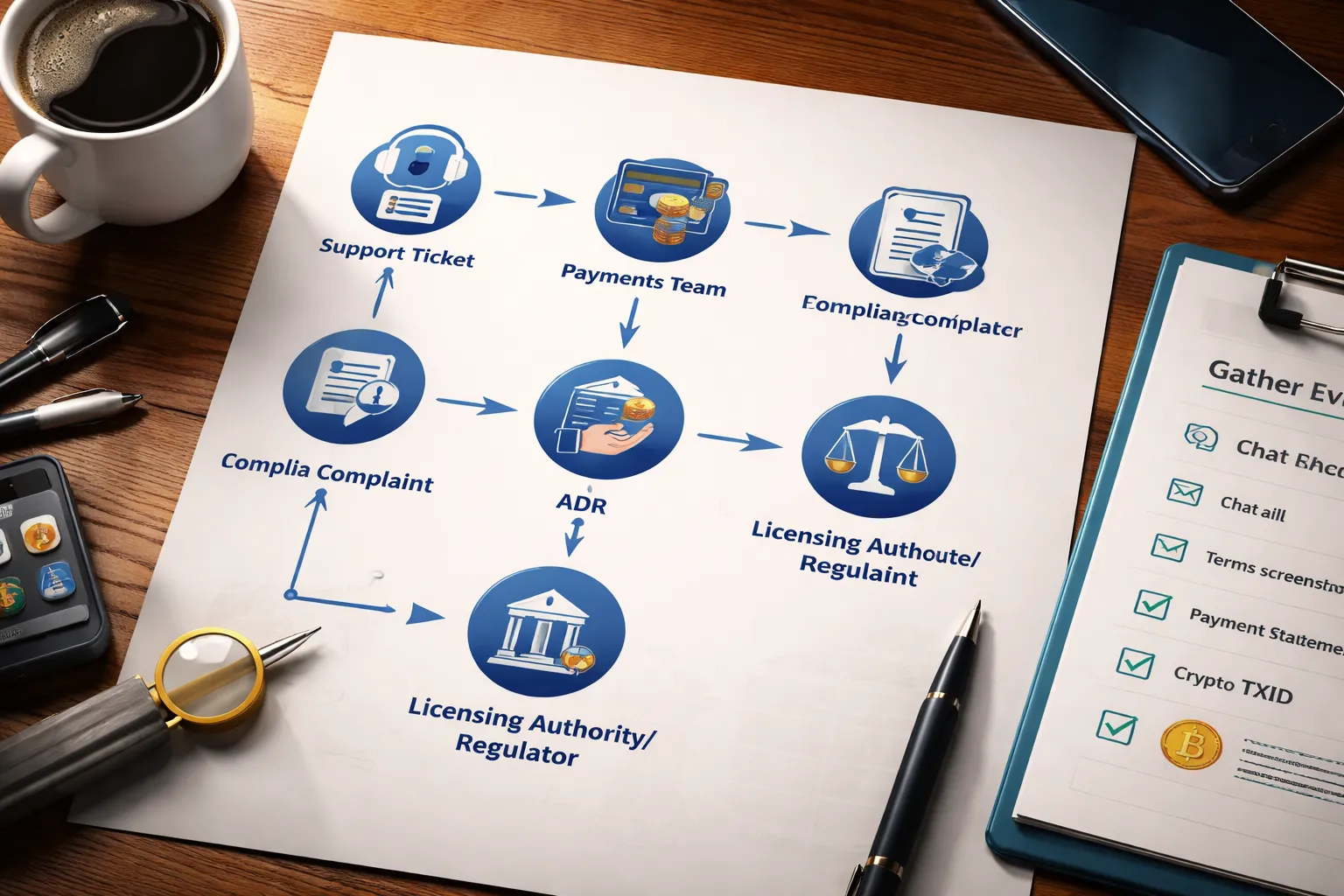
Prepare evidence before you escalate
Collect proof first. You will move faster and avoid repeats.
- Chat logs and emails. Export chats if possible. Save full email threads with timestamps.
- Terms and policy screenshots. Capture the withdrawal rules, KYC rules, bonus rules, and fee statements that applied when you requested the cashout. Include the URL and date.
- Withdrawal timeline. Note the request time, approval time, reversal time, and every status change you saw.
- Payment statements. Download bank or card statements, e-wallet statements, and crypto transaction details. For crypto, save the TXID, address, amount, and network.
- Account proof. Save your username, registered email, and any case ID from support.
- Security and device notes. Record VPN use, travel, device changes, and failed login alerts. These often trigger reviews.
Use the casino complaint route and set timelines
Escalate in layers. Keep each step short. Ask for a dated answer.
- Step 1, Support. Ask for the exact hold reason and the exact action that clears it. Ask for the expected completion time in hours or days.
- Step 2, Payments team. Request a transfer to payments or risk. Ask them to confirm the withdrawal method, limits, and processing queue time.
- Step 3, Compliance or KYC. If they cite verification, ask which document failed and which field mismatched. Ask for a resubmission checklist.
- Step 4, Formal complaint. Use their complaints page or email. Include your evidence bundle and a clear outcome request, such as “approve withdrawal” or “return deposit to original method.”
Set a simple schedule. Give support 24 to 48 hours for an update. Give a formal complaint 7 to 14 days, or the timeline stated in their terms. If your cashout stays stuck, review the common reasons in why your withdrawal is pending and match them to what support told you.
Escalate outside the casino: ADR, licensing authority, regulators
Go external when the casino misses its own deadlines, stops responding, or gives shifting reasons.
- ADR. Some licensed casinos must offer alternative dispute resolution. Use it when the operator rejects your claim or stalls after a formal complaint. Submit your evidence and a clean timeline.
- Licensing authority. File with the body that issued their license. Include your account details, case ID, dates, and the exact term you believe they broke.
- Regulator complaint. Use the regulator portal if available. Focus on process failures, such as no response, unclear reasons for a hold, or refusal to follow published withdrawal terms.
Do not send long stories. Send documents, dates, and the specific rule you rely on.
Protect yourself from scams while you pursue a resolution
- Use official channels only. Start from the casino site footer, license page, or your account dashboard. Do not trust links from social media or direct messages.
- Do not pay “release fees.” A real operator may request KYC documents, but it should not demand extra payments to unlock a withdrawal.
- Do not share full credentials. Never give your password, one-time codes, or remote access to your device.
- Limit the data you send. Share only what the dispute needs. Mask non-essential details on statements when possible.
- Watch for impersonation. Scammers copy support names and logos. Verify email domains and ticket numbers inside your account.
- Keep everything in one thread. Use one email chain or one ticket. It prevents lost context and makes escalation easier.
FAQ
How long do online casino withdrawals take?
It depends on the method and the casino’s review time. E-wallets and crypto often pay faster than cards and bank transfers. First withdrawals can take longer due to checks. Weekends and holidays slow bank processing.
Why is my withdrawal pending?
Most pending payouts sit in a manual review queue. Common causes include first-time withdrawal checks, KYC requests, bonus wagering not finished, or method mismatch. Check your account messages and email. Respond fast and keep one support thread.
Do I need to verify my identity before withdrawing?
Many casinos require KYC before they release funds. You may need ID, proof of address, and proof of payment method. Submit clear photos and matching details. Use KYC requirements to avoid rejections.
Can I withdraw to a different method than I used to deposit?
Often no. Many casinos follow closed-loop rules. They send funds back to the original deposit method first, up to the deposit amount. Remaining winnings may go to another method. Check cashier rules and method availability in your country.
What are the most common withdrawal methods?
Typical options include bank transfer, debit card, e-wallets, prepaid vouchers, and cryptocurrency. Availability depends on your location and casino licenses. Each method has different fees, limits, and processing times, so check the cashier before you choose.
Why did the casino reject or reverse my withdrawal?
Common reasons include incomplete KYC, name mismatch, expired card, invalid bank details, bonus terms not met, or hitting method limits. Fix the exact issue and resubmit. Ask support for the rejection code or reason in writing.
Do online casinos charge withdrawal fees?
Some do. Fees can come from the casino, your bank, or payment provider. Crypto payouts can include network fees. Read the cashier terms and your provider’s fee table. If fees look high, switch to a cheaper method.
What are withdrawal limits?
Limits cap how much you can withdraw per transaction, day, week, or month. Casinos also set max payout limits on some bonuses. Your VIP level can change limits. Check limits before you play high stakes or accept an offer.
How do taxes work on casino withdrawals?
Tax rules depend on your country and state. The casino may not withhold tax. You may need to report winnings yourself. Keep records of deposits, withdrawals, and net results. If you get a tax form, match it to your account history.
What should I do if my withdrawal is late?
Confirm the status in your cashier and check for KYC requests. Verify your payment details and method limits. Then contact support with your withdrawal ID, date, amount, and method. Set a clear deadline and ask for escalation if missed.
Can I cancel a withdrawal?
Many casinos let you cancel while the payout stays in “pending” or “processing.” Once approved or sent, you usually cannot cancel. Canceling may return funds to your casino balance. Bonus rules can reapply after a cancel.
Why does the casino ask for proof of payment method?
It helps prevent fraud and chargebacks. You may need a card photo with middle digits masked, a bank statement, or an e-wallet account screenshot. Show your name and the last four digits. Hide unrelated transactions when allowed.
Conclusion
You withdraw faster when you plan before you play. Use one payment method, keep your account details consistent, and verify your identity early. Match your withdrawal method to your deposit method when the casino requires it.
- Verify first. Complete KYC as soon as you register, not after you win. Use clear photos, correct addresses, and matching names.
- Pick the right rail. E-wallets and crypto often pay faster, bank transfers often pay more, cards can take longer.
- Check limits and fees. Review minimums, maximums, and any withdrawal charges before you submit. Read online casino fees and transaction charges if you want a quick cost checklist.
- Follow bonus rules. Meet wagering requirements, then withdraw. Avoid canceling withdrawals unless you accept the risk of bonus terms reapplying.
- Submit clean proof of ownership. Show your name and last four digits. Mask the rest. Remove unrelated transactions when allowed.
Final tip, take screenshots of your withdrawal request and confirmation page. Keep them until your money lands. It saves time if support asks for details.
-
Online Casino Payment Safety Tips: How to Deposit and Withdraw Securely
8 months ago -
What to Do If an Online Casino Won’t Pay Out: Step-by-Step Actions
8 months ago -
How to File a Complaint Against an Online Casino (Plus ADR Explained)
8 months ago -
How to Sign Up & Create an Online Casino Account (Step-by-Step)
8 months ago -
Online Casino Login Problems: Fixes for Common Sign-In Issues
8 months ago
-
- Confirm Your Balance Type, Cash vs Bonus vs Locked Funds
- Meet Wagering Requirements and Check Max Cashout Caps
- Check Minimum and Maximum Withdrawal Limits, Plus Daily and Weekly Caps
- Verify Your Account and Payment Method Ownership to Prevent Reversals
- Review Restricted Countries, Banking Rules, and Currency Conversion Impacts
-
- How long do online casino withdrawals take?
- Why is my withdrawal pending?
- Do I need to verify my identity before withdrawing?
- Can I withdraw to a different method than I used to deposit?
- What are the most common withdrawal methods?
- Why did the casino reject or reverse my withdrawal?
- Do online casinos charge withdrawal fees?
- What are withdrawal limits?
- How do taxes work on casino withdrawals?
- What should I do if my withdrawal is late?
- Can I cancel a withdrawal?
- Why does the casino ask for proof of payment method?
-
-
- Confirm Your Balance Type, Cash vs Bonus vs Locked Funds
- Meet Wagering Requirements and Check Max Cashout Caps
- Check Minimum and Maximum Withdrawal Limits, Plus Daily and Weekly Caps
- Verify Your Account and Payment Method Ownership to Prevent Reversals
- Review Restricted Countries, Banking Rules, and Currency Conversion Impacts
-
- How long do online casino withdrawals take?
- Why is my withdrawal pending?
- Do I need to verify my identity before withdrawing?
- Can I withdraw to a different method than I used to deposit?
- What are the most common withdrawal methods?
- Why did the casino reject or reverse my withdrawal?
- Do online casinos charge withdrawal fees?
- What are withdrawal limits?
- How do taxes work on casino withdrawals?
- What should I do if my withdrawal is late?
- Can I cancel a withdrawal?
- Why does the casino ask for proof of payment method?
-
-
Reload Bonus Explained: What It Is and When It’s Worth Claiming
6 months ago -
Online Casino Licensing Explained: Authorities, Licenses & How to Check One
8 months ago -
Best Live Dealer Casinos: Where to Play Live Blackjack, Roulette & More
8 months ago -
Best Online Casinos for High Rollers: VIP Perks, High Limits & Exclusive Bonuses
8 months ago -
Fast Payout Online Casinos: Best Sites for Quick Withdrawals
8 months ago
-
Online Casino Customer Support: What to Look For (Live Chat, Email, Response Times)
8 months ago -
Sign Up for an Online Casino: Create an Account in Minutes
8 months ago -
Online Casino Payment Safety Tips: How to Deposit and Withdraw Securely
8 months ago -
What to Do If an Online Casino Won’t Pay Out: Step-by-Step Actions
8 months ago -
How to File a Complaint Against an Online Casino (Plus ADR Explained)
8 months ago