Best Live Dealer Casinos: Where to Play Live Blackjack, Roulette & More

Live dealer casinos stream real tables to your screen. You play blackjack, roulette, baccarat, and game shows with a human dealer and live chat. You get faster rounds than land casinos, with clear rules and tracked results.
This guide lists the best live dealer casinos and explains how to pick one. You will learn what games each site runs, who supplies the tables, and what limits to expect. You will also learn what to check before you deposit, including licensing, RTP disclosure, stream quality, mobile support, and payment speed.
If quick cashouts matter most, use our fast payout online casinos guide to compare withdrawal times by method.
In het kort:
- Pick live casinos with a clear license, published RTP, and audited game info.
- Check who runs the tables. Top studios include Evolution, Pragmatic Play Live, Playtech, and Ezugi.
- Match the lobby to your goals. Blackjack for low house edge, roulette for simple play, game shows for higher volatility.
- Confirm table limits before you deposit. Look for low-min tables for testing, high-limit rooms if you scale up.
- Prioritize stream quality. You want stable HD, low lag, and multiple camera angles on key games.
- Test mobile play on your device. Look for fast loading, stable chat, and clean controls.
- Verify payments first. Check deposit options, withdrawal methods, fees, KYC rules, and typical payout times.
- If you are new, start on a simple site with clear navigation and support. Use our beginners guide to compare easy sign-up options.
Best Live Dealer Casinos: Our Top Picks (Reviewed)
| Casino | Standout features | Typical live limits | Payout speed | Best on |
|---|---|---|---|---|
| Ignition Casino | Strong live blackjack lobby, solid stream stability, simple layout | Low to high, depends on table | Fast after KYC, crypto is usually quickest | Mobile and desktop |
| BetOnline | Deep live roulette selection, clear betting layout, steady table traffic | Low to high, depends on wheel | Fast after KYC, crypto is usually quickest | Desktop and mobile browser |
| Slots.lv | Live blackjack focus, frequent table availability, easy navigation | Low to mid, plus higher limit tables at peak hours | Fast after KYC, crypto is usually quickest | Mobile |
| Super Slots | High roller live tables, higher caps, VIP support | Mid to very high | Fast after KYC, crypto is usually quickest | Desktop |
| Wild Casino | Good mix of live tables and game shows, clean lobby filters | Low to high | Fast after KYC, crypto is usually quickest | Mobile and desktop |
Best overall: Ignition Casino
Who it suits: You want a simple live lobby, steady streams, and enough tables to avoid long waits.
Why it wins: Ignition keeps the core live games easy to find and easy to join. You get reliable live blackjack coverage, plus roulette and baccarat to round out your sessions. It fits most bankrolls because table limits vary by room and time of day.
- Best use case: Mixed play, blackjack first, then roulette or baccarat.
- What to check: Minimums on the exact table you open. Limits change by variant.
- Payments: Expect faster turnaround once your KYC is complete, crypto tends to pay fastest.
Best for live blackjack: Slots.lv
What you want in live blackjack: Clear rules, enough tables, and side bets you can ignore when you want lower variance.
Why this pick: Slots.lv puts live blackjack front and center. You can usually find a table without fighting for seats, especially during normal US hours.
- Rules to prioritize: Dealer stands on soft 17 when available, double after split when allowed, and reasonable blackjack payout terms listed in the table info.
- Side bets: Common options add variance. Use them only if you accept bigger swings.
- Availability: Look for multiple table limits so you can move up or down without switching casinos.
Best for live roulette: BetOnline
What you want in live roulette: The right wheel type, clear bet placement, and tools that help you avoid misclicks.
Why this pick: BetOnline stands out for roulette variety and a layout that stays readable on smaller screens.
- Wheel variants: Prioritize European roulette when you can. American wheels add a double zero.
- Betting limits: Use low limit tables for testing. Move to higher caps once you trust the interface.
- UI tools: Use racetrack and neighbors if offered. They speed up complex bets and reduce errors.
Best for live baccarat: Wild Casino
What you want in live baccarat: Fast rounds, clear roadmaps, and optional squeeze tables when you want slower play.
Why this pick: Wild Casino gives you a solid baccarat setup without forcing you into one pace or one style.
- Roadmaps: Use them for tracking patterns if you enjoy it. Do not treat them as an edge.
- Squeeze tables: Pick squeeze when you want more theater and slower decision time.
- Pace of play: Standard tables move fast. Choose them when you want more hands per hour.
Best for live game shows: Wild Casino
What you get: Monopoly Live style formats, plus other wheel and multiplier games that play fast and pay in spikes.
How to choose: Focus on volatility and session control. Game shows can swing hard.
- Lower volatility: Games with frequent small wins and fewer bonus spikes.
- Higher volatility: Multiplier heavy formats and bonus rounds that decide most outcomes.
- Practical tip: Set a stop loss before you join. These games can drain a bankroll fast when bonuses miss.
Best for high rollers: Super Slots
Who it suits: You play bigger stakes and want higher caps, faster service, and fewer seat issues.
Why this pick: Super Slots tends to cater to higher limit play. You can often find tables that match larger bet sizes without jumping between rooms.
- VIP limits: Check max bet per hand and max payout rules on the specific table.
- Private tables: Ask support what is available and what action level you need to qualify.
- Host support: Use a host for faster issue resolution, comps rules, and withdrawal planning.
Best for beginners: Ignition Casino
Who it suits: You want low pressure tables, a clean lobby, and fewer decisions per click.
Why this pick: Ignition keeps the live section simple. You can find low minimum tables, learn the flow, and scale up when you feel ready.
- Low minimum tables: Start at the lowest stakes. Use it to test stream quality and controls.
- Easy lobbies: Filter by game and limit. Avoid crowded tables until you learn timing.
- Next step: Use our beginners guide to compare easy sign up casinos and support quality.
What Is a Live Dealer Casino (and How It Works)

A live dealer casino streams a real table with a real dealer to your phone or desktop. You place bets in an interface, the dealer runs the game on camera, and the system settles results in your balance.
Studio vs land-based streams, what you are actually watching
- Studio tables: Purpose-built rooms run by game providers. You get stable lighting, clear camera angles, and faster table turnover. Most live blackjack and roulette streams come from studios.
- Land-based tables: A camera sits on a real casino floor. You get real background noise and slower pacing. Table rules can vary more by location.
- What you see: A multi-camera feed plus on-screen overlays for bets, timers, and results history.
How RNG is replaced, physical cards and wheels plus tracking
Standard online table games use an RNG to generate outcomes. Live dealer games use physical equipment. The dealer deals real cards or spins a real wheel. Sensors and cameras capture the outcome and send it to the game server.
- Live blackjack: Real cards, usually from a shoe. Some tables use automatic shufflers to keep the game moving.
- Live roulette: Real wheel and ball. The system records the winning number after the ball drops.
- Other games: Baccarat, Dragon Tiger, and game show titles also use physical draws, wheels, or card reveals with electronic verification.
GCU and OCR, explained simply
- Game Control Unit (GCU): The table computer that collects data from sensors and dealer inputs. It time-stamps rounds, locks betting, and sends the confirmed result to the server.
- Optical character recognition (OCR): Camera-based reading that identifies card values or roulette outcomes. It helps the system match what you see on video to what settles in the software.
- Why it matters: You get consistent settlement. The system can flag mismatches for review.
Latency and bet timing, why your bet window matters
Your stream runs a few seconds behind real time. The casino handles this with a betting timer. You can only bet while the window stays open in the interface.
- Bet lock: Once the timer hits zero, the system closes bets even if the video still shows time before the deal or spin.
- Connection impact: Higher latency reduces your usable time to act. If you play on mobile data, expect tighter timing than wired or strong Wi-Fi.
- Practical tip: Place bets early. Avoid last-second clicks, especially on roulette.
Live chat, table etiquette, and interaction expectations
- Chat is moderated: Dealers follow rules and scripts. Staff can mute or ban chat for spam or abuse.
- Keep messages short: Dealers manage the game first. Expect delayed responses during busy rounds.
- Know table rules: Minimums, side bets, and blackjack rules sit in the info panel. Read them before you join a seat.
- Do not expect custom deals: You cannot ask for extra time, changes to procedure, or special handling.
- Security mindset: If a table feed, overlays, or payouts look off, leave and verify the site before you deposit. Use our guide to spotting a fake online casino.
How We Rank the Best Live Dealer Casinos (Methodology)
How We Rank the Best Live Dealer Casinos (Methodology)
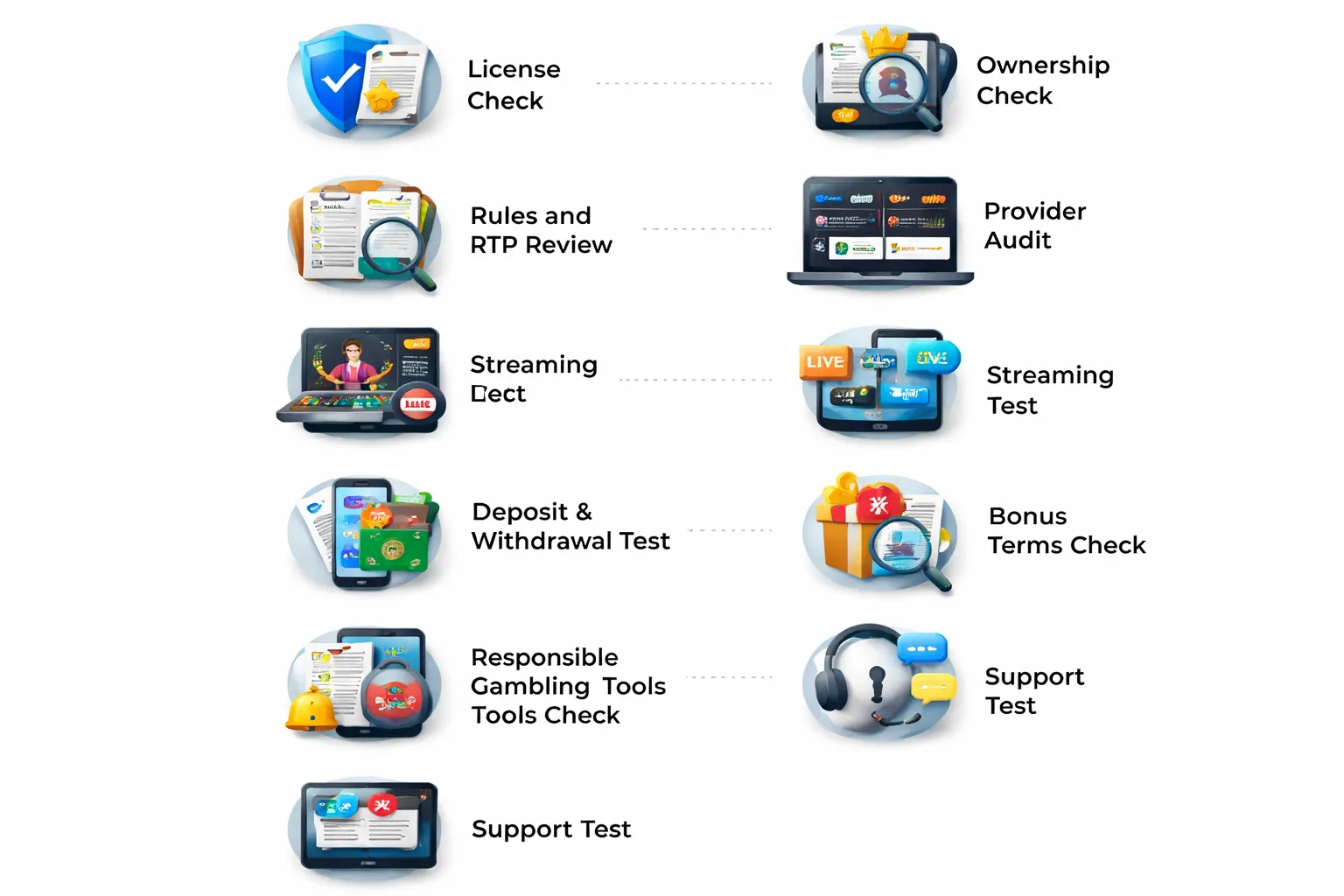
We score each live dealer casino on safety, game value, and real play performance. We use the same checklist for every site. We verify claims with account checks, lobby tests, and cashout trials.
Licensing, Ownership, and Reputation Checks
- License verification: We confirm the operator license on the regulator site, not just the casino footer. We log license number, operator name, and status.
- Company ownership: We check the legal entity behind the brand, corporate address, and any linked brands.
- Reputation signals: We review complaint patterns, payout disputes, and account closure reports. We downgrade sites with repeat issues.
- Security and fairness basics: We look for clear policies, KYC rules, and dispute channels. For deeper red flags, use our guide to spotting a fake online casino.
Game Rules and RTP Considerations for Live Tables
- Blackjack rules: We log dealer stand rules, blackjack payout, double rules, split limits, resplit aces, and surrender. 6:5 tables score lower than 3:2 tables.
- Roulette variants: We separate European, French, American, and side bet versions. American roulette scores lower due to the double zero.
- Baccarat rules: We note commission, no-commission variants, and side bet pricing.
- Side bets: We treat most side bets as high edge. They do not improve a score unless the pricing and rules stay player friendly.
- Transparency: We prefer lobbies that show rules in one click, with clear payouts and limits.
Provider Quality
- Top tier providers: We rate live libraries higher when they use proven studios and stable tables from Evolution, Pragmatic Live, Playtech, Ezugi, Authentic Gaming, OnAir, Stakelogic Live.
- Game depth: We score variety across blackjack, roulette, baccarat, and game shows. We also look for low limit and high limit tables.
- Studio standards: We check dealer professionalism, game pace, camera angles, and table UI clarity.
- Localized tables: We give credit for language tables, local limits, and local payment support when it matches your market.
Streaming Performance
- Resolution options: We test desktop and mobile. We check if you can switch quality without leaving the table.
- Stability: We track freezes, audio drift, desync, and reconnect behavior. A stable stream matters more than ultra high resolution.
- Peak-time capacity: We test busy hours. We check seat availability, bet acceptance speed, and lobby loading times.
- Latency feel: We note if bet timers feel tight due to lag. Slow streams lose points.
Banking and Cashout Testing
- Deposit coverage: We check cards, bank transfer, e-wallets, and crypto where relevant. We flag limited banking menus.
- Cashout speed: We run at least one withdrawal where possible and time each step, request, approval, and delivery.
- Fees and minimums: We record deposit fees, withdrawal fees, limits, and currency conversion costs.
- Reliability: We downgrade sites that delay payouts without clear reasons, or push you into repeated verification loops.
Bonuses for Live Games
- Live contribution rate: We check if live blackjack, roulette, and baccarat count toward wagering, and at what percentage.
- Wagering traps: We flag high playthrough, short expiry windows, low max bet limits, and bonus caps that block cashouts.
- Game exclusions: We confirm if live tables get excluded during bonus play. If the terms punish normal live play, the offer scores low.
- Value after rules: We rank offers by what you can realistically clear, not the headline number.
Responsible Gambling Features
- Limit tools: We look for deposit limits, loss limits, wager limits, and session limits that you can set fast.
- Timeouts: We check cooling-off periods and if the casino enforces them with no loopholes.
- Self-exclusion: We confirm self-exclusion options and duration choices. Strong sites support longer exclusions and clear reinstatement rules.
- Reality checks: We prefer sites that show time and spend prompts during play.
Customer Support Evaluation
- Channel coverage: We test live chat first, then email. Phone support earns points when it works.
- Response time: We time first reply and follow-ups. We test during peak hours.
- Problem resolution: We submit a live casino issue type, stream drop, bet dispute, or missing round result, and judge the accuracy of the fix.
- Quality of answers: We score lower when agents paste generic terms or avoid clear yes or no answers.
- What matters most in our score: licensing and payouts, then game rules, then stream performance and support.
Live Dealer Game Types You Can Play
Live blackjack variants
Live blackjack is the core live table game. The lobby usually splits it by table limits, speed, and local rules. Check these points before you sit down, dealers follow the posted rules.
- Classic Live Blackjack: Standard multi deck blackjack. You will see the key rules in the table info, dealer hits or stands on soft 17, double rules, split limits, and whether surrender exists.
- Infinite Blackjack: One dealer serves many players at once. You play against the same hand, your bet and decisions stay your own. It suits small bankroll play and avoids “table full” messages. Side bets vary by studio.
- VIP Blackjack: Higher limits and fewer seats per table. You usually get slower pace and clearer dealer interaction. Rules can be stronger or weaker than Classic, always check the rule card.
- Localized rules tables: Some tables match regional casinos. You may see differences like dealer stands on soft 17, double after split allowed, re split aces, or no hole card rules. These change your edge, so treat them as a different game.
Live roulette variants
Roulette tables look similar, but the wheel and payout rules change the math. Always confirm the wheel type and the “0” count.
- European Roulette: Single zero wheel. You avoid the extra house edge that comes with a second zero.
- American Roulette: Double zero wheel. Many sites still offer it because players know it from US land based casinos. Your odds drop versus European.
- French Roulette: Single zero with extra rules on even money bets. Look for La Partage or En Prison, these can cut losses on red, black, even, odd, and high, low when the ball lands on zero.
- Lightning style roulette: A live wheel plus random multipliers on selected numbers each round. Standard straight up wins can pay less than classic roulette, with the tradeoff of multiplier payouts. Read the payout table before you bet.
Live baccarat variants
Baccarat streams fast and stays simple. The main choice is pace and extra handling of the cards.
- Punto Banco: The default live baccarat. You bet Player, Banker, or Tie. The casino deals the cards by fixed rules. Banker wins often pay a commission.
- Speed Baccarat: Faster dealing and shorter decision windows. It fits you if you want more rounds per hour, but it also punishes slow clicks and unstable connections.
- Squeeze Baccarat: The dealer reveals cards slowly, sometimes with player interaction. The math stays close to standard baccarat, but the pace drops and the table limits often rise.
Live casino poker
Live poker here means table games, not poker rooms. You play against the dealer under fixed paytables. Your results depend on rules, side bets, and whether the table uses multipliers.
- Casino Hold’em: You get two cards, the dealer gets two, and five community cards follow. You choose to fold or call after the flop. Side bets can swing results hard, so check their payouts.
- Three Card Poker: Fast and simple. You can play Ante and Play, plus Pair Plus. Table paytables vary, so compare them if you play often.
- Ultimate Texas Hold’em: You can bet at multiple points, pre flop, flop, and river. It rewards timing, but it also creates bigger swings because you can place large raises.
Game shows
Game shows run on live presenters plus RNG driven bonuses. Treat them like low skill entertainment games. Your main control is bet size and volatility.
- Dream Catcher: A live money wheel with fixed segments. It is easy to follow and suits small stakes sessions.
- Crazy Time style wheels: A wheel game with bonus rounds and large multipliers. Rules differ by provider, but the pattern stays the same, base wheel first, then bonus features.
- Unique formats: Live studios also run dice games, racing style boards, and multiplier pick games. Always open the info panel and confirm max multiplier rules and bonus entry conditions.
Regional favorites
Many live lobbies add Asia focused and region specific tables. These games often run at a faster pace and use simpler decisions.
- Sic bo: Three dice with many bet types. You can keep it simple with small, big, or specific totals, or chase higher payouts with triples and combos.
- Dragon Tiger: Two hands, you pick which side wins or bet Tie. It is one of the simplest live table games and plays quickly.
- Localized tables: Expect local language dealers, local limits, and table side bets tailored to the region. Rules can differ from the “international” version, so read the table rules before you commit.
Choosing the Right Live Dealer Casino for Your Play Style
Low-stakes vs high-stakes, find the right table limits
Start with limits. They decide your session length, your variance, and how much one bad run costs.
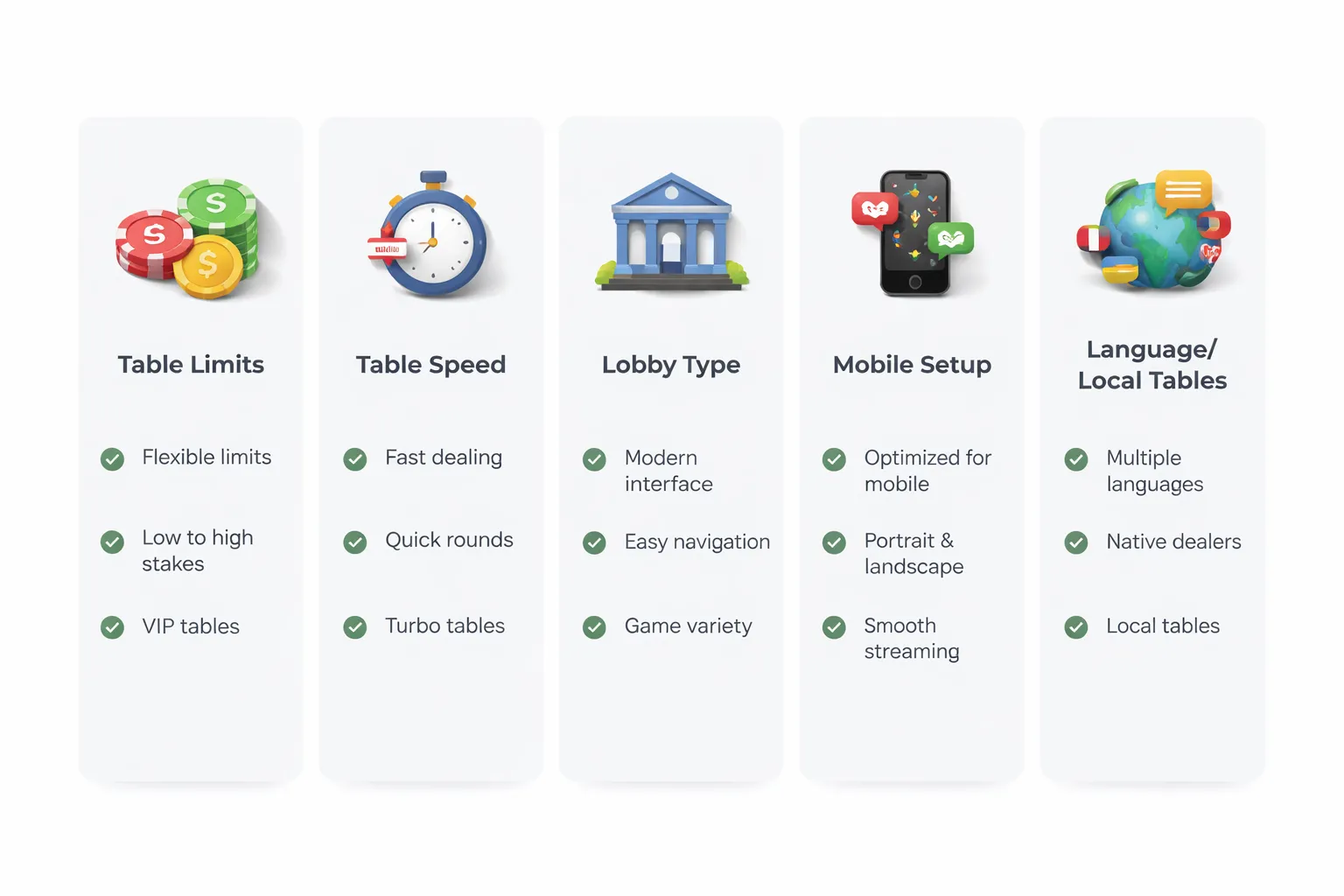
- Low-stakes goals: pick tables with low minimums, low side bet minimums, and flexible bet sizing. Avoid tables where side bets force higher stakes.
- High-stakes goals: check the maximum bet, max payout, and any max win cap per hand or per round. Verify VIP tables run 24/7 if you play late hours.
- Bankroll fit: plan for swings. If your typical bet uses more than 1 to 2 percent of your session bankroll, you will feel volatility fast.
- Rule fit: limits do not matter if the rules hurt you. Read the table rules panel before you sit.
| What to check | Why it matters | Best for |
|---|---|---|
| Min and max bet | Controls risk per round | All players |
| Side bet minimums | Can raise your real cost per round | Low-stakes players |
| Max payout or max win cap | Limits upside on big hands or bonus rounds | High-stakes players |
| Table rules panel | Changes edge and strategy | Strategy players |
Fast-paced vs relaxed tables, speed modes and dealer rotation
Game speed changes your results. Faster rounds mean more hands per hour, higher turnover, and faster bankroll movement.
- Speed tables: you get short betting windows. You need fast decisions and stable internet. These tables fit low chat use and repeat play.
- Relaxed tables: you get longer decision time and more table talk. These tables fit new players and anyone who uses side bets and promotions.
- Dealer rotation: casinos rotate dealers by schedule. Rotation affects pace and chat tone. If you want consistency, stick to branded tables with set shifts.
- Auto-play tools: some games offer repeat bet, undo, and auto rebet. Use them if you want speed, avoid them if you tilt.
Single-game specialists vs all-in-one lobbies
Choose a casino that matches how you search and how you switch games.
- Specialists: best if you play one core game, like blackjack or roulette, and you care about table variants, limits, and side bets. You get deeper filters and more table choice.
- All-in-one lobbies: best if you switch between blackjack, roulette, baccarat, and game shows. You save time and keep one wallet.
- What to check in the lobby: filters for limits, language, number of seats, and game variant. Also check table history and recent results display if you use it for tracking.
If you need simpler navigation and support, use a beginner-focused site and setup. See our guide to easy sign-up casinos for beginners.
Mobile-first selection, apps, browsers, and data usage
Live dealer streams demand stable bandwidth. Your phone setup decides video quality, lag, and disconnect risk.
- App vs browser: apps can feel smoother on older phones. Browsers update faster and avoid forced downloads. Test both on your device.
- Data use: live video can burn through mobile data fast. Use Wi-Fi when possible. If you must use cellular, lower stream quality in the player settings.
- Battery and heat: video plus chat drains battery. Use low brightness and close background apps during long sessions.
- Controls: check chip selection, rebet buttons, and chat access on small screens. Poor UI leads to misclicks and late bets.
Language, local tables, and dealer interaction preferences
Language and table culture affect comfort and speed. Localized tables also change rules and side bets.
- Dealer language: pick a language you understand for game calls, confirmations, and dispute handling.
- Local rules: localized roulette and blackjack tables can use different limits, payout rules, and side bets. Read the rules card every time you change tables.
- Chat level: if you want quiet play, choose tables with minimal chat and faster timers. If you want interaction, pick slower tables and dealers who engage.
- Seat style: some blackjack tables have limited seats, some offer unlimited seats. Limited seats feel more social, unlimited seats reduce waiting.
Bonuses and Promotions for Live Dealer Casinos (What to Look For)
Why many bonuses exclude live tables (and what still qualifies)
Live dealer games cost casinos more to run. Studios, dealers, and streaming add real overhead. Live tables also carry lower house edges than many slots. Casinos protect bonus budgets by limiting or excluding live wagering.
What can still qualify depends on the site. Common patterns:
- Slots-only welcome bonus: Live blackjack and roulette count as 0% contribution, or they are blocked while a bonus is active.
- Mixed bonus with reduced credit: Live games count, but at a low rate like 5% to 20% toward wagering.
- Live-specific promos: Some sites run live table leaderboards, lossback, or reloads that apply to live play.
Before you deposit, check the promo terms for eligible games, game contribution, and whether live tables are restricted during wagering.
Wagering requirements explained with a real example
Wagering, also called playthrough, is the amount you must bet before you can withdraw bonus funds. You must look at two numbers, the wagering multiple and the game contribution.
- Deposit: $100
- Bonus: 100% match, $100
- Wagering: 35x bonus
- Required betting: $100 x 35 = $3,500
Now add live contribution. If live blackjack contributes 10%, you must wager ten times more on live tables to clear the same requirement.
- If you play slots (100% contribution): $3,500 in bets clears the bonus.
- If you play live blackjack (10% contribution): $3,500 / 0.10 = $35,000 in bets to clear the bonus.
This is why a big match bonus can be a bad fit for live play. You want either a live-eligible bonus with a high contribution rate, or a promo that pays without heavy playthrough.
Live cashback, reloads, and VIP rewards that actually help
Live players get more value from rewards tied to net losses, total rake, or weekly activity. These offers stay useful even when live tables do not count much toward wagering.
- Cashback or lossback: A percent back on net losses over a day or week. Check if it applies to live tables and if it pays as cash or as a bonus with playthrough.
- Reload bonuses: Smaller deposit matches that you can time for planned sessions. Look for low wagering and clear live eligibility.
- VIP points for live bets: Best case is full points on live stakes. Avoid programs that award points on deposits only.
- Rakeback style rewards: If the site counts live wagers toward a weekly return, you get steady value without chasing a welcome bonus.
If you play higher stakes, compare VIP and comp value across sites. Use a dedicated high roller guide when you need bigger limits and faster support, see VIP perks for high rollers.
Free spins vs live perks: which offers fit live players
Free spins help slot play. They rarely help live blackjack or roulette. Treat free spins as separate value, not as a live bonus.
- If you mainly play live tables: Prioritize cashback, live leaderboards, reduced house edge promos, and reloads that include live games.
- If you mix slots and live: A slots-focused welcome bonus plus a weekly cashback offer can work, but only if live play does not trap your bonus behind low contribution.
- If you want low risk: Pick no-deposit live offers, bonus-free deposits, or promos with low wagering and no game restrictions.
Red-flag terms: max cashout caps, game contribution, and time limits
- Max cashout caps: Some bonuses cap withdrawals, like 5x or 10x the bonus. A $100 bonus with a 5x cap limits you to $500 from that promo, even if you win more.
- Game contribution at 0%: Live blackjack, roulette, and baccarat often sit at 0% to 10%. If live is 0%, your live bets do nothing to clear wagering.
- Short time limits: 24 to 72 hours to clear wagering forces high volume play. That pushes mistakes and larger bankroll swings.
- Max bet rules: Many promos set a maximum stake per hand or spin while a bonus is active. If you exceed it, the casino can void winnings.
- Restricted tables: Some terms exclude specific live tables, side bets, or high limit rooms. Check the live lobby list in the promo terms.
- Withdrawal locks: Some sites cancel the bonus and related winnings if you request a withdrawal before completing wagering.
Read the promo terms before you opt in. If the site makes live eligibility hard to find, treat the offer as slots-first.
Payments, Withdrawals, and Payout Speed
Common deposit methods
Most live dealer casinos support four core rails. Your options depend on your country, bank, and the site’s licensing.
- Cards (Visa, Mastercard). Fast deposits. Withdrawals often route to bank transfer or another method. Some banks block gambling charges.
- E-wallets (PayPal, Skrill, Neteller). Fast deposits and fast withdrawals when the casino supports payouts to the same wallet.
- Bank transfer. Higher limits. Slower processing. Best for large, planned deposits and cashouts.
- Crypto (BTC, ETH, LTC, USDT). Fast deposits. Withdrawals can be quick, but you still face KYC and risk checks. Network fees and confirmation times apply.
Fast withdrawal options and typical payout speed
Speed comes down to two steps. The casino approves the withdrawal, then the payment method settles it.
- Fastest in practice. E-wallets and crypto, once your account is verified.
- Middle. Cards, because many casinos do not pay out to cards, or they split payouts across rails.
- Slowest. Bank transfers, especially for cross-border payouts.
| Method | Casino approval | After approval | What usually slows it down |
|---|---|---|---|
| E-wallets | Same day to 48 hours | Minutes to 24 hours | First-time KYC, name mismatch, wallet not supported for withdrawals |
| Crypto | Same day to 48 hours | Minutes to a few hours | Chain confirmations, wrong network, compliance checks |
| Cards | 1 to 3 days | 1 to 7 days | Issuer processing, withdrawal routed to bank instead |
| Bank transfer | 1 to 5 days | 2 to 10 days | Intermediary banks, weekend cutoffs, extra documentation |
Ignore marketing claims like “instant” unless the casino lists average approval times and publishes clear cutoff hours.
Fees, minimums, and verification
Expect these friction points. Check them before you deposit.
- Deposit fees. Usually free on cards and e-wallets. Crypto deposits can still incur network fees.
- Withdrawal fees. Some casinos charge per cashout or after a monthly free limit. Banks can also deduct incoming wire fees.
- Minimum withdrawals. Common thresholds range from small wallet cashouts to higher bank transfer minimums. High minimums trap small balances.
- Maximum per transaction. Casinos often cap each cashout. Large wins may require multiple withdrawals.
- Turnover rules. Many sites require you to wager a portion of your deposit before you can withdraw, even without a bonus. This targets fraud and chargebacks.
KYC and source-of-funds checks
KYC drives payout speed. Do it early, not after a big win.
- Finish KYC before you play. Upload ID and proof of address as soon as you open the account.
- Match your details. Your casino name, banking name, and wallet name should match. Mismatches trigger manual review.
- Use one payment method. Switching methods midstream increases fraud checks and can force extra paperwork.
- Keep your deposit trail. For source-of-funds reviews, casinos may ask for payslips, bank statements, or crypto exchange receipts. Have them ready for larger cashouts.
- Avoid risky patterns. Repeated chargebacks, third-party payments, and rapid deposit and withdrawal cycles cause delays and limits.
Security basics
Payments run smoother when the casino treats security as a default, not a feature.
- Encryption. Look for HTTPS across cashier and account pages.
- Fraud prevention. Expect card verification steps, withdrawal address checks, and device monitoring.
- Account protection. Use a unique password. Turn on two-factor authentication if offered. Do not share devices or payment accounts.
- Support quality. A good cashier team resolves rejected withdrawals fast and explains which document they need and why. Vague replies usually mean delays.
For deeper checks, use our guide on how to choose a safe online casino.
Safety, Fairness, and Legality: Can You Trust Live Dealer Casinos?
Regulators and licenses, what they mean and how to verify
A live dealer casino earns trust through its license. A real license sets rules for player funds, game testing, anti-money laundering checks, and complaint handling. It also gives you a regulator you can contact if the casino refuses to resolve a dispute.
Verify a license before you deposit. Use these checks.
- Find the license details on the casino footer and in the Terms. You want the legal company name, license number, and regulator.
- Open the regulator register and search the license number or company name. Do not trust a badge image alone.
- Match the domain listed on the regulator page to the site you use. Some groups run multiple brands.
- Check status for “active” and note any public sanctions.
- Confirm the jurisdiction allows your location. A valid license in one region does not always cover your country or state.
Common regulated markets include Malta, Gibraltar, Isle of Man, Alderney, the UK, and state regulators in the US. License strength varies, so treat verification as a minimum step, not a guarantee.
Game integrity, how live tables are monitored and audited
Live dealer games run on two layers of control, the studio and the platform.
- Studio controls include multi-angle cameras, table microphones, and continuous recording. Supervisors watch tables in real time and review flagged hands.
- Platform controls include time-stamped game logs, bet acceptance rules, and event tracking. The system records cards dealt, roulette outcomes, and your bets.
Reputable operators add independent oversight. They use accredited test labs to audit game procedures and technical systems. You should see the testing lab named in the footer or in the compliance page. If the casino hides who tests its games, treat that as a risk.
Dealer training, shuffling procedures, and wheel checks
Dealer skill affects fairness. Good studios train dealers on dealing pace, hand exposure rules, and error calls. They also train them to follow the exact sequence for each game variant.
- Blackjack dealing rules stay fixed. The dealer must follow house rules for hit, stand, and peek procedures. The system blocks late bets.
- Shuffling uses either manual shuffles with strict cut rules or a continuous shuffling machine, depending on the table. The studio logs shoe changes.
- Roulette wheel checks look for bias and mechanical issues. Studios track results and inspect wheels and ball sets on schedule. They also replace parts and recalibrate when needed.
Expect occasional pauses. A pause often means a supervisor call, a shoe change, or a wheel inspection. That is normal when the studio follows controls.
Geolocation and jurisdiction restrictions
Legality depends on where you sit when you play. Casinos enforce location rules using geolocation tools. If you travel, your access can change the same day.
- US players face state-by-state rules. Legal online casino play usually requires you to be physically inside an approved state. Many regulated apps require location services and may use Wi-Fi and cell data checks.
- Outside regulated states you may only see offshore casinos or social and sweepstakes sites. These models run under different rules than regulated real-money casinos.
- VPN use can trigger blocks, account reviews, and payout delays. Casinos treat it as a location risk and a fraud signal.
- Payment limits can act as a soft restriction. Some banks block gambling transactions based on your region.
Read the site’s restricted countries and states list before you deposit. If you ignore it, you can lose access to withdrawals during verification.
Problem gambling safeguards, tools and external support resources
Trust includes player protection. Strong live dealer casinos give you tools you can set yourself.
- Deposit limits to cap spending per day, week, or month.
- Loss limits to cap total net loss in a period.
- Wager limits to cap total stakes.
- Session limits and reality checks that show time and spend.
- Cooling-off for short breaks.
- Self-exclusion for longer blocks. In regulated markets, you may also use a central program that blocks multiple operators.
If you need outside help, use established support services. In the US, contact the National Council on Problem Gambling at 1-800-522-4700. In the UK, use GAMSTOP for self-exclusion and GamCare for support. In many regions, you can also ask your bank for gambling transaction blocks.
If you want a deeper checklist for security and red flags, use our safe online casino guide.
How to Start Playing at a Live Dealer Casino (Step-by-Step)

1) Create an account and lock it down with 2FA
- Choose one casino, then open the sign-up form.
- Use your real name, date of birth, and address. Your withdrawal depends on a match later.
- Set a strong password. Use 12 plus characters, and do not reuse it.
- Turn on two-factor authentication (2FA) in account settings. Use an authenticator app when available.
- Confirm your email and phone. Many live casinos block deposits or withdrawals until you verify them.
2) Deposit funds and pick a table limit you can control
- Open the cashier, choose a payment method, then deposit.
- Start with a low table. Many live tables run $1 to $5 minimums, premium tables can start at $25 to $100 plus.
- Keep your bet size tied to your bankroll. If you play $10 per hand, plan for swings and avoid going all-in fast.
- Check the table limit range before you sit. The UI shows minimum and maximum bets, side bet limits, and max payout caps when they apply.
- If you need help choosing wheel types and limits, use our roulette casino guide.
3) Read the table rules before you place a bet
- Blackjack payouts: Look for 3:2 on a natural blackjack. Many lower-limit or fast tables pay 6:5, which raises the house edge.
- Blackjack rules: Check dealer stands or hits on soft 17, double rules, split limits, and whether surrender exists.
- Roulette wheel type: Prefer European roulette with 1 zero. American roulette adds 00 and increases the house edge.
- Roulette bet rules: Confirm minimums for inside and outside bets, and whether the table uses racetrack or neighbor bets.
- Baccarat commission: Banker bets often charge 5% commission. Some tables use no-commission rules and pay Banker 1:2 on a 6, which changes the math.
- Side bets: Read paytables. Side bets usually carry a higher house edge than the main bet.
4) Join the live table, place bets, use chat, and manage the bet timer
- Pick a table, then wait for an open seat if the game uses seats. Some games let you bet without a seat.
- Confirm the table minimum and maximum again after you enter. Limits can differ by studio and language table.
- Place your chips during the betting window. Live games run on a timer, once it closes you cannot change bets.
- Use chat for simple messages. Keep it polite, avoid spamming, and do not post personal or payment details.
- Track the bet timer each round. If your connection lags, lower video quality in settings to reduce delays.
- Use responsible tools. Set deposit limits, loss limits, or session timers in your account if your casino offers them.
5) Withdraw winnings, submit documents, and plan for timelines
- Go to the cashier, choose withdraw, then pick a method. Some casinos require you to withdraw back to the same method you used to deposit.
- Complete KYC if you have not done it yet. Most casinos ask for:
-
- Government ID, front and back.
- Proof of address, like a utility bill or bank statement, usually dated within 90 days.
- Payment proof, like a card photo with middle digits covered, or an e-wallet screenshot showing your name and email.
- Expect a review period. Many operators process withdrawals in 24 to 72 hours, then your bank or payment provider adds transfer time.
- Keep your details consistent. Name, address, and payment account must match your casino profile.
- If a withdrawal stalls, contact support and ask for the exact missing document or rule that blocks it.
Strategy Basics and Tips for Live Table Games
Bankroll management for live tables, session caps and stop-loss rules
Live tables move fast, and side bets drain bankrolls. Set rules before you sit down.
- Set a session bankroll. Use money you can lose, separate from your main funds.
- Use a hard stop-loss. Common caps: 20% to 40% of your session bankroll. When you hit it, you leave.
- Set a win cap. Common caps: 20% to 50%. When you hit it, you cash out or switch to lower stakes.
- Size your bets. For higher-variance games like roulette, keep flat bets around 1% to 2% of your session bankroll per spin. For blackjack, 1% to 3% works for many players.
- Respect table limits. Your strategy fails if the minimum forces you to risk too much per hand.
- Avoid side bets by default. Many carry high house edges. Treat them as entertainment, not value.
Blackjack essentials, basic strategy and rule differences that matter
Blackjack gives you the most control, but rules decide your expected value. Learn basic strategy for the exact rules at your table, then play it the same way every hand.
- Follow basic strategy. It cuts the house edge to a low level, often around 0.5% or lower under solid rules. Guessing pushes it much higher.
- Know the dealer stand rule. Dealer stands on soft 17, often written S17, helps you. Dealer hits soft 17, H17, hurts you.
- Check blackjack payout. 3:2 is standard. 6:5 is a major downgrade.
- Look at decks and penetration. Fewer decks usually help. Many live games use 6 to 8 decks.
- Confirm doubling rules. Double on any two cards is better than limited doubling. Doubling after split helps you.
- Use correct insurance logic. Insurance is usually a losing bet unless you count cards well enough to justify it, which most live online players do not.
If you play live blackjack often, save or print a basic strategy chart for the exact rules. Most mistakes come from playing “memory blackjack” instead of table-specific strategy.
Roulette essentials, odds by bet type and why systems don’t change house edge
Roulette has fixed math. Your bet choice changes variance, not the long-term house edge.
| Bet type | Payout | Hit rate (European) | Hit rate (American) |
|---|---|---|---|
| Single number | 35:1 | 1/37, 2.70% | 1/38, 2.63% |
| Red or Black | 1:1 | 18/37, 48.65% | 18/38, 47.37% |
| Dozen | 2:1 | 12/37, 32.43% | 12/38, 31.58% |
| Column | 2:1 | 12/37, 32.43% | 12/38, 31.58% |
- Pick European roulette when you can. It has one zero. House edge is 2.70% versus 5.26% on American.
- Understand what “systems” do. Martingale, Fibonacci, and similar progressions only change bet size. They do not change the wheel odds or the house edge.
- Plan for streaks. Progression systems hit table limits and bankroll limits fast. A long losing run can wipe you out before the “recovery” arrives.
- Use outside bets to control swings. You will lose slower, but you still lose in expectation.
Baccarat essentials, banker vs player odds and commission realities
Baccarat is simple. The key decision is usually Banker versus Player.
- Banker is the best main bet in most games. Typical house edge sits around 1.06% with a 5% commission.
- Player usually costs more. Typical house edge sits around 1.24%.
- Avoid Tie bets. Tie has a much higher house edge in most rule sets, often around 14% or more.
- Watch commission and side rules. Some tables replace commission with different payouts on Banker wins, like “Banker pays 1:2 on 6”. This can raise the house edge. Read the table info.
- Ignore bead roads for prediction. Past results do not change the next hand outcome. Use roads for tracking, not forecasting.
Common mistakes, chasing losses, tilting, and ignoring table limits
- Chasing losses. You increase stakes to get even. You raise risk and shorten your runway. Use your stop-loss.
- Tilting. You play faster, ignore strategy, and take bad side bets. Take a break when you feel pressure.
- Ignoring table limits. A low bankroll at a high-min table forces oversized bets. Find a table where you can bet small enough to last.
- Changing strategy mid-session. Switching systems after a bad run creates random decision-making. Stick to one plan.
- Playing unclear rules. If you cannot find the rules, limits, and payouts, leave the table. Use the same caution you use when you choose a safe online casino.
Pros and Cons of Live Dealer Casinos
Advantages vs RNG casino games
Live dealer games use real cards, wheels, and game equipment. You see each step on video. This makes outcomes easier to verify than RNG-only games, where you rely on the casino and the lab reports.
You also get fewer “black box” moments. You can watch shuffles, spins, and dealing. You can review game history inside most live interfaces, which helps you spot rule changes and table settings fast.
Immersion is the other edge. You play with a real dealer and other players. You get table chat, social pacing, and a casino-like flow that RNG tables do not replicate.
Potential downsides
- Higher minimums. Live tables often start higher than RNG versions. This matters most in blackjack and roulette, where you may see a low-limit RNG table but a higher live minimum for the same game.
- Slower pace. Live rounds take longer. That cuts your hands or spins per hour. If you chase volume for comps, wagering requirements, or practice reps, RNG can move faster.
- Peak-time queues. Popular tables fill up. At busy hours you may wait for a seat, get placed in a queue, or land on a higher-min table because the low-min tables are full.
Who live dealer casinos are best for (and who should stick to RNG)
Live dealer games fit you if you value transparency, table feel, and steady pacing. They also fit you if you want to slow down and avoid rapid-fire betting.
Stick to RNG if you need the lowest limits, you want the fastest play, or you multi-table for volume. RNG also works better if you play from unstable internet, or if you dislike queues and seating limits.
Before you commit bankroll, confirm rules, limits, and payouts, and use the same checks you use when you choose a safe online casino.
Connectivity considerations
Your connection affects live play more than RNG. Video streaming adds load. If your stream stutters, you can miss decision windows and get auto-actions you did not want.
- Speed. You need enough download bandwidth for stable video, and enough upload for commands. You do not need extreme speeds, but you need consistency.
- Latency. High ping causes delayed inputs. This matters when you must act before the timer ends.
- Stability. Packet loss and Wi-Fi drops create the worst issues. Use a strong Wi-Fi signal or wired Ethernet when possible.
- Device load. Older phones and laptops can overheat or lag during HD streams. Close background apps and lower stream quality if the interface slows.
FAQ
What is a live dealer casino?
A live dealer casino streams real tables from a studio or casino floor. You place bets in the interface. A real dealer runs the game and a camera shows every move. Results come from the physical cards or wheel, not an RNG.
Is live blackjack fair?
Yes, if you pick a licensed casino using major live studios. The shoe, shuffle, and dealing happen on camera. Game history logs each hand. Avoid unlicensed sites. If a stream cuts often or rules change mid-session, leave.
What internet speed do you need for live games?
Plan for at least 5 Mbps download for HD, 2 Mbps for SD. Latency matters more than raw speed. Keep ping under 80 ms if possible. Use wired Ethernet or strong 5 GHz Wi-Fi. Close downloads and background streams.
How do you avoid lag and disconnects?
Use Ethernet when you can. Restart your router if the stream buffers. Switch to lower video quality. Turn off VPNs unless the casino requires one. Keep your device cool and plug in power. If mobile data fluctuates, move closer to a window.
Can you play live dealer games on mobile?
Yes. Most casinos support iOS and Android in a browser or app. Use a newer device for stable HD video. Disable battery saver so the stream does not throttle. Keep enough free storage and memory to prevent freezes.
What are typical table limits for live blackjack and roulette?
Limits vary by casino and studio. Many live tables start at $5 to $10 per hand or spin. VIP tables can run $500 to $5,000+. Always check the table card for min, max, and side bet limits before you sit.
What games can you expect besides blackjack and roulette?
You will usually find baccarat, casino poker variants, and game shows. Common options include Lightning Roulette, Crazy Time, Monopoly Live, and live poker tables where available. Game availability depends on your location and the casino’s provider lineup.
How do live dealer payouts compare to RNG table games?
Payouts follow the table rules. Some live tables use less favorable rules, like 6:5 blackjack or roulette side bets with high house edge. Read the rules panel before betting. Choose 3:2 blackjack and European roulette when possible.
Are tips required for live dealers?
No. Tips are optional. Some casinos let you tip with a chip button or a separate option. Tip only if you want to. Do not chase losses by tipping. Set a session budget and keep tips inside it.
How do you spot a safe live dealer casino?
Check for a valid gambling license, clear terms, and known live studios. Look for HTTPS, fast support, and transparent withdrawal rules. Avoid sites with unclear ownership or aggressive bonuses. Use this guide on how to spot a fake online casino.
Conclusion
Conclusion
Live dealer games give you real cards, real wheels, and real pace. Your edge comes from picking the right casino, the right tables, and the right limits.
- Start with safety. Play only at licensed sites with clear ownership, HTTPS, and defined withdrawal rules.
- Control the cost. Set a session budget, use table limits that fit it, and stop when you hit your loss cap.
- Protect your EV. Pick blackjack rules with low house edge, avoid side bets, and keep tips inside your budget.
- Plan payouts. Before you deposit, check fees, KYC steps, and cashout timeframes. Use a fast method you trust. See our fast payout online casinos guide if speed is your priority.
Final tip. Choose one live table, play a fixed stake, and quit on schedule. You will make fewer mistakes and keep your bankroll intact.
-
Fast Payout Online Casinos: Best Sites for Quick Withdrawals
8 months ago -
How to Spot a Fake Online Casino (and Avoid Online Casino Scams)
8 months ago -
Best Online Casinos for Blackjack: Best Tables, Rules & Bonuses
8 months ago -
Best Online Casinos (2026): Top-Rated, Safe & Trusted Picks
8 months ago -
Best PayPal Online Casinos: Top Sites That Accept PayPal Deposits & Withdrawals
8 months ago
-
- Bankroll management for live tables, session caps and stop-loss rules
- Blackjack essentials, basic strategy and rule differences that matter
- Roulette essentials, odds by bet type and why systems don’t change house edge
- Baccarat essentials, banker vs player odds and commission realities
- Common mistakes, chasing losses, tilting, and ignoring table limits
-
- What is a live dealer casino?
- Is live blackjack fair?
- What internet speed do you need for live games?
- How do you avoid lag and disconnects?
- Can you play live dealer games on mobile?
- What are typical table limits for live blackjack and roulette?
- What games can you expect besides blackjack and roulette?
- How do live dealer payouts compare to RNG table games?
- Are tips required for live dealers?
- How do you spot a safe live dealer casino?
-
- Bankroll management for live tables, session caps and stop-loss rules
- Blackjack essentials, basic strategy and rule differences that matter
- Roulette essentials, odds by bet type and why systems don’t change house edge
- Baccarat essentials, banker vs player odds and commission realities
- Common mistakes, chasing losses, tilting, and ignoring table limits
-
- What is a live dealer casino?
- Is live blackjack fair?
- What internet speed do you need for live games?
- How do you avoid lag and disconnects?
- Can you play live dealer games on mobile?
- What are typical table limits for live blackjack and roulette?
- What games can you expect besides blackjack and roulette?
- How do live dealer payouts compare to RNG table games?
- Are tips required for live dealers?
- How do you spot a safe live dealer casino?
-
Reload Bonus Explained: What It Is and When It’s Worth Claiming
6 months ago -
Online Casino Licensing Explained: Authorities, Licenses & How to Check One
8 months ago -
Best Online Casinos for High Rollers: VIP Perks, High Limits & Exclusive Bonuses
8 months ago -
Fast Payout Online Casinos: Best Sites for Quick Withdrawals
8 months ago -
Welcome Bonus vs No Deposit Bonus: Key Differences, Pros & Cons
8 months ago
-
Online Casino Customer Support: What to Look For (Live Chat, Email, Response Times)
8 months ago -
Sign Up for an Online Casino: Create an Account in Minutes
8 months ago -
Online Casino Payment Safety Tips: How to Deposit and Withdraw Securely
8 months ago -
What to Do If an Online Casino Won’t Pay Out: Step-by-Step Actions
8 months ago -
How to File a Complaint Against an Online Casino (Plus ADR Explained)
8 months ago