Online Casino Payment Safety Tips: How to Deposit and Withdraw Securely
Online casino payments fail for simple reasons, weak account security, unverified details, risky payment choices, and careless device habits. Fix those and you cut the odds of chargebacks, blocked deposits, and delayed cashouts.
This guide covers the steps you control. You will learn how to pick safer payment methods, secure your account, spot warning signs of fraud, and keep clean records for support and disputes. You will also learn how to avoid common withdrawal blocks linked to mismatched names, bonus terms, and verification rules, see why casino withdrawals get rejected.
Use these tips before you deposit, and again before you request a withdrawal. Small checks prevent most payment problems.
Key Takeaways
- In het kort: Use licensed casinos, HTTPS sites, and tested payment methods.
- In het kort: Match your name, bank details, and casino profile, or withdrawals can fail.
- In het kort: Verify your identity early, keep your documents ready, and avoid last minute KYC delays.
- In het kort: Read bonus terms before you deposit, wagering rules often block withdrawals.
- In het kort: Protect your account with a strong password and 2FA, stop fraud before it starts.
- In het kort: Track every deposit and withdrawal, save emails, screenshots, and transaction IDs.
- In het kort: Watch for red flags, sudden verification demands, changing terms, and support that dodges clear answers.
- In het kort: Use one method per cashier flow when possible, mixed methods can trigger extra checks.
Pick one primary payment method. Use it for both deposits and withdrawals when the casino allows it. This reduces checks and rejection risk.
Complete KYC before you request a payout. Use identity verification steps that match the casino rules. Submit clear scans, current proof of address, and the same personal details you used at signup.
Keep your risk low with simple controls. Set spending limits, avoid public Wi-Fi for payments, and never share login codes. If a payment issue hits, your records speed up support and disputes.
Understand the real risks behind online casino payments
Common threats you face during deposits and withdrawals
- Phishing: Scammers copy casino emails, SMS, and live chat. They push you to “verify” details, then steal your login or payment data.
- Account takeover: Attackers use leaked passwords, SIM swaps, and stolen email access. They change your withdrawal method or cash out to their wallet.
- Payment interception: You connect on unsafe networks or infected devices. Malware reads your clipboard, swaps wallet addresses, or captures card details.
- Fake cashier pages: You land on a cloned deposit screen. You enter card or e-wallet credentials on the wrong site.
Where players get exposed
- Bonuses: Fake “free spins” links lead to copycat logins. Bonus terms also drive rushed deposits, which increases mistakes.
- VIP managers: Impersonators use WhatsApp or Telegram. They ask you to “use this private payment link” or “send a screenshot of your card.”
- Social media promos: Scam ads and fake pages mimic brands. They send you to lookalike domains with a cloned cashier.
- Third-party apps: Unofficial APKs and browser extensions can inject overlays, steal session cookies, or replace payment destinations.
Financial risk vs. identity risk
Card safety matters, but your identity data can cause longer damage. KYC files include your full name, address, date of birth, and ID numbers. Criminals use them for account fraud, loan attempts, and SIM swaps. They can also use them to bypass casino checks and take over your gambling accounts.
Protect KYC data the same way you protect money. Send documents only through the casino account portal. Avoid email attachments and chat uploads unless support gives you a secure, logged method. Learn the key steps in online casino KYC requirements so you do not share extra data.
Red flags that a cashier is unsafe
- Odd redirects: The cashier jumps through multiple domains, short links, or a different brand name before payment.
- Mismatched currencies: You play in one currency, but the cashier forces another without clear rates and fees.
- Urgent pop-ups: Timers and warnings push you to “deposit now” or “confirm now” to avoid closure.
- Requests for sensitive extras: The page asks for your full card PIN, full bank login, or codes sent by SMS.
- Broken trust signals: No HTTPS lock, certificate warnings, or a payment window that looks different each time.
- Unusual payment routing: The merchant name does not match the casino, or the transaction looks like a random retail purchase.
Pick a trustworthy casino before you ever deposit
Licensing and regulation checks
Start with the license. A real license gives you a regulator, rules, and a place to escalate a dispute.
- Find the license details. Look in the site footer and the Terms and Conditions. You should see the operator name, license number, and the licensing authority.
- Match the legal entity. The company name on the license should match the company name in the casino terms and on your payment descriptor. Mismatches raise risk.
- Verify on the regulator site. Use the regulator’s license search and confirm status, domain, and operator. Do not trust a logo or badge alone.
- Check allowed markets. Some licenses restrict where the casino can serve. If your country is excluded, withdrawals often become harder.
Reputation signals that matter
Reputation shows up in payment outcomes, not marketing.
- Payout complaints. Search the casino name plus “withdrawal” and “pending” and “closed account”. Look for patterns like repeated delays, requests for new documents after approval, and sudden term enforcement at cashout.
- Audit seals and test certificates. Treat seals as weak proof until you click through to a live certificate page that lists the casino domain. Screenshots mean nothing.
- Operator track record. Prefer operators with years of history under the same legal entity. Frequent rebrands and domain changes correlate with support and payout issues.
If you want a baseline for normal timelines, read our guide to online casino payout times before you deposit.
Read payment terms before you fund your account
Payment terms tell you how the casino treats your money. Read them before you deposit, not at withdrawal.
- Minimum deposit and minimum withdrawal. Check both. A low deposit minimum can hide a high withdrawal minimum.
- Fees and fee shifting. Look for “processing fees”, “bank fees”, “intermediary fees”, and “FX conversion”. Some casinos pass all costs to you.
- Withdrawal limits. Check per transaction, per day, per week, and per month. A low monthly cap can trap large wins for months.
- Method restrictions. Many casinos require you to withdraw to the same method you used to deposit, up to the deposit amount. Extra funds may go to bank transfer only.
- Bonus wagering impact. Confirm whether active bonuses block withdrawals, whether you can cancel a bonus, and what happens to winnings if you cancel.
Understand KYC and AML rules to avoid delays and document abuse
Verification protects the casino from fraud, but vague KYC also enables stalling. Know what you will need and when.
- Standard documents. Government ID, proof of address, and payment method proof. For cards, expect masked images that show last 4 digits. For e-wallets, expect account screenshots that show name and email.
- Source of funds checks. Larger withdrawals often trigger bank statements or payslips. A serious casino states thresholds and gives a clear checklist.
- One-account rules. The account name must match your documents and your payment method holder name. Mismatches can freeze withdrawals.
- Safe sharing. Upload only through your logged-in account over HTTPS. Never send full card numbers, PINs, full bank logins, or SMS codes.
- Data handling. Look for retention timelines and who processes documents. If terms say they can keep documents indefinitely without reason, treat it as a risk.
Spot predatory policies before they cost you
Bad casinos use terms to take your balance or block cashouts. Scan for these clauses.
- Confiscation and “void winnings” language. Watch for broad rights to seize funds for “irregular play”, “abuse”, or “at our discretion” without clear definitions and evidence standards.
- Vague verification triggers. Avoid terms that let them request “any documents at any time” with no limits, no timeframe, and no appeal path.
- Unfair chargeback bans. A casino can dispute chargebacks, but terms that threaten forfeiture for any chargeback, even fraud, signal danger.
- Dormant account fees. Check when inactivity starts, the monthly fee, and whether they can zero your balance.
- Short complaint windows. If you must dispute a payment within a few days, you lose leverage when withdrawals drag out.
Verify checkout security and data privacy practices
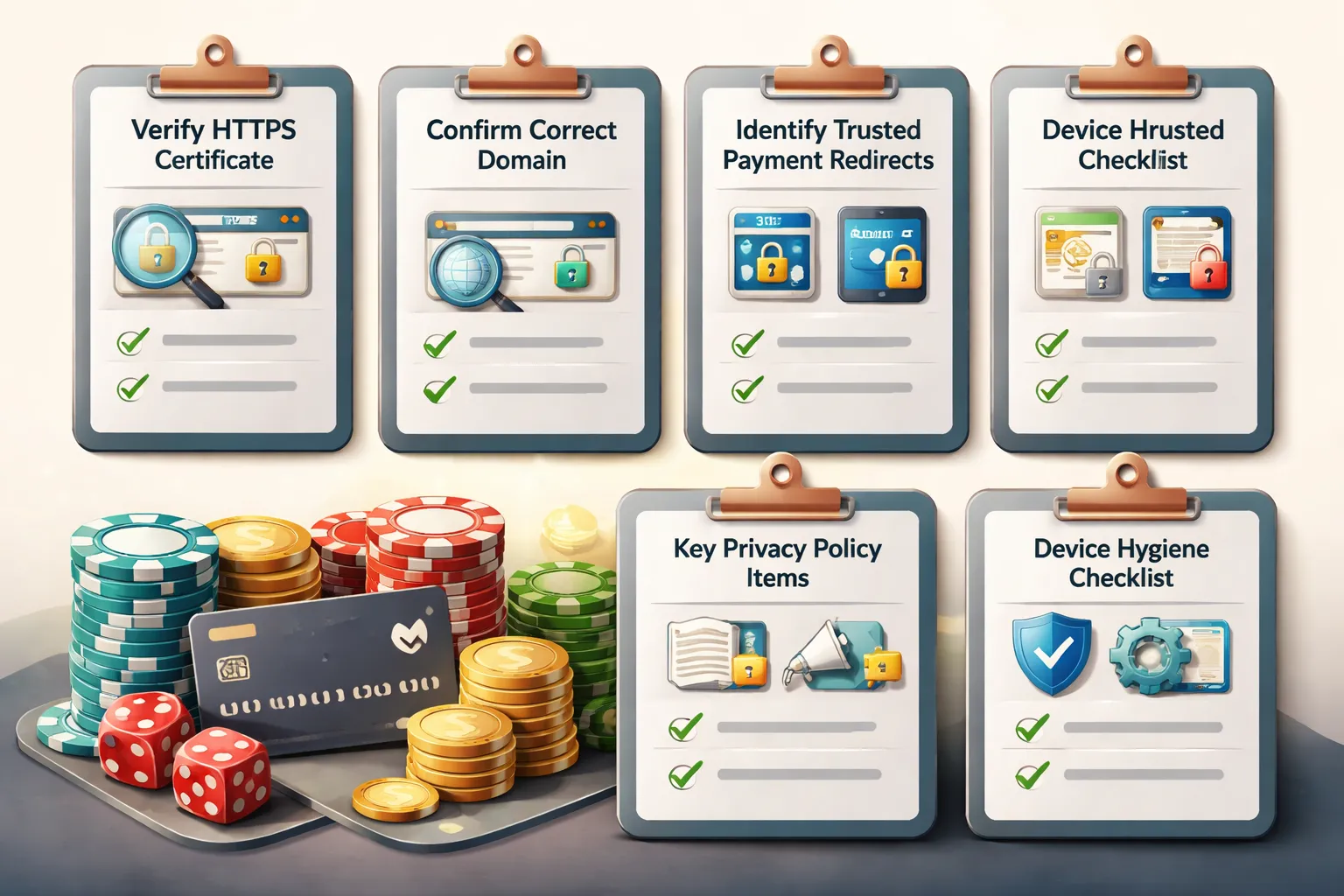
TLS and HTTPS checks you can do in 30 seconds
Start with the address bar. You want https:// and the correct domain. Do this before you type a password or card details.
- Type the casino URL yourself. Do not trust links from emails, ads, or DMs.
- Check the exact spelling. Watch for extra letters, swapped characters, and different endings like .net instead of .com.
- Click the padlock icon. Open the certificate details.
- Confirm the certificate matches the domain you are on. The “Issued to” name should align with the operator or its verified domain.
- Look for a valid certificate chain. Modern browsers show warnings for expired or mismatched certificates. Treat any warning as a hard stop.
HTTPS protects data in transit. It does not prove the casino will treat you fairly, or handle your data well after it reaches them.
Secure payment flows you should expect
Good checkout flows reduce what the casino touches. They push sensitive steps to banks and regulated processors.
- Cards. Expect 3D Secure prompts for many deposits, either as an in-page bank step or a redirect to your bank’s domain.
- E-wallets. You should log in on the wallet provider’s site or app. The casino should not ask for your wallet password.
- Open banking. You should authenticate inside your bank’s environment. You should not enter bank login details into a casino form.
- Processor redirects. A redirect can be normal if it goes to a known processor domain and returns you to the casino after approval.
- What to avoid. Any checkout that asks for full card data over chat or email, or asks for banking credentials directly.
If a payment step feels “off,” stop. Use a different method from a trusted provider, or choose another operator. Compare safer options in our payment methods guide.
Privacy policy essentials that affect deposits and withdrawals
Read the privacy policy like a payment document. Look for specific rules, not broad promises.
- Data retention. Find how long they keep account, device, and transaction records. Prefer clear timelines and clear reasons like fraud control and legal duties.
- Sharing with processors. They will share data with payment processors, banks, fraud tools, and KYC vendors. The policy should name categories, the purpose, and the legal basis.
- Marketing consent. Look for separate opt-in for email, SMS, and profiling. Avoid sites that bundle marketing consent into required terms.
- Access and deletion. You should see how to request a copy of your data and how to request deletion, with limits explained for compliance records.
- Cross-border transfers. If they move data outside your country, the policy should state safeguards such as standard contractual clauses or equivalent controls.
What PCI DSS means for card payments
PCI DSS is a security standard for handling card data. It reduces risk, but it does not eliminate it.
- What it usually means. The casino or its payment provider follows rules for network security, access controls, logging, and regular testing around card data systems.
- What it does not guarantee. It does not guarantee a site is licensed, honest, or fast with withdrawals. It does not prevent phishing, malware on your device, or scams that trick you into sending money.
- What you can do. Prefer checkouts that tokenize card data or shift entry to a processor page. The fewer places your card number appears, the better.
Device and browser hygiene checklist for safer deposits and withdrawals
- Use your own device. Avoid public computers and shared tablets.
- Update your OS and browser. Install security patches before you deposit.
- Use a strong, unique password. Store it in a password manager.
- Turn on two-factor authentication if the casino offers it.
- Avoid browser extensions you do not trust. Remove unused add-ons.
- Do not save card details in the browser on shared devices.
- Use a private, trusted network. Avoid public Wi-Fi for payments.
- Lock your phone and enable biometric or PIN access for wallet apps.
- Check your balance and transaction history after deposits and withdrawals. Screenshot receipts and reference numbers.
- Keep payment email separate. Use alerts from your bank or wallet for every transaction.
Choose the safest deposit methods for your situation
Your safest deposit method depends on your risk, your bank setup, and how fast you need cashouts. Use one primary method, keep it consistent, and match the payment name to your casino account name to avoid failed withdrawals.
Cards (Visa, Mastercard)
- Best for: Simple deposits, strong bank controls, familiar dispute process.
- Protections: Your bank can block merchants, set spend limits, and send real time alerts. Chargebacks may apply when a deposit posts incorrectly or a merchant error happens. Do not treat chargebacks as a routine refund tool, casinos can suspend your account.
- Common decline reasons: Bank blocks gambling merchants, 3D Secure fails, AVS address mismatch, insufficient funds, card country mismatch, prepaid card rules, card not enabled for online use, issuer flags the transaction as high risk.
- Safety moves: Enable 3D Secure, use a low card limit, keep one card for gambling only, turn on instant transaction alerts.
E-wallets (PayPal, Skrill, Neteller)
- Best for: Privacy, faster cashouts, keeping card and bank details away from the casino.
- Why they are safer: The casino sees the wallet account, not your card number. You can lock funding sources, use app based login, and review activity in one place.
- Cashout advantage: Many casinos process wallet withdrawals faster than card withdrawals, and you avoid some card specific payout rules.
- Safety moves: Turn on 2FA, use a strong wallet password, keep a separate wallet balance for gambling, disable auto top ups if your wallet supports it.
Bank transfer and instant banking
- Best for: Larger amounts, fewer card declines, direct account to merchant payments.
- Authentication: Use bank app approval, biometrics, and transaction signing when offered. Avoid any method that asks you to share banking passwords with third parties.
- Limits and timing: Banks set daily transfer caps, casinos set deposit and withdrawal caps. Check both before you deposit. If a cashout is slow, see why a withdrawal can show as pending.
- Scam avoidance: Only start transfers from inside your casino cashier page, then confirm the payee name and reference. Do not accept new payee details from email, SMS, or chat. Watch for lookalike domains and fake payment popups.
Prepaid and vouchers
- Best for: Tight spend control and less exposure of your main banking details.
- How they reduce risk: You do not share bank login data, and a compromised casino account cannot drain your bank balance.
- Tradeoffs: Many vouchers support deposits only. Withdrawals often require a bank account or e-wallet in your name. Plan your withdrawal method before you deposit.
- Safety moves: Buy vouchers from official sellers, keep codes private, redeem on a trusted network, and never send voucher codes to support via email.
Crypto deposits
- Best for: Privacy and global access, if you can manage wallet security.
- Wallet security: Use a reputable wallet, protect your seed phrase offline, enable app locks, and avoid storing large balances on exchanges.
- Confirmations and finality: Deposits credit after network confirmations. Crypto payments do not support chargebacks, so mistakes become permanent.
- Volatility: Your deposit value can change between sending and receiving. If you budget in fiat, deposit smaller amounts more often.
- Address whitelisting: If your exchange supports it, whitelist the casino payout address before you move funds. This reduces damage if your account gets compromised.
- Safety moves: Copy and paste addresses, verify the first and last characters, and confirm the network matches. One wrong network can destroy funds.
Pay-by-mobile and app payments
- Best for: Small deposits and quick checkout on a phone.
- Carrier risks: SIM swap and account takeover can lead to unauthorized charges. Treat your mobile number as a high value credential.
- Refund reality: Carrier billing disputes can take longer than card disputes, and some charges fall under strict carrier policies.
- Spending controls: Set a carrier billing cap, block premium SMS, lock your SIM with a PIN, and use app store purchase controls if you pay through an app.
Protect your casino account like a financial account
Strong password strategy and password manager best practices
Treat your casino login like online banking. Use a unique password for every casino and your linked email.
- Length wins. Use 14 to 20+ characters.
- Uniqueness matters. Never reuse a password from email, banking, or another casino.
- Use a password manager. Let it generate and store long random passwords. Lock it with a strong master password and app based multi-factor authentication.
- Audit for leaks. If your manager flags a reused or exposed password, change it at the casino and at the email account tied to it.
Turn on multi-factor authentication, app based vs SMS
Enable multi-factor authentication on your casino account and on the email account used for login and recovery.
- Best option. Use an authenticator app or device based prompt. It resists SIM swap attacks.
- SMS tradeoff. SMS helps, but attackers can hijack texts through SIM swaps, call forwarding, or carrier support scams.
- Set it once. Save your backup codes in a secure place. Do not store them in the same inbox you use for recovery.
Account recovery safety, secure email, SIM swap protection, backup codes
Attackers target account recovery because it bypasses your password.
- Use a dedicated gambling email. Keep it separate from banking and work. Use a unique password and MFA.
- Harden your mobile number. Add a carrier account PIN, block SIM changes where possible, and remove public info that helps social engineering.
- Lock down recovery options. Use a secure recovery email, avoid weak security questions, and keep your recovery phone number current.
- Store backup codes safely. Save them offline or in a password manager vault. Do not keep them in notes synced to your email account.
When a casino asks for verification during changes, complete it fast so your withdrawals do not stall later. Use this guide on how to verify your identity faster.
Session security, logging out, device trust prompts, avoiding shared devices
Most account takeovers start with a stolen session or a compromised device.
- Log out after cashing out. Do this on desktop browsers and shared networks.
- Do not trust shared devices. Avoid public computers, gaming cafés, and borrowed phones for deposits and withdrawals.
- Use private browsing only as a backup. It reduces saved traces, but it does not protect against malware or keyloggers.
- Watch device trust prompts. Do not approve a new device or login you did not start. If you see it, change your password and revoke sessions.
- Keep your device clean. Update your OS and browser, remove unknown extensions, and avoid sideloaded apps.
Limit exposure, separate gambling email, virtual cards, spending caps
Reduce the damage if your casino account or payment method gets compromised.
- Use a separate gambling email. It cuts phishing risk and keeps recovery contained.
- Use virtual cards when available. Create a card number just for casino use, then freeze or delete it after a session.
- Set tight limits. Use casino deposit limits, loss limits, and time limits. Match them to your budget, not your balance.
- Keep balances low. Do not store large sums in casino wallets longer than needed.
- Separate funds. Prefer an e-wallet or a dedicated bank sub account for gambling transfers.
Deposit safely: a step-by-step secure workflow
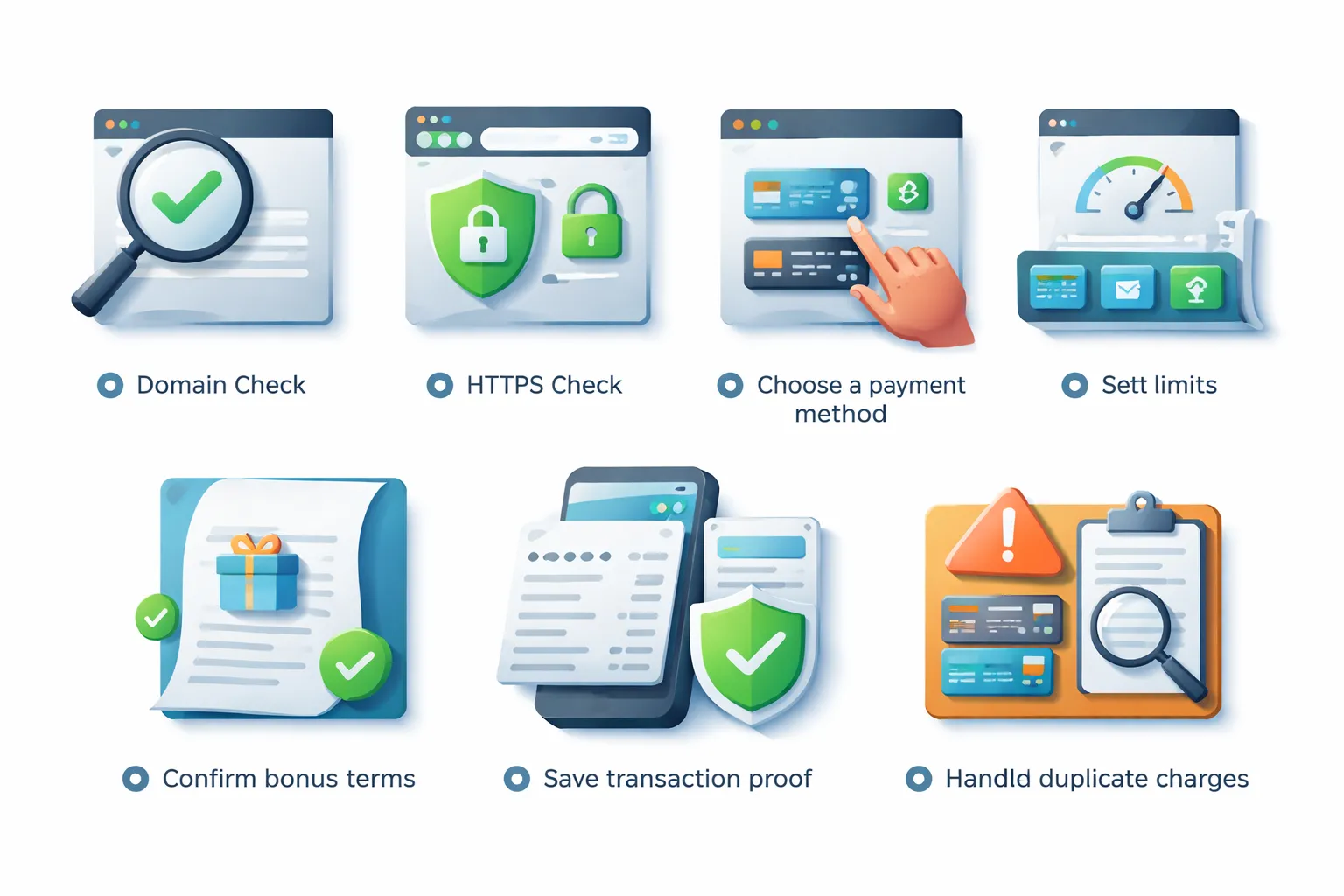
Pre-deposit checklist: verify the site, the connection, and the cashier
- Confirm the domain. Type it yourself or use a saved bookmark. Do not follow links from ads, DMs, or email.
- Check HTTPS and the certificate. The URL must start with https. The certificate should match the casino domain, not a lookalike.
- Use a private connection. Avoid public Wi-Fi. If you must use it, use your mobile data or a trusted VPN.
- Log in, then open the cashier. Do not enter payment details on pages outside the cashier flow.
- Confirm the method is available for both deposit and withdrawal. Many casinos allow deposits via one method but force withdrawals to another.
- Check the method rules. Look for minimum deposit, fees, processing times, and required verification.
- Match currency and country. Mismatches trigger declines, extra fees, or manual review.
- Set your amount before you pay. Pick a number you can afford to lose, then stop. Do not chase with top-ups.
Use virtual cards or low-limit cards to cap worst-case losses
- Prefer a virtual card number. Use one created for casino use. Delete or freeze it after your session.
- Use a low-limit card or sub account. Keep only the session budget in the linked balance.
- Block risky features. Turn off international transactions, card-not-present transactions, or ATM cash access if your bank allows it.
- Do not save card details in the browser. Use a password manager for your casino login instead.
Avoid bonus traps that block or reduce withdrawals
- Read wagering requirements. A 35x requirement on a $100 bonus means $3,500 in qualifying bets before withdrawal.
- Check max cashout limits. Some bonuses cap winnings, even if you win more.
- Check game restrictions. Many terms exclude certain slots, live games, table games, or side bets from counting toward wagering.
- Watch max bet rules. A common rule limits stake size while a bonus is active. Breaking it can void winnings.
- Know what happens to your balance. Some casinos lock your deposit with the bonus. Others let you decline the bonus at checkout.
- If you plan to withdraw soon, skip the bonus. Clean deposits usually cash out with fewer checks.
Save proof of every deposit
- Keep the transaction ID. Save the casino reference number and the payment provider reference.
- Take two screenshots. One of the deposit confirmation page, one of the updated cashier history.
- Save the confirmation email. Keep it with headers if possible. Archive it in a folder.
- Note the timestamp and amount. Include currency, method, and any error message.
If a deposit looks wrong or duplicates, act fast
- Stop and do not retry. Duplicate charges often happen when you submit again after a lag.
- Check three places. Casino cashier history, your bank or e-wallet ledger, and any pending authorizations.
- Screenshot everything. Include error codes, pending entries, and the time shown on screen.
- Contact casino support in writing. Provide username, amount, method, time, and both reference IDs. Ask them to confirm whether they see one deposit or two.
- Contact your bank or provider if needed. Ask if one charge is pending and expected to drop, or if both settled.
- Freeze the payment instrument if you suspect fraud. Lock the virtual card, card, or wallet connection.
- Do not charge back too early. First confirm the casino records. A rushed chargeback can trigger account limits and slow later withdrawals.
For fewer payment holds later, complete identity checks before you deposit large amounts. Use casino verification to reduce manual review risk.
Withdraw securely and avoid delays, reversals, or lockups
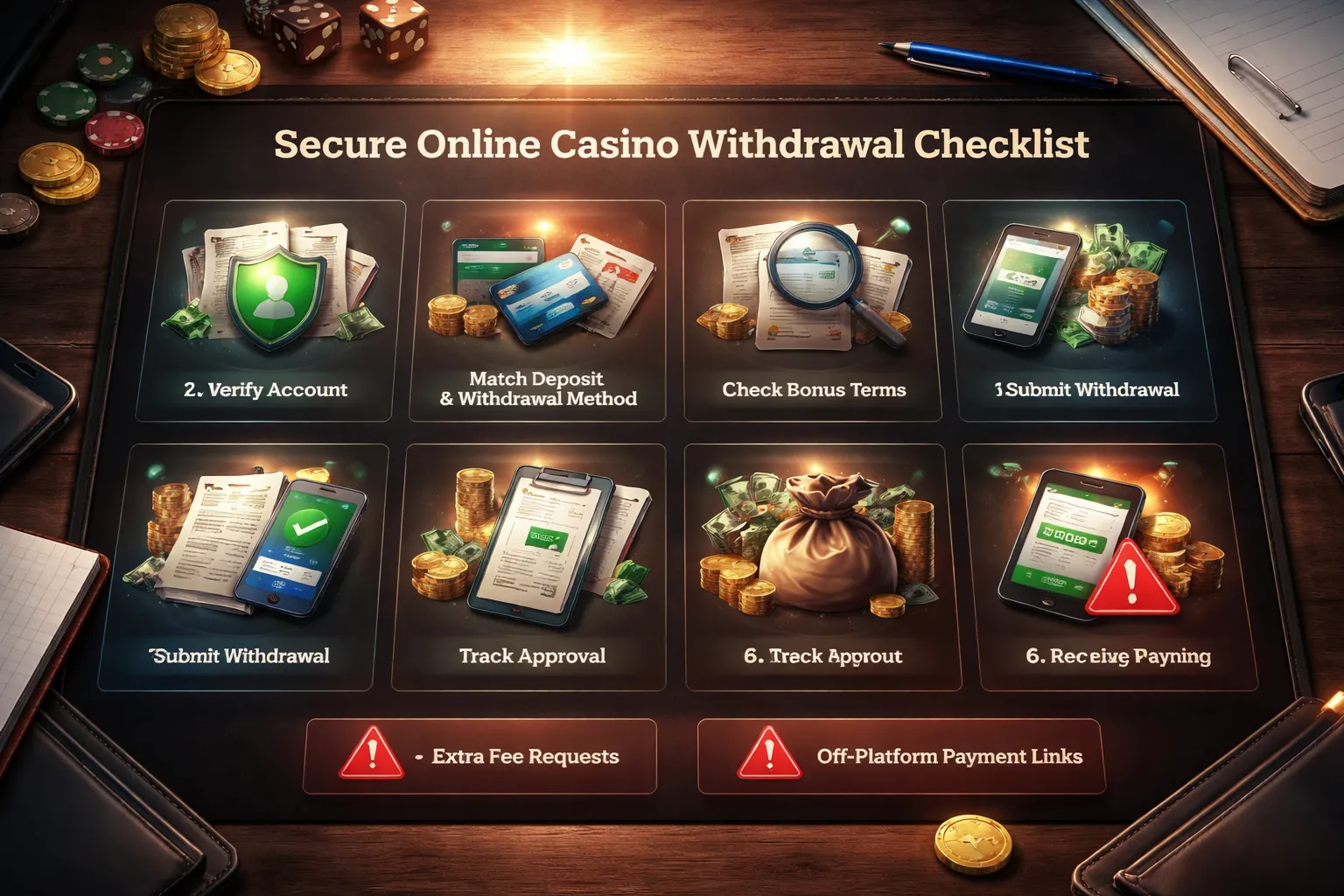
Why withdrawals fail or get reversed
- Mismatched methods. You deposit by card, then request a payout to a different card, a wallet, or a bank account. Many casinos block this. They must send funds back to the same source when possible.
- Incomplete KYC. Your ID, address, or payment ownership checks are missing, outdated, or unclear. The cashier flags the withdrawal for manual review.
- Name and account mismatches. Your casino profile name differs from your bank or wallet name. Joint accounts, nicknames, and typos trigger holds.
- Bonus restrictions. You still have wagering to complete, you used restricted games, or you broke max bet rules. The casino pauses the cashout or cancels it.
- Risk flags. Multiple cards, frequent method changes, VPN changes, or logins from new locations can trigger enhanced checks.
- Chargeback history. Prior disputes can cause payout limits, longer reviews, or extra verification.
How to pass verification safely
- Use the casino upload tool. Avoid sending sensitive documents by email unless support confirms it and you can verify the address from the official site.
- Upload from a private connection. Use your home network. Avoid public WiFi when sending ID, bank statements, or card images.
- Mask only what you are allowed to mask. Hide the middle digits of a card number. Leave the first 6 and last 4 visible if requested. Do not hide your name, expiry date, or document number unless the casino policy allows it.
- Protect your files. Remove unnecessary metadata if your phone adds location data. Keep copies in a secure folder, not in a public cloud album.
- Send clean images. No glare, no cropped corners, no edits that look like tampering. Use high resolution.
- Time it. Complete KYC before your first large withdrawal. Do it on a weekday if possible. Many teams process slower on weekends and holidays.
- Keep your profile consistent. Match your address format to your proof of address. Update details before you submit a withdrawal, not after.
Match withdrawal methods and plan deposits for easy cashouts
- Assume a same method rule. Plan to withdraw back to the same method you used to deposit, until that method reaches its refund limit.
- Understand card limits. Many casinos treat card withdrawals as refunds. You can often only withdraw up to the amount you deposited by card. Profits then go to bank transfer or an approved wallet.
- Keep your payment stack simple. Use one primary method. Do not rotate cards and wallets unless you must.
- Deposit with your intended cashout path. If you want fast payouts, consider methods that support payouts in your country and on that casino. Check the cashier before you deposit.
- Do not use third party accounts. No friend’s card, no business wallet, no shared bank account. You risk lockups and long source of funds checks.
- Know the common rejection reasons. If a payout fails, review the likely cause before you retry. See why withdrawals get rejected for a focused checklist.
Timeframes and fees, what looks normal vs suspicious
| Stage | Normal | Watch for |
|---|---|---|
| Casino review | Minutes to 48 hours for many brands, longer if you are new or unverified. | No status updates for several days, repeated resets to “pending” after you confirm KYC. |
| Wallet payouts | Often same day after approval. | Casino claims “sent” but no transaction ID or reference number. |
| Card payouts | Refund timing can take several business days depending on the issuer. | Casino asks you to cancel and resubmit many times, or keeps changing the method without clear reason. |
| Bank transfers | Commonly 1 to 5 business days after approval, sometimes longer cross border. | Requests for extra “processing” payments, or pressure to use a new off platform account. |
| Fees | Clear fee schedule in the cashier and terms, with exact amounts or percentages. | New fees appear only after you request a withdrawal, or the fee depends on “unlocking” your payout. |
Action: Keep a screenshot trail. Save the withdrawal request, status changes, and any fee disclosures shown in the cashier.
Extra payments and off platform fees, treat as a red flag
- Do not pay to get paid. Legit casinos do not require an extra deposit, “tax”, “insurance”, or “verification fee” to release a withdrawal.
- Refuse off platform payments. Do not send crypto to a personal address. Do not pay by gift card. Do not use a random payment link sent in chat.
- Verify support channels. Use only the live chat and email shown on the casino site, inside your logged in session.
- Ask for written terms. Request the exact policy section that allows the fee, plus the name of the payment provider involved. If they cannot provide it, stop.
- Freeze activity if pressured. Stop deposits, change your password, and lock your payment method if you suspect fraud.
Spot scams and fraud patterns targeting casino payments
Phishing emails, fake support chats, and social-engineering scripts
Scammers target payments because you act fast when money gets blocked. They copy casino branding, then push you to “verify” a deposit or “unlock” a withdrawal.
- Phishing emails and SMS: Messages claim “deposit failed,” “KYC expired,” or “withdrawal on hold.” They include a link to “confirm” your card or wallet. Do not click. Open the casino site by typing the URL yourself and check your inbox inside your account.
- Fake support chats: Popups appear on search results, forums, or mirrored pages. The agent asks for your password, SMS code, or full card number. Real support does not need these.
- Common scripts you should treat as fraud: “We must verify your wallet, share the OTP.” “Install this app so we can fix your withdrawal.” “Send a small test deposit to this new address.” “Pay a fee to release funds.”
- Payment redirection: They ask you to deposit via bank transfer to a personal name, crypto to a new address, or gift cards. Legit casinos route payments through named providers and your cashier page.
Imposter apps and cloned sites: confirm you have the official version
- Use the casino site as your source of truth: Install apps only from the link inside your logged-in casino account, or from the official app store page linked there.
- Check the domain before you log in: Look for small changes, extra words, or different endings. Save the correct URL as a bookmark and use it.
- Confirm HTTPS and the certificate: On desktop, click the lock icon and check the certificate matches the brand, not a random organization.
- Avoid “APK” files from chat: If support or an affiliate sends an Android install file, treat it as hostile. Many steal logins, intercept SMS codes, or replace wallet addresses.
- Watch for cloned cashier pages: A fake page can show the right logo but send your payment to a different recipient. If the payee name, provider, or flow looks new, stop.
“VIP” and affiliate scams: pressure tactics, remote access requests, and wallet swaps
VIP and affiliate fraud often starts with a “manager” who promises faster withdrawals, higher limits, or private bonuses. The goal is to take control of your payment path.
- Pressure tactics: “Deposit now to keep your status.” “One-time window.” “Compliance will close your account.” Time pressure signals fraud.
- Remote access requests: They ask you to install AnyDesk, TeamViewer, or a “support tool.” Do not. Remote access lets them change withdrawal details, add new payees, or capture your 2FA.
- Wallet swaps: They tell you to “switch to this wallet” or “use our address for faster cashout.” If you withdraw crypto, confirm the address in your own wallet app, not from a chat screenshot.
- Off-platform communication: They push you to Telegram, WhatsApp, or SMS. Keep contact inside the casino help channel shown in your account session.
Chargeback and transaction laundering schemes, and why you can get flagged
Some fraud rings use player accounts to move funds. Even if you think you are helping, the casino and payment providers can flag you.
- Chargeback bait: Someone offers to “front” you money, then tells you to deposit using their card or account. The real owner later files a chargeback. The casino can lock your account and void winnings.
- Third-party deposits: Deposits from a name that does not match your KYC profile can trigger AML checks and withdrawal holds.
- Transaction laundering: A “service” asks you to receive funds and send them back via crypto or bank transfer. This can look like money laundering. You can lose access to withdrawals and get reported by providers.
- Risk signals that trigger reviews: Many small deposits in minutes, frequent payment method changes, deposits from different countries, or rapid deposit then full withdrawal with little play.
Signs your account is compromised and immediate containment steps
- Account signals: Password reset emails you did not request, new devices in login history, new withdrawal wallet or bank details, changed email or phone number, missing balances, or bonus offers you did not activate.
- Payment signals: Deposits you do not recognize, small “test” transactions, failed withdrawals you did not initiate, or new payees on e-wallet or bank apps.
- Containment steps: Change your casino password, then your email password. Enable 2FA. Log out of all sessions. Remove unknown devices. Freeze or lock your card in your banking app. Revoke e-wallet permissions. Contact support from inside your logged-in session and request a security hold on withdrawals.
- Document everything: Save transaction IDs, timestamps, emails, chat transcripts, and screenshots of the cashier. If a withdrawal gets stuck during a security review, use the steps in why your casino withdrawal is pending to track the cause and respond fast.
Monitoring, recordkeeping, and what to do if something goes wrong
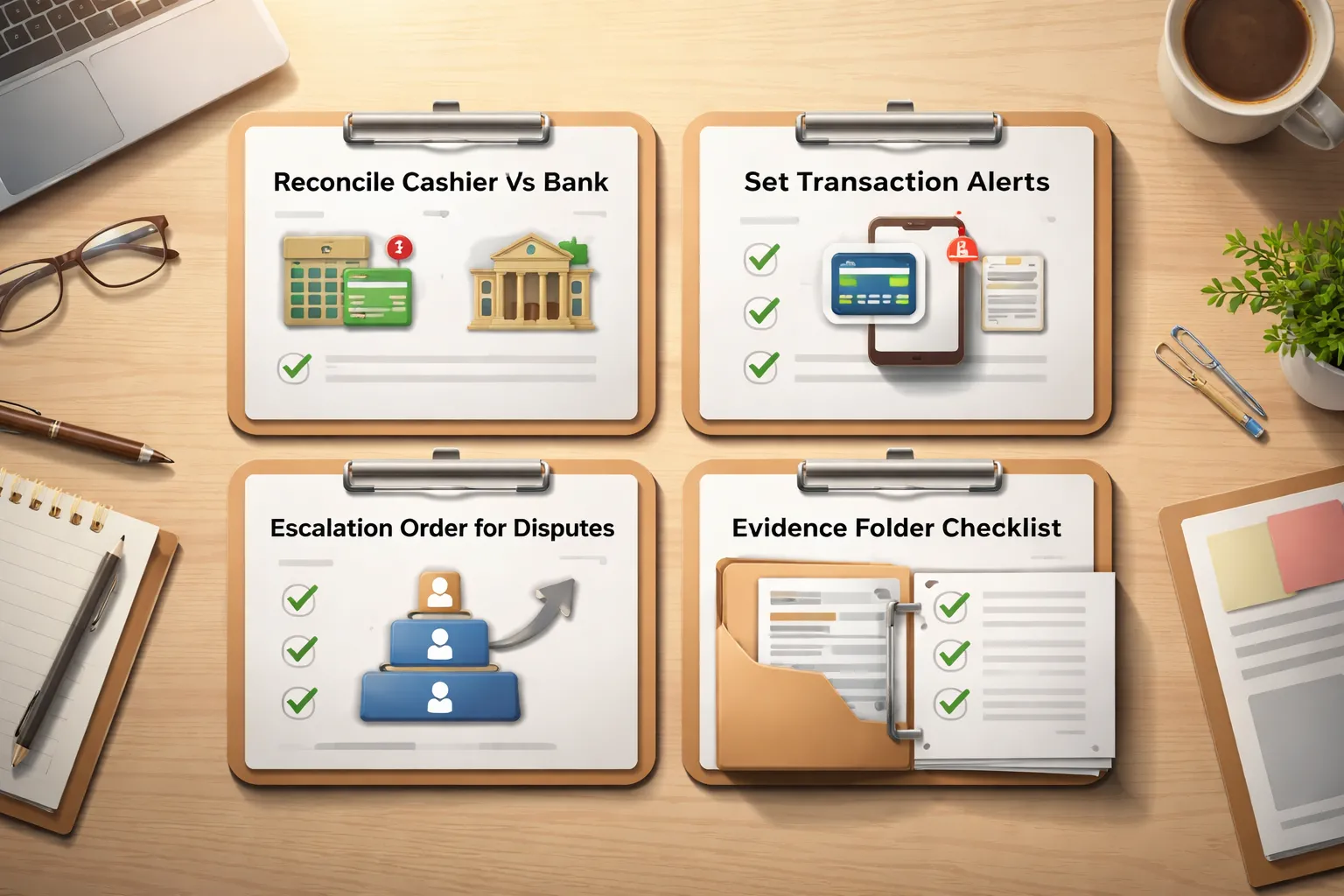
Reconcile every deposit and withdrawal
Match your casino cashier history to your wallet or bank ledger. Do it after each session, then again when your statement closes.
- Use one reference point. Start from your bank or e-wallet transaction list. It is harder to fake than a casino screen.
- Match three fields. Amount, date and time, and a reference ID or descriptor.
- Expect naming differences. Many casinos bill through processors. Your statement may show a trading name, not the casino brand.
- Check for split payments. A single casino deposit can post as multiple processor charges.
- Confirm net results. Your deposit outflows minus withdrawals received should equal your bankroll change.
- Flag mismatches fast. Treat any amount you cannot match within 24 hours as an issue.
| What you see | What it can mean | What to do |
|---|---|---|
| Deposit shows in casino, missing at bank | Pending authorization, delayed posting, failed capture | Wait for posting window, then ask casino for processor reference and status |
| Bank shows charge, casino shows no deposit | Failed credit, wrong account, processor error | Send proof of charge to casino support and request manual credit or reversal |
| Withdrawal approved, no funds received | Processor delay, compliance hold, wrong payout route | Ask for payout transaction ID, tracking link, and release timestamp |
| Extra or duplicate charge | Double submit, recurring token, processor retry | Freeze further deposits, document, then dispute in order |
Set alerts that catch fraud early
Use notifications to spot unauthorized activity before it settles.
- Enable real-time alerts. Turn on push notifications for card present, card not present, bank transfer, and e-wallet actions.
- Set a low threshold. Alert on any transaction, or anything over a small amount you pick.
- Turn on login alerts. Use e-wallet and email sign-in notifications where available.
- Use balance alerts. Get notified when your account drops below a floor.
- Block risky categories. If your bank supports merchant category controls, restrict gambling spend when you are not playing.
- Keep alerts separate. Send payment alerts to an email you do not use for casino logins.
If something goes wrong, contact in the right order
Start with the party that can fix it fastest, then escalate with proof.
- Step 1, casino support. Use in-app chat or your logged-in help channel. Ask for the processor name, transaction ID, and current status.
- Step 2, payment provider. For e-wallets, cards, and bank transfers, contact the provider with the processor reference, amount, and timestamp.
- Step 3, your bank or card issuer. Report unauthorized charges immediately. Ask for a card freeze, new card number, and fraud case number.
- Step 4, regulator or ADR. Use this when the casino stalls, refuses to answer, or closes the ticket without resolving. Follow the steps in how to file a complaint against an online casino.
Do not start a bank chargeback for a legitimate deposit you used for play unless support confirms a processor mistake. Chargebacks can trigger account restrictions and slow down withdrawals.
Evidence checklist for an investigation
Collect evidence before you argue. Keep it in one folder. Use original files, not edited screenshots.
- Account identifiers. Casino username, registered email, wallet ID, last four digits of card, bank account nickname.
- Transaction details. Amount, currency, date and time with timezone, casino transaction ID, provider transaction ID, bank statement line item.
- Processor references. Acquirer reference number, retrieval reference number, SEPA end-to-end ID, blockchain txid where relevant.
- Cashier proof. Screenshots of deposit or withdrawal status pages and any error messages.
- Communication logs. Chat transcripts, email headers, ticket numbers, agent names, and promised timelines.
- KYC timeline. When you submitted documents, what you submitted, and the casino response.
- Security proof. Login alerts, device list, IP logs if available, password change timestamps.
When to close the account, rotate credentials, and check for identity theft
Take decisive action when you see patterns, not one-off delays.
- Close the casino account if you see repeated unexplained charges, multiple failed withdrawals without clear reasons, or support refuses to provide transaction references.
- Rotate credentials after any suspected compromise. Change your casino password, email password, and e-wallet password. Enable two-factor authentication on each.
- Revoke access tokens. Remove linked cards, remove saved bank accounts, and revoke third-party wallet permissions.
- Replace the card or account details if fraud touched the payment rail. Do not reuse the same card number across new casino accounts.
- Check for identity theft if you see new payees, new devices, address changes, or credit applications you did not make. Monitor credit reports where your country supports it, and place a fraud alert if available.
- Keep a clean payment setup. Use a dedicated card or wallet for gambling and keep your main banking separate.
Pros and cons of the most secure payment safety practices
Why extra security can slow withdrawals, and why it is still worth it
Strong safety steps add checks. Checks add time.
- KYC reviews take time. ID, address, and source of funds checks can add hours or days. The first withdrawal often takes the longest.
- Name matching can trigger delays. If your casino profile name does not match your payment name, support may freeze the payout until you fix it.
- Anti-fraud rules flag patterns. Large first-time withdrawals, new devices, VPN use, or fast deposit to withdrawal cycles can push you into manual review.
- Extra steps reduce chargeback risk. Casinos tighten controls to avoid card disputes and stolen payment use. That protects you from account takeover payouts.
- Slower can be safer. A short delay gives you a window to spot fraud and stop a bad withdrawal before it completes. For payout timing details, see why withdrawals take time.
Privacy vs. convenience tradeoffs by payment method
| Method | Privacy upside | Convenience upside | Main downside |
|---|---|---|---|
| E-wallets | Casino does not see your bank login, often less bank data shared. | Fast deposits, often fast payouts, easy to lock or reset. | Account lockouts and extra verification can pause withdrawals. |
| Debit and credit cards | Low. Card data ties directly to you and can appear on statements. | Simple to deposit, familiar flow. | Withdrawals may not go back to cards, more decline codes, more dispute risk flags. |
| Bank transfer | Low. Full banking identifiers move with the payment. | High limits, clear audit trail. | Slower processing, more compliance checks on larger amounts. |
| Prepaid cards and vouchers | Higher for deposits, you share less banking data. | Quick deposits, good for spend control. | Often no direct withdrawals, you may need a second method for payouts. |
| Crypto | No bank data shared with the casino for the transfer itself. | Fast settlement on many networks, global access. | Wallet mistakes are final, price volatility, chain analysis can still link identity. |
Pick based on what you want to hide. Payment details, bank identity, or gambling activity on statements. You rarely hide all three.
Cost considerations, exchange rates, network fees, and hidden cashier charges
- FX spreads can beat published fees. A cashier can show “no fee” but add a weak exchange rate. Always check the rate you get versus a mid-market rate.
- Network fees hit crypto and some bank rails. On-chain fees change by network load. Some casinos pass the fee to you, some add a markup, some set a minimum withdrawal.
- Processor fees stack. You can pay a deposit fee, then a withdrawal fee, then an extra fee when your wallet or bank receives it.
- DCC and routing choices cost money. If you see an option to pay in your home currency at checkout, you may pay more than letting your bank handle conversion.
- Inactivity and account fees exist. Some wallets charge if you do not use the account. Some casinos charge for extra withdrawal requests.
- Chargebacks cost time. Even if you win a dispute, you can lose access to your casino account and trigger long reviews.
Responsible bankroll controls as a safety layer, limits reduce fraud impact
Fraud hurts less when there is less money to steal.
- Use a dedicated balance. Keep only your planned spend in the gambling wallet or card account.
- Set deposit and loss limits. If someone takes over your account, limits cap the damage. Limits also stop impulse top-ups after a bad session.
- Use withdrawal locks with care. Some casinos let you add extra checks before withdrawals. It slows cash-outs but blocks quick theft.
- Keep session and device control tight. Log out after play. Do not save cards in browsers. Remove old devices from your casino account.
- Lower your daily transfer limits at the bank. If your bank allows it, set smaller outgoing caps for the account linked to gambling.
FAQ
What payment method is safest for online casinos?
Use methods with strong fraud controls. Cards, PayPal, and bank transfers give chargeback or dispute options in many cases. Use a dedicated e-wallet or a separate bank account for gambling. Avoid crypto if you need reversals or fast support.
How do I check if a casino payment page is secure?
Confirm the site uses HTTPS and shows a valid certificate in your browser. Use a direct bookmark, not a link from email or social. Do not enter card data on pop-ups or redirected pages you do not recognize.
What are the biggest deposit and withdrawal scams?
Phishing emails, fake support chats, and bonus traps. Scammers push you to “verify” by sharing codes or passwords. Bonus terms can lock withdrawals with wagering rules. Read withdrawal rules and fee tables before you deposit.
Should I save my card in the casino or browser?
No. Saved cards raise risk if your account or device gets compromised. Type details when needed. Use a password manager for logins, not for card storage. Remove stored payment methods after big sessions.
How can I protect withdrawals from account takeovers?
Turn on 2FA. Use a unique password. Set withdrawal limits and withdrawal locks if the casino offers them. Check and remove old devices in your account settings. Keep your email account protected with 2FA.
Why does the casino ask for KYC before I withdraw?
Casinos must confirm identity to block fraud and meet AML rules. KYC often triggers at first withdrawal or higher limits. Use real details that match your bank. Learn the basics in casino KYC requirements.
What should I do if my withdrawal is delayed?
Check KYC status, wagering requirements, and withdrawal method limits. Confirm your name and bank details match your account. Screenshot the timeline and chat logs. Contact support with the transaction ID and request an estimated processing time.
Is crypto safer for casino payments?
Crypto can reduce bank sharing, but it adds other risks. Transfers are hard to reverse. Wallet mistakes cause permanent loss. Use a trusted wallet, double-check addresses, and avoid sending from third-party exchanges if the casino blocks them.
How do I reduce damage if my payment details leak?
Use a separate card or account with low limits. Set bank alerts for each transfer. Freeze the card fast if you see unknown charges. Change casino and email passwords. Report the issue to the casino and your bank.
Can I use someone else’s card or bank account?
No. Most casinos block third-party payments. It triggers failed withdrawals and account locks. Use payment methods in your name. Match your casino profile to your bank and ID to avoid KYC rejection and delays.
Conclusion
Conclusion
Safe casino payments come from repeatable habits. Use a licensed casino. Use payment methods in your name. Enable 2FA and strong passwords. Keep devices updated. Avoid public Wi-Fi for deposits and withdrawals.
Make one final step your default. Run a quick payment check after every session. Review your balance, pending transactions, and bank or wallet statement. Save receipts and transaction IDs. Set alerts in your banking app. Act fast if anything looks wrong.
- Deposit only from accounts you control and can verify.
- Withdraw to the same method you used to deposit when possible.
- Never share card photos, CVV, or one-time codes.
- Use a separate email for gambling and lock it with 2FA.
- Keep proof of every deposit and withdrawal request.
If you want a method-by-method walkthrough, follow this guide on how to deposit money at an online casino.
-
What to Do If an Online Casino Won’t Pay Out: Step-by-Step Actions
8 months ago -
How to File a Complaint Against an Online Casino (Plus ADR Explained)
8 months ago -
How to Sign Up & Create an Online Casino Account (Step-by-Step)
8 months ago -
Online Casino Login Problems: Fixes for Common Sign-In Issues
8 months ago -
How to Withdraw Money from an Online Casino: Methods, Steps & Tips
8 months ago
-
- Strong password strategy and password manager best practices
- Turn on multi-factor authentication, app based vs SMS
- Account recovery safety, secure email, SIM swap protection, backup codes
- Session security, logging out, device trust prompts, avoiding shared devices
- Limit exposure, separate gambling email, virtual cards, spending caps
-
- Phishing emails, fake support chats, and social-engineering scripts
- Imposter apps and cloned sites: confirm you have the official version
- “VIP” and affiliate scams: pressure tactics, remote access requests, and wallet swaps
- Chargeback and transaction laundering schemes, and why you can get flagged
- Signs your account is compromised and immediate containment steps
-
- What payment method is safest for online casinos?
- How do I check if a casino payment page is secure?
- What are the biggest deposit and withdrawal scams?
- Should I save my card in the casino or browser?
- How can I protect withdrawals from account takeovers?
- Why does the casino ask for KYC before I withdraw?
- What should I do if my withdrawal is delayed?
- Is crypto safer for casino payments?
- How do I reduce damage if my payment details leak?
- Can I use someone else’s card or bank account?
-
- Strong password strategy and password manager best practices
- Turn on multi-factor authentication, app based vs SMS
- Account recovery safety, secure email, SIM swap protection, backup codes
- Session security, logging out, device trust prompts, avoiding shared devices
- Limit exposure, separate gambling email, virtual cards, spending caps
-
- Phishing emails, fake support chats, and social-engineering scripts
- Imposter apps and cloned sites: confirm you have the official version
- “VIP” and affiliate scams: pressure tactics, remote access requests, and wallet swaps
- Chargeback and transaction laundering schemes, and why you can get flagged
- Signs your account is compromised and immediate containment steps
-
- What payment method is safest for online casinos?
- How do I check if a casino payment page is secure?
- What are the biggest deposit and withdrawal scams?
- Should I save my card in the casino or browser?
- How can I protect withdrawals from account takeovers?
- Why does the casino ask for KYC before I withdraw?
- What should I do if my withdrawal is delayed?
- Is crypto safer for casino payments?
- How do I reduce damage if my payment details leak?
- Can I use someone else’s card or bank account?
-
Reload Bonus Explained: What It Is and When It’s Worth Claiming
6 months ago -
Online Casino Licensing Explained: Authorities, Licenses & How to Check One
8 months ago -
Best Live Dealer Casinos: Where to Play Live Blackjack, Roulette & More
8 months ago -
Best Online Casinos for High Rollers: VIP Perks, High Limits & Exclusive Bonuses
8 months ago -
Fast Payout Online Casinos: Best Sites for Quick Withdrawals
8 months ago
-
Online Casino Customer Support: What to Look For (Live Chat, Email, Response Times)
8 months ago -
Sign Up for an Online Casino: Create an Account in Minutes
8 months ago -
What to Do If an Online Casino Won’t Pay Out: Step-by-Step Actions
8 months ago -
How to File a Complaint Against an Online Casino (Plus ADR Explained)
8 months ago -
Online Casino Licensing Explained: Authorities, Licenses & How to Check One
8 months ago