How Progressive Jackpot Slots Work (And How You Can Win Them)

Progressive jackpot slots can pay six or seven figures, but they follow strict rules. A progressive jackpot grows when players place qualifying bets. A fixed cut of each bet funds the prize pool. When someone hits the trigger, the jackpot pays out, then resets to a seed amount and starts growing again.
You will learn how the jackpot meter builds, what “qualifying bet” means, and the main progressive types, local, networked, and must-hit-by. You will also learn what the RNG does, how jackpot triggers work, and which player choices affect your real cost per spin. You will get practical steps to avoid common mistakes and improve your chance of being eligible when the jackpot hits.
Key Takeaways
- In het kort: A progressive jackpot grows when players spin and do not hit the top prize.
- In het kort: Your bet often must meet a qualifying bet to make you eligible for the jackpot.
- In het kort: Progressives come in three main types, local, networked, and must-hit-by.
- In het kort: The RNG decides outcomes; you cannot time or predict a jackpot hit.
- In het kort: Jackpot triggers vary by game, fixed trigger, random trigger, or must-hit-by range.
- In het kort: Your main controls are your stake size, whether you cover the qualifying bet, and how long you play.
- In het kort: Bigger jackpots usually mean lower hit frequency; your chance per spin stays small even when the meter grows.
- In het kort: Your biggest mistake risk is playing under-qualifying spins, you pay into the pool but you cannot win it.
- In het kort: If you chase progressives, pick games with clear rules, set a stop loss, and treat the jackpot as a bonus, not a plan.
What progressive jackpot slots are (and why they get so big)
Progressive vs. fixed jackpots, what changes for you
A fixed jackpot pays a set top prize. It does not grow with play.
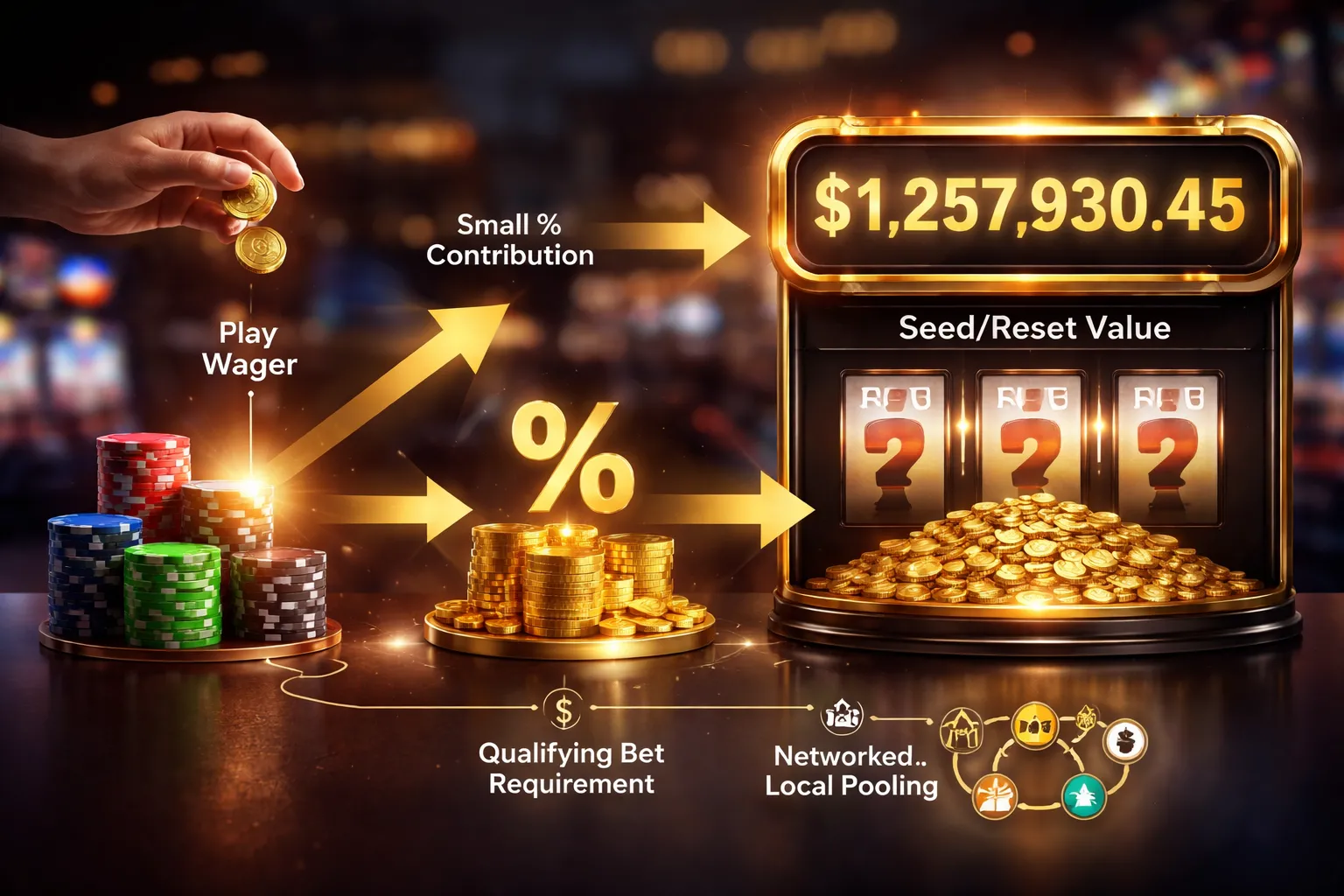
A progressive jackpot grows over time. Each qualifying bet adds money to a shared jackpot meter. You can see it on the game screen.
For you, the key change is this. A fixed jackpot gives the same top prize today and tomorrow. A progressive jackpot can be small right after a win, then become huge before the next one.
Most progressive games also add rules. Many require a minimum bet, or max bet, to qualify for the top prize. If you spin below the requirement, you can still win normal payouts, but you cannot win the progressive jackpot.
Where the money comes from, the contribution percentage
The jackpot does not come from nowhere. The game routes a small part of each qualifying wager into the progressive pool. Casinos call this the contribution percentage.
- Example: If the contribution rate is 1% and players wager $100,000, the progressive pool grows by about $1,000.
- The rest of the wager funds normal wins, the game’s expected return, and the casino margin.
- Some games take contributions across many casinos or many sites. Others only take them from one casino.
You rarely see the exact percentage in the game lobby. You can still use the concept. A bigger network and more total wagering usually means faster jackpot growth.
Why jackpots reach life-changing amounts
Two forces drive size. Pooling and time.
- Pooling: Many players contribute to the same meter. In wide networks, that can mean thousands of spins per minute.
- Time on device: If the jackpot does not hit for days or weeks, contributions keep stacking.
Most progressives also use a seed and a reset value. The seed is the starting amount. After someone wins, the jackpot resets to the preset base, then starts growing again.
Some games add a “must-hit-by” cap. The jackpot must pay before it reaches that number. That creates a ceiling and makes hits more frequent than an open-ended progressive.
Common myths you should ignore
- Hot and cold machines: Past spins do not change your odds on the next spin. Each spin remains independent.
- Timing tricks: There is no best time of day to hit a progressive. High traffic can grow the meter faster, but it does not make your next spin more likely to win.
- “Due” payouts: A jackpot can sit for a long time without being “due.” Only a must-hit-by mechanic creates a real deadline.
If you want the clearest view of risk, treat progressives as high volatility. Use the same bankroll rules you would for other high swing slots, and learn the basics of slot volatility.
How progressive jackpot slots work behind the scenes

The jackpot meter, how it updates and what it represents
The meter is a running total stored by the game or by a jackpot server. It does not “track” your chances. It tracks money allocated to the prize pool.
On each qualifying bet, the system adds a fixed contribution. Casinos set this as a percentage, a fixed amount, or a tiered rate based on bet size.
- Base amount (seed): The starting value after a win.
- Current value: Seed plus all contributions since the last reset.
- Displayed value: The current value shown to players, often rounded, sometimes updated with a short delay.
Some games show multiple meters. Each meter can have its own bet requirement and its own trigger rule.
RNG basics, how spins are decided and why outcomes are independent
A slot uses an RNG to generate outcomes. Each spin pulls a new random result. Your last spin does not affect your next spin.
Most modern slots map RNG numbers to reel stops or to a set of pre-built outcomes. The mapping controls hit rate, bonus frequency, and overall return.
- Independence: Each spin stands alone. No memory. No “warm” or “cold” cycles.
- Probability: Rare outcomes stay rare, even after long losing streaks.
- Timing: The RNG runs continuously. The moment you start a spin locks your result.
Jackpot trigger methods, random events, symbol combos, and feature-based awards
Progressives pay when a specific trigger hits. The trigger can sit inside the base game, inside a bonus, or outside the reels.
- Random event (mystery jackpot): A hidden RNG check awards the jackpot. It can occur on any qualifying spin, even with a losing reel result.
- Symbol combination: You must land a rare pattern, like specific symbols on a payline, specific reels, or a full screen.
- Feature-based award: You must enter a bonus, then hit a jackpot outcome inside it, like a wheel stop, pick item, or hold-and-spin tier.
Many games require a minimum bet to qualify for the top prize. If you bet below that level, you can still play, but you cannot win the highest meter.
Seed and reset mechanics, what happens immediately after a jackpot win
When someone hits the progressive, the system pays the current meter value, then resets the jackpot to its seed. The next qualifying spin starts building it again.
Reset rules vary by game and jurisdiction, but the common mechanics stay the same.
- Reset value: A fixed seed or a seed range.
- Post-win delay: The meter can display the old value briefly while systems sync.
- Funding: Casinos may pre-fund seeds and then replenish through contributions.
Network architecture, standalone, local-area, and wide-area progressives
The network decides how many players feed the same meter. More connected play usually means faster growth, but it does not change the underlying odds.
- Standalone: One machine, one meter. Only bets on that game contribute.
- Local-area progressive (LAP): A bank of machines in one venue shares a meter.
- Wide-area progressive (WAP): Many venues share a meter through a central server. These often create the largest top prizes.
| Type | Who contributes | Typical result |
|---|---|---|
| Standalone | One machine | Smaller jackpots, slower growth |
| Local-area | One casino or one section | Mid-size jackpots, moderate growth |
| Wide-area | Many casinos | Largest jackpots, fastest growth |
Auditing and compliance, how regulators and labs validate fairness
Regulators and test labs check that the game matches its approved math model. They also check that the progressive meter adds, pays, and resets correctly.
- RNG testing: Statistical tests confirm outputs meet randomness standards.
- Game rules validation: The reel mapping and pay rules match the certified configuration.
- Meter integrity: Contribution rates, display logic, and reset values match the approved settings.
- Security controls: Access logs, configuration controls, and tamper detection reduce manipulation risk.
If you want a player-side metric to compare slots, focus on RTP and volatility. Start with this guide to what RTP means and how to use it.
Types of progressive jackpots you’ll encounter
Progressive jackpots come in a few common formats. The label tells you how many machines share the pool, how the prize triggers, and what you need to qualify.
Standalone progressives
A standalone progressive links to one machine, or one game instance online. Only bets on that specific title grow the meter.
- Prize pool size: Usually smaller than networked jackpots.
- Hit rate: Often higher than wide networks, because fewer players compete for the same top prize.
- What to check: Minimum bet to qualify, reset value, and whether all paylines or features must activate.
Local progressives
A local progressive links a group of machines in one venue, or a small cluster of terminals. Every qualifying bet across that group feeds one jackpot.
- Prize pool size: Larger than standalone, smaller than wide-area pools.
- Competition: More players contribute, so the meter climbs faster.
- What to check: Which bank of machines links together, and whether your game version matches the link.
Wide-area progressives (WAP)
A WAP links jackpots across many casinos, or across a large online network. These create the biggest headline prizes.
- Prize pool size: Highest, because thousands of players can contribute.
- Odds profile: The top tier usually has long odds. You trade frequency for size.
- What to check: Qualifying bet, contribution rate, and game volatility. Use RTP and volatility to compare options.
Must-hit-by and mystery progressives
These jackpots trigger inside a defined range. The game guarantees a payout by a displayed cap, or triggers through hidden logic that behaves like a range.
- Must-hit-by: The jackpot pays before it reaches the maximum number shown.
- Mystery: You do not see the trigger point. The meter still grows, but the hit uses an internal threshold.
- How to use it: When the meter sits close to the cap, expected value improves. You still need to meet the qualifying bet.
- What to check: The range, the reset value, and whether the cap applies per machine, per bank, or per network.
Multi-tier progressives
These games split progressives into tiers, often mini, minor, major, and grand. Each tier has its own meter and trigger rules.
- Funding: A portion of your wager can feed one tier, multiple tiers, or a blended pool split by the game rules.
- Hit frequency: Lower tiers hit more often but pay less. The grand tier drives the biggest prizes and the longest odds.
- What to check: Which tiers require max bet, and whether lower tiers still pay at reduced stakes.
Time-based and promotional progressives
These progressives run on a schedule. Some use timed drawings. Others run as limited windows with boosted contributions or fixed prize drops.
- Mechanics: The win can come from a draw entry, a timed trigger, or a prize drop that replaces the usual jackpot hit method.
- Value drivers: Entry rules, participation caps, and the total time window matter more than the meter size.
- What to check: Opt-in requirements, wagering minimums, and whether you must play specific titles to qualify.
Before you chase any format, confirm the qualifying bet and the game’s RTP and volatility. Use this slots guide to compare them fast.
Eligibility rules: when a spin can actually win the progressive
Minimum bet, max bet, and qualifying coin-in requirements
A progressive only counts when your spin meets the casino and game rules for eligibility. If you miss the requirement, you can still win normal payouts, but your spin will not qualify for the jackpot trigger.
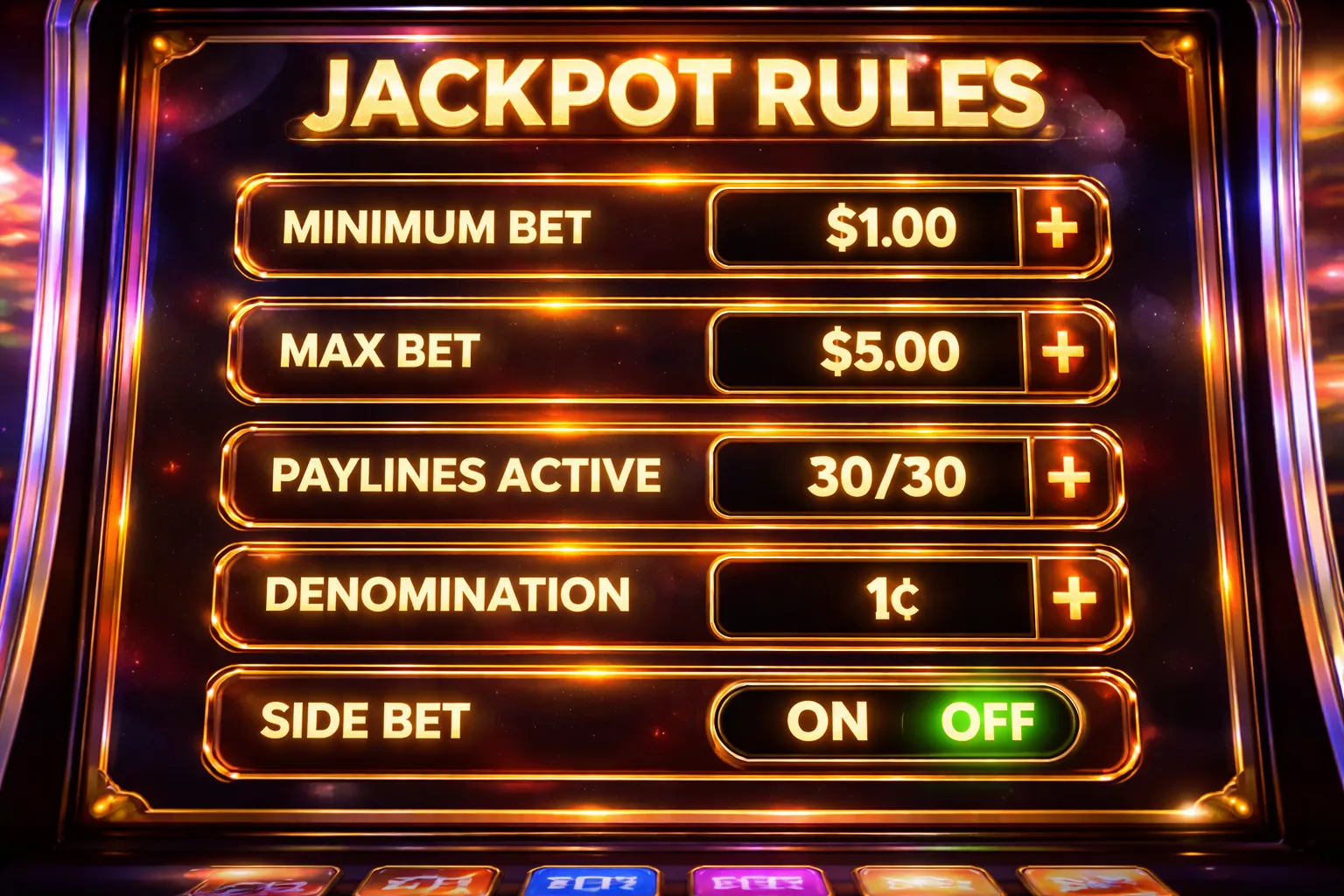
- Minimum bet. Many progressives require a minimum stake per spin. Some require max bet. Treat anything below the stated threshold as ineligible.
- Max bet. “Max bet to qualify” usually means you must stake the top allowed wager for that game and configuration. If you lower the bet by one step, you drop out.
- Qualifying coin-in. Some jackpots qualify only after you cycle a set amount of total wagers. Example, you need $25 or $50 coin-in before the progressive trigger can hit. If you stop early, you do not “carry” eligibility unless the rules say the counter persists.
- Time window. Tournaments, promos, and must-hit-by progressives can run on a fixed schedule. Eligibility can reset daily, hourly, or at the end of a session.
Bet configuration gotchas: paylines, denomination, and side bets
Progressives often tie eligibility to a specific bet shape, not just the final dollar amount.
- Paylines and ways. Some games require all lines active. If you reduce lines to cut variance, you can lose jackpot eligibility even at the same total stake.
- Denomination. Multi-denom machines can run different progressives per denom. If you switch from $0.01 to $0.05, you may switch jackpot pools and qualifying rules.
- Feature buys and side bets. A “jackpot bet,” “bonus bet,” or “ante bet” can be mandatory. If you turn it off, the progressive can disable. If you turn it on, your cost per spin rises and your RTP can change.
- Multi-level jackpots. Mini, minor, major, grand can each have different entry rules. Do not assume one setting covers all tiers.
Auto-play and quick-spin: what they change (and what they don’t)
- They do not improve odds. Auto-play and quick-spin only change pacing. The RNG still decides each outcome.
- They can change your compliance. Auto-play can keep you at a qualifying bet level. It can also keep firing spins after you meant to lower the bet or switch games.
- They can change your tracking. If eligibility depends on coin-in, faster spins burn through the requirement faster, and also burn your bankroll faster.
- They can conflict with session rules. Some casinos pause eligibility during interruptions, disconnections, or game switches. Auto-play can increase the chance you miss those details.
Reading the paytable and rules screen like a pro
You need one habit. Open the rules screen before you play. Look for exact phrases that define a qualifying spin.
- Find “Jackpot Rules” or “Progressive Rules”. Do not rely on the lobby card or the meter panel.
- Search for “must bet” language. Examples include “max bet required,” “ante bet required,” “all lines must be active,” “minimum bet $X.”
- Confirm the trigger type. Some jackpots trigger on a symbol combo. Others trigger randomly on any qualifying spin. Some trigger only during the bonus.
- Check whether eligibility ties to coin-in. If it does, confirm whether the counter resets on cash out, on game change, or on disconnect.
- Verify the pool scope. Local machine, bank-wide, casino-wide, or networked. This affects both meter growth and how strict the qualifying terms can be.
Online vs. land-based differences in qualifying terms
- Online. You often see clear toggles for side bets and eligibility, plus a written rule set inside the game. Some sites also add promo-level terms like opt-in, minimum wager per spin, or excluded games. Read the bonus and promo terms separately from the slot rules. If you want to sanity check game mechanics and fairness basics, use this online casino fairness guide.
- Land-based. Eligibility can depend on denom, bet level, and the specific cabinet or bank. Some properties require a player card for certain progressives or drawings. Staff can confirm, but the machine rules and signage control.
- Linked progressives. Both settings can run networked jackpots. Expect tighter qualifying rules, especially max-bet or side-bet requirements.
Odds, probability, RTP, and volatility (the math players should understand)
Why the jackpot odds are usually fixed and extremely long
The jackpot trigger usually has fixed odds. The RNG checks for a specific rare outcome. The jackpot meter size does not change that trigger.
Expect very long odds. Many progressives sit in the millions to one range, and some go much longer. The casino can set the hit rate. You cannot influence it with timing, bet patterns, or session length.
Read the rules panel. Some games require max bet or a side bet to qualify. If you do not qualify, your jackpot odds drop to zero.
RTP with progressives, base-game RTP vs total expected return
Progressives split return into two parts. The base game pays most wins. The jackpot pool pays rare wins.
- Base RTP, the expected return from the normal paytable and features.
- Jackpot contribution, the part of each wager that funds the progressive pool.
- Total RTP, base RTP plus the expected value of the jackpot pool you can win.
Some casinos publish only the base RTP. That number can look lower on progressives because some money routes to the meter. If you want the full math, use the game info screen or the operator disclosure. For a deeper RTP refresher, see online casino fairness explained.
A growing meter can raise total RTP over time. It still does not change the trigger odds. It changes the value of the win if it happens.
Volatility and hit frequency, why progressives feel “swingy”
Progressives feel swingy because they shift return into rare, large outcomes. You trade frequent medium wins for a small chance at a huge payout.
- Hit frequency tells you how often you win anything, even a small amount.
- Volatility tells you how rough the ride feels around the long-term average.
Many progressive slots run high volatility. You can see long dead stretches, then short bursts of wins. The jackpot itself may never appear in your lifetime of play. That is normal under long odds.
Variance and bankroll risk, what losing streaks can look like
Variance creates streaks. Long losing runs happen even when RTP looks decent on paper. High volatility makes those streaks longer and more common.
- Set a hard session bankroll. Treat it as spent money.
- Use a bet size that survives cold runs. If your balance cannot handle 100 to 300 spins without a meaningful hit, your bet is too high for that game.
- Plan for the qualify rule. If max bet qualifies, your bankroll must support max bet for the full session.
Do not judge a progressive by short sessions. Short samples mostly measure luck. They do not reveal the true edge.
Why an increasing jackpot does not necessarily mean better short-term chances
A higher meter raises the payout amount, not your short-term chance to hit it. If the trigger odds stay fixed, each spin still has the same probability.
A rising jackpot can improve expected value in one specific case. The game has a fixed probability and the meter has grown enough to offset the cost of play. Casinos know this and can use lower base RTP, qualification rules, or lower contribution rates to protect their edge.
Use a simple rule. A bigger jackpot can make the bet mathematically less bad, but it does not make it easier to win.
How you can win progressive jackpots (realistic pathways)
Direct jackpot triggers, what you can actually do
Some progressives pay the top prize only on a specific outcome. Think a rare symbol combo on the max line bet, or a specific bonus symbol count on an eligible stake.
- Read the rules screen. Confirm the exact trigger and the required bet size. Many games require max bet, a minimum coin value, or all paylines active.
- Verify eligibility. Some casinos exclude bonus funds, capped stakes, or certain jurisdictions from jackpot wins.
- Accept the baseline. You cannot influence the trigger. Your only control is whether you qualify and how many spins you buy.
Bonus features that can award progressives
Many modern progressives attach the jackpot to a bonus. The base game gets you into the feature, then the feature decides the tier.
- Wheels. You trigger a spin, then the wheel lands on Mini, Minor, Major, or Grand. The Grand slice stays tiny even when the meter grows.
- Pick’em games. You select items to reveal prizes. Some picks unlock a jackpot tier, most reveal fixed credits.
- Hold-and-spin variants. You collect special symbols, lock them, and respin. Some layouts award a tier when you fill a grid or land specific jackpot symbols.
What you can do stays the same. Qualify for the feature. Manage how much variance you can handle. Stop if the required bet pushes you outside your bankroll plan.
Tiered jackpots, why smaller tiers hit more often
Tiered progressives split the prize pool into several jackpots. The smaller tiers hit more often because the game assigns them higher probability.
- Mini and Minor. Frequent relative to the top tier. They often act like bonus prizes with a jackpot label.
- Major. Less frequent, still realistic over long play, depending on the game.
- Grand. Extremely rare. The meter size changes the payout amount, not the rarity.
| Tier | Typical hit frequency | What it means for you |
|---|---|---|
| Mini | Common | Expect to see hits in normal sessions, but payouts stay small. |
| Minor | Less common | Can meaningfully offset losses sometimes, not a long-term edge. |
| Major | Rare | Big swings, long droughts, high session variance. |
| Grand | Extremely rare | You buy a lottery-like chance each spin. Most players never hit it. |
Must-hit-by progressives, what changes and what does not
A must-hit-by progressive guarantees a win before the meter reaches a ceiling. It does not guarantee you profit.
- The window matters. A narrow window can create frequent hits, but each hit can still pay less than the total money wagered to get there.
- The reset value matters. A low reset plus a high ceiling creates a long ramp. Most of the time you play below the ceiling.
- The eligible bet matters. If you must bet higher to qualify, your cost rises faster than the meter.
These games change the experience. They create more predictable jackpot timing. They do not remove house edge.
Common misconceptions, near misses and patterns
- Near misses mean nothing. A screen that stops one symbol short does not raise your next-spin odds. Many slots design near-miss visuals to feel close.
- Streaks do not signal anything. Long dry spells and clusters of wins happen in random sequences. You cannot time a progressive.
- The meter does not “get due.” A bigger jackpot can change the value of the win, not the probability of the trigger.
- Someone else’s win does not make your next spin better. On shared progressives, the jackpot usually resets after a hit, your odds stay the same.
Realistic pathways, what winning looks like in practice
- Qualify correctly. Most failed jackpot stories come from missing a bet requirement or playing a non-eligible mode.
- Play for tiers you can actually hit. If you want a plausible jackpot outcome, target games where Mini and Minor drop often, and treat the Grand as a bonus possibility.
- Chase value only when the math supports it. If a large meter pushes expected value closer to break-even, that is the only rational reason to prefer a high jackpot. You still face huge variance.
- Control volume. A progressive win usually comes from buying enough spins while staying inside a strict loss limit.
If you want the mechanics behind these prize pools, read our guide on how progressive jackpots work.
Practical tips to improve your chances (without claiming impossible guarantees)
Always meet qualification rules
Many progressives only pay the top prize on qualifying spins. Miss the rule and you buy spins that cannot win the jackpot.
- Check the minimum bet. Some games require max bet, others require a fixed coin count or denomination.
- Confirm paylines and features. If the game lets you change lines, coins, or buy bonus rounds, read which modes qualify.
- Watch for side bets. Some jackpots sit behind an extra bet. No side bet, no jackpot eligibility.
- Recheck after changes. Switching stake, currency, or device can reset defaults. Verify the qualifying label before you spin.
Choose the right type of progressive for your goals
Different progressives pay on different schedules. Pick based on your budget and tolerance for long losing streaks.
- Local progressives. Smaller pools. More frequent hits. Lower top prizes.
- Network progressives. Larger pools across many casinos. Rarer hits. Bigger variance.
- Tiered jackpots. Mini and Minor can land often, Grand lands rarely. Your results will cluster around the small tiers.
- Must-hit-by or mystery jackpots. A guaranteed ceiling changes the math near the top of the range. These can become better value as the meter climbs.
Bankroll planning: session limits, stop-loss, and realistic jackpot-chasing budgets
You cannot control the outcome. You can control how many spins you buy and how much damage a bad run can do.
- Set a hard session bankroll. Treat it as a cost. Do not reload to chase.
- Set a stop-loss and obey it. Pick a number you can lose without changing your day.
- Use a time cap. Progressive chasing increases spin volume. Time caps slow that down.
- Size your bet for longevity. A larger stake may qualify, but it also burns bankroll faster. If the minimum bet qualifies, start there.
- Budget for variance. Progressives can run cold for long periods. Plan for zero jackpot outcomes as the default.
Comparing games: RTP, volatility, and bet size alignment
Pick games where the base game economics and the jackpot rules fit your plan.
- RTP. Higher RTP usually means lower house edge, but only for the exact settings used. Some slots change RTP by stake, feature, or jurisdiction.
- Volatility. High volatility can drain bankroll before you buy enough qualifying spins. Lower volatility can stretch sessions, but it usually caps big base-game hits.
- Qualifying bet. If a game requires max bet, compare the cost per spin to your budget. Avoid games where the qualifying stake forces you into short sessions.
- Contribution rate. A higher percent of each wager feeding the jackpot can matter, but casinos often do not disclose it. Use disclosed terms when available.
Timing myths vs. smart timing
Jackpots do not get “due.” RNG outcomes do not follow patterns you can read. Timing only helps when it changes the terms.
- Ignore “hot” and “cold” claims. Recent wins do not predict the next spin.
- Use promos that add real value. Cashback, wagering-free spins, and deposit matches can reduce your net cost if the progressive spins qualify.
- Check tournament rules. Slot tournaments can pay extra prizes, but they often use specific games or play modes. Confirm the progressive still qualifies.
- Watch must-hit-by meters. Value improves as the meter approaches the ceiling, but you still face huge variance and competition from other players.
- Track meter size versus reset. If the current jackpot sits near its reset value, you usually chase at the worst price.
Responsible gambling guardrails
Progressives tempt you to increase bet size and spin volume. Put friction in place before you play.
- Set deposit and loss limits. Use operator tools, not willpower.
- Stop after a big win. Lock profits. Do not “press” to chase the next reset.
- Do not borrow or use credit. If you need outside money, you cannot afford the variance.
- Know your red flags. Chasing losses, hiding play, breaking limits, or feeling unable to stop means you should pause and get support.
- Switch to lower-edge games when you want skill control. If you want decisions that reduce edge, use a blackjack basic strategy chart instead of chasing a long-shot jackpot.
Value hunting: break-even points and when a progressive can be “worth it”
Expected value (EV) in plain English
EV is your long-run average result per dollar wagered.
On most slots, EV stays negative. The house edge stays in place.
A progressive adds a second moving part. The jackpot grows over time. Your EV rises with it.
Most of the time, your EV still stays negative. Sometimes, if the jackpot gets large enough, the math can flip.
The break-even concept, when the jackpot offsets the edge
Break-even means EV equals zero. At that point, the jackpot value fully cancels the game’s built-in loss rate.
You can think of it as two pieces.
- Base game EV: what you lose on average from the normal paytable and features.
- Progressive EV: your share of the growing jackpot based on how often it hits.
A simplified model looks like this.
EV per $1 wagered = Base RTP + (Jackpot EV) - 1
Where:
- Base RTP is the return from everything except the progressive jackpot.
- Jackpot EV is the jackpot amount multiplied by your chance of triggering it per $1 wagered.
| Input | What it means |
|---|---|
| Base RTP (excluding jackpot) | Your baseline return before the progressive value |
| Hit rate per $1 wagered | Your chance to win the jackpot for each $1 of coin-in |
| Current jackpot amount | The prize on the meter right now |
| Reset amount | The starting jackpot after a win |
Break-even happens when:
Jackpot amount ≥ (1 - Base RTP) ÷ (Hit rate per $1)
If the jackpot sits below that level, you pay for the thrill. If it sits above it, the progressive can be “worth it” on paper.
That does not mean you “should” play. Variance stays brutal. Your bankroll can still crater before the math shows up.
Why advantage play is rare
- You usually do not get the hit rate. Casinos and studios do not publish the true trigger probability.
- You often cannot isolate the base RTP. Many games quote RTP that already includes some assumed jackpot value.
- Qualifying rules block small-stake play. Max-bet or high-bet requirements force higher loss rates per spin.
- Competition is real. If a progressive gets “positive,” other players pile in and the edge disappears fast.
- Rules vary by casino. Contribution rate, eligibility, and jackpot type change the math.
Data you need to evaluate value
- Contribution rate: the percent of each bet that feeds the jackpot pool. Higher rate, faster growth.
- Hit rate: the jackpot trigger frequency, ideally stated as odds per spin or per dollar wagered.
- Reset value: the post-win starting point. A high reset raises average value over time.
- RTP disclosure details: whether the posted RTP includes the progressive or excludes it. If you cannot tell, your EV estimate can be wrong.
- Bet qualification rules: minimum bet, max-bet requirement, and any “eligible spins only” language.
If you cannot find at least RTP treatment, reset value, and qualification rules, you are guessing. Use RTP basics to sanity-check what a game can realistically return, see what RTP means and how to use it.
Red flags that make chasing costly
- Max-bet required to win. You multiply your hourly loss rate to access the same jackpot.
- Low RTP variants. Some branded progressives run lower RTP than the non-progressive versions.
- Hidden or vague jackpot odds. No hit rate, no credible break-even estimate.
- Multiple jackpots with split contribution. Your money may feed several meters, reducing value for the top prize.
- “Must bet X to qualify” plus high volatility. You get long dry spells at a higher stake.
Taxes, payouts, and withdrawal realities after you hit a progressive
How progressive jackpot payouts usually work
Most progressives pay as a single cash payout. Some branded jackpots can pay in installments. Read the jackpot terms before you play.
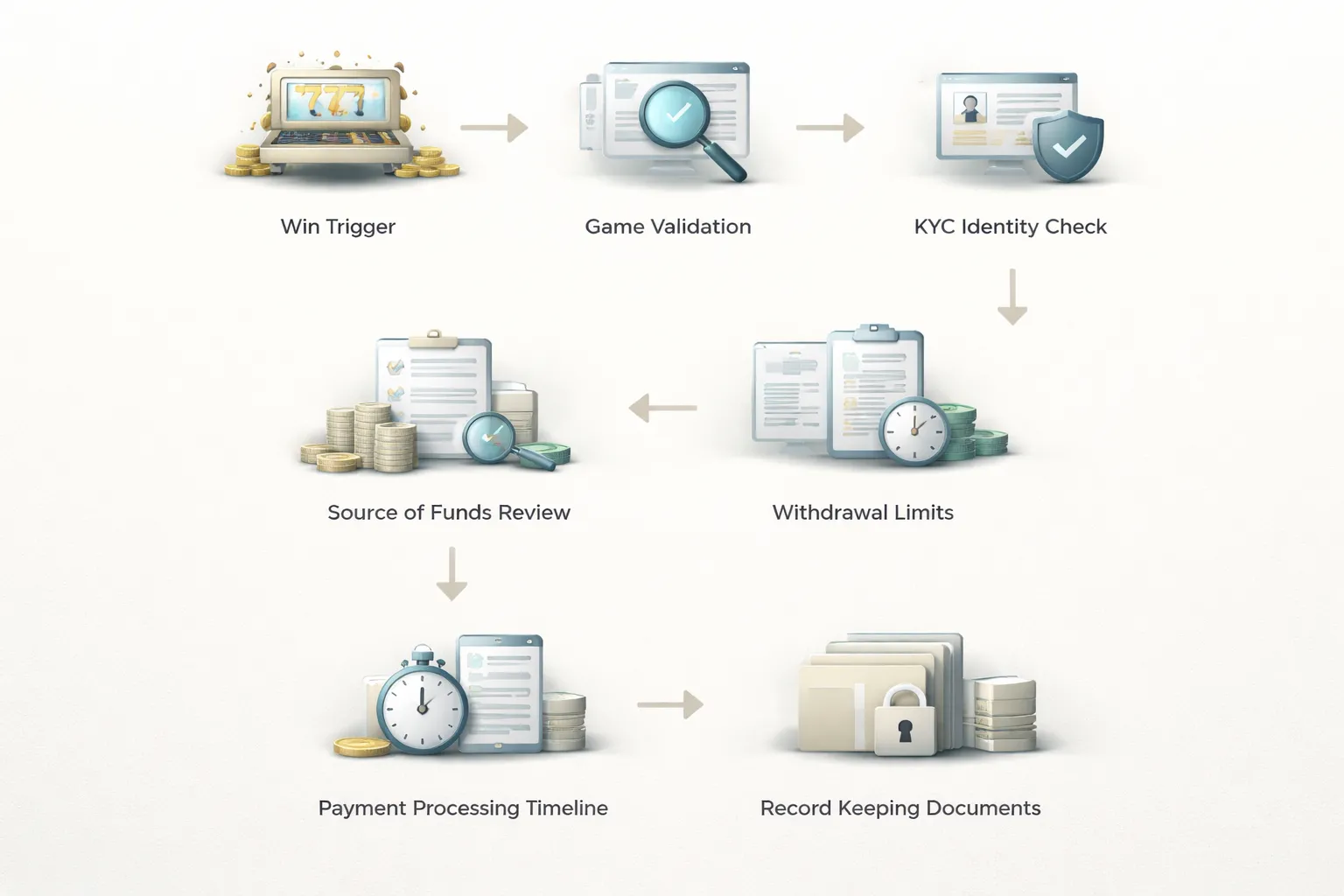
After the hit, the casino freezes the game session. You then move into verification and payment processing. Expect delays on large wins. Plan for days, not minutes.
- Game validation: the casino confirms the RNG outcome and jackpot trigger.
- Account review: they check your identity, payment method, and play history.
- Payment approval: finance signs off, then schedules the payout.
Identity checks and source-of-funds reviews
Big wins trigger extra checks because casinos must follow anti-money-laundering rules. You do not control this. You can control how prepared you are.
- ID and address: passport or driver license, plus a recent utility bill or bank statement.
- Payment method proof: card images, e-wallet screenshots, or bank account proof.
- Source of funds: proof of income or savings if they ask, payslips, tax returns, bank statements.
- Source of wealth: for very large payouts, they may ask how you built your assets over time.
Keep your documents current before you play. Use your own payment methods only. Do not mix accounts with other people.
Tax considerations by jurisdiction
Tax rules vary by country and state. You need local advice. Ask a qualified tax professional these points.
- Is gambling taxable where I live? Some places tax winnings, some do not.
- Does the casino withhold tax? Withholding can happen at payout or later via reporting.
- Do I owe tax where the casino operates? Cross-border play can create extra reporting.
- What records do I need? Some systems allow losses to offset winnings, with strict documentation.
- What forms will I receive? Ask what the operator issues for reporting.
Do not spend the full headline number until you know your net amount after tax and fees.
Online withdrawal limits and real timelines
Online casinos often cap withdrawals. A big progressive can arrive in chunks.
- Daily, weekly, or monthly caps: limits can force staged payouts over weeks or months.
- Method limits: cards, e-wallets, and bank transfers each have different ceilings.
- Provider processing time: bank wires can take longer than e-wallets.
- Pending period: some operators add internal review time before funds leave.
Check three things before you request a payout. The max cashout per period, the max cashout per transaction, and the method-specific rules. If you need a refresher on the mechanics behind these prizes, see how progressive jackpots work.
Documentation to keep after a big win
Save evidence as you play, not after the fact. It helps with verification, disputes, and taxes.
- Win confirmation: screenshots of the win screen, jackpot meter, and transaction ID.
- Casino statements: bet history, game logs, deposit and withdrawal history.
- Payment records: bank statements, e-wallet receipts, wire confirmations.
- Session notes: date, time, game name, stake level, and device used.
- Support transcripts: email threads and chat logs with the operator.
Store copies offline. Keep them for at least the local tax record period, or longer if you play across borders.
Progressive jackpots beyond slots: quick comparisons
Progressive blackjack and table-game side bets, how they differ from slot progressives
Most “progressive blackjack” prizes sit on a side bet, not on your main hand.
- Separate bet: You place a fixed side wager to qualify. Your main blackjack bet often does not feed the jackpot.
- Different trigger: You win with specific card combos, like suited A-K, pocket pairs, or a dealer upcard match. Slots usually use a hidden RNG trigger tied to a spin.
- Lower hit rate, clearer conditions: The rules list the winning hands and pay tiers. You can estimate odds from the deck and number of decks. You still face a strong house edge on many side bets.
- Jackpot funding: A slice of each side bet contributes to the meter. Some casinos cap contributions or only contribute above a minimum stake.
- Best practice: Treat the side bet as its own game. Track its paytable and qualifying rules. Keep your main blackjack play tight with basic strategy, start with this blackjack basic strategy chart.
Video poker progressives, paytables and why “break-even” comes up more often
Video poker progressives can move the math in your favor because the payouts link to real hand odds and a published paytable.
- Paytable drives everything: The base game return comes from the paytable. Small changes matter, like full house and flush payouts.
- Progressive usually boosts the top hand: Most progressives add value to royal flush payouts, sometimes straight flushes.
- Break-even points exist: When the meter rises enough, the added expected value can offset the house edge. That is why players talk about “break-even” more with video poker than slots.
- You still need correct play: Strategy errors drop return fast. A strong meter does not save poor holds and discards.
- What to check before you play: The exact paytable, the progressive reset value, the current jackpot, the bet requirement for full payout, and whether the progressive pays full value on max coins only.
Lottery-style jackpots vs. casino progressives, odds and payout structure differences
Lottery jackpots and casino progressives both “grow,” but they work under different rules.
- Odds: Lotteries use fixed draw odds that do not change with ticket volume. Casino progressives use fixed game odds per spin or hand, even as the meter grows.
- Payout structure: Lotteries often advertise an annuity, with a lower cash option. Casino progressives usually pay a single lump sum, subject to operator terms and verification.
- Contribution: Lottery pools come from ticket sales after costs, taxes, and set allocations. Casino progressives take a defined contribution rate from qualifying wagers.
- Split prizes: Lottery jackpots can split among multiple winners. Casino progressives can also split on some table-game side bets, but many slot jackpots pay to one winner per hit.
- Practical takeaway: In lotteries, jackpot size does not change your odds, it changes the payout. In casino progressives, jackpot size can change the value of a wager, but it never changes the hit probability.
FAQ
What is a progressive jackpot slot?
A progressive jackpot slot funds a shared prize pool. A small part of many players’ wagers adds to the meter. The jackpot grows until one spin hits the trigger. After a win, the meter resets to a preset seed amount and starts growing again.
Do bigger jackpots mean better odds?
No. The RNG and the jackpot trigger define hit probability. The meter size changes the payout, not your chance to hit. A larger jackpot can improve the expected value of a qualifying bet, but it never makes the jackpot easier to win.
Do you need max bet to win the jackpot?
Often, yes. Many games require a max bet or a minimum coin value to qualify for the top progressive. Some allow smaller bets to win a reduced jackpot. Check the paytable and rules before you spin. If you do not qualify, you cannot win it.
What is a “must-hit-by” jackpot?
A must-hit-by progressive sets a maximum meter value. The game guarantees a jackpot hit at or before that number. The trigger still stays random on each spin. Your odds per spin do not rise because the meter climbs, but the time to a hit is capped.
What is a “mystery” progressive?
A mystery progressive awards at a random time or random spin event, not a specific symbol combination. You can win even if you do not land a jackpot screen. The RNG picks a trigger point. Qualifying bet rules still apply.
Can you win a progressive jackpot on free spins or bonus rounds?
Sometimes. Some games allow jackpots on bonus features, others block it on free spins or require a cash wager. Read the feature rules. If the rules say “jackpot disabled,” those spins cannot trigger it. If allowed, you still must meet the bet requirement.
Do progressive jackpots pay one winner or can they split?
Most progressive slot jackpots pay one winner per hit. Some network progressives can pay multiple tiers to different players, but the top meter still goes to one trigger. Splits are more common on table-game progressives and some side bets than on slots.
How can you improve your chances of winning?
You cannot change the RNG. You can control volume and qualification. Play only when you can afford many spins. Always meet the bet requirement. Prefer higher RTP games for better baseline value, see our best RTP slots guide.
Are online progressive jackpots fair?
Legit casinos use audited RNGs and certified game math. Use licensed operators and check the provider’s certification. Avoid unlicensed sites. Fair does not mean favorable. The house edge still applies, and the progressive only changes the payout structure, not your long-term odds.
What happens after someone wins the progressive?
The jackpot resets to a seed value set by the game. It then starts growing again from new wagers. Some games show the seed in the paytable. The reset does not change hit probability. It only reduces the current payout until the meter rebuilds.
Conclusion
Conclusion
Progressive jackpots grow from player wagers. The RNG still controls outcomes. The progressive changes payout size, not your long-term odds.
If you want a real edge, treat it like a value check. Start with the game rules. Confirm the qualifying bet. Check the contribution rate if the casino lists it. Compare the current meter to the seed and typical hit range if the game publishes a must-hit-by cap.
- Only play when you can meet the qualifying bet, otherwise you pay for the meter without access to it.
- Choose a fixed budget, then stop. A bigger jackpot does not reduce variance.
- Prefer transparent jackpots, seed value, must-hit-by, and clear eligibility rules.
Your best practical move is simple. Read the paytable and eligibility rules before you spin. Use a qualifying stake only if it fits your bankroll, then play short sessions. For basics on setup and features, see how to play online slots.
-
Online Casino Fairness Explained: RNG, RTP, House Edge & Provably Fair
8 months ago -
Slot RTP Explained: What RTP Means and How to Use It
8 months ago -
How to Play Online Slots: Rules, Features & Beginner Tips
8 months ago -
How Slot Jackpots Work: Progressive Jackpots Explained
8 months ago -
How to Play Online Blackjack: Rules, Payouts & Quick Start Guide
8 months ago
-
- The jackpot meter, how it updates and what it represents
- RNG basics, how spins are decided and why outcomes are independent
- Jackpot trigger methods, random events, symbol combos, and feature-based awards
- Seed and reset mechanics, what happens immediately after a jackpot win
- Network architecture, standalone, local-area, and wide-area progressives
- Auditing and compliance, how regulators and labs validate fairness
-
- Why the jackpot odds are usually fixed and extremely long
- RTP with progressives, base-game RTP vs total expected return
- Volatility and hit frequency, why progressives feel “swingy”
- Variance and bankroll risk, what losing streaks can look like
- Why an increasing jackpot does not necessarily mean better short-term chances
-
- What is a progressive jackpot slot?
- Do bigger jackpots mean better odds?
- Do you need max bet to win the jackpot?
- What is a “must-hit-by” jackpot?
- What is a “mystery” progressive?
- Can you win a progressive jackpot on free spins or bonus rounds?
- Do progressive jackpots pay one winner or can they split?
- How can you improve your chances of winning?
- Are online progressive jackpots fair?
- What happens after someone wins the progressive?
-
- The jackpot meter, how it updates and what it represents
- RNG basics, how spins are decided and why outcomes are independent
- Jackpot trigger methods, random events, symbol combos, and feature-based awards
- Seed and reset mechanics, what happens immediately after a jackpot win
- Network architecture, standalone, local-area, and wide-area progressives
- Auditing and compliance, how regulators and labs validate fairness
-
- Why the jackpot odds are usually fixed and extremely long
- RTP with progressives, base-game RTP vs total expected return
- Volatility and hit frequency, why progressives feel “swingy”
- Variance and bankroll risk, what losing streaks can look like
- Why an increasing jackpot does not necessarily mean better short-term chances
-
- What is a progressive jackpot slot?
- Do bigger jackpots mean better odds?
- Do you need max bet to win the jackpot?
- What is a “must-hit-by” jackpot?
- What is a “mystery” progressive?
- Can you win a progressive jackpot on free spins or bonus rounds?
- Do progressive jackpots pay one winner or can they split?
- How can you improve your chances of winning?
- Are online progressive jackpots fair?
- What happens after someone wins the progressive?
-
Reload Bonus Explained: What It Is and When It’s Worth Claiming
6 months ago -
Online Casino Licensing Explained: Authorities, Licenses & How to Check One
8 months ago -
Best Live Dealer Casinos: Where to Play Live Blackjack, Roulette & More
8 months ago -
Best Online Casinos for High Rollers: VIP Perks, High Limits & Exclusive Bonuses
8 months ago -
Fast Payout Online Casinos: Best Sites for Quick Withdrawals
8 months ago
-
Online Casino Customer Support: What to Look For (Live Chat, Email, Response Times)
8 months ago -
Sign Up for an Online Casino: Create an Account in Minutes
8 months ago -
Online Casino Payment Safety Tips: How to Deposit and Withdraw Securely
8 months ago -
What to Do If an Online Casino Won’t Pay Out: Step-by-Step Actions
8 months ago -
How to File a Complaint Against an Online Casino (Plus ADR Explained)
8 months ago