Play Casino Games Online: Start Playing Real Money & Demo Games

Online casino games let you play slots, table games, and live dealer titles on your phone or computer. You can play demo games to learn rules and features. You can play real money games to win cash, using deposits, bonuses, and withdrawals.
This guide shows you how to start fast and avoid common mistakes. You will learn the key game types, how demo mode differs from real money play, what to check before you deposit, and which payment and support features matter. You will also learn how to read RTP, volatility, wagering terms, and game rules, so you pick games that fit your budget and goals.
Use our tips on how to read an online casino review to spot weak licensing, vague bonus terms, and inflated ratings.
Key Takeaways
- In het kort: Pick licensed casinos with clear rules, fair RTP, and fast payouts.
- In het kort: Use demo mode to learn games, then switch to real money only when you know the stakes.
- In het kort: Read bonus terms before you deposit, focus on wagering, max bet limits, and game contribution.
- In het kort: Match volatility to your bankroll, high volatility needs larger buffers and longer sessions.
- In het kort: Check payment limits, fees, and withdrawal speed, not just deposit options.
- In het kort: Verify support quality, test live chat, and confirm hours and response times.
- Demo vs real money: Demo play helps you learn rules and features. Real money adds bankroll pressure, withdrawal rules, and bonus limits. Treat them as different tests.
- RTP and volatility: RTP shows the long-run return, not your short-run result. Volatility shows how wins cluster. High volatility increases losing streak risk.
- Bonus terms that matter: Check wagering multiple, time limit, max cashout, max bet while wagering, and which games count. Avoid vague language.
- Before you deposit: Confirm the license, ownership, and audit marks. Read the withdrawal policy and KYC steps. Know the minimum deposit and minimum withdrawal.
- Payments: Look for clear limits per method, realistic processing times, and low fees. If you plan to start small, use a low deposit casino with fair withdrawal rules.
- Reviews: Trust reviews that cite terms, licensing, and payment testing. Skip reviews that hide conditions behind “T&Cs apply” with no details.
What it means to play casino games online (real money vs demo)

Demo mode explained: practice, rules learning, and feature testing
Demo mode lets you play with virtual credits. You do not deposit. You do not withdraw. You play to learn the game.
- Practice: You can test bet sizes, volatility, and bankroll swings without risking cash.
- Learn rules: You can understand paylines, paytables, side bets, and blackjack or roulette limits before you stake money.
- Test features: You can check bonus rounds, free spins triggers, gamble features, autoplay, and buy bonus options if the demo includes them.
Demo mode can differ from real money in small ways. Some studios cap session length, disable some options, or use a different game build. Treat demo as training, not proof of results.
Real money mode explained: deposits, wagering, and withdrawals
Real money mode links play to your balance. You deposit, place real bets, then withdraw winnings if you meet the casino rules.
- Deposits: You add funds by card, bank transfer, e-wallet, prepaid voucher, or crypto, based on what the casino supports.
- Wagering: Every spin or hand stakes cash. If you take a bonus, wagering requirements can apply. You must meet them before you can withdraw bonus-linked funds.
- Withdrawals: You request a payout to an approved method. The casino may require KYC checks first. Some methods have different minimums, fees, and processing times.
If you plan to start small, use low deposit online casinos with clear minimums and fair cashout rules.
Key differences: RTP parity, bonus eligibility, and bet limits
| Factor | Demo play | Real money play |
|---|---|---|
| RTP | Often the same as real money when it is the same game version. | Set by the game and can vary by casino or jurisdiction if multiple RTP versions exist. |
| Bonuses | No welcome bonus, no free spins with cash value, no VIP rewards. | Eligible for bonuses, promos, loyalty points, and jackpots, based on terms. |
| Bet limits | May not match real money limits. Some demos cap max bet or features. | Real limits apply, including table minimums, max bets, and max win rules. |
| Withdrawals | None. Virtual credits only. | Available, subject to KYC, payment method limits, and casino policies. |
Check the game info panel for RTP and version notes. If the casino offers multiple RTP settings, the real money number matters.
Who each mode is best for: beginners, casuals, and high-intent players
- Beginners: Start with demo. Learn rules, limits, and features. Move to real money after you can track your spend and understand payout terms.
- Casual players: Use demo for entertainment and game discovery. Use small real money stakes only when you understand volatility and the casino withdrawal rules.
- High-intent players: Use real money to access bonuses, jackpots, and loyalty rewards. Read wagering rules, max cashout caps, and RTP settings before you deposit.
Online casino game types you can play
Online casinos group games by speed, rules, and payout style. Pick types that match your risk tolerance and bankroll. Use demo mode to learn mechanics, then move to real money when you understand RTP, volatility, and bonus limits.
Slots
Slots run on RNG. You set your bet, spin, and get instant results. Your main decision is game style and volatility.
- Classic slots: Simple layouts, often 3 reels. Fewer features. Clear paytables. Good for quick sessions.
- Video slots: 5 reels and more bonus tools. Look for free spins, multipliers, wilds, and scatter payouts. Check volatility before you stake up.
- Megaways slots: Reel setups change each spin. You get many ways to win, but swings can be larger. Keep stakes small until you track your average session loss.
- Progressive jackpots: Part of each bet funds a shared prize pool. RTP can vary by title. Some jackpots require max bet or a side bet, check the rules before you play.
Table games
Table games usually offer lower house edges than slots when you use basic strategy. Rules change the math, always read the table limits and payouts.
- Blackjack: Strategy-driven. Rule points that matter include dealer hits or stands on soft 17, double after split, resplit rules, and blackjack payout (3:2 beats 6:5).
- Roulette: Bet selection drives your expected loss. European wheels (single zero) usually beat American wheels (double zero). Outside bets lower variance, inside bets raise it.
- Baccarat: Simple betting. Banker bet often has the best odds, but carries a commission or adjusted payout. Avoid high-edge side bets unless you accept the cost.
- Variants: Side bets and rule tweaks change volatility. Treat them as new games, not small changes.
Live dealer games
Live dealer tables stream real dealers in real time. You place bets through the interface. Results come from real cards, wheels, or equipment, not a slot-style RNG.
- Real-time tables: Live blackjack, roulette, and baccarat with fixed betting windows. Table limits can run higher than RNG versions.
- Chat: You can message the dealer and other players. Use it for basic table flow, not for strategy help.
- Game shows: Fast rounds with bonus features and multipliers. Volatility can spike. Use small stakes if you chase big outcomes.
Video poker and specialty games
Video poker uses a standard deck model with RNG. Your choices affect return, so learn the correct holds for your variant.
- Paylines and paytables: Video poker pays by hand rank, not paylines. Look for stronger paytables because small changes cut RTP.
- Hands and variants: Jacks or Better, Deuces Wild, and Joker Poker play differently. Do not reuse strategy charts across variants.
- Strategy basics: Use a simple hold chart, avoid guessing. Stick to one game until you play it correctly at your stake level.
Bingo, keno, and scratch cards
These are fast-play options with simple mechanics. They suit short sessions and small budgets, but you still need to check RTP and limits.
- Bingo: Tickets auto-daub in many online rooms. Costs stay low, but prizes depend on room traffic and prize structure.
- Keno: Pick numbers and accept high variance. More picks can change payout curves, read the paytable before you increase stakes.
- Scratch cards: Instant reveal games. Treat them like micro-slots, watch per-play cost and maximum prize caps.
If you want a fast way to compare game libraries, limits, and rule sets, use how to read an online casino review before you deposit.
How to start playing casino games online step by step
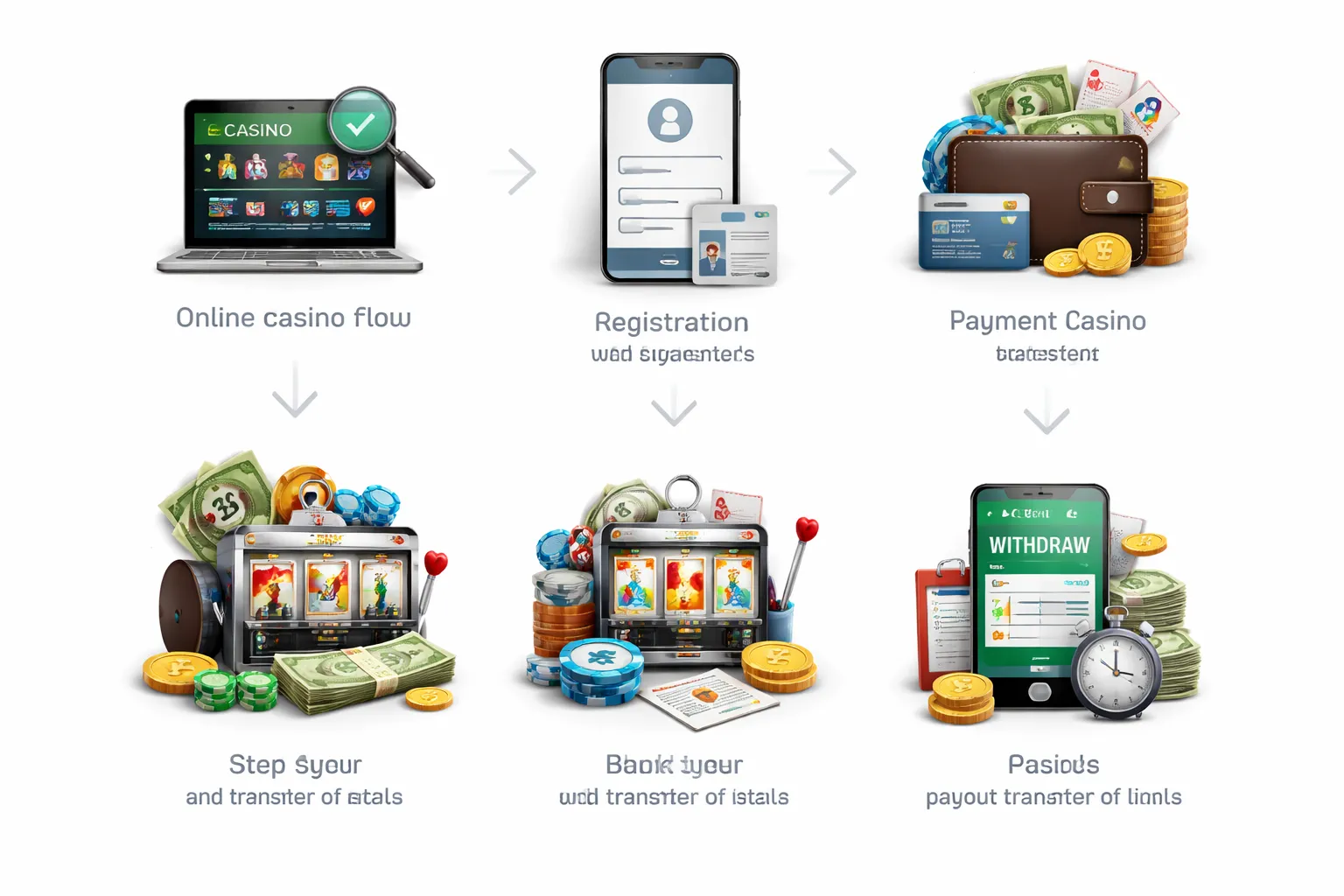
1) Find a reputable casino
- Confirm licensing. Look for a license number and regulator on the footer and in the terms. Match the operator name to the license holder. Do not rely on a logo alone.
- Check game audits. Legit casinos publish RNG testing from labs such as eCOGRA, iTech Labs, GLI, or BMM. You want a current certificate tied to the casino domain or game provider list.
- Verify reputation signals. Check how long the brand has operated, who owns it, and whether it has a clear dispute path. Scan recent player reports for repeated issues, slow payouts, bonus confiscations, or KYC loops.
- Confirm legality where you live. Rules vary by country and state. Use this online casino legality guide before you register.
2) Create an account and pass KYC without delays
- Use your real details. Match your name, address, and date of birth to your bank or card. Small mismatches trigger manual review.
- Prepare documents. Most casinos ask for ID, proof of address, and sometimes a payment proof. Common proofs include a bank statement or utility bill dated within the last 90 days.
- Upload clean files. Use color images, full corners visible, no blur, no glare. Keep file sizes within the site limit.
- Verify early. Do KYC before you deposit or right after your first deposit. This reduces withdrawal holds later.
3) Deposit funds and avoid fees
- Pick a method that fits your goal. Cards are fast but can have declines. E-wallets often speed up withdrawals. Bank transfers suit larger deposits but can take longer.
- Check deposit and withdrawal compatibility. Some methods allow deposits but restrict withdrawals. Confirm both directions before you fund the account.
- Watch hidden costs. Check for cashier fees, currency conversion markups, and minimum deposit rules. If you play in a different currency than your bank, conversion costs can exceed any bonus value.
- Set a hard deposit limit. Use responsible gambling tools if available. Lock your maximum weekly or monthly spend before you start.
4) Select a game and set stakes
- Start with demo mode. Learn rules, paylines, and bonus features without burning bankroll. Then move to real money when you can track bet size and outcomes.
- Read the key numbers. Check RTP, volatility, min and max bet, and any side bet costs. RTP shows long-run return, volatility drives swing size.
- Use simple bet sizing. Keep your base bet at 0.5% to 2% of your session bankroll. If you bring $100 for the session, a $0.50 to $2 base bet keeps you alive through normal variance.
- Plan the session. Set a time cap, a loss cap, and a win cap. Stop when you hit any cap. Do not increase stakes to chase losses.
5) Withdraw winnings safely
- Know payout times. Many casinos process withdrawals in stages, internal review, then payment delivery. E-wallets tend to land faster than cards or bank transfers.
- Check limits. Review minimum cashout, maximum per transaction, and maximum per week or month. High wins can require multiple withdrawals.
- Use the same payment route. Casinos often return funds to the original deposit method first, then pay profit via an approved method. This reduces fraud but affects speed.
- Expect documentation on larger cashouts. Big withdrawals can trigger enhanced checks, fresh proof of address, payment ownership proof, and source of funds. Keep statements ready and consistent.
- Track every transaction. Save confirmation emails, screenshots of cashout requests, and support tickets. You need a clear trail if a payout stalls.
How to choose a safe and legitimate online casino
Licensing bodies to look for, and what they regulate
Start with the license. A real-money casino should show a license number, the regulator name, and the legal operator entity in the footer. Cross-check the license on the regulator site.
- UK Gambling Commission (UKGC). Sets strict rules on player protection, anti-money laundering, marketing, and dispute handling. Expects clear terms and fast complaint routes.
- Malta Gaming Authority (MGA). Regulates game fairness controls, player funds handling, and operational standards. Requires reporting and oversight of key systems.
- Gibraltar Regulatory Authority (GRA). Focuses on operator probity, compliance, and financial safeguards for established brands.
- Isle of Man Gambling Supervision Commission. Strong on compliance, AML checks, and oversight of gambling software and operations.
- State and provincial regulators, such as the Pennsylvania Gaming Control Board, New Jersey Division of Gaming Enforcement, Michigan Gaming Control Board, Ontario iGaming. These typically enforce local rules on game approval, data security, responsible gambling, and payouts through approved payment rails.
A license does not guarantee a perfect experience. It does set minimum standards and gives you a regulator to escalate to if the casino stalls.
Fairness and security signals, RNG certification, SSL, and audits
- RNG certification. Look for testing lab names like eCOGRA, iTech Labs, GLI, BMM Testlabs. These labs test RNG behavior and game math and publish certificates for specific platforms or game sets. Check dates and scope, old certificates can cover obsolete builds.
- Game provider reputation. Big studios publish RTP ranges and ship the same game builds to many licensed casinos. Unknown providers can still be fine, but you need stronger proof like current lab reports.
- SSL encryption. Your casino site should use HTTPS. Click the padlock to confirm a valid certificate and matching domain. Do not log in or deposit on HTTP pages.
- Independent audits. Some operators publish payout reports, compliance statements, or annual assurance notes. Treat missing audit info as a risk signal, not a deal breaker.
- Clear RNG vs live dealer labeling. You should always know if you play software RNG or a streamed table. See the difference between live dealer and RNG games if the casino blurs the line.
Responsible gambling tools you should see
Safe casinos put controls in your account settings. You should be able to set them without contacting support.
- Deposit limits. Daily, weekly, and monthly caps. A good casino applies decreases fast and increases only after a cooling-off period.
- Loss limits and wager limits. Useful if you want tighter control than deposits alone.
- Time limits and session reminders. Pop-ups that show time spent and net result.
- Time-out. Short breaks, often 24 hours to 6 weeks. You cannot reverse it during the lock.
- Self-exclusion. Longer blocks, often 6 months to 5 years. Reputable operators stop marketing during exclusion and block new accounts.
- Reality checks and activity history. Easy access to your bets, deposits, and withdrawals.
Customer support quality, availability, channels, and resolution speed
- Availability. 24/7 live chat matters if you play nights or weekends. Limited hours can delay withdrawals and verification fixes.
- Channels. Live chat for urgent issues, email for paper trails, phone for complex identity and payment problems. A ticket system helps you track progress.
- Resolution speed. Test support before you deposit. Ask one specific question about withdrawal limits or verification steps. Time the reply. Save the transcript.
- Quality signals. The agent gives direct answers, links to the exact policy page, and states time frames. Vague replies usually mean slow escalation.
Red flags to avoid, vague T&Cs, delayed payouts, and restricted wins
- Missing license details. No license number, no legal entity, no regulator link, or a license that does not match the brand name.
- Vague terms. Rules that let the casino void winnings for broad reasons like irregular play, bonus abuse, or verification at our discretion, without definitions and timelines.
- Withdrawal friction. No clear withdrawal limits, no stated processing times, or repeated requests for the same documents after approval.
- Restricted wins. Caps that limit max cashout per win, per day, or per bonus, buried deep in bonus terms. Watch for low caps that make big wins hard to collect.
- Conflicting payment rules. The cashier shows methods that support later blocks, or the casino pushes you to switch methods after you win.
- Weak security posture. No HTTPS, broken certificate warnings, or forced downloads for basic play.
- Too-good bonus math. Extreme bonuses with high wagering and short expiry often lead to disputes.
Use a simple checklist. Verify the license, confirm RNG testing, scan withdrawal and bonus limits, then test support. Do this before your first deposit.
Bonuses and promotions: how they work (and how to evaluate them)
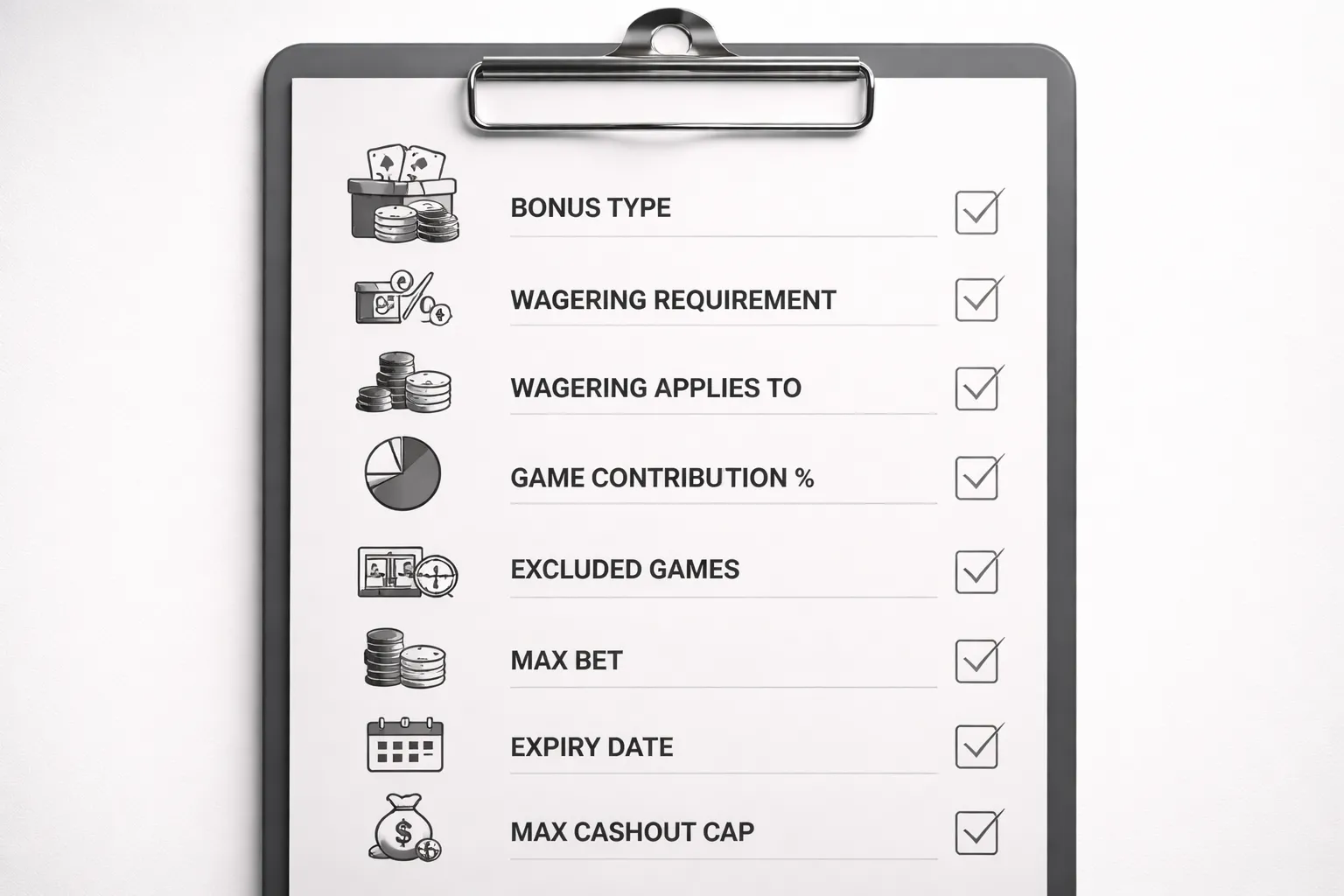
Common promo types
- Welcome offers. Usually a match bonus on your first deposit, sometimes with a second deposit bonus. Often includes free spins.
- Free spins. Spins on specific slots. Winnings often become bonus funds with wagering rules, or convert to cash after you meet terms.
- Cashback. A percentage of net losses returned over a day or week. Some cashback is cash, some is bonus credit with wagering.
- Reloads. Extra credit on later deposits, often tied to a schedule, such as weekends, Tuesdays, or VIP tiers.
Wagering requirements, plain math
Wagering tells you how much you must bet before you can withdraw bonus money, and sometimes bonus-linked winnings.
Simple example. You deposit $100. The casino gives a 100% match bonus, so you get $100 bonus funds. The wagering is 35x on the bonus.
- You must place $100 x 35 = $3,500 in bets before the bonus balance becomes withdrawable.
- If wagering applies to deposit + bonus, you must place ($100 + $100) x 35 = $7,000 in bets.
Use this rule. Lower wagering and bonus-only wagering usually beat high wagering and deposit + bonus wagering.
Game contribution and excluded games
Casinos rate games differently for wagering. This changes the real cost of a bonus.
- Slots often count 100%. A $10 slot spin adds $10 toward wagering.
- Table games often count less. Many casinos set roulette, blackjack, and baccarat at 0% to 20%.
- Some games do not count at all. Live dealer, video poker, and jackpot slots often sit on exclusion lists.
Quick impact example. You need $3,500 wagering. If your game contributes 20%, you must place $3,500 / 0.20 = $17,500 in bets to clear it.
Max bet rules, time limits, and withdrawal caps
These rules cause most bonus disputes. Check them before you opt in.
- Max bet per spin or hand. Common limits run $5 to $10 while a bonus is active. If you bet over the cap, the casino can void bonus winnings.
- Time limits. You may need to meet wagering in 7 to 30 days. Short windows push you into higher risk play.
- Max cashout and withdrawal caps. Some bonuses cap withdrawals to a multiple of the bonus, such as 5x or 10x. Others cap free spin winnings at a fixed amount.
- Sticky vs non-sticky bonuses. Sticky means you cannot withdraw your deposit until you finish wagering. Non-sticky lets you forfeit the bonus and withdraw your deposit, subject to normal withdrawal rules.
Read the promo terms, then confirm them with support if anything looks vague. Use online casino customer support as a test before you deposit.
When skipping a bonus is the smarter move
- You plan to play table games and the contribution rate is low or zero.
- The wagering is high, or it applies to deposit + bonus.
- The promo has a low max bet cap that conflicts with your normal stakes.
- The expiry window is short, or the terms let the casino change or cancel the bonus without clear notice.
- The max cashout cap turns a good win into a small withdrawal.
- You want fast withdrawals and clean bankroll accounting. A no-bonus deposit often keeps withdrawals simpler.
| Term | What to look for | What to avoid |
|---|---|---|
| Wagering | 20x to 35x, bonus-only | 45x+, deposit + bonus wagering |
| Game contribution | Slots 100%, tables at least 10% to 20% | Most non-slots at 0% |
| Max bet | Clear cap, fits your stake | Low cap with strict void clauses |
| Expiry | 14 to 30 days | 1 to 7 days |
| Cashout cap | No cap, or high multiple | Small fixed cap on winnings |
Key game mechanics that affect your results
RTP and house edge, what they mean and how to compare games
RTP (return to player) tells you the long-run percentage a game pays back. A slot at 96% RTP returns about $96 for every $100 wagered, over a huge number of spins.
House edge is the gap between 100% and RTP. A 96% RTP game has a 4% house edge.
- Use RTP to compare the same game type. Compare slots to slots, roulette to roulette, blackjack ruleset to blackjack ruleset.
- Check the specific version. Many slots ship with multiple RTP settings. Pick casinos that show the RTP in the game info panel.
- Table games depend on rules and your decisions. Blackjack and video poker can swing from low edge to high edge based on strategy and paytables.
Volatility and variance, why it changes win frequency and bankroll needs
Volatility (variance) describes how a game distributes payouts.
- Low volatility. More small wins. Smaller swings. Your balance lasts longer, but top wins tend to cap lower.
- High volatility. Fewer wins. Bigger swings. You need a larger bankroll to handle long losing stretches.
Match volatility to your session plan. If you play short sessions or tight budgets, avoid high volatility slots.
Hit frequency, max win, and bonus features, what to look for
Hit frequency shows how often a game pays any win, not a profitable win. A game can “hit” often and still drain your balance if most hits are tiny.
- Higher hit frequency. More feedback, but many wins may be below your bet size.
- Lower hit frequency. Longer dead spins, with more value pushed into bonus rounds and bigger hits.
Max win is the payout cap, shown as a multiplier like 5,000x or 50,000x. A higher max win usually pairs with higher volatility. Treat it as a ceiling, not an expectation.
Bonus features change how money returns to you. Focus on mechanics that shift payout distribution.
- Free spins and multipliers. Often drive most of the RTP in slots. Strong for burst payouts, weak for steady returns.
- Buy bonus. Lets you pay to trigger a feature. It increases speed and variance. Your results can swing fast.
- Sticky or expanding wilds. Can raise peak wins but also extend dry spells, depending on the math model.
Progressive jackpots, contribution rates and jackpot odds basics
Progressive jackpots grow as players wager. A small slice of each bet funds the prize pool. This slice is the contribution rate. Some games show it, many do not.
- Know what you pay for. If part of each bet feeds the jackpot, base game payouts can feel weaker.
- Jackpot odds are long. Most progressives require rare symbol sequences or specific bonus outcomes. You should expect long gaps between meaningful hits.
- Check eligibility rules. Some progressives require a minimum bet to qualify for the top tier.
Return expectations vs reality, randomness and sample size pitfalls
RTP and house edge describe long-run averages. Your short-run results depend on randomness.
- Small samples mislead. 200 spins or 30 hands can look “hot” or “cold” and still mean nothing.
- Volatility masks RTP. High volatility games can run far below RTP for long stretches, then recover in a few hits.
- Chasing losses fails. Each spin or hand stays independent in RNG games. Your next result does not “owe” you anything.
If you want to understand what drives outcomes, learn the difference between RNG and live dealer games and how each produces results. See RNG vs live dealer casino games.
Payments, crypto, and banking: deposits and withdrawals explained
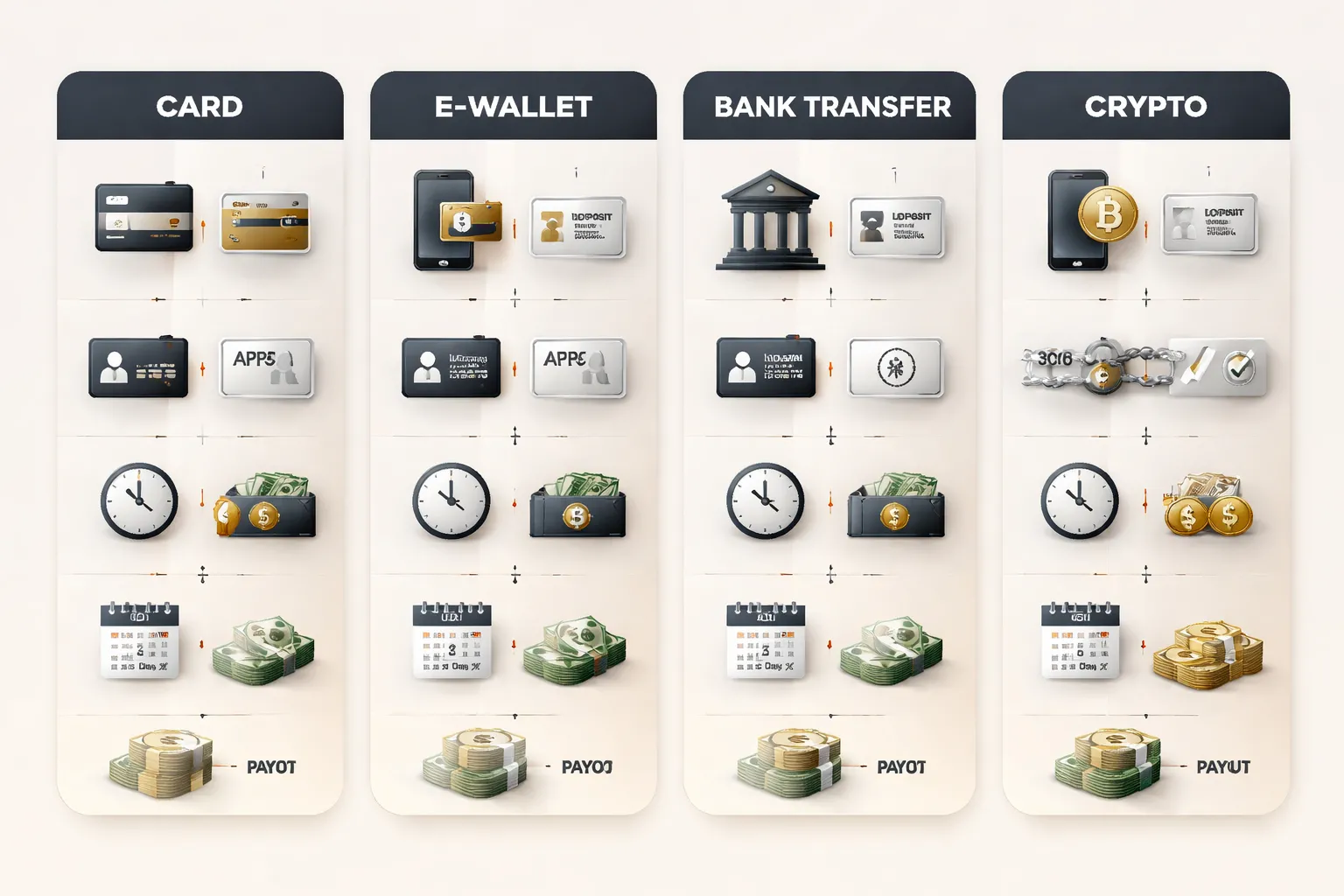
Fastest payout methods: e-wallets, instant bank, and cards
Your deposit method often controls your withdrawal options. Many casinos require you to withdraw back to the same method first.
- E-wallets: Usually the fastest for withdrawals. Common processing ranges from minutes to 24 hours after approval.
- Instant bank transfer: Fast deposits. Withdrawals can be same day to 2 business days, depending on the provider and bank.
- Cards: Fast deposits. Withdrawals are slower. Many issuers do not support card payouts, so casinos switch you to bank transfer. Typical timelines run 2 to 7 business days.
“Pending” time matters. Casinos often take 0 to 48 hours to approve a withdrawal before the payment network moves it.
Crypto casinos: confirmations, volatility risk, and wallet basics
Crypto withdrawals depend on blockchain confirmations. Each network has its own speed and fee model.
- Confirmations: The casino sends the transaction, then the network confirms it. More network traffic means slower confirms.
- Volatility risk: Your balance can change in value between deposit and withdrawal. Stablecoins reduce this risk if the casino supports them.
- Wallet basics: Use your own wallet address. Double-check the network type, for example ERC-20 vs TRC-20. A wrong network can mean lost funds.
Crypto casinos may still run standard checks. Expect identity or source-of-funds requests on larger cashouts.
Fees, currency conversion, and minimum and maximum transaction limits
Payment costs come from three places, the casino, the payment provider, and your bank or wallet.
- Deposit and withdrawal fees: Many casinos cover them, some do not. Crypto network fees often come out of your transfer amount.
- Currency conversion: Conversions add spread. You pay it when you deposit in one currency and play in another, or when you withdraw to a different currency.
- Minimums: Low minimum deposits can still have higher minimum withdrawals. Check both before you play.
- Maximums: Limits can apply per transaction, per day, or per week. VIP tiers sometimes raise these limits.
If you want fewer surprises, keep one account currency, use one payment method, and avoid repeated conversions.
Chargebacks, reversals, and common payment declines
Chargebacks and reversals create risk for casinos. Many casinos block withdrawals until they clear.
- Card chargebacks: If you charge back a deposit, the casino can freeze your account and void bonuses. You can also lose access to winnings tied to that deposit.
- Reversals: Some deposits show as successful, then reverse later. Casinos may lock funds until the payment settles.
- Common declines: Bank blocks on gambling, mismatched name, wrong billing address, failed 3D Secure, prepaid card limits, country restrictions, or velocity limits from repeated attempts.
If a payment fails, stop retrying the same transaction. Switch method or contact your bank first. Then use casino support if the block sits on their side.
How to speed up withdrawals: verification, consistent methods, and compliance
You can cut delays by treating KYC as part of setup, not a surprise.
- Verify early: Upload ID and proof of address before your first cashout. Use clear photos. Match your account details to your documents.
- Use consistent methods: Deposit and withdraw with the same method. Avoid third-party cards or wallets not in your name.
- Follow bonus rules: Meet wagering requirements and game contribution rules. A mismatch can trigger a manual review.
- Avoid risky patterns: Large deposits, quick cashout attempts, multiple accounts, or VPN use can trigger compliance checks.
- Pick low-friction options: E-wallets and instant bank transfers often clear faster than cards once your account is verified.
Before you deposit, learn how casinos handle disputes, complaints, and response times in online casino customer support expectations.
Playing on mobile vs desktop: performance, apps, and UX

Browser play vs native apps: pros, cons, and security considerations
Mobile and desktop both work, but they behave differently. Your choice affects speed, stability, and how you control access to your account.
- Browser casino on mobile or desktop. No install. Fast to start. Updates happen on the casino side. You rely on your browser security and you should keep it updated.
- Native casino app. Faster login and smoother navigation for some games. Better support for biometrics. Uses device permissions, so you should review what it can access.
- Security checks. Stick to official casino domains and verified app store listings. Avoid APK sideloads and third-party “mod” apps. Use a screen lock, enable biometrics, and turn on two-factor authentication if the casino offers it.
- Shared devices. Log out after play. Disable saved passwords if others use your phone or computer. Avoid public Wi-Fi for deposits and cashouts.
Data usage, battery, and performance tips for smooth gameplay
Slots and RNG table games use little data. Live dealer uses much more because it streams video.
| Activity | Typical data use | What to do |
|---|---|---|
| Slots, RNG blackjack, roulette, video poker | Low, often under 10 to 30 MB per hour | Close background apps, keep your browser updated, use stable Wi-Fi or strong LTE/5G |
| Live dealer streaming | High, often 0.3 to 1.5 GB per hour, depends on quality | Use Wi-Fi, lower video quality, plug in power, avoid battery saver mode if it causes stutter |
- Reduce lag. Turn off VPN, stop large downloads, and switch networks if your connection spikes.
- Protect battery. Lower screen brightness, use headphones instead of speakers, and keep your device cool. Heat triggers throttling and slows gameplay.
- Prevent crashes. Clear browser cache if games freeze. Restart the app or browser. Update your OS. Keep at least 1 to 2 GB of free storage.
- Desktop edge. Bigger CPU and stable power help with long live sessions and multi-table play.
Touch controls and live casino streaming: what to expect
Mobile feels direct. Desktop feels precise. Each has tradeoffs.
- Touch inputs. Buttons sit closer together on small screens. Mis-taps happen. Use landscape mode for table games and avoid playing while moving.
- Game speed. Slots run fine on most phones. Live dealer can buffer if your signal drops. A wired desktop connection stays steadier.
- Live dealer UX. You get video, chat, and betting panels. On mobile, panels stack and you switch views more. On desktop, you see more at once and chat stays readable.
- Audio and chat. Mobile mics can pick up noise. Use mute in public places. Keep chat off if it distracts you or tempts impulse bets.
If you want a clear breakdown of game types and how they run, use this guide on live dealer vs RNG casino games.
Notifications and limits: using device tools to manage sessions
Your phone can extend sessions. Set friction on purpose.
- Mute promos. Disable push notifications for casino apps. Keep only security alerts like login codes.
- Use timers. Set an alarm for a hard stop. Use a second alarm as a final warning.
- Block access windows. Use Screen Time, Digital Wellbeing, or Focus modes to cap daily minutes or block the app after a set hour.
- Control payments. Turn off one-click payments. Require biometrics for wallet use. Remove saved card details from your browser.
- Session hygiene. Log out after play and close the app. It reduces accidental reopen and background data use.
Responsible gambling and bankroll management
Setting a bankroll and session budget
Your bankroll is money you can lose without touching rent, bills, debt payments, or savings. Set it once, then lock it in.
- Use a separate pot. Fund play from a separate account or prepaid method. Do not mix it with daily spending money.
- Set a hard loss cap per session. Many players use 5% to 10% of their bankroll as a session loss limit.
- Set a time cap. Pick a stop time before you start. Treat time as a limit, not a suggestion.
- Size bets to survive variance. For slots and fast games, keep a typical bet at 0.5% to 1% of your bankroll. Smaller is safer.
- Stop rules. Stop when you hit your loss cap, or when you double your session buy-in. Bank the win and end the session.
| Bankroll | Session loss cap (5% to 10%) | Typical bet (0.5% to 1%) |
|---|---|---|
| $100 | $5 to $10 | $0.50 to $1 |
| $500 | $25 to $50 | $2.50 to $5 |
| $1,000 | $50 to $100 | $5 to $10 |
Recognizing risky patterns
Risk spikes when your decisions change after a loss. Watch for patterns, not outcomes.
- Chasing losses. You raise stakes or reload to win back money. You stop following your loss cap.
- Escalating stakes. Your bets climb during the same session. You feel pressure to make the session “count”.
- Tilting. You play faster, skip breaks, or switch games to recover quickly.
- Depositing more often. You top up multiple times in one day, or you deposit right after a loss.
- Hiding play. You avoid bank statements, delete emails, or downplay losses to others.
If you spot two or more signs in one week, treat it as a trigger to stop, set tighter limits, or take a break.
Using casino tools: limits, cool-offs, and reality checks
Use built-in controls before you feel out of control. Set them on day one.
- Deposit limits. Cap how much you can add per day, week, and month. Set it to match your bankroll plan.
- Loss limits. Stop play after you lose a fixed amount. Use this as your primary session guardrail.
- Wager limits. Limit total stakes for a period. It controls high volume play.
- Session limits. Cap time in app. Combine it with the phone limits you already set.
- Reality checks. Enable pop-ups that show time played and net results. Use them as a forced pause.
- Cool-off. Take a short lockout, often 24 hours to 30 days. Use it after any chase or overspend.
- Self-exclusion. Block access for months or years. Use it if you keep breaking limits.
Live games can feel more intense because play runs in real time. Use stricter time and loss limits in live sessions. Learn the flow in our live dealer guide.
Where to get help
If gambling stops being entertainment, get support fast. Use services that do not rely on willpower.
- USA. Call or text 1-800-GAMBLER. Many states route this to local help.
- UK. GamCare offers support and live chat. Use the National Gambling Helpline.
- Canada. Provincial problem gambling lines offer free support and referrals.
- Australia. Gambling Help Online provides chat and phone support.
Run a self-check if you feel unsure. Use the PGSI questionnaire, or your local regulator’s self-assessment tool. If you answer “yes” to lying about play, borrowing money, or missing work due to gambling, stop play and contact support.
Common mistakes when you play casino games online (and how to avoid them)
Ignoring terms and conditions
Most cashout problems start in the terms. You skip them, then you hit a clause that blocks or delays your withdrawal.
- Wagering requirements. You must wager a set multiple before you can withdraw bonus funds, and sometimes before you can withdraw linked cash.
- Max cashout caps. Some bonuses limit how much you can withdraw, even if you win more.
- Game contribution rules. Slots may count 100% toward wagering, table games may count 0% to 20%.
- Minimum odds and staking limits. Some sites void bonus winnings if you bet above a set amount per spin or hand.
- Time limits. Bonuses can expire, and so can pending withdrawals if you miss a deadline.
Fix it. Read the bonus terms before you deposit. Screenshot key limits. If a rule looks unclear, do not opt in. Use this guide on how online casinos work to check licensing, bonuses, and withdrawal rules in one place.
Picking games without checking RTP and volatility
You choose a game based on theme or hype. Your results then feel “wrong” because you expected a different payout pattern.
- RTP sets the long-run return. A 96% RTP means the game returns about $96 per $100 wagered over a very large sample. Short sessions can swing far from that.
- Volatility sets the swing size. High volatility pays less often but hits bigger. Low volatility pays more often but usually smaller.
- House edge varies by game type. Many blackjack variants can sit near 0.5% house edge with correct play. Many slots sit around 3% to 6% house edge based on RTP.
Fix it. Check the RTP in the game info panel or paytable. Match volatility to your bankroll. If you play short sessions, avoid high-volatility slots when you need steadier results.
Mixing bonus money with cash deposits
You deposit, take a bonus, then add more cash later. You assume you can withdraw your cash anytime. Many sites lock your balance until you clear wagering.
- Funds become “sticky.” Your cash and bonus can merge into one balance with one set of rules.
- Withdrawal triggers forfeits. Some casinos remove bonus funds and winnings tied to the bonus if you cash out early.
- Different wallets have different rules. Some sites separate cash and bonus. Others do not.
Fix it. If you want fast withdrawals, decline the bonus. If you take the bonus, plan to play it through. Do not top up again until you finish the bonus cycle. Track your wagering progress inside the cashier or promo page.
Playing on unlicensed sites
You can win and still lose your money if the site runs outside a recognized regulator. You also risk your data.
- Funds risk. Unlicensed operators can delay, cap, or refuse withdrawals with no real appeal path.
- Fairness risk. You may not get audited RNG reports, game certificates, or enforced payout rules.
- Data risk. Weak security and poor controls increase exposure of ID, card data, and account details.
- Chargeback and dispute limits. Payment disputes get harder when the merchant and operator sit offshore or hide ownership.
Fix it. Verify the license number, regulator name, and legal entity in the footer. Cross-check it on the regulator site. Avoid casinos that hide ownership, list no address, or push crypto-only cashouts with vague terms.
Not verifying early
You skip KYC until you withdraw. The casino then pauses the cashout and asks for documents. That creates delays and extra checks.
- KYC triggers at withdrawal. Casinos must confirm identity and payment method before they pay out.
- Names and addresses must match. Small mismatches between your profile, bank card, and documents cause rejections.
- Proof of payment adds steps. You may need a card photo with digits masked, a bank statement, or an e-wallet screenshot.
- Risk reviews can extend timelines. Big wins, unusual play patterns, or multiple payment methods can trigger manual review.
Fix it. Complete verification right after registration or after your first deposit. Use your real details. Keep one primary payment method. Upload clear files, and follow the casino’s masking rules for cards.
FAQ
What is the difference between demo games and real money games?
Demo games use play credits. You can test rules, features, and volatility without risk. Real money games use cash deposits and pay real winnings. RTP and mechanics usually match, but some casinos limit bonuses, jackpots, or bet sizes in demo mode.
How do you start playing casino games online?
Pick a licensed casino. Register with your real details. Set deposit limits. Make a first deposit with one primary payment method. Complete verification early. Then choose a game, set a budget, and place your bets.
How fast do online casinos pay out?
Deposits often clear in minutes. Withdrawals depend on the method and review. E-wallets can pay the same day after approval. Cards and bank transfers often take 1 to 5 business days. Big wins and mixed payment methods can add review time.
Why do withdrawals get delayed?
Delays come from incomplete KYC, unclear documents, name mismatches, or payment checks. Multiple cards, chargeback risk, and unusual play can trigger manual review. Upload clear files, follow masking rules, and keep your account details consistent.
What documents do you need for verification?
You usually need a photo ID, proof of address, and a payment proof. Use a bank statement, card photo with digits masked, or an e-wallet screenshot. Files must be readable. Names and addresses must match your account.
Are online casino games fair?
Licensed casinos use audited RNGs for digital games. Live dealer games use real cards and studio controls. You still face house edge. Check the provider, game RTP, and the regulator on the casino’s license page.
What does RTP mean, and why does it matter?
RTP is the long-run return to players, shown as a percentage. Higher RTP usually means lower house edge, but it does not guarantee short-term results. Use RTP to compare similar games, then manage variance with bet size and bankroll.
Can you play on mobile?
Yes. Most casinos run in a mobile browser or app. Use stable Wi-Fi or data. Turn on biometric login if available. Avoid public networks for payments. Keep your OS and browser updated to reduce security risk.
How do you check if an online casino is legal in your area?
Check your local gambling laws and the casino’s licensing. Rules differ by country and state. Use a clear legal guide before you deposit. Read are online casinos legal in your area.
What are safe responsible gambling steps?
Set deposit, loss, and time limits. Use reality checks. Never chase losses. Keep gambling funds separate from bills. If you lose control, use self-exclusion and contact support to lock your account.
What should you do if a game freezes during a bet?
Do not refresh right away. Check your balance and game history first. Screenshot the error. Reopen the game from the lobby. If the round stays unresolved, contact support with time, game name, bet size, and any transaction ID.
Conclusion
Play real money games when you can verify the basics. Licensing, game rules, and withdrawal terms. Use demo mode to learn paytables, bonus triggers, and volatility before you risk cash.
- Pick the right mode. Use demo for practice. Use real money only when you have a set budget and you accept the variance.
- Protect your bankroll. Set deposit limits, loss limits, and time limits. Stop when you hit them.
- Control bonuses. Read wagering, max bet rules, and game contribution. Keep screenshots of the offer and terms.
- Keep clean records. Save transaction IDs, timestamps, and game history. Screenshot errors and unresolved rounds.
- Use support fast. Contact the casino with exact details when a bet or payout looks wrong, see what to expect from online casino customer support.
Final tip. Treat casino play like a controlled spend. Separate your gambling funds, track every deposit and withdrawal, and walk away when your limits trigger.
-
Are Online Casinos Legal? Complete Guide by State & Country
8 months ago -
What Is an Online Casino? How They Work, Games, Bonuses & Safety
8 months ago -
Best Low Deposit Online Casinos: Play for Less with Small Minimum Deposits
8 months ago -
Live Dealer vs RNG Casino Games: What’s the Difference?
8 months ago -
How Live Dealer Casinos Work (and What to Expect)
8 months ago
-
- RTP and house edge, what they mean and how to compare games
- Volatility and variance, why it changes win frequency and bankroll needs
- Hit frequency, max win, and bonus features, what to look for
- Progressive jackpots, contribution rates and jackpot odds basics
- Return expectations vs reality, randomness and sample size pitfalls
-
- Fastest payout methods: e-wallets, instant bank, and cards
- Crypto casinos: confirmations, volatility risk, and wallet basics
- Fees, currency conversion, and minimum and maximum transaction limits
- Chargebacks, reversals, and common payment declines
- How to speed up withdrawals: verification, consistent methods, and compliance
-
- What is the difference between demo games and real money games?
- How do you start playing casino games online?
- How fast do online casinos pay out?
- Why do withdrawals get delayed?
- What documents do you need for verification?
- Are online casino games fair?
- What does RTP mean, and why does it matter?
- Can you play on mobile?
- How do you check if an online casino is legal in your area?
- What are safe responsible gambling steps?
- What should you do if a game freezes during a bet?
-
-
- RTP and house edge, what they mean and how to compare games
- Volatility and variance, why it changes win frequency and bankroll needs
- Hit frequency, max win, and bonus features, what to look for
- Progressive jackpots, contribution rates and jackpot odds basics
- Return expectations vs reality, randomness and sample size pitfalls
-
- Fastest payout methods: e-wallets, instant bank, and cards
- Crypto casinos: confirmations, volatility risk, and wallet basics
- Fees, currency conversion, and minimum and maximum transaction limits
- Chargebacks, reversals, and common payment declines
- How to speed up withdrawals: verification, consistent methods, and compliance
-
- What is the difference between demo games and real money games?
- How do you start playing casino games online?
- How fast do online casinos pay out?
- Why do withdrawals get delayed?
- What documents do you need for verification?
- Are online casino games fair?
- What does RTP mean, and why does it matter?
- Can you play on mobile?
- How do you check if an online casino is legal in your area?
- What are safe responsible gambling steps?
- What should you do if a game freezes during a bet?
-
-
Reload Bonus Explained: What It Is and When It’s Worth Claiming
6 months ago -
Online Casino Licensing Explained: Authorities, Licenses & How to Check One
8 months ago -
Best Live Dealer Casinos: Where to Play Live Blackjack, Roulette & More
8 months ago -
Best Online Casinos for High Rollers: VIP Perks, High Limits & Exclusive Bonuses
8 months ago -
Fast Payout Online Casinos: Best Sites for Quick Withdrawals
8 months ago
-
Online Casino Customer Support: What to Look For (Live Chat, Email, Response Times)
8 months ago -
Sign Up for an Online Casino: Create an Account in Minutes
8 months ago -
Online Casino Payment Safety Tips: How to Deposit and Withdraw Securely
8 months ago -
What to Do If an Online Casino Won’t Pay Out: Step-by-Step Actions
8 months ago -
How to File a Complaint Against an Online Casino (Plus ADR Explained)
8 months ago