Problem Gambling Signs: How to Recognize the Warning Flags Early

Problem gambling can start quietly, then turn into money stress, conflict, and mental health strain. You do not need to gamble every day to be at risk. The key is spotting pattern changes early.
This guide breaks down the most common warning flags, what they look like in real life, and why they matter. You will learn behavioral signs, money signs, and emotional signs, plus simple ways to track your risk.
If you already see issues, use protection tools now. Read our responsible gambling tools guide for practical steps like deposit limits, time-outs, and self-exclusion.
In het kort:
- Watch for three clusters of warning signs, behavior, money, and mood.
- Treat any fast pattern change as a red flag, longer sessions, higher stakes, more secrecy.
- Track your spend and time weekly. Compare it to your limits, not to your wins.
- Money stress is a key signal. Chasing losses, borrowing, missed bills, and hidden transactions matter.
- Emotional signs count. Irritability, guilt, anxiety, and sleep problems often show up early.
- Use barriers when you spot risk. Set deposit limits, time-outs, or self-exclusion via responsible gambling tools.
- Get help fast if you lose control. If you lie, gamble to escape, or gamble despite harm, act the same day.
What problem gambling is (and what it isn’t)
Healthy gambling vs. risky gambling vs. gambling disorder
Healthy gambling means you treat gambling like a capped cost. You set a budget and a time limit. You stop when you hit either limit. You do not borrow. You do not hide it. Your bills stay paid. Your mood does not depend on the outcome.
Risky gambling starts when you break your own rules. You raise stakes to feel the same buzz. You spend more time than planned. You chase losses. You dip into money meant for rent, food, or debt. You argue about it. You hide transactions. Harm shows up, even if you still function day to day.
Gambling disorder is a clinical condition. It is not about willpower. It is a pattern where gambling keeps going despite harm. Common markers include loss of control, failed attempts to stop, chasing losses, lying, financial damage, and relationship or work problems. Many clinical checklists use a 12 month window to judge persistence and severity.
Why loss of control matters more than how often you gamble
Frequency can mislead you. Some people gamble often and keep control. Others gamble less often but crash hard when they start.
Track control, not counts. These signs matter more than days played.
- You plan to spend $50 and spend $300.
- You plan to play 30 minutes and play three hours.
- You try to stop and you restart the same day.
- You keep betting to get back to even.
- You need bigger bets to feel it.
- You feel restless, tense, or irritable when you cut back.
If you see control slipping, lock in limits before the next session. Use a written budget and a hard stop. If you need a simple framework, read how to set a gambling budget.
Common myths that delay getting help
- “I can win it back.” This keeps you chasing. Losses push you to bet bigger and longer. That pattern drives the harm.
- “It’s just entertainment.” Entertainment stops when the cost stays fixed. If you break limits, borrow, or hide it, it is not entertainment anymore.
- “I’m fine because I still pay my bills.” Many people hold things together for a while. Problem gambling often shows up first as stress, secrecy, and debt that grows quietly.
- “I only gamble on weekends.” Time on the calendar does not protect you. Loss of control does the damage, even in short bursts.
- “I’m not addicted because I can stop sometimes.” On and off control still signals risk. Repeated failed attempts to cut back matter.
- “I’ll fix it when I get a big win.” Big wins often raise confidence and stakes. They can deepen the cycle, not end it.
Why recognizing warning signs early is so hard
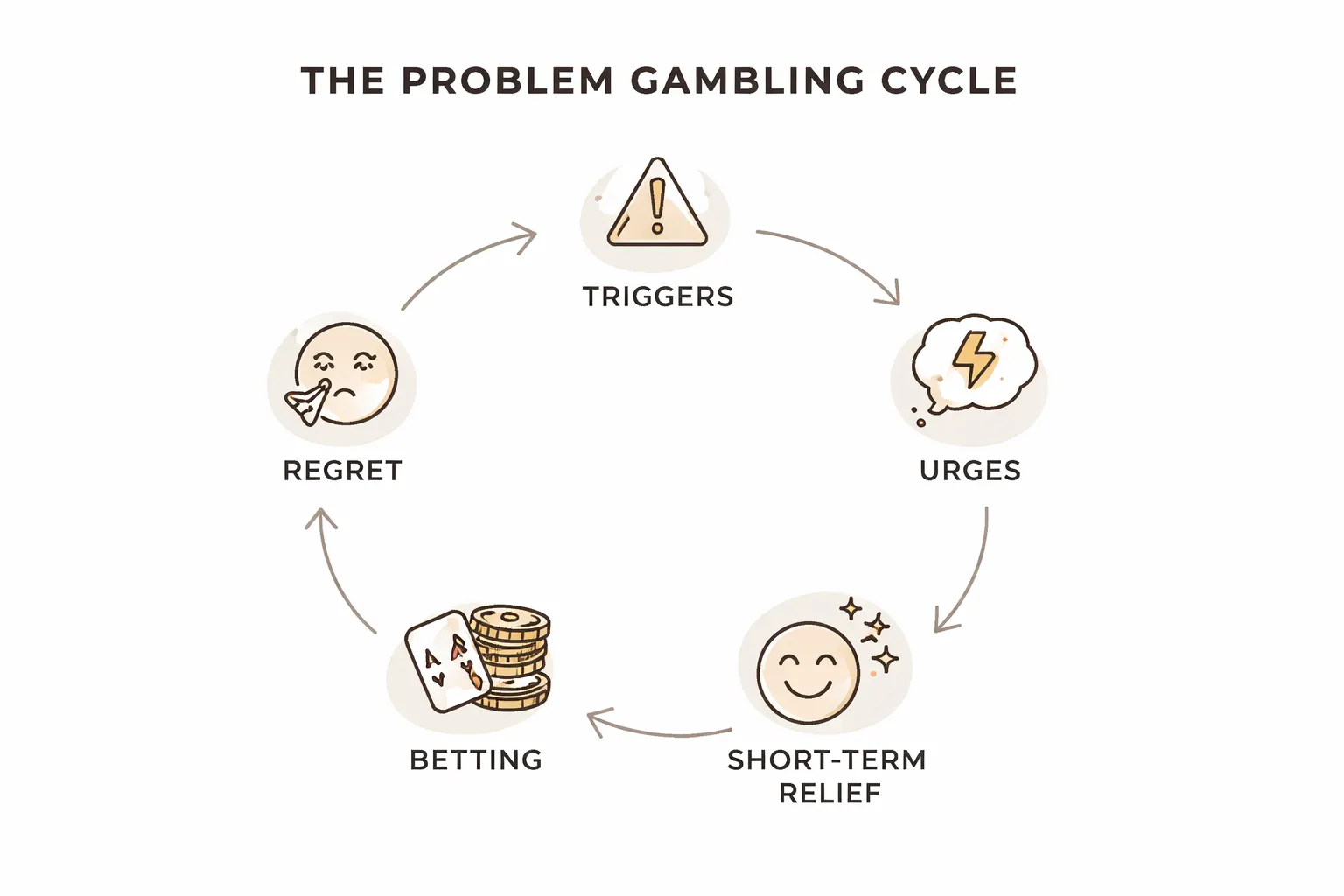
The cycle hides the problem in plain sight
Problem gambling often runs on a tight loop. It does not need daily play to cause damage.
- Triggers. Stress, boredom, alcohol, paydays, sports events, and notifications can start the chain.
- Urges. You feel tension and restlessness. Your brain pushes for quick relief.
- Betting. You place a bet to change your mood, not to “have fun.”
- Short-term relief. The action itself can calm you for a moment, even if you lose.
- Regret. You feel guilt, anxiety, or anger. You promise to stop or to win it back.
That relief teaches your brain that gambling works as a coping tool. This learning effect can build fast. The regret then becomes the next trigger.
Secrecy and shame block early feedback
You can hide gambling longer than most other addictions. Betting leaves few visible signs until money or relationships break.
- You gamble alone on a phone. No one sees it.
- You use small deposits to avoid detection. The totals add up over time.
- You move money between accounts, credit cards, and wallets. This blurs the trail.
- You lie by omission. You remove key facts, not just the details.
- You avoid talks about money, time, and mood. This delays outside pressure to change.
Shame pushes silence. Silence removes accountability. Family and friends often notice the fallout first, not the behavior.
Online betting design makes the slide faster
Online gambling removes friction. Less friction means fewer chances to stop.
- 24/7 access. You can bet at night, at work, or during family time. There is no closing time to force a break.
- Fast play. Quick spins, rapid hands, and instant deposits shorten the time between urge and action.
- Micro-bets. In-play wagers and small side bets create many decisions per game. More decisions mean more chances to chase.
- Personalized promos. Bonuses, free bets, and “just for you” offers target your play patterns. They arrive when you tend to bet.
These features can make losses feel abstract. You tap, swipe, and repeat. If you want a hard control, use a written limit and stick to it. See a gambling budget that you’ll actually stick to.
How to recognize problem gambling signs in daily life
Time and attention red flags
Watch what happens to your time when you gamble. The shift often shows up before money problems.
- Preoccupation. You think about bets during work, school, or family time. You replay past losses and plan the next session.
- Constant checking. You check odds, scores, cash out options, or your balance many times a day. You keep gambling apps open in the background.
- Chasing information. You follow more leagues than you can track. You add live bets because you feel you need action in real time.
- Time creep. You start with a short session, then hours pass. You lose track of the clock.
Control-related red flags
Problem gambling often looks like repeated failed attempts to control your own rules.
- Failed cutbacks. You set limits, then break them within days. You promise to stop after a loss, then place another bet.
- Longer sessions than planned. You keep playing past your planned stop time. You extend sessions to “get back to even.”
- “One last bet” loops. You end on a loss, so you add one more bet. You repeat this pattern until you run out of time or money.
- Loss of control after wins. A win triggers bigger bets, more games, or longer sessions instead of a stop.
Secrecy patterns
Secrecy protects the habit. It also blocks outside feedback.
- Hiding evidence. You hide bank alerts, receipts, or email promos. You move transactions between accounts.
- Deleting traces. You delete apps, browsing history, or messages from betting groups. You use private tabs to place bets.
- Lying about whereabouts. You say you are working, out with friends, or running errands, but you are gambling.
- Deflecting questions. You get irritated when someone asks about spending, time, or results.
Escalation signals
Escalation means the same activity no longer feels like enough.
- Higher stakes for the same feeling. You increase bet size to feel engaged. Small bets start to feel pointless.
- More frequent betting. You move from weekends to weekdays, then to daily sessions.
- Switching to riskier formats. You shift to faster games, live betting, parlays, or higher volatility slots because the pace feels better.
- More funding events. You deposit more often, take cash advances, borrow, or sell items to keep playing.
Neglect indicators
Daily life starts to shrink. Basic needs come second.
- Missed responsibilities. You show up late. You skip tasks. You miss deadlines because you gamble or recover from it.
- Sleep loss. You stay up to chase, watch games, or play one more round. You wake up to check results.
- Skipping meals. You delay eating to keep playing. You choose gambling time over normal routines.
- Reduced self-care. You stop exercising, cleaning, or social plans. You cancel events to gamble.
If you see these patterns stacking up, use written limits and platform controls before the habit hardens. Start with responsible gambling tools like deposit limits, time-outs, and self-exclusion.
Financial warning flags that often appear early
Budget drift: spending beyond limits, moving goalposts, and rationalizing losses
Early financial harm often starts small. Your budget stops acting like a limit and starts acting like a suggestion.
- Spending beyond your cap. You exceed your weekly or monthly gambling amount, then tell yourself you will fix it next time.
- Moving the goalposts. You raise your limit after a loss, a win, or a “special” event. You reset the rules mid-session.
- Using new money sources. You dip into bills money, savings, or cash meant for essentials.
- Rationalizing losses as “investment.” You treat lost money as progress, practice, or the cost of “getting close.”
- Tracking wins, ignoring losses. You remember big hits and forget the total amount staked.
If you need a hard framework, use a written plan and a fixed stop point. See how to set a gambling budget that you’ll actually stick to.
Chasing losses and break-even thinking
Chasing losses is a key marker because it changes your goal. You stop playing for entertainment. You play to erase damage.
- You increase stake size after losing. You try to recover faster. Variance hits harder.
- You extend sessions to “get even.” Time becomes flexible. Sleep, meals, and plans take the hit.
- You change games for bigger payouts. You jump to higher volatility slots, higher limits, or riskier markets.
- You treat break-even as required. You cannot stop while down, even when the rational move is to stop.
Borrowing and liquidity moves
When your gambling spend outruns your income, you look for fast cash. These moves often show up early, before you miss major bills.
- Credit cards for deposits. You fund play with revolving debt, then carry a balance.
- Cash advances. You pay extra fees and interest to get money now.
- Buy now, pay later use for basics. You shift groceries or fuel onto pay-later plans so you can keep cash for gambling.
- Payday loans. You accept high fees because you expect a quick win to cover it.
- Selling items. You pawn, sell electronics, or offload valuables to keep playing.
Money concealment behaviors
Secrecy is a financial flag. You start managing money to avoid questions, not to meet goals.
- Unexplained cash withdrawals. You pull small amounts often, or large amounts right before or after sessions.
- Hidden accounts or cards. You open a new e-wallet, prepaid card, or bank account to separate gambling spend.
- Transfer patterns that do not match income. You move money between accounts to mask deposits or losses.
- Missing statements. You opt out of paper mail, delete emails, or change login alerts.
- Vague explanations. You label gambling transactions as “shopping” or “fees,” or you refuse to discuss them.
Risk compounding with crypto, margin, or high-interest debt
Risk stacks when gambling merges with speculation. You add price swings, leverage, and expensive borrowing on top of uncertain outcomes.
- Crypto deposits to bypass friction. You move funds faster and feel less “real money” pain.
- Using volatile assets as bankroll. Your bankroll value can drop even if you do not place a bet.
- Margin or leveraged trading to “refill.” You borrow against positions to keep playing, then face liquidation risk.
- High-interest debt as fuel. Interest and fees keep growing while you chase a win to cover them.
| Early flag | What it looks like in your money | Why it matters |
|---|---|---|
| Budget drift | Limits change, essentials get used | Overspend becomes normal |
| Chasing losses | Bigger stakes, longer sessions | Loss rate and volatility rise |
| Borrowing | Credit use, advances, payday loans | Debt adds fixed costs to losses |
| Concealment | Cash withdrawals, hidden accounts | Accountability drops |
| Compounded risk | Crypto swings, leverage, high APR | Multiple loss channels at once |
Emotional, psychological, and physical signs
Mood changes around gambling
Your mood can start to track your gambling cycle.
- Irritability when you lose, when someone asks about money, or when you cannot gamble.
- Restlessness during normal tasks. You struggle to sit through work, meals, or family time.
- Anxiety when you try to cut back. You feel on edge until you place a bet.
- Anger spikes after a session. You snap at others, then feel guilt or shame.
- Low mood after wins and losses. The high fades fast, then you feel flat.
Track timing. If stress peaks right before you gamble and drops right after, your brain may start to treat gambling as relief.
Using gambling to escape
Many people shift from playing for fun to playing to cope.
- Stress relief. You gamble after work, conflict, or deadlines to switch off.
- Loneliness. You use apps, live dealers, or sports betting to fill empty time.
- Grief. You chase numbness and distraction when loss feels heavy.
- Depression. You gamble to feel something, then crash harder after.
- Trauma reminders. You gamble after triggers, nightmares, or flashback-like memories to quiet your body.
Watch the pattern. If gambling becomes your main coping tool, you will need more time and money to get the same relief.
Withdrawal-like effects when you stop
Problem gambling can create symptoms that look like withdrawal when you try to pause.
- Agitation. You feel tense and short-tempered.
- Insomnia. You cannot fall asleep, or you wake up wired.
- Rumination. You replay hands, spins, and missed cashouts. You plan the next session.
- Cravings. You feel a pull to check odds, open an app, or deposit.
- Focus problems. You make mistakes at work or school because your mind stays on gambling.
These signals matter. They often drive relapse, even after you decide to stop. If you want a structured break, use self-exclusion to reduce access during high-craving periods.
Co-occurring issues to watch for
Problem gambling often overlaps with other mental health and behavior risks. The mix raises harm fast.
- Substance use. More drinking, nicotine, or stimulants during sessions. More use after losses.
- Depression. Hopelessness, loss of interest, or thoughts that life will not improve.
- ADHD traits. Impulsivity, boredom intolerance, and chasing quick rewards.
- Bipolar symptoms. Risk bursts, reduced need for sleep, fast spending, and grand plans during elevated mood.
Pay attention to sequence. If gambling rises during mood swings, substance use, or sleep loss, treat that as a high-risk window.
Physical stress signals
Your body often shows the cost before your bank balance does.
- Headaches after long sessions, especially with screen time and tension.
- Stomach issues like nausea, cramps, reflux, or stress eating.
- Sleep disruption from late sessions, adrenaline, and checking results at night.
- Appetite changes. Skipped meals during play, binge eating after, or loss of appetite from stress.
- Muscle tension in jaw, neck, and shoulders during high stakes moments.
Log three basics for two weeks. Sleep hours, meals, and gambling time. Clear shifts often line up with heavy play.
Relationship, school, and work impacts
Trust erosion: lying, defensiveness, and conflict patterns
Problem gambling breaks trust fast. You start managing impressions instead of telling the truth.
- Cover stories and missing details. You hide time spent gambling, downplay losses, or “forget” to mention deposits and cash withdrawals.
- Defensiveness. You react with anger or shutdown when someone asks about money, where you were, or why you are on your phone.
- Control fights. Arguments repeat around the same themes, spending, secrecy, and broken promises. The pattern becomes predictable.
- Financial gatekeeping. You avoid shared accounts, delay bills, or stop showing statements. You shift to cash or private cards.
- Trust costs. Partners check transactions, set rules, or monitor devices. You feel watched. They feel unsafe.
Track it like a system. Count how many times per week you lie by omission, dodge a question, or start a fight after gambling. Rising counts signal escalation.
Social withdrawal and loss of interest in non-gambling activities
Gambling takes time first. Then it takes your attention.
- Less contact. You stop replying, cancel plans, or show up late. You keep conversations short so you can get back to play.
- Interest drop. Hobbies feel flat. Family time feels like an interruption. You think about bets while doing other things.
- Isolation by design. You choose activities that let you gamble at the same time, phone use at dinner, “quick” breaks, bathroom checks.
- Social cover. You avoid friends who would notice changes, missed payments, mood swings, or repeated cancellations.
Use a simple baseline. Log two numbers for two weeks, hours with other people, hours gambling. If social time falls as gambling rises, you have a clear tradeoff.
Performance decline: lateness, missed deadlines, absenteeism, academic drops
Work and school show damage early because they run on schedules, output, and attention.
- Lateness. Late nights lead to late mornings. You show up tired and distracted.
- Missed deadlines. You underestimate time, lose focus, and rush. Small tasks pile up.
- Absenteeism. You call in sick after long sessions or big losses. You take “appointments” that are really gambling time.
- Quality drop. More errors, weaker preparation, lower grades, and incomplete work. Feedback turns negative and frequent.
- Time theft. You gamble during class, meetings, or shifts. You check scores and markets instead of doing the work.
Pick three objective markers and measure them weekly. Minutes late, tasks missed, and days absent. Numbers cut through denial.
Legal and ethical risk behaviors, plus early precursors
When losses stack, some people start chasing money anywhere they can. The shift often starts with small rule breaks.
- Early precursors. Borrowing without a plan to repay. Taking cash advances. Using bill money. Selling items fast. Opening new accounts to access credit.
- Boundary creep. “I will pay it back after I win” becomes the excuse for riskier moves.
- Workplace misconduct. Using company time to gamble. Misusing expense cards. Falsifying time sheets. Taking cash from registers. Moving money between accounts you manage.
- Fraud and theft. Stealing from family, friends, or employers. Forging signatures. Taking loans in someone else’s name.
- Legal exposure. Debt collection actions, bounced payments, loan defaults, and criminal charges if theft or fraud occurs.
If you see boundary creep, put friction in place the same day. Limit access to funds and set a hard cap. Use a written plan you can follow, like this guide on how to set a gambling budget.
A quick self-assessment: practical ways to check your risk
The 2-minute self-check, simple questions you can answer today
Answer yes or no. Use the last 30 days.
- Loss of control: You planned to stop, but you kept going.
- Chasing: You tried to win back losses with more gambling.
- Time creep: Sessions ran longer than you intended, or you gambled more days than planned.
- Money creep: You spent more than your set limit, even once.
- Secrecy: You hid gambling, deleted messages, or lied about time or money.
- Borrowing: You used credit, loans, or money meant for bills.
- Withdrawal: You felt restless, irritable, or low when you tried to cut down.
- Escape: You gambled to numb stress, sadness, or anxiety.
- Harm: Gambling caused conflict, missed work, poor sleep, or skipped responsibilities.
- Failed cutback: You tried to reduce gambling and could not stick to it.
Score it fast. 0 yes answers means low immediate risk. 1 to 2 means watch it. 3 or more means you need tighter limits and outside support.
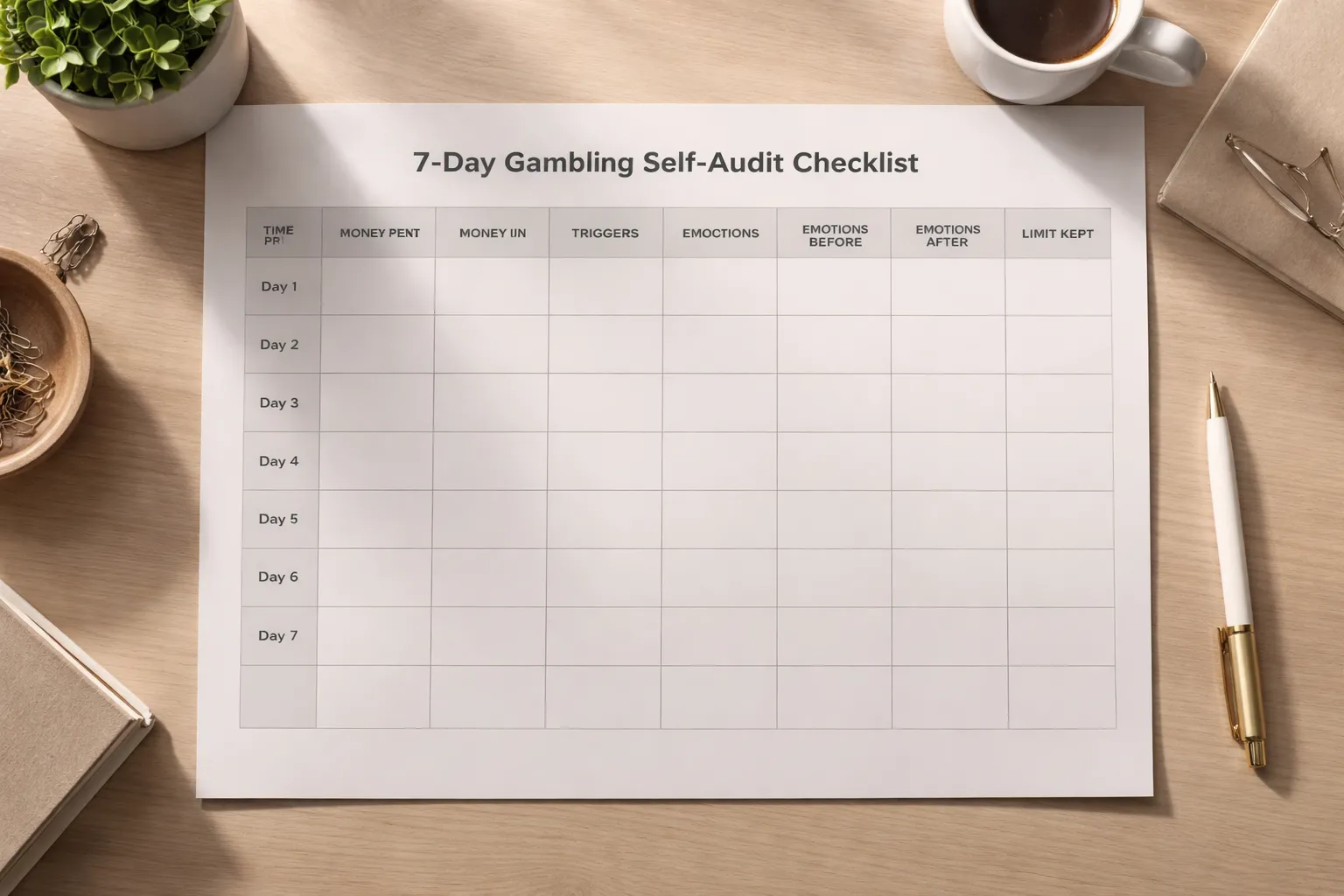
Tracking method, time, money, triggers, and emotions, a 7-day audit template
Track for seven days. Do not rely on memory. Use your bank app, wallet notes, and account history.
| Day | Time spent | Money in | Money out | Net result | Trigger | Emotion before | Emotion after | Limit kept | Notes |
|---|---|---|---|---|---|---|---|---|---|
| Mon | |||||||||
| Tue | |||||||||
| Wed | |||||||||
| Thu | |||||||||
| Fri | |||||||||
| Sat | |||||||||
| Sun |
Rules for clean data.
- Log every session the same day.
- Track deposits and withdrawals, not just wins and losses.
- Write the trigger in plain words, stress, boredom, alcohol, sports game, payday, argument.
- Rate emotion before and after with one word, calm, anxious, angry, numb, excited.
- Mark Limit kept as yes or no. If no, write why.
At day seven, total your time and net loss. Then count how many sessions broke your rules. Those numbers tell you more than any single big win or loss.
When to take screening tools seriously, PGSI and brief clinical screeners, what they indicate
Self-tracking shows patterns. Screeners estimate risk level. They do not diagnose you, but they can tell you when to act.
- PGSI: A short questionnaire used in public health research. It flags low, moderate, or high risk based on gambling harms and loss of control signs.
- Brief clinical screeners: Very short checklists used in healthcare settings. They focus on core markers like chasing, lying, and failed attempts to stop.
Take results seriously when you see the same story in your log.
- You score in the moderate or high-risk range.
- Your seven-day audit shows repeated limit breaks.
- Your triggers link to strong emotion shifts, stress in, numb or shame out.
- You use gambling to manage mood, sleep, or anxiety.
If you want immediate guardrails, use built-in controls like deposit limits and time-outs. See responsible gambling tools for the fastest options.
Red-flag thresholds, how many signs are enough to seek help
Use these thresholds. Treat them as action points, not debate points.
- Any 1 of these means seek help now: borrowing to gamble, using bill money, hiding gambling from a partner or family, stealing or fraud, thoughts of self-harm.
- Any 2 of these means tighten controls today and book support: chasing losses, repeated failed attempts to stop, gambling to escape mood, strong irritability when you cut down.
- 3 or more yes answers on the 2-minute check: act this week. Add friction, limit access to funds, and talk to a professional or helpline.
- 2 or more limit breaks in 7 days: your plan does not hold under pressure. Upgrade your controls.
- Any pattern of secrecy plus money problems: assume the risk is high, even if total losses look small.
Do not wait for a crisis. Early action costs less money, less time, and less trust.
High-risk situations and populations (who needs extra caution)
Adolescents and young adults
Your brain keeps developing into your mid-20s. Decision control and long-term planning mature later than reward drive. That gap raises risk when gambling feels fast, social, and skill-based.
- Impulsivity and loss chasing: You react to near-misses and streaks. You raise stakes to get back to even.
- Esports and streaming exposure: You see constant betting talk, odds, and big wins. Normalization lowers your guard.
- Loot boxes and microtransactions: Random-reward purchases train the same reward loop as gambling. They also blur the line between gaming and wagering.
- Mobile access: You can gamble anywhere. Privacy makes limits easier to break.
Older adults
Risk rises when gambling becomes a routine, a social outlet, or a way to cope with loneliness. Fixed income makes losses hit harder and recovery slower.
- Isolation: Fewer daily check-ins mean fewer brakes on time and spending.
- Fixed income pressure: You may try to “top up” retirement funds with wins. Losses then trigger chasing.
- Casino and social gambling overlap: Group trips, bus tours, and “free” perks can turn gambling into a weekly habit.
- Cognitive changes: Slower math and attention make it harder to track losses, odds, and session time.
People with mental health conditions or substance use history
Problem gambling often clusters with anxiety, depression, ADHD, trauma history, and substance use. The mix raises relapse risk and makes control plans fail under stress.
- Gambling to regulate mood: You use gambling to escape, numb, or lift your mood. That pattern builds dependence fast.
- ADHD and impulsivity: Fast games and quick bets match your reward-seeking style. You may break limits in minutes.
- Substance use history: Alcohol and drugs lower inhibition and raise stake size. The two problems can fuel each other.
- Medication and sleep loss: Poor sleep and certain meds can increase risk-taking. Track this if your behavior shifts.
Major life transitions
Transitions change your routine, your finances, and your support system. Gambling can slide in as a coping tool or a quick-money fantasy.
- Divorce or breakup: Stress, anger, and loneliness increase risk. So do new financial obligations.
- Unemployment or income drop: More free time plus money pressure creates a high-risk mix. Chasing starts earlier.
- Bereavement: Grief can drive escape gambling. Decision quality drops.
- Relocation: New place, fewer supports, more downtime. Online gambling fills the gap fast.
Sports bettors and online casino players
Speed and access multiply harm. Online products remove friction and make repeating bets easy.
| Risk multiplier | How it raises harm | What to watch in your behavior |
|---|---|---|
| 24/7 access | No closing time. No travel barrier. | Late-night sessions, betting at work, betting in bed. |
| High event volume | Constant new markets and games. | More bets per day, more “just one more” cycles. |
| Fast bet loops | Short time between stake and result. | Re-staking within minutes after losses. |
| In-play and micro-betting | Turns one match into dozens of decisions. | Impulse bets, poor tracking of total exposure. |
| Bonuses and VIP programs | Rewards higher spend and higher frequency. | Raising deposits to “qualify,” playing to clear wagering rules. |
| Multiple accounts and easy funding | More ways to bypass limits. | Opening new sites after losses, using credit, using cash-advance apps. |
If any of these situations fit you, tighten controls now. Use responsible gambling tools before your next session, not after a bad one.
What to do if you recognize the warning flags
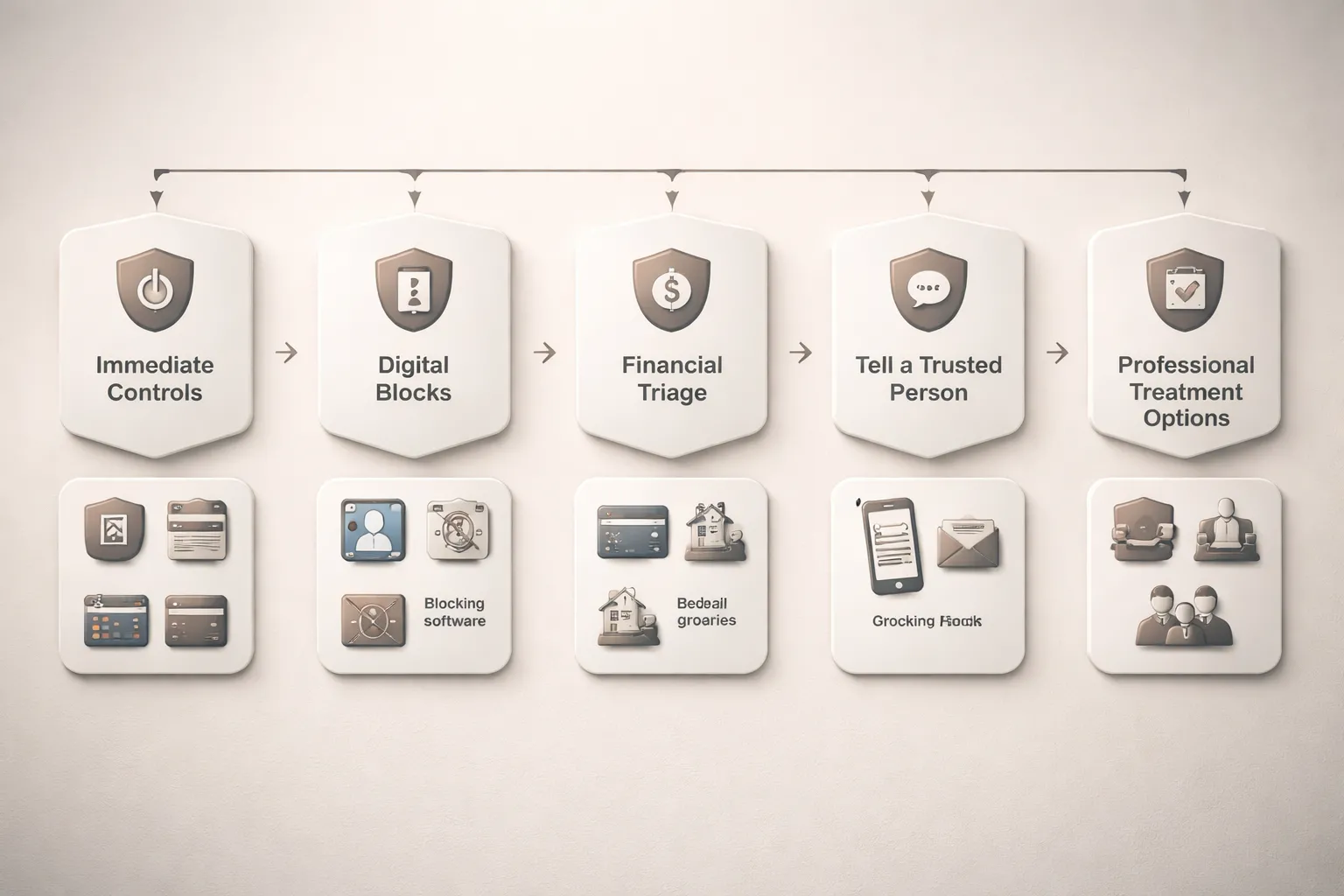
Immediate harm-reduction steps
Act before you gamble again. Make access harder and losses smaller.
- Set a cooling-off period. Use a 24-hour to 30-day timeout on every site you use.
- Set deposit limits. Choose a weekly cap you can afford to lose. Set it lower than your recent average spend. Turn off limit increases where possible.
- Remove saved payment methods. Delete stored cards, PayPal links, and bank tokens. Disable one-click deposits.
- Turn off easy money features. Disable overdraft. Delete cash-advance apps. Block credit card gambling transactions if your bank supports it.
- Use self-exclusion for stronger control. Exclude from each operator you use. Add your national or state self-exclusion register if available. Pick the longest term you can accept today.
- Close loopholes. Stop using multiple accounts. Stop using new sites after losses. If you must play, use one account with strict limits and no credit.
If you need a checklist of tools by type, see responsible gambling tools.
Digital tools that help
Use blocks that work even when your willpower drops.
- Gambling blocking software. Install on every device you use to gamble. Set a passcode your trusted person controls.
- Phone controls. Use Screen Time or Digital Wellbeing to block gambling apps and sites. Block new app installs. Restrict private browsing.
- Browser and DNS blocks. Add site blockers on each browser. Use family-safe DNS to block gambling categories across your network.
- Bank gambling blocks. Ask your bank to block gambling merchant category codes. If your bank cannot, consider a basic account that supports category blocks.
- Email and ad clean-up. Unsubscribe from casino promos. Mute marketing texts. Remove push notifications.
Financial triage
Stabilize basics first. Protect housing, food, and bills.
- Do a 30-minute debt snapshot. List cash on hand, bank balances, credit limits, debts, and minimum payments. Write it down.
- Ring-fence essentials. Move rent, utilities, and food money into a separate account. Do not connect that account to any gambling site.
- Freeze your credit. Place a credit freeze with major bureaus where you live. This blocks new credit in your name.
- Talk to your bank. Ask about chargeback options where applicable, gambling transaction blocks, lowering card limits, and removing overdraft.
- Stop the cash pipeline. Cut up spare cards. Remove cards from mobile wallets. Limit ATM withdrawals.
- Get a repayment plan. Call lenders and ask for hardship options. Ask for lower interest, payment plans, or temporary pauses.
How to tell a trusted person
Pick one person who can stay calm. Use clear facts. Ask for specific help.
- Key points to include. What you do, what it costs, what you need next, what access you want them to control.
- What to ask for. Hold passwords for blockers, hold your credit card, check in weekly, help you set limits, attend an appointment with you.
| Who you tell | Script you can use |
|---|---|
| Partner | I need to tell you something directly. I have been gambling more than I can afford. It is affecting my money and my mood. I want to stop the damage. I am asking you to hold my card and the passcode for my gambling blocks for 30 days. I also want to book a session with a counselor this week. |
| Friend | I am dealing with a gambling problem. I am taking steps to block access. I need accountability. Can I text you before I gamble and when I feel the urge. If I do not text, can you check in with me at night for the next two weeks. |
| Family member | I need help with gambling. I am not asking for money. I need structure. Can you help me list my bills, set my limits, and come with me to a support group or appointment. I also want you to keep my spare cards. |
When professional treatment is appropriate
Get professional help if you lose control, chase losses, hide gambling, borrow to gamble, or feel anxious or depressed around gambling. Get urgent help if you think about self-harm.
- Therapy that fits gambling problems. Cognitive behavioral therapy targets triggers, distorted beliefs about odds, and relapse patterns. Motivational interviewing helps you commit to change and follow through. Some programs use family therapy when trust and finances take damage.
- Support groups. Peer support adds structure and reduces secrecy. Look for local meetings or online options if travel is hard.
- Medication considerations. A clinician may treat anxiety, depression, ADHD, or substance use that drives gambling. Medication can help when those conditions fuel impulses. Do not self-medicate. Do not mix gambling stress with alcohol or unprescribed pills.
- Higher level care. Consider intensive outpatient or inpatient care if you cannot stop, you keep relapsing after blocks, or you face severe debt, legal risk, or safety concerns.
How to support someone else showing signs
How to start the conversation without blame
Pick a calm time. Talk in private. Do not start right after a loss, during a game, or after drinking.
Use facts you can verify. Use specific dates, amounts, and events. Focus on impact, not character.
- What to say: “I care about you. I have seen missed bills and new cash advances. I am worried.”
- What to say: “I will help you get support. I will not cover gambling losses.”
- What to say: “Let’s look at your bank statements and debts together.”
- What to say: “If you feel out of control, we can set blocks today.”
- What to avoid: Name calling, shaming, or moral labels.
- What to avoid: Threats you will not follow through on.
- What to avoid: Debating odds, systems, or “one last win.”
- What to avoid: Arguing about intent. Stick to behavior and consequences.
Expect denial. Do not chase an admission. State your boundary, then pause.
Setting boundaries around money and safety
Your goal is to reduce access to fast cash and remove secrecy. Boundaries protect you and reduce harm. They do not “control” the person.
- Separate finances. Move your paycheck to an account only you control.
- Remove shared cards. Cancel authorized user access where you can.
- Change passwords on your own accounts. Turn on two factor authentication.
- Freeze your credit to block new loans in your name.
- Set clear rules. No loans, no co signing, no paying bookies, no covering overdrafts tied to gambling.
- Stop cash handouts. Cash is easy to gamble with and hard to track.
- Limit access to joint funds. Use a household bill account with autopay.
Watch for enabling traps. Paying rent once can become a pattern. Taking over all consequences often keeps gambling going.
If you share a home, set safety rules. No yelling, no threats, no blocking exits, no damaged property. Leave if you feel unsafe.
If online gambling drives the damage, push for account blocks and platform bans. Use self-exclusion as a concrete step.
Encouraging treatment and follow-through
Make help easy to start. Offer actions, not lectures.
- Help book the first appointment with a therapist or addiction counselor.
- Offer to sit with them while they call a helpline or clinic.
- Ask for consent to attend one session or to join a support meeting.
- Set a simple check in. “Show me you attended your session on Tuesday.”
- Push for practical guardrails. Blocking software, deposit limits, banking alerts.
Plan for relapse. Treat it as a risk to manage, not a surprise.
- List triggers. Stress, boredom, alcohol, loneliness, payday, sports seasons.
- List early signs. Hiding screens, chasing losses, new loans, missed work.
- Agree on a reset plan. Extra meetings, tighter money controls, renewed blocks.
- Set a consequence you will enforce. Separate accounts, no shared credit, temporary living separation if needed for safety.
Track progress with proof, not promises. Look for canceled gambling accounts, stable bill payment, and reduced debt, not statements of willpower.
Crisis guidance: suicidal talk, domestic conflict, severe financial danger
Take crisis signs seriously. Act fast. Do not handle it alone.
- If they talk about suicide or self harm: Call your local emergency number now. Stay with them if it is safe. Remove access to weapons, pills, and large amounts of alcohol if you can do so safely.
- If there is domestic conflict or you feel unsafe: Leave the space. Go to a safer location. Call emergency services. Do not try to physically block them from leaving or taking items.
- If there is severe financial danger: Protect essential bills first, housing, utilities, food, and insurance. Contact lenders to ask about hardship plans. Lock down credit, change banking access, and document debts and withdrawals.
In a crisis, your priorities are safety, medical help, and stopping immediate financial bleeding. You can sort out recovery steps after the situation stabilizes.
Prevention and relapse-warning signs after cutting back or quitting
Early relapse cues after you cut back or quit
Relapse often starts days or weeks before you place a bet. Watch for pattern drift. Treat it as a signal to tighten your plan.
- Stress spikes. You feel flooded. Sleep drops. Irritability rises. You start chasing quick relief.
- Secrecy returns. You clear browser history. You hide statements. You use private devices. You gamble when nobody can see.
- “Controlled gambling” bargaining. You set rules you can break. “Just sports.” “Only bonuses.” “Only small stakes.” “Only once.”
- Testing behavior. You browse odds “for fun.” You reinstall apps. You visit venues “to prove” you can handle it.
- Money loosening. You stop checking balances. You delay bills. You keep extra cash. You reopen credit access.
- Recovery drop-off. You skip meetings, therapy, or check-ins. You stop tracking urges. You stop using blocks.
Build a replacement plan for the dopamine gap
Quitting removes a fast reward loop. If you do not replace it, cravings fill the space. Use simple, repeatable options.
- Move daily. Walk, lift, cycle, swim. Use a set time. Track it. Keep it short and consistent.
- Use hands and focus. Cooking, DIY, gaming with limits, music practice, puzzles, reading sprints. Pick one you can do on bad days.
- Use social support on purpose. Call one person when urges hit. Meet someone in a public place. Join a group that has structure.
- Schedule “high-risk hours.” Put activities where you used to gamble. Nights and paydays need plans.
- Reduce friction for good habits. Gym bag packed. Class booked. Groceries ready. Calendar reminders set.
Trigger management strategies that work in the moment
Urges peak, then fall. You do not need to win an argument with your brain. You need time and distance.
- Urge surfing. Name the urge. Rate it 1 to 10. Breathe slow for 2 minutes. Notice the rise and fall. Re-rate after 10 minutes.
- Delay techniques. Wait 15 minutes before any gambling action. Then wait another 15. Cravings often drop with time.
- Interrupt the loop. Stand up. Drink water. Shower. Step outside. Text your support contact. Change rooms.
- Environment design. Remove apps. Block sites. Disable stored cards. Turn off gambling ads where possible. Do not carry extra cash.
- Plan for triggers. Alcohol, loneliness, boredom, payday, sports events, and arguments. Write one action for each trigger.
- Use tools early. Set deposit limits, time limits, and exclusions before cravings return. Use responsible gambling tools as defaults, not as last resort steps.
Long-term safeguards to prevent backsliding
Willpower fades. Systems last. Keep guardrails even when you feel stable.
- Keep limits in place. Do not remove blocks because you feel better. Feeling better is the point of the blocks.
- Use check-ins. Weekly review of urges, spending, mood, and sleep. Monthly review of bank and credit reports.
- Build financial guardrails. Autopay essentials. Separate bill money. Lower card limits. Freeze credit if needed. Use a trusted person for accountability if you can.
- Track relapse signals. Write your top five cues. Post them where you will see them. Act on cue one, not cue five.
- Create a lapse protocol. If you gamble, stop the session fast. Tell someone the same day. Re-enable blocks. Review what triggered it. Tighten the plan within 24 hours.
| Warning flag | What you do that day |
|---|---|
| Thinking about “just one bet” | Delay 30 minutes, contact support, leave the gambling environment |
| Hiding screens or statements | Share access with an accountability person, re-check blocks, move devices to public spaces |
| Payday pressure | Pay essentials first, move money to bills, remove discretionary cash |
| Stress and poor sleep | Exercise lightly, simplify your day, avoid alcohol, book a check-in |
| Reinstalling apps or browsing odds | Delete apps, tighten site blocks, replace the habit with a scheduled activity |
Frequently Asked Questions
What are the earliest signs of problem gambling?
Watch for secrecy, chasing losses, and rising time spent gambling. Your budget starts slipping. You borrow, sell items, or miss bills. Your mood swings with wins and losses. You think about gambling at work, school, or in bed.
How do I tell the difference between fun gambling and a problem?
Fun stays inside limits. You stop when you plan to stop. A problem breaks limits. You keep going to fix losses. You hide activity. You gamble with money meant for bills. You feel irritable or restless when you cannot gamble.
Can problem gambling happen without going to a casino?
Yes. Sports betting, slots apps, crypto casinos, and online poker can trigger the same pattern. Fast deposits, 24-7 access, and privacy increase risk. Your bank history and screen time often show the change before anyone else notices.
What should I do first if I spot warning signs?
Freeze access. Remove gambling apps. Block sites on every device. Turn off marketing messages. Put bills on autopay. Move spare cash out of your main account. Tell one trusted person. Book a check-in with a counselor or support service.
Does self-exclusion work?
It helps when you use it early and pair it with money controls. It removes easy access and reduces impulse play. Use it across operators you use. Combine it with site blocks and limits on cards and e-wallets. Read how self-exclusion works.
What money moves help most right away?
Separate money. Use a bills-only account. Lower card limits. Block gambling merchant codes if your bank supports it. Remove saved cards from sites and wallets. Set daily cash limits. Hand control of large transfers to a trusted person for 30 days.
What if I relapse and gamble again?
Act within 24 hours. Stop play and cut access again. Tell your accountability person. Review triggers, stress, alcohol, boredom, payday. Add one stronger barrier, bank blocks, device restrictions, or no-phone zones. Treat relapse data as a plan update.
When should I seek professional help?
Get help if you chase losses, borrow to gamble, lie about gambling, or miss bills. Get urgent help if you steal, feel trapped, or think about self-harm. Use a gambling-specific counselor and consider group support. Bring bank statements to the first session.
How can I help a family member who shows signs?
Use facts, not blame. Talk when they are calm. Share specific examples, dates, amounts, missed bills. Offer one clear next step, self-exclusion, counseling, or a support line. Protect household money. Set boundaries on loans and shared accounts.
Conclusion
Conclusion
Problem gambling grows in silence. Your job is to spot the pattern and act early.
Track the basics for 30 days. Amounts, dates, time spent, and money sources. Save screenshots and bank statements. Bring them to counseling. Use them to set boundaries at home.
Pick one step and do it today. Block access, stop shared money, or start treatment. If you need a fast, high-impact move, use self-exclusion and tell one trusted person you did it.
- If you gamble: Remove payment methods. Set a hard limit on cash access. Book a gambling-specific counselor session.
- If you support someone: Stop loans. Separate accounts. Put bills on autopay. Offer one next step and stick to it.
Delay helps the habit. Action protects your money, your time, and your relationships.
-
Online Casino Customer Support: What to Look For (Live Chat, Email, Response Times)
8 months ago -
Sign Up for an Online Casino: Create an Account in Minutes
8 months ago -
Online Casino Licensing Explained: Authorities, Licenses & How to Check One
8 months ago -
How to Set a Gambling Budget (That You’ll Actually Stick To)
8 months ago -
Responsible Gambling Tools Explained: Deposit Limits, Self-Exclusion & More
8 months ago
-
- What are the earliest signs of problem gambling?
- How do I tell the difference between fun gambling and a problem?
- Can problem gambling happen without going to a casino?
- What should I do first if I spot warning signs?
- Does self-exclusion work?
- What money moves help most right away?
- What if I relapse and gamble again?
- When should I seek professional help?
- How can I help a family member who shows signs?
-
- What are the earliest signs of problem gambling?
- How do I tell the difference between fun gambling and a problem?
- Can problem gambling happen without going to a casino?
- What should I do first if I spot warning signs?
- Does self-exclusion work?
- What money moves help most right away?
- What if I relapse and gamble again?
- When should I seek professional help?
- How can I help a family member who shows signs?
-
Reload Bonus Explained: What It Is and When It’s Worth Claiming
6 months ago -
Online Casino Licensing Explained: Authorities, Licenses & How to Check One
8 months ago -
Best Live Dealer Casinos: Where to Play Live Blackjack, Roulette & More
8 months ago -
Best Online Casinos for High Rollers: VIP Perks, High Limits & Exclusive Bonuses
8 months ago -
Fast Payout Online Casinos: Best Sites for Quick Withdrawals
8 months ago
-
Online Casino Customer Support: What to Look For (Live Chat, Email, Response Times)
8 months ago -
Sign Up for an Online Casino: Create an Account in Minutes
8 months ago -
Online Casino Payment Safety Tips: How to Deposit and Withdraw Securely
8 months ago -
What to Do If an Online Casino Won’t Pay Out: Step-by-Step Actions
8 months ago -
How to File a Complaint Against an Online Casino (Plus ADR Explained)
8 months ago