New Online Casinos: The Latest Sites Reviewed & Compared

New online casinos launch every month. Some bring better bonuses, faster payouts, and new game lobbies. Others cut corners. You need a quick way to spot the difference.
This guide reviews and compares the latest casino sites. You will see which markets they serve, onshore or offshore. You will learn what to check before you deposit, licensing, payment methods, withdrawal speed, bonus terms, game providers, and support quality. You will also find side by side comparisons so you can pick a site that fits your budget and play style.
If you want a safety checklist before you sign up, read our how to choose a safe online casino guide.
In het kort:
- Check licensing first. Pick onshore sites where available. Use offshore only if the operator shows clear ownership, verifiable licensing, and strict player protection.
- Do not deposit before you read the bonus terms. Focus on wagering, game contribution, max cashout caps, and time limits.
- Prioritize fast withdrawals. Look for clear payout timelines, reasonable KYC steps, and no hidden fees on cashouts.
- Match payment methods to your habits. Confirm your exact options, limits, and processing times before you register. If you pay by card, use our Visa and Mastercard-friendly casinos list.
- Judge the game lobby by providers, not game count. Strong studios and audited RNG matter more than a big headline number.
- Use support quality as a filter. Test live chat, response time, and the ability to solve account and withdrawal issues.
- Compare sites side by side. Pick the casino that fits your budget, your preferred games, and your risk tolerance.
What Counts as a “New Online Casino” in 2026?

“New” can mean different things in 2026. A fresh domain and a new logo do not always signal a new operation. You need to separate a true launch from a repackaged product.
New brand launches vs rebrands vs skin sites
- New brand launch: A new operator builds a new front end, sets new terms, and runs new promotions. You should still confirm who holds the license, who processes payments, and who controls support.
- Rebrand: The same operator changes the name, design, or domain. You often see the same cashier, same KYC flow, same game providers, and similar bonus rules. Treat it as an update, not a new casino.
- Skin site on a shared platform: A “new” casino runs on the same backend as other brands. The lobby, limits, and payout pipeline can match sister sites. Skins can be fine, but you must judge the platform owner, not the marketing.
New-to-market regulated launches by state or country
A casino can be old globally and still count as new where you live. In regulated markets, “new” usually means one of these events.
- A brand launches in a new state or country under a local license.
- A new operator enters through a local partner, often tied to a land based casino.
- A regulator opens a new market segment, then new apps go live in waves.
Your checklist stays simple. Confirm the regulator, confirm the license holder, confirm allowed payment methods, then confirm geolocation rules.
Offshore newcomers and what “international” really implies
Offshore casinos often market themselves as “international.” That usually means the site accepts players across many countries, not that it holds a license where you live.
- You rely on the operator’s internal policies for withdrawals, disputes, and account closures.
- Banking support varies by region. Crypto support often fills the gaps.
- Terms can change fast. Bonus limits, max cashout rules, and KYC triggers matter more than the headline offer.
When you compare offshore sites, focus on withdrawal track record, clear bonus terms, and consistent support outcomes. If you play with crypto, use a specialist guide like our best crypto casinos breakdown.
New sweepstakes casinos (SC and GC model) vs real-money casinos
Sweepstakes casinos grew fast in 2025 and 2026. They do not run like standard real-money casinos.
- Two currency model: You play with Gold Coins (GC) for entertainment and Sweeps Coins (SC) for prizes in eligible locations.
- Access path: You typically “buy” GC packages and receive SC as a bonus. Rules vary by site.
- Redemptions: You redeem SC for prizes, often with extra ID checks and location checks.
- Game catalog: You may see social style slots and limited table coverage, depending on providers and platform.
Do not treat SC as the same as cash balance. Read redemption rules, daily limits, playthrough rules, and exclusion lists before you deposit.
How we define “new” for this review (launch window and verification)
For this page, we label a casino as “new” when it meets our launch window and we can verify the launch event.
- Launch window: We treat a site as new if it launched or entered a new regulated market within the last 18 months, or it completed a verified platform relaunch within the last 12 months.
- What does not qualify: A simple domain swap, a new promo page, or a cosmetic redesign.
- How we verify: We check license records where applicable, operator disclosures, platform identifiers, and payment and KYC flows. We also track support responsiveness and early withdrawal behavior on low stakes test activity when possible.
| Type | What “new” means | What you should check |
|---|---|---|
| New brand | New operator or new operational stack | License, ownership, cashier, KYC, withdrawal policies |
| Rebrand | Same operator with a new identity | Same terms, same limits, same support, same payout rails |
| Skin site | New front end on a shared backend | Platform owner, sister site history, shared payment processors |
| Regulated market entry | Existing brand launches locally | Local license holder, geolocation, local banking support |
| Offshore launch | New site open to many regions | Withdrawal terms, dispute path, KYC triggers, banking fit |
| Sweepstakes launch | SC and GC platform goes live | Redemption rules, eligibility map, limits, verification steps |
Our Review Methodology: How We Rank New Online Casinos
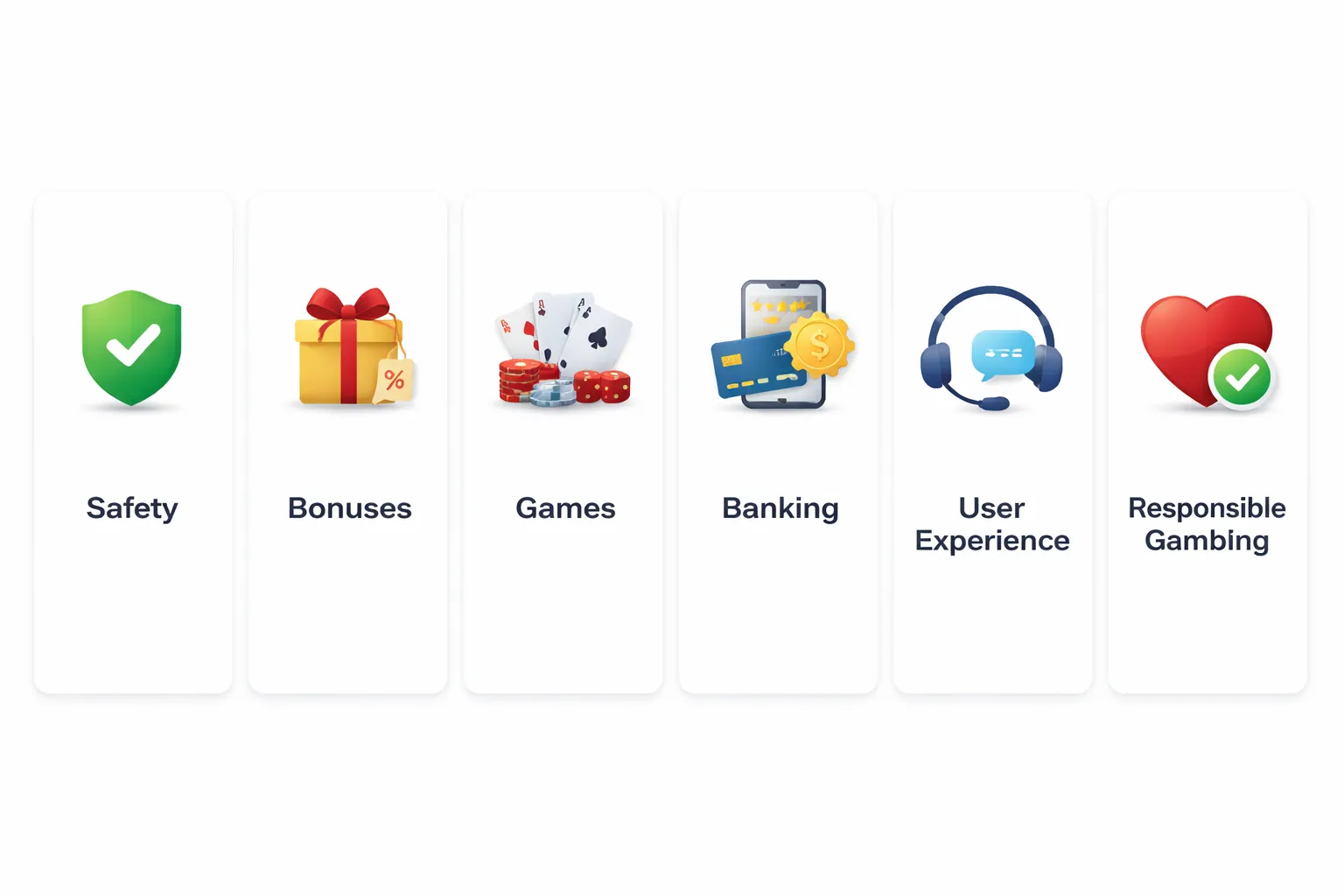
Safety signals, licensing, audits, ownership, track record
We start with safety. If a new casino fails basic checks, it cannot rank.
- License and scope. We confirm the operator, license number, regulator, and the regions the license covers. We check domain match, brand match, and any linked entities.
- Ownership. We identify the parent company and key brands in the group. We look for clean corporate info and consistent terms across sister sites.
- Audits and certification. We look for RNG testing and game fairness certificates from recognized labs. We verify certificate dates and the exact products covered.
- Track record. We review public enforcement actions, unresolved complaint patterns, and payout reputation. A new brand with an old operator inherits that history.
Bonus value scoring, expected value, caps, wagering requirements
We score bonuses by what you can realistically convert to cash, not by headline size.
- Expected value. We model value using match rate, max bonus, and any game weighting rules.
- Wagering requirements. We record wagering, contribution rates, time limits, and max bet rules during wagering.
- Caps and cashout rules. We flag max win caps, withdrawal caps, and any “bonus to cash” conversion limits.
- Terms clarity. We penalize vague rules, hidden exclusions, and rules that let the casino void winnings without clear triggers.
Game catalog evaluation, providers, RTP ranges, originality
We review what you can play on day one and how strong the catalog is.
- Providers. We list core studios and check if the lineup includes top-tier suppliers or only white-label clones.
- RTP ranges. We sample slots across categories and log RTP where displayed. We note when RTP stays hidden or varies by jurisdiction.
- Originality. We separate exclusive games, branded titles, and standard re-skins. We score higher when the lobby adds real depth, not just volume.
- Live dealer and table depth. We check limits, side bets, variants, and table availability at peak hours. For more depth, see our live dealer casino guide.
Banking tests, deposit methods, withdrawal time, limits, fees
Fast withdrawals matter more than flashy deposit options. We test the full loop.
- Method coverage. We check cards, bank transfer, e-wallets, crypto, and local options where relevant.
- Withdrawal speed. We record stated processing times, then compare them to real user reports and support statements.
- Limits. We log minimum deposits, minimum withdrawals, daily and monthly caps, and any VIP-based gating.
- Fees and exchange rates. We check casino fees, third-party fees, and currency conversion costs.
- Decline and chargeback risk. We flag processors that commonly reject gambling transactions in your region.
User experience checks, speed, navigation, search, personalization
We test the site like you will. On mobile and desktop.
- Speed. We measure load time for the lobby, game pages, cashier, and account pages. We penalize heavy scripts and slow logins.
- Navigation. We check category structure, filtering, and whether key tasks take too many taps.
- Search. We test search for game titles, providers, and features like “high RTP” and “megaways” where supported.
- Personalization. We score features like favorites, recent plays, game recommendations, and responsible play reminders that you can control.
Support and fairness, KYC clarity, complaints handling, dispute channels
New casinos fail here often. We look for clear rules and a real path to resolution.
- KYC clarity. We check what documents you need, when verification triggers, and how the casino handles name mismatches and payment method checks.
- Complaints handling. We test support access, hours, and first response time. We score higher when support answers in writing and references terms.
- Dispute channels. We confirm escalation options through the regulator, ADR bodies, or a formal complaint form. We penalize casinos that offer no external path.
- Fair rules. We flag broad “confiscation” clauses, undefined “irregular play,” and rules that let the casino change terms mid-bonus.
Responsible gambling review, limits, self-exclusion, reality checks
We score safer casinos higher. Tools must work, and you must control them.
- Limits. We check deposit, loss, wager, and session limits. We note if limits apply instantly or only after a delay.
- Self-exclusion. We confirm short and long exclusions, cooling-off periods, and whether exclusions block marketing.
- Reality checks. We look for session timers, spend summaries, and clear history exports.
- Help links. We check for direct links to support services and clear problem gambling info in your region.
| Category | What we measure | What lowers rank |
|---|---|---|
| Safety | License, ownership, audits, history | Unverifiable license, unclear operator, poor record |
| Bonuses | EV, wagering, caps, clarity | High wagering, max win caps, vague terms |
| Games | Studios, RTP transparency, depth | Clone-heavy lobbies, hidden RTP, thin live tables |
| Banking | Methods, speed, limits, fees | Slow payouts, low caps, surprise fees |
| UX | Speed, filters, search, mobile flow | Lag, broken search, hard-to-find cashier and terms |
| Support | KYC steps, response time, dispute path | No escalation route, inconsistent answers |
| Responsible play | Limits, exclusion, reality checks | Weak tools, unclear limit rules, hard opt-out |
Best New Online Casinos Right Now (Reviewed & Compared)
Editor’s Picks by Player Type
- Bonus hunters: PlayStar Casino. Strong promos and clear bonus terms.
- Slot fans: Fanatics Casino. Smooth app flow and a deep slot catalog.
- Live dealer: FanDuel Casino. Reliable live lobby in supported states.
- Crypto players: CoinPoker Casino. Crypto-first payments and fast coin transfers.
- VIP and high rollers: Hard Rock Casino. Strong loyalty perks where available.
Best New Online Casinos Right Now (Reviewed & Compared)
“New” can mean two things. A newly launched brand, or a newer option in your state. What matters is what you get today. License coverage. Bonus math. Payout speed. Payment rails. Game depth. Support and limits.
| Casino | License | Welcome bonus | Wagering | Payout speed | Min deposit | Game count |
|---|---|---|---|---|---|---|
| Fanatics Casino | US state regulated, state dependent | Varies by state and promo cycle | Varies by offer | Usually 1 to 3 days for common methods | Often $10 | Large, varies by state |
| PlayStar Casino | US state regulated, NJ and select states | Varies by state and promo cycle | Varies by offer | Often 1 to 3 days | Often $10 | Large, strong slots focus |
| Hard Rock Casino | US state regulated, state dependent | Varies by state and promo cycle | Varies by offer | Often 1 to 3 days | Often $10 | Large, broad lobby |
| Horseshoe Casino Online | US state regulated, state dependent | Varies by state and promo cycle | Varies by offer | Often 1 to 3 days | Often $10 | Large, brand network dependent |
| FanDuel Casino | US state regulated, state dependent | Varies by state and promo cycle | Varies by offer | Often 1 to 3 days | Often $10 | Large, strong live section in supported states |
| CoinPoker Casino | Offshore, not US state regulated | Varies, crypto promos change often | Varies by offer | Fast on-chain, platform handling varies | Low, coin dependent | Smaller casino lobby, poker plus slots |
Quick Verdicts (Strengths, Drawbacks, Best Fit)
-
Fanatics Casino
- Strengths: Fast app experience. Strong cross-brand promos in some markets. Solid slots depth.
- Drawbacks: Offer terms and availability change by state. Some features roll out in phases.
- Best for: Slot-first players who want a modern mobile flow.
-
PlayStar Casino
- Strengths: Promo engine stays active after signup. Simple site navigation. Good slot variety.
- Drawbacks: Limited state reach. Bonus rules depend on the exact offer.
- Best for: Bonus hunters who plan to play weekly, not just on day one.
-
Hard Rock Casino
- Strengths: Strong loyalty program where live. Wide payment support in regulated markets.
- Drawbacks: Access depends on your state. Game list and promos differ by jurisdiction.
- Best for: VIP grinders who want perks and repeat rewards.
-
Horseshoe Casino Online
- Strengths: Familiar operator stack in supported states. Stable cashier tools in regulated markets.
- Drawbacks: Not “new” everywhere, updates arrive market by market. Bonus value varies.
- Best for: Players who want a mainstream regulated brand and a simple lobby.
-
FanDuel Casino
- Strengths: Strong live dealer section in supported states. Clean UX. Good reliability.
- Drawbacks: Live tables and promos vary by state. Some markets have fewer providers.
- Best for: Live dealer players who want a polished platform.
-
CoinPoker Casino
- Strengths: Crypto-first funding. No card declines tied to gambling MCC codes. Poker plus casino in one client.
- Drawbacks: Not state regulated in the US. Consumer protections differ. Game lobby can be smaller than big regulated apps.
- Best for: Crypto users who want quick coin handling and also play poker.
New Casino Launch Notes (What Changed Since Release)
- Fanatics Casino: Expanded state footprint in phases. Added more slot providers over time. Tightened app navigation and promotions around account hubs.
- PlayStar Casino: Built out recurring promos beyond the welcome offer. Expanded game library and tuned rewards tracking in the player account area.
- Hard Rock Casino: Continued market rollouts. Improved loyalty tie-ins where available. Added more payment and game options per state rules.
- Horseshoe Casino Online: Ongoing feature parity work across states. Game additions track provider approvals and local regulations.
- FanDuel Casino: Strengthened live dealer coverage in key markets. Improved lobby filters and game discovery as catalogs grew.
- CoinPoker Casino: Rotates crypto promos more often than regulated apps. Adds games in smaller drops, driven by platform updates rather than state approvals.
Availability Disclaimer (Where You Can Play and Why It Matters)
Access depends on your location. Regulated US casinos work only in states that license online casino play. You must pass geolocation checks and KYC. This affects your payouts, dispute options, and taxes.
- If you play on a regulated site: You get state oversight, audited games, and formal complaint channels. Payment methods tend to run smoother.
- If you use an offshore site: You may still access it, but you do not get US state protections. Rules, limits, and withdrawal handling can differ.
If you want more help spotting risky operators, use our guide on how to spot a fake online casino.
New Casino Bonuses: How to Compare Offers Without Getting Tricked
Welcome bonuses explained
New casinos use big headline numbers to pull you in. You need the bonus type, the cap, and the rules.
- Deposit match. The site matches a percentage of your deposit. Example, 100% up to $200 means you deposit $200 and get $200 bonus funds. Deposit $50 and you get $50.
- Free spins. Spins on specific slots, often with a max win cap or winnings paid as bonus funds. Check the slot name and the value per spin.
- Cashback. A percent of net losses returned over a period, often weekly. It may pay as cash, bonus funds, or free spins. Each version plays differently.
- No-deposit bonus. Small credit or free spins without a deposit. These usually come with strict limits and high wagering, plus a low max cashout.
Wagering requirements, how rollover works
Wagering, also called rollover, tells you how much you must bet before you can withdraw bonus-linked funds.
Use this quick method.
- Find what counts, bonus only, deposit plus bonus, or winnings from free spins.
- Multiply that amount by the wagering number.
- Check game contribution, since slots and table games rarely count the same.
Simple example.
- You deposit $100.
- You take a 100% match, so you get $100 bonus funds.
- The site uses deposit + bonus for wagering, so the base is $200.
- Wagering is 35x.
- You must place $200 x 35 = $7,000 in eligible bets before you can withdraw bonus-linked winnings.
Bonus traps to watch
These rules decide what you can actually cash out.
- Max cashout. Some offers cap withdrawals from bonus play, even if you win more. Example, max cashout $200 on a no-deposit bonus means you forfeit winnings above $200.
- Game contribution. Slots may count 100%. Roulette, blackjack, and live dealer may count 0% to 20%. Low contribution turns a fair rollover into a grind.
- Time limits. Many bonuses expire in 7 to 30 days. Free spins can expire in 24 to 72 hours. If you miss the window, you lose the bonus and sometimes the winnings tied to it.
Promo calendars at new sites
New casinos often run stacked promos for the first few months. Track the ongoing value, not just the welcome offer.
- Tournaments. Leaderboards that reward top scores. Check the scoring method, eligible games, and whether rewards pay as cash or bonus funds.
- Missions. Task lists like play X spins or wager Y amount. Look for missions that you complete with normal play, not forced game switches.
- Drops. Timed giveaways or random rewards tied to specific games. Check minimum bet size, opt-in rules, and whether you must claim prizes in time.
- Loyalty boosts. Limited-time points multipliers. These can beat a small reload bonus if the points convert well.
VIP and loyalty programs
VIP sounds big. The math decides if it helps your bankroll.
- Points value. Find the conversion rate. Example, 1,000 points = $10 means each point equals $0.01. Then check how many points you earn per $1 wagered.
- Reloads. A VIP reload can beat a welcome bonus over time. Compare the reload cap, wagering, and how often you can claim it.
- Real benefits. Faster withdrawals, higher limits, and lower fees matter. Mystery gifts and host promises do not help your cashout.
If you plan to fund deposits by card, use our guide to Visa and Mastercard friendly casinos and confirm the promo rules match your payment method.
Games at New Online Casinos: What’s Actually New?
Most “new” casino game lobbies look familiar. The real change sits in slot math, feature sets, and the mix of providers. Use this section to spot what matters before you deposit.
Newest slots and features
New casinos launch with the same top slot families because they convert. You should judge them by mechanics, not by thumbnails.
- Hold & Win: A bonus round built around locking symbols and re-spins. Check the trigger rate and the max win. Many titles pay small, frequent hits and keep the rare top prize behind high volatility.
- Megaways-style slots: Variable reels and thousands of ways to win. Look at volatility and the average bonus payout, not the “ways” number. These games can drain balance fast in cold runs.
- Cluster pays: Wins form from groups, not paylines. Cascades can raise multipliers, which makes results swing harder. Confirm the RTP for your region because providers sometimes ship multiple RTP versions.
- Bonus buys, where allowed: You pay to enter the feature. This speeds up testing but increases loss rate per hour. Check three things before you click, the buy price, the max win, and whether the casino or your location blocks the option.
If slots drive your play, compare RTP ranges, max wins, and provider depth. Use our slots casino guide to benchmark the lobby against proven slot-heavy sites.
Live dealer evolution
Live casinos improved in production and game variety. The gap now shows in limits, streams, and game rules.
- Game shows: Lightning-style rounds, wheel games, and multiplier formats. Expect high volatility and higher house edge than standard tables. Treat them like entertainment stakes, not grinding games.
- Table coverage: The best new sites add multiple roulette and blackjack tables, plus baccarat. Weak sites pad the lobby with one or two tables and repeat the same studio.
- Limits: New casinos often advertise “high limit” but cap most live tables low. Check real minimums and maximums inside the game, not on the lobby tile.
- Streaming quality: Look for HD with stable frame rate, clear bet timers, and quick reconnection on mobile. Poor streams cause misclicks and rushed bets.
Table games and RNG classics
RNG tables look stable, but new casinos differ in rules, side bets, and game count.
- Blackjack variants: Prioritize standard rules and enough seats. Avoid games with weak rules like low blackjack payout or restrictive doubling. Side bets add volatility and raise the house edge.
- Roulette types: European beats American for odds. Some casinos add “special” roulette with multipliers; it can look better while costing more in edge.
- Side bets: They boost action and losses. If you use them, set a fixed stake and treat them as separate from your main session bankroll.
Instant win and crash games
New casinos push fast games because they keep you clicking. They can fit short sessions, but they punish loose bankroll control.
- Volatility: Many instant wins and crash games swing hard. Your results depend on streaks, so you need strict stake sizing.
- Fairness checks: Look for published game rules, tested RNG or provably fair verification, and clear return metrics where offered. If the casino hides the provider and the rules, skip it.
- Suitability: These games suit small, pre-set budgets and short sessions. They do not suit chasing losses or slow wagering plans.
Exclusive titles and new studios
“Exclusive” often means a reskin or a timed release. You can still spot real value fast.
- Check the provider list: Originality shows up when the casino adds new or niche studios, not just the same three brands.
- Compare feature patterns: Clones reuse the same bonus flow, same symbol sets, and the same max win claims across many titles. New art does not equal new math.
- Look for transparent game info: Strong sites show RTP, volatility, max win, and rules. Weak sites hide details and rely on “exclusive” labels.
- Test with demo first: If the casino offers demos, use them to check hit rate feel and bonus frequency before you commit real money.
Payments, Withdrawals, and KYC at New Casino Sites
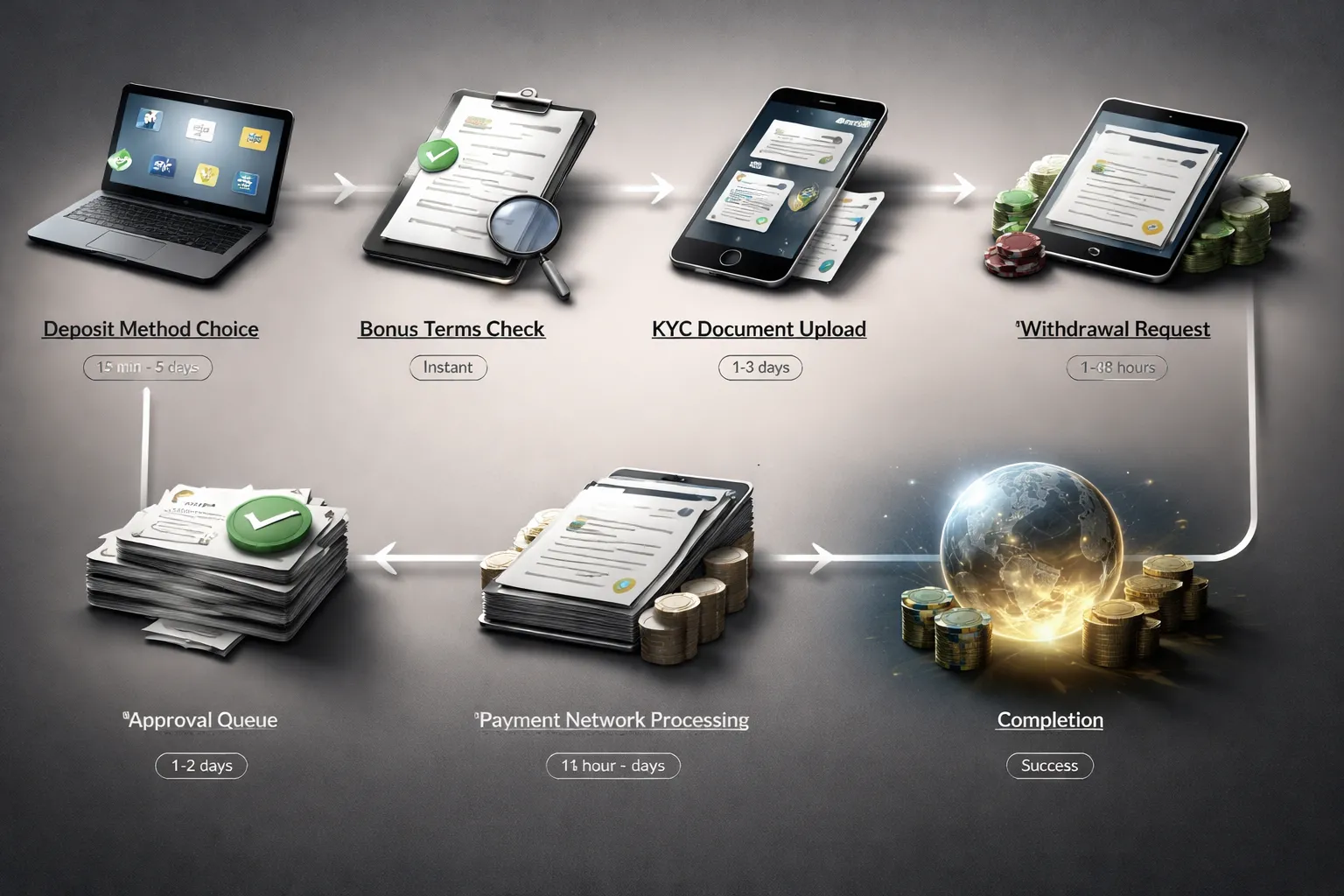
Fast payouts at new casino sites, realistic timelines
New casinos often market “instant withdrawals.” You still face processing time, payment network time, and KYC holds. Use this table as a realistic baseline.
| Method | Deposit speed | Typical withdrawal time | Common limits and notes |
|---|---|---|---|
| Credit, debit | Instant | 1 to 7 business days | Many casinos do not pay out to cards. If they do, banks can add extra days. Watch for MCC blocks and “cash advance” fees. |
| E-wallets (Skrill, Neteller, PayPal where available) | Instant | Minutes to 24 hours, after approval | Often the fastest fiat option. You may need to verify the wallet name matches your casino profile. |
| Bank transfer (ACH, wire) | Same day to 2 business days | 2 to 7 business days | Slow but stable. Banks can reject mismatched names or missing reference codes. |
| Instant banking (Trustly, Interac, open banking tools) | Instant | 0 to 48 hours, after approval | Fast rails, but higher fraud checks. Expect extra KYC if you change banks or devices. |
| Crypto (BTC, ETH, LTC, USDT, USDC) | Minutes | Minutes to 24 hours, plus confirmations | Speed depends on casino approval and network congestion. Stablecoins reduce price risk. |
First cashout often takes the longest. The second and third usually move faster if you keep the same device, method, and details.
Credit, e-wallets, bank transfer, and instant banking
- Cards: Good for deposits. Weak for withdrawals. Keep a backup method ready.
- E-wallets: Best mix of speed and tracking. Screenshot transaction IDs and timestamps.
- Bank transfers: Best for larger amounts. Confirm the exact account holder name, routing, and reference fields.
- Instant banking: Fast deposits and fast withdrawals on some brands. You trade speed for tighter verification checks.
Match your deposit and withdrawal method when you can. Many sites enforce “same method” rules until you withdraw your original deposit amount.
Crypto deposits and withdrawals, confirmations, fees, volatility
Crypto can pay fast, but it adds new failure points. Treat these as standard checks.
- Confirmations: The casino may wait for a set number of confirmations before crediting a deposit. Withdrawals also need network confirmations after the casino sends funds.
- Fees: You pay network fees. The casino may add an internal fee or a minimum withdrawal. Compare both before you deposit.
- Address format: Send to the right network. Do not send USDT on the wrong chain. One mismatch can burn the funds.
- Volatility: Your balance can swing between deposit and cashout. Use USDT or USDC if you want less price risk.
- Source of funds checks: Large crypto withdrawals can trigger extra review. Keep exchange receipts and wallet transaction history.
Verification (KYC) checklist, timelines, and how to avoid delays
KYC delays cause most “stuck withdrawal” complaints at new casinos. Upload clean documents before your first cashout.
- Identity: Government ID, front and back. No glare, no cropped edges.
- Proof of address: Utility bill or bank statement, usually within 60 to 90 days. Name and address must match your profile.
- Payment proof: Card photo with middle digits covered, or e-wallet screenshot showing your name and email, or bank document with IBAN and name.
- Selfie or liveness check: Follow instructions and use good lighting. Match your ID name exactly.
- Source of funds, high amounts: Payslip, bank statements, or crypto exchange history if asked.
Typical KYC time runs from 10 minutes to 48 hours. New brands often take 1 to 3 days during peak periods. You avoid delays when your account details, payment details, and documents match.
If you want more safety checks beyond KYC, use this guide on how to spot a fake online casino.
Withdrawal issues, common reasons, escalation steps, proof to keep
- Bonus terms: You did not meet wagering, you hit a game restriction, or you exceeded a max bet rule.
- Incomplete KYC: Missing payment proof, unclear images, or mismatched name and address.
- Method mismatch: The casino requires you to withdraw to the same method used for deposits.
- Chargeback and fraud checks: Multiple accounts, VPN location conflicts, or rapid deposit and withdrawal patterns.
- Withdrawal limits: Daily, weekly, or monthly caps. Some brands split large payouts into batches.
- Step 1: Ask support for the exact hold reason and the exact document or rule involved.
- Step 2: Request the relevant terms section in writing, bonus terms, max cashout, max bet, game contribution, and withdrawal limits.
- Step 3: Provide one clean upload set. Do not spam multiple versions. It slows review.
- Step 4: Escalate to the compliance team. Ask for an estimated review window.
- Step 5: If regulated, file a complaint with the operator or regulator listed in the footer. If offshore, use the casino’s dispute channel and keep the paper trail.
Keep proof from day one. Save deposit receipts, withdrawal requests, chat transcripts, emails, bonus screenshots, game history, and transaction IDs. If crypto, save the wallet hash and the sending and receiving addresses.
Is It Legal and Safe? Navigating Regulation, Offshore Sites, and Sweepstakes Casinos
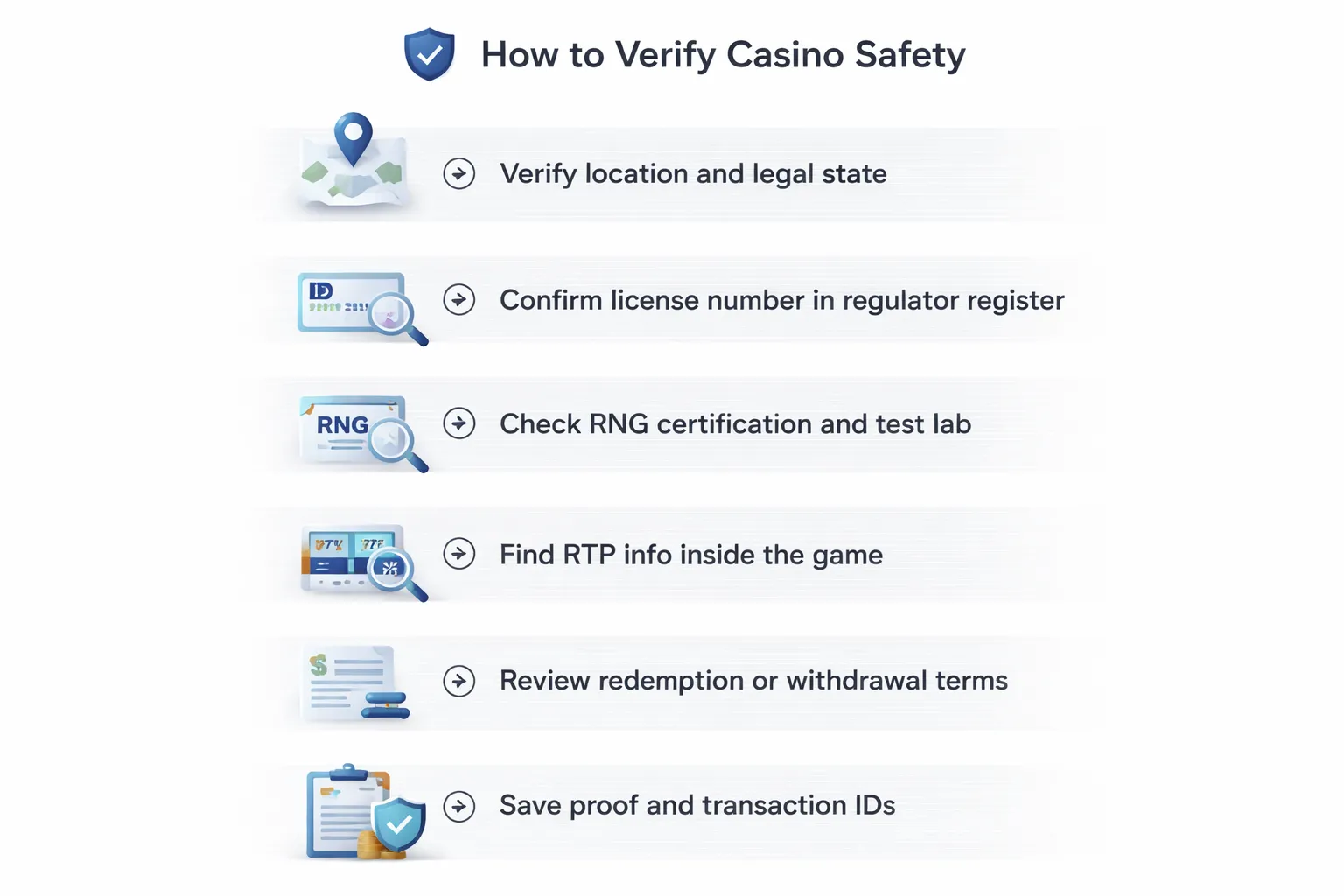
How regulated online casinos work, and why location matters
Regulated online casinos operate under a government license. The regulator sets the rules. The operator must follow them or lose the license.
Your location controls what you can legally access. In the US, online casino legality works state by state. A site can be fully legal in one state and illegal in the next.
- Geolocation: The casino uses location checks. If you sit outside the state border, the app blocks real-money play.
- Identity checks: You provide personal details. The operator verifies you to meet KYC and anti-fraud rules.
- Responsible gambling tools: You get deposit limits, time limits, cooling-off, and self-exclusion.
- Dispute path: You can escalate complaints to the regulator listed in the casino footer.
When you play on a regulated site in your state, you trade some privacy for clearer protections. You also get clearer tax records and fewer payment problems.
Offshore casinos: potential benefits and the biggest risks
Offshore casinos accept players from places where they do not hold a local license. They often run under a foreign license. Some run with weak oversight. Some run with no real oversight at all.
- Potential benefits: bigger bonuses, more payment methods, more game types, faster sign-up, fewer location blocks.
- Biggest risks: withdrawals can stall, terms can change fast, limits can appear late, account closures can happen with little recourse.
- Disputes: you often rely on the casino’s support channel. The regulator may not help you, even if a seal appears on the site.
- Banking: card deposits can fail, processors can change, and chargeback outcomes vary by bank.
Use offshore sites only if you accept that enforcement may be weak. Keep records. Assume you may need to prove every step.
Sweepstakes model basics: SC vs GC, redemption, and eligibility restrictions
Sweepstakes casinos use a dual-currency model. You play for entertainment and potential prizes. The legal basis relies on sweepstakes rules and no-purchase-necessary access methods.
- GC (Gold Coins): play-money used for fun. No cash value.
- SC (Sweeps Coins): promotional currency used for sweepstakes-style prizes. You can redeem SC if you meet the site’s rules.
Redemption usually requires identity verification. Many sites also apply minimum redemption amounts and playthrough rules on SC bonuses.
- Eligibility restrictions: most platforms block certain states and territories. Age rules vary by site.
- Redemption limits: some cap daily or monthly redemptions. Some process redemptions in batches.
- Account rules: one account per person, per household, or per IP may apply. Violations can void redemptions.
Read the sweepstakes rules page, not the homepage. That page controls your redemption.
Licenses and seals: what to trust (and what’s easy to fake)
Trust a license only when you can verify it on the regulator’s own site. A logo in the footer proves nothing by itself.
- What to trust: a regulator name, a license number, and a public register entry that matches the brand and domain you use.
- What’s easy to fake: “licensed” badges, audit seals without links, generic “secure” icons, and copied certificate images.
- What to check fast: the operator legal name, the URL in the license record, and the jurisdiction listed in the terms.
If you want a deeper checklist for security signals and red flags, use our guide to choosing a safe online casino.
Fairness testing: RNG certification, RTP disclosure, and game audits
Fair play depends on the game math and the random number generator. A safe site proves both with testing and clear disclosures.
- RNG certification: look for named test labs and current certificates. Then verify the certificate applies to the operator and platform you use.
- RTP disclosure: regulated sites often publish RTP ranges or per-game RTP. Offshore sites may hide RTP or offer multiple RTP versions for the same slot.
- Game audits: audits check game code, payout behavior, and controls. Some jurisdictions require ongoing testing, not one-time checks.
| Signal | What you should see | What it tells you |
|---|---|---|
| RNG test report | Lab name, date, scope, operator or platform identifier | Games use tested randomness within the audited build |
| Per-game RTP | RTP shown in game info or help panel | You can compare versions and avoid low-RTP builds |
| Regulator oversight | Public license record and complaint path | Stronger enforcement if payouts or terms go wrong |
Pros and Cons of Playing at New Online Casinos
Advantages of playing at new online casinos
- Stronger introductory promos. New brands often lead with bigger welcome offers, extra deposit matches, or higher free-spin totals to win early market share.
- Cleaner, more modern UX. You often get faster sign-up, better mobile layouts, clearer game filters, and simpler cashier flows, including more payment rails.
- Fresh game portfolios. Launch lineups usually focus on current slot releases, new provider deals, and newer features like game search, favorites, and recent-play lists.
Downsides to watch for
- Limited reputation data. You have fewer months of payout feedback, fewer resolved complaints, and less evidence of how the operator handles edge cases.
- Evolving withdrawal policies. New sites may adjust limits, processing windows, and KYC steps after launch. That can change your cashout timeline midstream.
- Promo terms can be aggressive. High headline bonuses often come with high wagering requirements, short expiry windows, or game restrictions that cut real value.
Who should try new casinos vs who should stick to established brands
- Try new casinos if you: bonus shop with discipline, keep session stakes consistent, and can follow fine-print rules without improvising.
- Stick to established brands if you: plan bigger deposits, want predictable withdrawals, rely on proven support, or dislike policy changes during your play.
- New live casino focus: if your priority is live tables, use a dedicated shortlist of live dealer casinos where stream stability and limits have a longer track record.
Risk management tips that protect your bankroll
- Set a bankroll cap per casino. Treat a new site like a trial. Start small. Scale up only after you complete a full deposit to withdrawal cycle.
- Use simple session rules. Set a loss limit and a win goal. Stop when you hit either number. Do not chase.
- Avoid promo overplay. If wagering is high, lower your stake size. If expiry is short, skip the bonus. A bonus that forces volume often increases your risk.
- Match games to bonus rules. Check which games count at 100% toward wagering. Avoid low-contribution games that slow clearing and increase time at risk.
- Plan withdrawals before you deposit. Check minimum cashout, fees, daily limits, and required verification steps. Screenshot key terms in case the page changes.
How to Choose the Right New Online Casino for You (Step-by-Step Checklist)
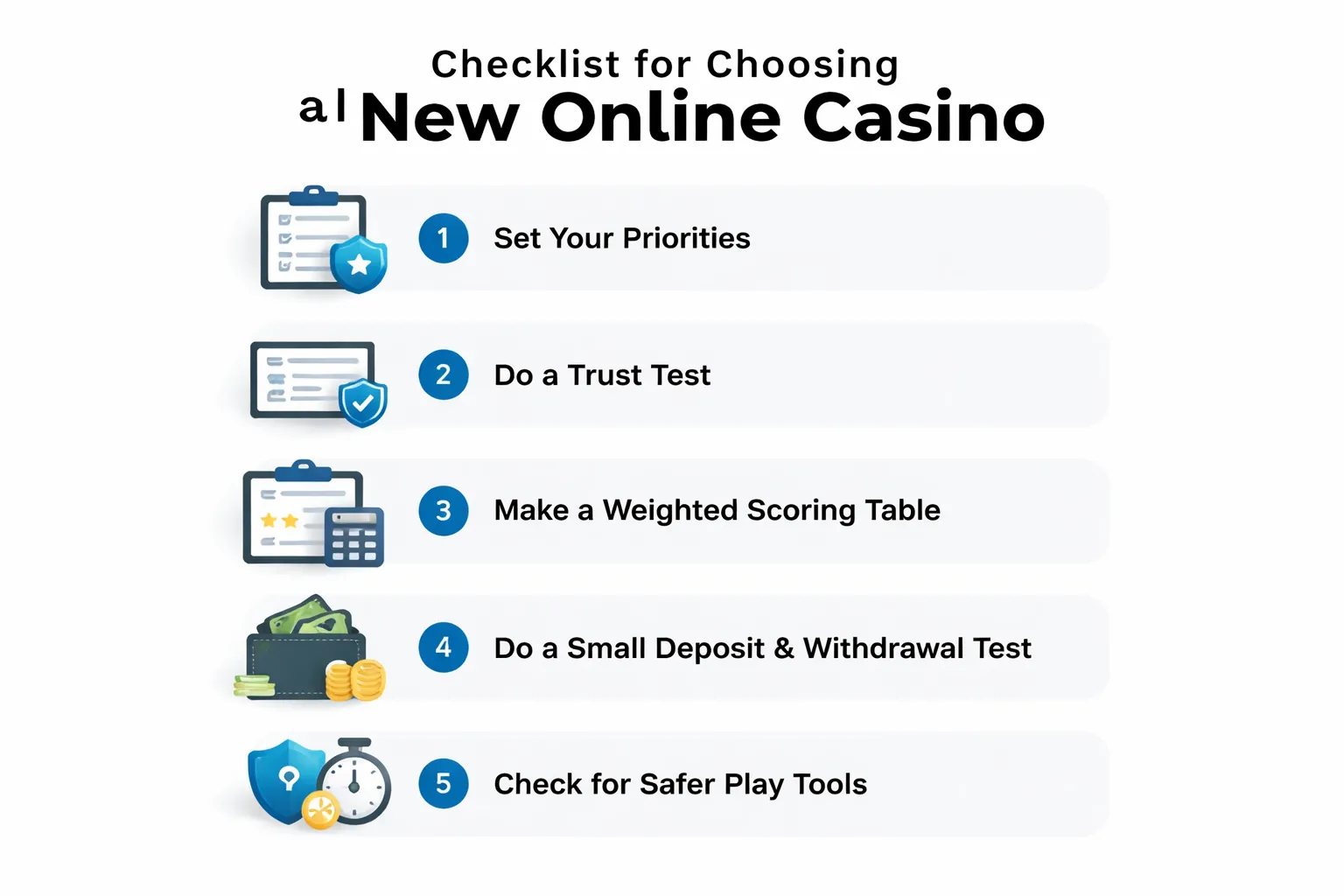
1) Define your priorities
Write down what matters to you before you pick a site. New casinos look similar, so you need a filter.
- Bonuses. Decide if you want a bonus at all. If you do, set a hard cap on wagering, time limits, and max cashout. Ignore big numbers that come with tight rules.
- Payout speed. Pick your preferred cashout method first, then find casinos that pay fast on that method. Look for clear timelines per method, plus any weekend or manual review delays.
- Games. List the games you will actually play. Check provider names, live dealer availability, and table limits. If you mainly play roulette, use a roulette-first shortlist from best online roulette casinos.
- Limits. Set your deposit and wager comfort range. Remove casinos with low max bets, low withdrawal caps, or high minimum deposits.
- Mobile. Choose browser play or app. If you play on mobile, require quick loading, stable cashier flow, and easy ID upload.
2) Run a 5-minute trust test
- License check. Find the operator name and license number in the footer. Verify it on the regulator site. If you cannot verify it fast, drop the casino.
- Terms clarity. Open the bonus terms and banking terms. Look for exact numbers, not vague lines. Red flags include broad “at our discretion” clauses tied to voiding winnings, unclear max cashout rules, and hidden game weighting.
- Payment proof. Check if the cashier shows real methods, limits, and processing times before you deposit. Then search the site for withdrawal fees, daily caps, and required documents. If the casino hides key details until after deposit, treat it as high risk.
- Ownership and reputation. Confirm the brand links to a known operator group. If it feels off, use this guide on how to spot a fake online casino.
3) Shortlist and compare with a simple weighted score
Pick 3 to 5 casinos. Score each one using the same weights. You avoid bias from headline bonuses.
| Category | Weight | What to check | Your score (0 to 10) |
|---|---|---|---|
| Trust | 35% | Verified license, clear terms, known operator, KYC rules stated | |
| Withdrawals | 25% | Methods you use, fees, min cashout, daily limits, stated timelines | |
| Game fit | 20% | Providers, live dealer, table limits, RTP info where available | |
| Value | 15% | Bonus size after max cashout, wagering, game contribution, expiry | |
| Mobile and support | 5% | Mobile stability, support hours, live chat speed, helpful answers |
4) Do a small deposit test
Test the casino like you plan to use it. Keep the money small. Your goal is to measure friction.
- Deposit the minimum. Use the withdrawal method you want long term. Skip the bonus for this test so you can cash out clean.
- Verify early. Upload ID and proof of address on day one. Note if the upload flow fails on mobile.
- Run a withdrawal trial. After a short session, request a small cashout. Track timestamps, emails, and any extra document requests.
- Test support. Ask two questions: “What is my max withdrawal per day on this method?” and “Do you charge any withdrawal fees?” Time the response. Save the transcript.
5) Set safer play tools on day one
New casinos push fast deposits. You need controls before you start chasing.
- Deposit limits. Set a daily or weekly cap that matches your budget. Keep it low enough that you cannot tilt your way into a bigger loss.
- Loss limits. Add a hard stop for the session. If the casino only offers deposit limits, set a lower deposit cap.
- Session controls. Turn on reality checks and set a session timer. Treat it as a mandatory break.
- Time-out and self-exclusion. Confirm you can activate them from your account settings. Do not rely on support to apply them later.
New Online Casino Red Flags (Avoid These Sites)
Unclear ownership, missing license details, and copied terms
Start with the footer. You should see a legal company name, a registration number, and a real address. If you only see a brand name, treat it as a risk.
Check the licensing block. A real casino lists the regulator, license number, and jurisdiction. You should verify it on the regulator site. If the license text has no number, links to a dead page, or uses vague wording like “licensed and regulated” with no proof, walk away.
Open the Terms and Privacy Policy. Look for signs of copy and paste. Mixed company names, wrong currencies, and references to other brands signal a rushed operation. That same sloppiness shows up later in payouts and disputes.
- No operator details: no company name, no registration number, no address.
- License info you cannot verify: no license number, no regulator, no working validation link.
- Inconsistent legal pages: different company names across Terms, Privacy, and footer.
- Generic or broken policies: missing AML, KYC, or responsible gambling pages.
Predatory bonus terms: extreme rollover, low max cashout, restrictive games
Bad casinos use bonuses to trap your balance. You see it in the wagering and in the cashout cap.
Read three lines before you claim anything. Wagering, max cashout, and game contribution. If those terms look harsh, skip the bonus. If the casino forces the bonus, skip the site.
| Bonus term | Red flag | What it does to you |
|---|---|---|
| Wagering requirement | 50x to 80x+, or applies to deposit + bonus | Inflates the target so you churn longer and bust more often |
| Max cashout | Caps like $50 to $200 from a welcome bonus | Limits upside even if you win early |
| Game restrictions | Only a small list of slots count, table games count 0% to 10% | Forces low choice and blocks low house edge play |
| Withdrawal rules tied to bonus | “Withdrawals void winnings” or “bonus funds locked” wording | Creates a lose lose choice between cashing out and keeping wins |
- Short time limits: 24 to 72 hours to clear wagering.
- Max bet limits during wagering: low caps with harsh confiscation rules.
- Bonus abuse clauses that grant total discretion: “we decide” language with no appeal path.
Payment warning signs: limited withdrawals, high fees, or payout stalling
Deposits look easy at every casino. The test is the withdrawal menu and the rules around it.
Open the Banking page before you register. You want clear withdrawal methods, clear limits, clear timeframes, and a plain KYC list. If the site hides fees or pushes you into one payout option, treat it as a red flag.
- Deposit methods without matching withdrawals: you can deposit by card, but withdrawals require crypto or bank wire only.
- High or unclear fees: “processing charges may apply” with no numbers.
- Low withdrawal limits: tiny daily or weekly caps that stretch payouts for months.
- Slow pay language: “up to 21 business days” with no reason, or no stated timeframe at all.
- Stalling triggers: repeated “document resubmission” requests, extra checks after you win, or new limits after you request a cashout.
- Forced conversion rates: the casino sets its own FX or crypto rate with no reference point.
Suspicious game lobbies: unrecognized providers and no RTP information
Game quality signals site quality. A clean lobby lists known studios, shows RTP info, and separates demo play from real money.
If you see dozens of games with unfamiliar provider names and no details, treat it as a risk. If the site hides RTP, you cannot judge what you play.
- No provider transparency: games listed with no studio name or only “in house” labels.
- No RTP details: no RTP in the game info panel, no paytable, no rules link.
- Broken game testing claims: “certified fair” badges with no lab name or report link.
- Cloned lobby patterns: the same thumbnails and game order you see on multiple sketchy brands.
Pressure tactics and spam: aggressive retention or unclear VIP rules
Bad casinos push you to deposit more, faster. You see it in the inbox, the bonus prompts, and the VIP pitch.
Set a hard boundary. If the casino ignores it, you should leave. You can also compare safer options on our trusted online casinos list.
- Too many messages: constant SMS, WhatsApp, or Telegram promos after one signup.
- Opt-out friction: no clear unsubscribe, or support refuses to stop contact.
- Host pressure: “exclusive” deals tied to bigger deposits or faster reloads.
- VIP without rules: no published tiers, no benefit table, no clear wagering terms.
- Confusing comp language: cashback and loss rebates that reset weekly with hidden caps.
Responsible Gambling at New Casino Sites
Built-in tools, deposit limits, loss limits, time-outs
Set limits before you deposit. Do it on day one. You will not set better limits after a losing session.
- Deposit limits, cap how much you can add to your account per day, week, or month. Use these as your main control.
- Loss limits, cap how much you can lose in a set period. Use these if you chase losses or raise stakes after a bad run.
- Wager limits, cap how much you can stake. Use these for fast games and high volatility slots.
- Session time limits, cap how long you can stay logged in. Use these if you play on your phone in short bursts that turn into hours.
- Time-out, blocks play for a short period, often 24 hours to 30 days. Use this when you feel tilted, tired, or angry.
Check the site rules before you rely on a limit. Some casinos apply limit increases right away, others add a cooling-off period. A good site delays increases, and applies decreases fast.
Self-exclusion options and how to use them effectively
Self-exclusion stops you from gambling. Use it when limits fail, or when you keep breaking your plan.
- Pick the widest block you can, use operator self-exclusion plus any state or regulator program in your area if available.
- Choose a long window, weeks help with a rough patch, months help with habits, years help with relapse risk.
- Remove payment triggers, delete saved cards, unlink wallets, and turn off one-click deposits.
- Block access, use device and browser blocking tools, and block casino marketing emails and SMS.
- Close VIP contact, tell support you want all marketing stopped, and ask for written confirmation.
Do not treat self-exclusion as a test of willpower. Treat it as an access shutdown. If a new casino site makes this hard, leave. Do not negotiate.
Reality checks, recognizing risky patterns early
Reality checks help you spot drift. New casino sites often push fast onboarding and constant promos, so you need your own signals.
- You deposit more than planned, or you reload right after a loss.
- You raise stakes to recover, and you stop tracking wins and losses.
- You extend sessions, and you ignore food, sleep, or work.
- You play to numb stress, not for entertainment.
- You hide play, from your partner, friends, or your bank history.
- You respond to pressure, VIP hosts, limited-time reloads, or “exclusive” deals tied to bigger deposits.
Use reality check popups if the site offers them. If it does not, set your own phone timers. If you mostly play on mobile, use a dedicated app timer and notification controls, see our best mobile casino apps guide for safer setup ideas.
Where to get help, support organizations and confidential resources
If gambling starts to feel hard to control, get support early. Use confidential help lines and local services.
- US and Canada, 1-800-GAMBLER (call or text in many states), and state problem gambling councils.
- UK, GamCare and the National Gambling Helpline.
- Europe, national gambling help lines, and local treatment services through health systems.
- Global, Gamblers Anonymous, peer support meetings, online and in-person.
If you feel at risk of self-harm, contact your local emergency number now. Tell a trusted person what is happening, and stop play immediately.
Frequently Asked Questions
What counts as a new online casino?
A new online casino is a site that recently launched in your market, or a new brand from an existing operator. Check the launch date, license start date, and when it began taking real-money deposits. Some “new” sites only rebrand an older platform.
Are new online casinos safe to use?
Some are. Safety depends on licensing, audits, and track record. Verify the regulator, company details, and published terms. Avoid sites with unclear ownership, vague withdrawal rules, or no responsible gambling tools. Use our safe online casino checklist.
Do new casinos pay faster or slower?
Speed varies by payment method and KYC. Cards and bank transfers often take longer than e-wallets and crypto. First withdrawals can take extra time due to identity checks. Read the cashier page for stated processing times and fees, then confirm in the terms.
How do I know a new casino is licensed?
Scroll to the footer for the license number and regulator. Click the regulator link if available. Match the operator name on the license with the site’s legal entity. If the license details do not verify, treat the site as unlicensed.
What games should a new casino offer at minimum?
Look for licensed slot and table providers, live dealer tables if you want them, and clear RTP disclosure where required. You also need search and filtering, demo mode where legal, and stable mobile play. Thin libraries and missing provider info signal risk.
Are “new casino” bonuses better?
Sometimes, but the terms decide value. Check wagering requirements, game contribution, max bet rules, bonus duration, and withdrawal caps. A smaller bonus with low wagering can beat a large bonus with strict limits. Always read the promo terms before depositing.
Can I trust welcome bonus wagering requirements?
Trust them only if the casino lists the rules in writing and applies them consistently. Focus on the full wagering multiple, restricted games, and max cashout. If the casino can change terms at any time, or hides rules behind support, skip it.
What is KYC, and when will you need it?
KYC means identity checks. Most casinos require it before your first withdrawal, and sometimes before you deposit. You usually submit ID, proof of address, and payment proof. Delays happen when your documents do not match your account details.
Are new casinos legal in the US?
Legality depends on your state and the casino type. Regulated casinos operate only in licensed states. Offshore casinos may accept US players but sit outside US regulation. Sweepstakes casinos use a different model and also face state-by-state limits.
What is the difference between regulated, offshore, and sweepstakes casinos?
Regulated casinos hold a local license and follow state rules. Offshore casinos operate under foreign licenses and set their own terms. Sweepstakes casinos use virtual coins and redemption systems instead of direct wagering, but rules still vary by state.
What should you check before depositing at a new casino?
- License: regulator, license number, operator name match
- Payments: methods, fees, limits, processing times
- Withdrawals: KYC steps, max cashout, timeframes
- Bonus terms: wagering, max bet, expiry, caps
- Support: live chat hours, email response time
Do new online casinos accept crypto?
Some do. Check supported coins, network fees, and whether the casino processes withdrawals in crypto or converts to fiat. Confirm minimum withdrawal limits and KYC rules, since crypto deposits do not always mean anonymous play.
Why do some new casinos block certain countries or states?
Licenses restrict where a casino can legally offer games. Payment processors also impose location rules. Some casinos geoblock to avoid regulatory action. If a site lets you deposit but blocks withdrawals due to location, you carry the full risk.
What are common red flags with new casino sites?
- Hidden terms: unclear wagering, vague withdrawal rules
- No verification: no license details you can confirm
- Payment traps: high fees, low limits, long delays
- Support gaps: no live chat, slow replies
- Ownership fog: no company name or address
Can you set deposit limits and self-exclude at new casinos?
Good casinos offer deposit limits, time-outs, and self-exclusion in your account settings. Regulated sites usually link to state programs. If you cannot find limits, or support refuses to set them, treat that as a serious safety issue.
Conclusion
Conclusion
New casinos can give you fresh bonuses and new game lobbies, but they also bring more risk. Your job is to verify the basics before you deposit.
- Prove the license. Check the regulator name, license number, and company details. Match them on the regulator site.
- Test payouts early. Make a small deposit, then request a small withdrawal. Track approval time and any extra document demands.
- Read the bonus rules. Focus on wagering, max cashout, game contribution, and withdrawal limits tied to promo play.
- Check banking and fees. Look for clear deposit and withdrawal methods, limits, and processing times.
- Confirm safety tools. Set a deposit limit on day one. If the site cannot offer limits, time-outs, or self-exclusion, do not play.
One final tip. Keep your first session small, and treat your first withdrawal as the real review. If the casino delays, changes terms, or dodges ownership details, move on and use this guide on how to spot a fake online casino.
-
Fast Payout Online Casinos: Best Sites for Quick Withdrawals
8 months ago -
How to Spot a Fake Online Casino (and Avoid Online Casino Scams)
8 months ago -
Best Online Casinos for Blackjack: Best Tables, Rules & Bonuses
8 months ago -
Best Online Casinos (2026): Top-Rated, Safe & Trusted Picks
8 months ago -
Best PayPal Online Casinos: Top Sites That Accept PayPal Deposits & Withdrawals
8 months ago
-
- Safety signals, licensing, audits, ownership, track record
- Bonus value scoring, expected value, caps, wagering requirements
- Game catalog evaluation, providers, RTP ranges, originality
- Banking tests, deposit methods, withdrawal time, limits, fees
- User experience checks, speed, navigation, search, personalization
- Support and fairness, KYC clarity, complaints handling, dispute channels
- Responsible gambling review, limits, self-exclusion, reality checks
-
- Fast payouts at new casino sites, realistic timelines
- Credit, e-wallets, bank transfer, and instant banking
- Crypto deposits and withdrawals, confirmations, fees, volatility
- Verification (KYC) checklist, timelines, and how to avoid delays
- Withdrawal issues, common reasons, escalation steps, proof to keep
-
- How regulated online casinos work, and why location matters
- Offshore casinos: potential benefits and the biggest risks
- Sweepstakes model basics: SC vs GC, redemption, and eligibility restrictions
- Licenses and seals: what to trust (and what’s easy to fake)
- Fairness testing: RNG certification, RTP disclosure, and game audits
-
- Unclear ownership, missing license details, and copied terms
- Predatory bonus terms: extreme rollover, low max cashout, restrictive games
- Payment warning signs: limited withdrawals, high fees, or payout stalling
- Suspicious game lobbies: unrecognized providers and no RTP information
- Pressure tactics and spam: aggressive retention or unclear VIP rules
-
- What counts as a new online casino?
- Are new online casinos safe to use?
- Do new casinos pay faster or slower?
- How do I know a new casino is licensed?
- What games should a new casino offer at minimum?
- Are “new casino” bonuses better?
- Can I trust welcome bonus wagering requirements?
- What is KYC, and when will you need it?
- Are new casinos legal in the US?
- What is the difference between regulated, offshore, and sweepstakes casinos?
- What should you check before depositing at a new casino?
- Do new online casinos accept crypto?
- Why do some new casinos block certain countries or states?
- What are common red flags with new casino sites?
- Can you set deposit limits and self-exclude at new casinos?
-
- Safety signals, licensing, audits, ownership, track record
- Bonus value scoring, expected value, caps, wagering requirements
- Game catalog evaluation, providers, RTP ranges, originality
- Banking tests, deposit methods, withdrawal time, limits, fees
- User experience checks, speed, navigation, search, personalization
- Support and fairness, KYC clarity, complaints handling, dispute channels
- Responsible gambling review, limits, self-exclusion, reality checks
-
- Fast payouts at new casino sites, realistic timelines
- Credit, e-wallets, bank transfer, and instant banking
- Crypto deposits and withdrawals, confirmations, fees, volatility
- Verification (KYC) checklist, timelines, and how to avoid delays
- Withdrawal issues, common reasons, escalation steps, proof to keep
-
- How regulated online casinos work, and why location matters
- Offshore casinos: potential benefits and the biggest risks
- Sweepstakes model basics: SC vs GC, redemption, and eligibility restrictions
- Licenses and seals: what to trust (and what’s easy to fake)
- Fairness testing: RNG certification, RTP disclosure, and game audits
-
- Unclear ownership, missing license details, and copied terms
- Predatory bonus terms: extreme rollover, low max cashout, restrictive games
- Payment warning signs: limited withdrawals, high fees, or payout stalling
- Suspicious game lobbies: unrecognized providers and no RTP information
- Pressure tactics and spam: aggressive retention or unclear VIP rules
-
- What counts as a new online casino?
- Are new online casinos safe to use?
- Do new casinos pay faster or slower?
- How do I know a new casino is licensed?
- What games should a new casino offer at minimum?
- Are “new casino” bonuses better?
- Can I trust welcome bonus wagering requirements?
- What is KYC, and when will you need it?
- Are new casinos legal in the US?
- What is the difference between regulated, offshore, and sweepstakes casinos?
- What should you check before depositing at a new casino?
- Do new online casinos accept crypto?
- Why do some new casinos block certain countries or states?
- What are common red flags with new casino sites?
- Can you set deposit limits and self-exclude at new casinos?
-
Reload Bonus Explained: What It Is and When It’s Worth Claiming
6 months ago -
Online Casino Licensing Explained: Authorities, Licenses & How to Check One
8 months ago -
Best Live Dealer Casinos: Where to Play Live Blackjack, Roulette & More
8 months ago -
Best Online Casinos for High Rollers: VIP Perks, High Limits & Exclusive Bonuses
8 months ago -
Fast Payout Online Casinos: Best Sites for Quick Withdrawals
8 months ago
-
Online Casino Customer Support: What to Look For (Live Chat, Email, Response Times)
8 months ago -
Sign Up for an Online Casino: Create an Account in Minutes
8 months ago -
Online Casino Payment Safety Tips: How to Deposit and Withdraw Securely
8 months ago -
What to Do If an Online Casino Won’t Pay Out: Step-by-Step Actions
8 months ago -
How to File a Complaint Against an Online Casino (Plus ADR Explained)
8 months ago