How to Spot a Fake Online Casino (and Avoid Online Casino Scams)

Fake online casinos cost players money, data, and access to winnings. Scammers copy real brands, buy ads, and push fast deposits. Some rig games, delay cashouts, or lock accounts after you verify your ID.
This guide shows you how to spot a scam site before you sign up. You will learn how to check a casino license, confirm the operator, and verify the games and software providers. You will learn the red flags in bonuses, terms, and wagering rules that trap your bankroll. You will learn how to test withdrawals, payment methods, and customer support, so you do not find problems after you deposit.
You will also get a quick checklist you can use in minutes on any site, including crypto platforms. If you want safer options, start with our best crypto casinos list.
Key Takeaways
Key Takeaways
- In het kort: Verify the license and the regulator, not the logo. Match the license number to the official register.
- In het kort: Check the software providers and the games list. Fake casinos copy brand names but cannot verify integrations.
- In het kort: Read bonus terms before you deposit. Avoid high wagering, short time limits, and vague “management discretion” clauses.
- In het kort: Run a withdrawal test early. Start small, document timestamps, and watch for sudden KYC demands after you win.
- In het kort: Audit payment methods. Missing standard options, odd processor names, or crypto-only with no proof of reserves are red flags.
- In het kort: Test support before you pay. If you cannot reach a human fast, you will not get help when your money is locked.
- In het kort: Look for clean, specific policies. Clear KYC, withdrawal limits, RTP info, and dispute steps signal lower risk.
- In het kort: Use a 5 minute checklist on every site. License, providers, terms, withdrawal path, payments, support, and reputation.
- In het kort: If you want a deeper framework, use our safe online casino checklist.
What counts as a “fake online casino” (and why scams are increasing)
What counts as a fake online casino
A fake online casino is any site that takes your money or data while it pretends to offer real gambling. Some run illegal games. Others never run games at all. The goal stays the same, get you to deposit, then block your payout.
- Cloned brands. Scammers copy a real casino’s name, logo, and layout. They buy similar domains and run lookalike ads. You think you sign up with the known brand, you actually send money to a copy.
- Unlicensed operators. The site claims it has a license, but you cannot verify it with a regulator. Or it uses a license number from another company. No real license means no real oversight and no regulator to push for your payout.
- Rigged-game sites. The site offers “casino games” that do not come from known software providers. You see no RTP details, no game rules, and no independent testing seals you can verify. Results can be manipulated because the operator controls the game logic.
- Phishing fronts. The “casino” exists to collect your login, card details, crypto wallet addresses, or ID documents. Some also drop malware through fake apps or APK downloads.
Why scams are increasing
- Fast payments. Cards, e-wallets, and crypto move money in minutes. That helps scammers cash out before banks or victims react.
- Anonymity. Crypto, mules, and layered payment accounts make it hard to trace who sits behind the site.
- Cross-border gaps. A scam site can target you from another country, host on offshore infrastructure, and rotate domains. Enforcement takes time and often stops at borders.
- Low setup costs. Templates, white-label platforms, and copied content let scammers launch many sites fast, then abandon them and restart.
How fake casinos profit
- Deposit theft. You deposit, then the site blocks your account, “fails” withdrawals, or vanishes. Some push you to deposit more to “unlock” a payout.
- Identity theft. You upload KYC documents. The scammer uses them for account takeovers, loan fraud, SIM swaps, or to open payment accounts.
- Withdrawal obstruction. The site delays payouts with endless checks, shifting rules, and new document demands. It cites vague “security” reasons. It may add impossible wagering rules after you win.
If you want a baseline of trusted operators, start with our online casino reviews and cross-check the license and payment flow on the casino’s own site.
First-pass red flags you can spot in 60 seconds
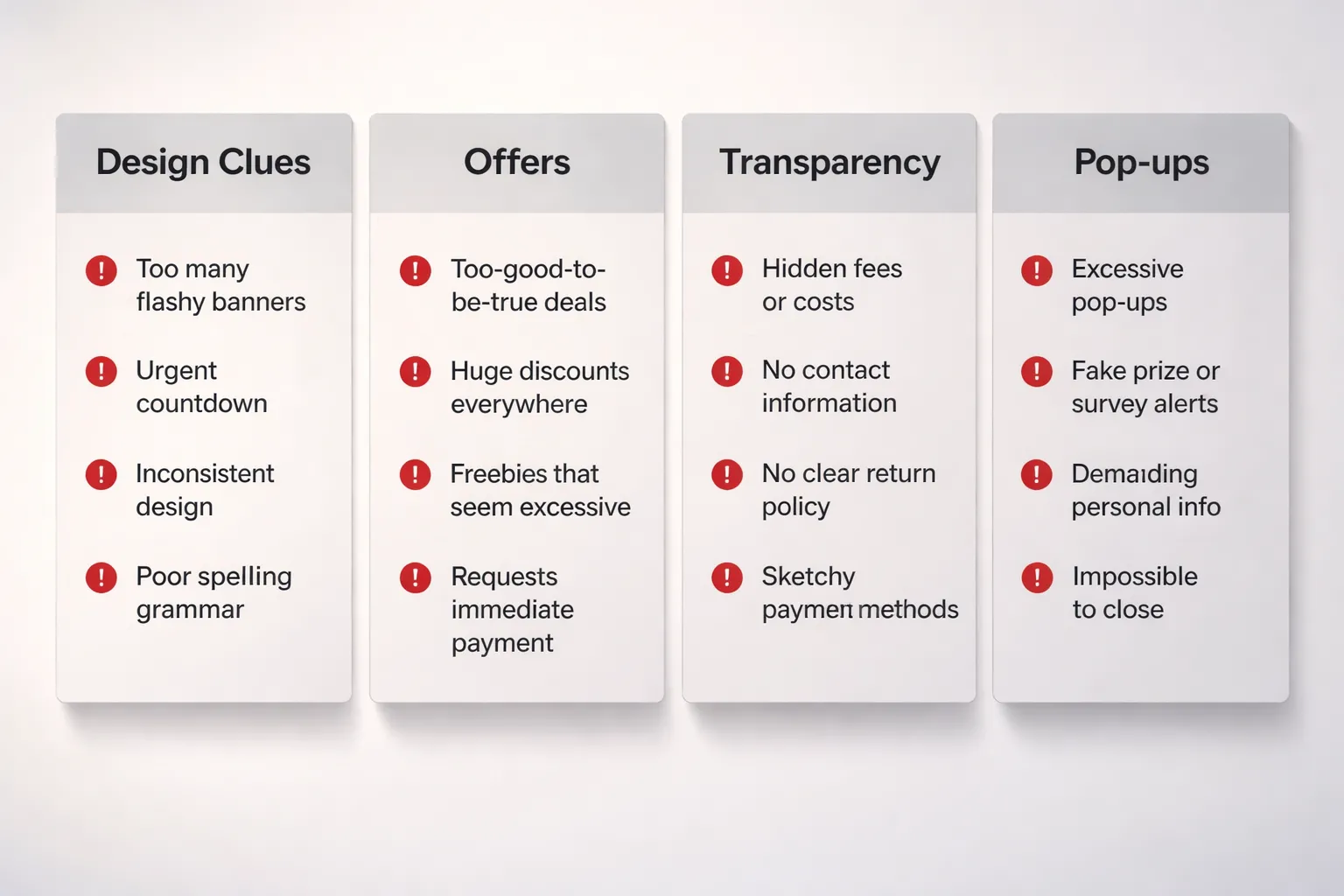
Suspicious design and content clues
You can spot many scam casinos before you sign up. Look for basic build quality issues.
- Broken pages. Dead links, 404 errors, missing terms, or buttons that do nothing.
- Copied text. Generic “about” sections, mismatched names, or policy pages that mention a different casino.
- Inconsistent branding. Different logos across pages, mixed fonts, and a footer that looks like a template.
- No real product proof. Game thumbnails that do not open, provider logos with no link, or a lobby that stays empty until you deposit.
- Too many domains. You click “Register” and land on a different site, or the cashier opens on a new domain.
Too-good-to-be-true offers
Scam sites use extreme promos to push you into a fast deposit. Treat these as high risk until you verify the operator.
- Massive bonuses with no clear terms. If you cannot find wagering, max cashout, game limits, and time limits in plain text, walk away.
- Guaranteed wins. Any claim of “risk-free profit,” “sure win system,” or “fixed matches” signals fraud.
- Instant VIP pressure. “VIP unlocked,” “host assigned,” or “exclusive invite” right after you land, before any play history.
- Countdown timers everywhere. Fake urgency to stop you from reading terms and checking the license.
Missing or weak transparency
Legit casinos identify the company behind the site. Scam casinos hide it or keep it vague.
- No company name. No legal entity in the footer, terms, or privacy policy.
- No address. No registered address, or only a country name with no street address.
- Generic contact details. Only a web form, no email, no phone, no live chat hours, no support policies.
- License claims you cannot verify. A “licensed” badge with no regulator name, no license number, or no link to the regulator register.
- Terms that let them do anything. Clauses that allow account closure “for any reason,” confiscation of winnings, or rule changes without notice.
If you want a deeper checklist, use our guide to choosing a safe online casino and verify each item on the casino site.
Aggressive pop-ups and forced redirects
Fast, pushy flows often point to affiliate bait, malware risk, or payment traps.
- Forced redirects. You click “Play” and bounce through multiple pages before you see games or terms.
- Pop-ups that block the site. You cannot read policies without closing repeated bonus prompts.
- Download prompts. The site pushes APKs or unknown apps instead of standard app store links.
- Wallet and crypto pressure. The cashier pushes one method only, often crypto, with no clear fee and refund policy.
- Browser warnings. “Deceptive site,” certificate warnings, or security alerts, even once, should end the session.
License and regulation checks that actually work
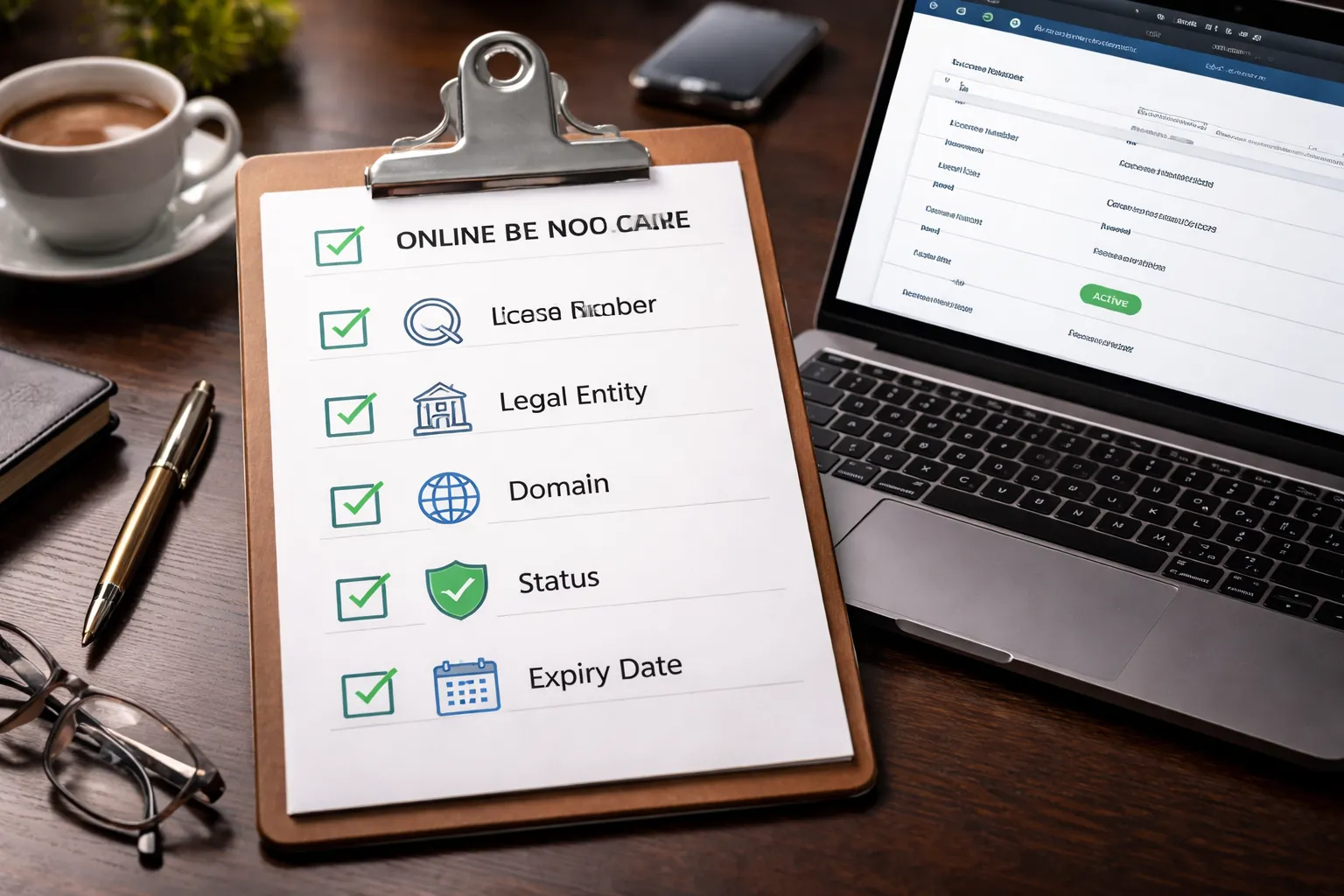
How to validate a license number on the regulator’s website
Do not trust a logo or a footer line that says “Licensed.” Verify it on the regulator’s own register.
- Step 1, copy the license details. Get the license number, licensee name, and jurisdiction from the casino footer and the Terms and Conditions. Save a screenshot.
- Step 2, find the regulator’s official domain. Use the link from the regulator list on Wikipedia or a known directory, then type the domain yourself. Do not click a badge on the casino site.
- Step 3, open the public register. Look for “Licensee register,” “Public register,” “Approved operators,” or “Verify a license.”
- Step 4, search by license number first. If the register supports it, use the exact number. If it does not, search the company name.
- Step 5, match the details. The register entry should match the casino brand and the legal entity. Check the trading name, domain, and operator name. Some regulators list approved domains. Your casino domain must appear.
- Step 6, check status and dates. Confirm “Active” or “Valid.” Check issue date and expiry date. Avoid “Suspended,” “Revoked,” “Lapsed,” or “Under review.”
- Step 7, check the license type. Some licenses cover B2B software, not consumer gambling. You want an operator license that covers casino betting offered to players.
- Step 8, cross-check contact details. The register often lists the operator address. Compare it to the casino’s Terms and Privacy Policy. Mismatches matter.
- Step 9, keep proof. Save the register page as a PDF or screenshot. If a dispute happens, you need a record.
Which regulators tend to be more reliable, and what “white-label” means
Reliability comes from audits, enforcement, and public records you can verify. Some regulators publish clean registers and take action fast. Others do not.
- Generally stronger oversight. UKGC, Malta Gaming Authority, Isle of Man, Gibraltar, Sweden, Denmark, Ontario iGaming. These regulators publish enforcement actions and maintain operator registers you can check.
- Variable oversight. Curacao and some smaller offshore jurisdictions. You can still find legit brands there, but you must verify the exact licensee and domain. Many scams also hide behind vague Curacao claims.
- White-label licensing. A third party holds the main license. Your casino runs as a brand under that license. This can be normal, but it changes your risk.
- What to check with white-label setups. Confirm the master license holder, the brand authorization, and the exact domain. If the regulator register shows only the master company and no brand or domain, treat it as higher risk.
If you want a shortcut, use vetted lists like our top-rated, safe online casinos, then still verify the license on the regulator register.
Warning signs in licensing claims
- Mismatched company names. The footer shows one company, the Terms show another, the regulator shows a third. Walk away.
- No license number. Real operators show a license ID, not just “regulated” text.
- Wrong regulator for the claim. The casino claims UK licensing but appears nowhere on the UKGC register.
- Expired or invalid status. The register shows expired, suspended, revoked, or pending. Do not deposit.
- Fake seals. A “verified” badge that does not link to a regulator page, or links to an image file, or links to a different domain.
- Generic certificates. PDF “certificates” hosted on the casino site only. Real proof lives on the regulator site.
- Domain mismatch. The license covers one domain, you play on another. This often signals a clone site.
Jurisdiction limits, a license does not always mean it is legal for you
A valid license tells you the operator exists under a regulator. It does not guarantee the casino can legally accept players from your country or state.
- Geo restrictions. Many licenses cover only specific markets. The operator may block restricted regions. Scam sites often do not.
- Your local law still applies. A Malta or Curacao license does not override a US state ban, a provincial restriction, or local licensing rules.
- Payment access does not equal legality. Some casinos process crypto or third-party payments even when they should not serve your location.
- Dispute reality. If you play from a restricted location, you can lose chargeback rights, lose complaint options, and lose the ability to claim winnings.
Ownership, reputation, and digital footprint investigation

How to confirm operator identity
A real casino tells you who runs it. A fake one hides behind vague names and generic contact pages.
- Find the legal entity. Check the footer, Terms and Conditions, and Privacy Policy for the operator name, company number, and registered address.
- Match the license to the operator. The license holder name must match the legal entity in the site terms. If the license shows a different company, treat it as a risk.
- Look for the parent group. Legit operators list a parent company or gaming group. Cross check that group on multiple sources, not just the casino site.
- Check the brand list. Real groups run several brands. The same operator name should appear across those sites. If each brand claims a different “owner,” the network may exist to dodge complaints.
- Verify in corporate registries. Search the company number in the relevant registry. Confirm incorporation date, directors, and address. Watch for dissolved entities, recent changes, or addresses that show dozens of unrelated firms.
Domain and website history checks
Scam casinos burn domains fast. They rebrand, relaunch, and move players to mirror sites.
- Check domain age. A brand that claims years of history but uses a newly registered domain does not add up.
- Track frequent rebrands. If the casino changes name, logo, or URL often, it may try to outrun bad reviews and unpaid withdrawals.
- Watch for mirror sites. Scammers clone the same casino across multiple domains with the same design, cashier flow, and bonus text. They rotate links when one site gets flagged.
- Compare site fingerprints. Look for identical Terms, identical support email templates, and the same broken links across “different” brands.
- Check public web archives. Use cached pages and archives to see older versions of the site. Sudden shifts in operator name or terms matter.
Reputation research methods
Player feedback helps, but you need to filter noise and manipulation.
- Prioritize withdrawal reports. The best signal is a clear timeline, amount, payment method, and support response. Generic “scam” posts without details help less.
- Check patterns, not one offs. Repeated reports of delayed KYC, “random” account closures, bonus term abuse, or confiscated winnings show operator behavior.
- Separate product issues from payout issues. Slow loading games annoy players. Non payment harms you.
- Cross check across platforms. One forum thread can get brigaded. Look for the same complaint type on multiple independent sites.
- Spot smear campaigns. Competitor attacks often use fresh accounts, copy pasted wording, and no transaction proof. They also target many brands in the same group on the same day.
- Look for operator responses. Real operators reply with case handling steps and required documents. Scams reply with threats, blame, or silence.
Affiliate network traps
Many scam casinos grow through affiliates. The review site looks independent, but it sells your click.
- Check disclosure. Honest sites label affiliate links and explain how they rank casinos. If you cannot find a disclosure, assume bias.
- Watch for one brand dominance. If every “best casino” list pushes the same few brands, the site may belong to an affiliate network that works with risky operators.
- Test the negatives. Legit reviews list real cons, terms that hurt players, and withdrawal limits. Scam pushing reviews stay vague and upbeat.
- Look for copied content. Networks reuse the same review template across many domains. Identical headings, identical ratings, and identical bonus copy signal a farm.
- Verify claims. If a review says “fast withdrawals” or “no KYC,” confirm in the casino terms. Many scams advertise one thing and enforce another after you win.
- Be careful with crypto pitches. Some affiliates push high risk casinos because chargebacks get harder. If you want crypto options, use a vetted list like crypto casino picks, then still verify the operator and domain history yourself.
Security and privacy signals (protect your money and your identity)
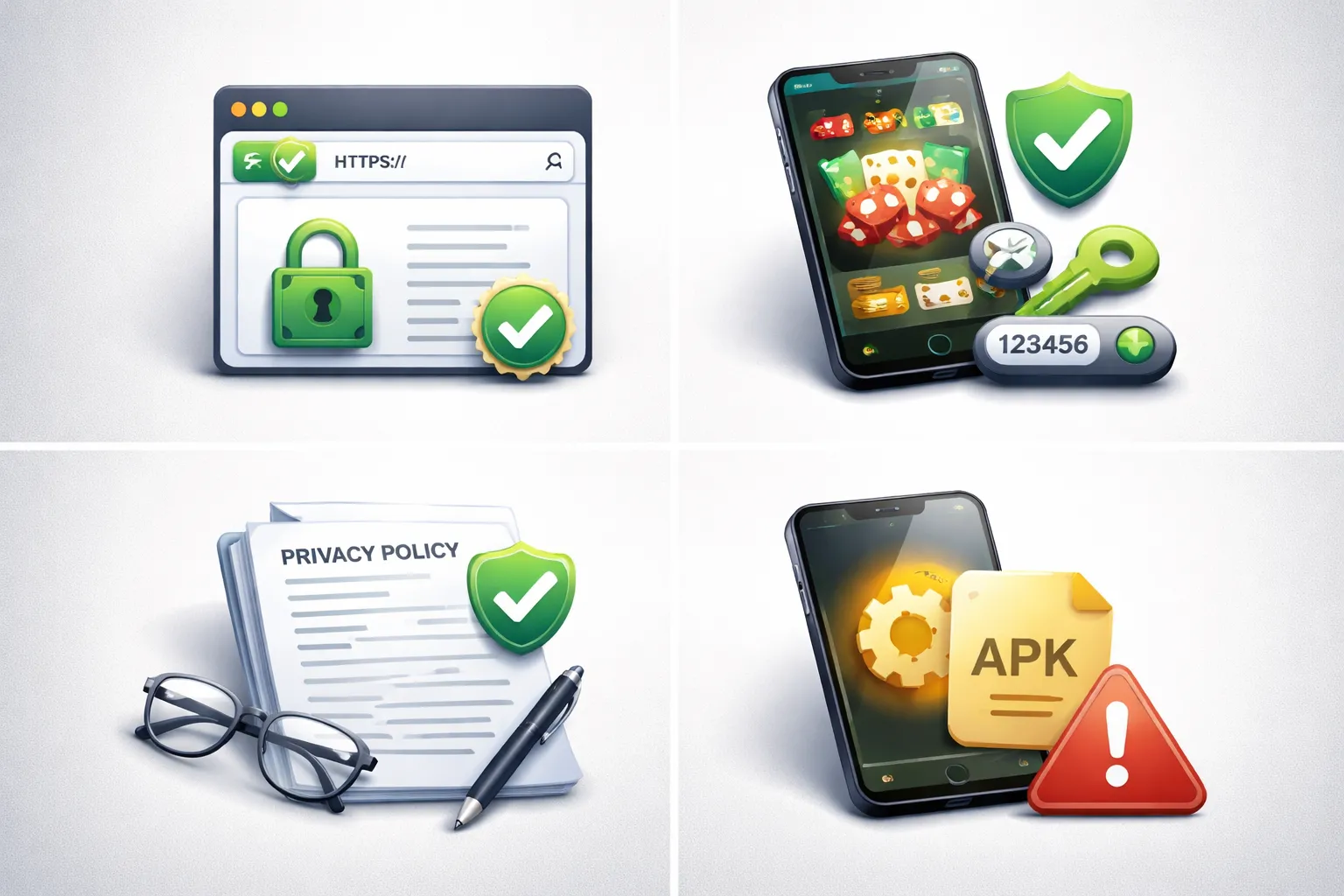
Website security basics, check the domain and the lock
Start with the address bar. You want HTTPS, a normal domain name, and no browser warnings. If the site loads on HTTP, leave. If your browser flags malware or a bad certificate, leave.
- HTTPS and the certificate: Click the lock icon. Check the certificate looks valid and current. Avoid sites with certificate errors, expired dates, or mismatch warnings.
- Domain consistency: Scams copy brands and use lookalike domains. Watch for extra words, odd hyphens, and misspellings. Check that the cashier, login, and support pages stay on the same main domain.
- Secure login practices: A real casino does not ask for your password over email, live chat, or Telegram. It does not send you a password in plain text.
- Payment page safety: Do not enter card details on a random form. Use trusted payment rails when possible. PayPal adds a layer of separation, see our PayPal casinos guide.
Account protection features, block account takeover
Weak account security makes it easy for criminals to drain your balance and lock you out. You should see basic controls before you deposit.
- 2FA or MFA: Enable it. App based codes beat SMS. If the site offers no 2FA, treat it as a risk signal.
- Login alerts: Look for email or SMS alerts on new logins, device changes, and withdrawal requests.
- Session controls: You want a way to view active sessions and log out of all devices. You also want a short session timeout on cashier pages.
- Withdrawal protection: Strong sites require confirmation for new withdrawal methods and changes to bank or wallet details.
Data handling red flags, protect your identity
Scam casinos collect more data than they need. They also hide how they use it. Your goal is to limit what you share until the operator proves it can pay.
- Unclear privacy policy: You should find a privacy policy that names the operator, lists what data it collects, and explains retention and sharing. If it looks generic, missing, or copied, treat it as a stop sign.
- Invasive permissions: Avoid sites that push you to install apps, enable unknown browser permissions, or allow access to contacts and storage without a clear reason.
- Excessive KYC demands: KYC can be normal. The timing and scope matter. Red flags include requests for extra documents after you win, repeated resubmissions with vague reasons, and demands for sensitive data not tied to payments.
- Unsafe document handling: Do not email documents to random addresses. Use only an in site secure upload inside your account. If the casino asks you to send ID over WhatsApp or Telegram, leave.
Safer device habits, reduce the blast radius
You cannot control how a casino stores data. You can control how much damage a breach or scam can do to you.
- Use a separate email: Create an email you use only for gambling. It cuts phishing risk and limits account linking.
- Use a password manager: Generate a long unique password for each casino. Do not reuse old passwords.
- Avoid sideloaded APKs: Only install apps from official stores. Do not install Android files from chat links, popups, or mirror sites.
- Keep your device clean: Update your OS and browser. Do not play or cash out on public Wi Fi. Use your own network or a trusted hotspot.
Payments and withdrawals: where most casino scams show up
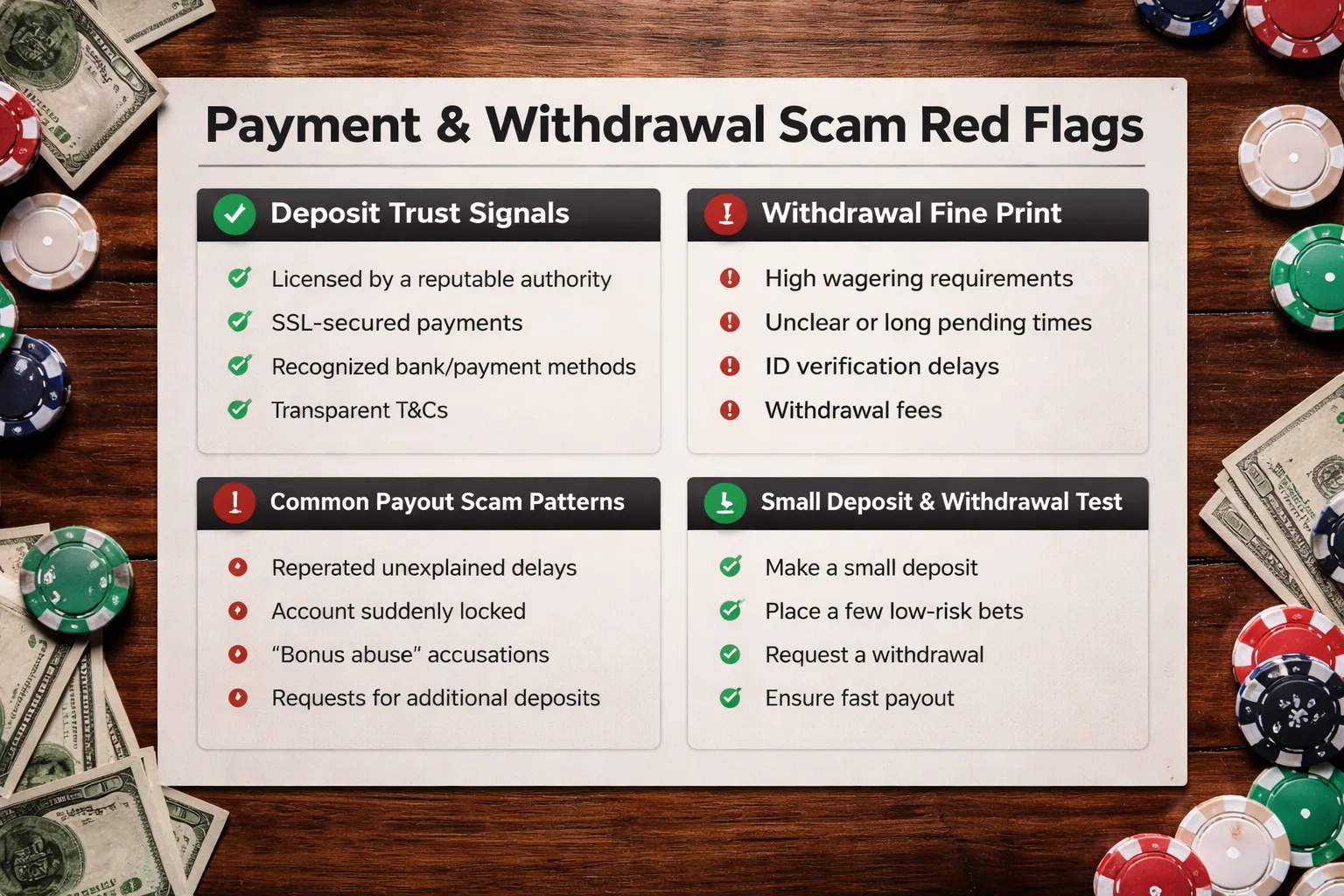
Deposit method trust signals
Payments show you who sits behind the casino.
- Recognizable payment service providers (PSPs). Look for mainstream processors and e wallet brands you can verify outside the casino site. Fake casinos often list logos with no real integration.
- Card acceptance that behaves like real card acceptance. Legit casinos support standard card flows, 3D Secure prompts in many regions, and clear descriptor details. Scams push bank transfer, crypto only, or “manual card” payments through chat.
- Transparent processing details. You should see deposit fees, minimums, and processing times before you pay. The cashier should show currency, exchange rate, and who processes the transaction.
- Consistent cashier behavior. Working casinos send instant receipts, email confirmations, and a transaction ID. Scam sites fail to generate records or show “successful” deposits that never appear in your account history.
Withdrawal fine print to scrutinize
Most scams hide behind withdrawal terms. Read these items before you deposit.
- Limits. Check minimum cashout, maximum per transaction, maximum per day, and maximum per month. Watch for low caps that stretch payouts for weeks.
- Fees. Look for withdrawal fees, inactive account fees, and “processing” fees. A legit casino states fees in one place and applies them consistently.
- Pending periods. A short review window can be normal. Long, undefined pending states are a red flag. Terms should state typical processing times by method.
- Wagering rules tied to deposits and bonuses. Some casinos apply wagering to deposits, not just bonuses. If terms say you must wager a large multiple before any cashout, treat it as a trap.
- Verification triggers. The casino should list the documents it may request and when. Watch for vague clauses like “any additional documents we deem necessary” with no limits.
Common payout scam patterns
Scam casinos block withdrawals with repeated friction. These patterns show up fast.
- Endless KYC. They approve one document, then ask for another, then ask for the same one again. They keep moving the goalposts until you give up.
- Changing terms after you win. They add new withdrawal caps, new wagering requirements, or new verification rules that did not appear when you deposited.
- Fabricated “security checks.” They claim you need to pay a fee, make another deposit, or “verify a wallet” to unlock cashout. Legit casinos do not require extra deposits to release your funds.
- Forced withdrawal methods. They accept deposits by card, then insist you withdraw by crypto or bank transfer through a third party. That blocks chargebacks and raises fraud risk.
- Support stalling. You get scripted replies, no case number, and no written timeline. They push you to chat apps or request documents through unsecured email.
Practical test strategy: go small before you scale
Test the cashier like you test a new bank. Use a controlled trial.
- Deposit the minimum. Use a method you can dispute if needed, and avoid crypto on a first test.
- Skip bonuses. Bonuses add wagering rules and give scammers leverage. Test base terms first.
- Play a small amount. You want a normal transaction trail, not a big win that triggers delays.
- Request a small withdrawal. Pick the simplest method offered and document timestamps.
- Track the full flow. Save screenshots of the cashier, the terms page, and any support messages. If the casino changes rules or invents new steps, stop.
- Scale only after a clean payout. One smooth withdrawal does not guarantee safety, but one blocked withdrawal often confirms a scam. Use published research before increasing stakes, and compare operators in our online casino reviews.
Bonuses, promotions, and terms that can trap players
Wagering requirements explained, realistic ranges vs predatory numbers
A bonus is never free. You pay with wagering.
Wagering requirements tell you how many times you must bet the bonus, or bonus plus deposit, before you can withdraw. Scams use huge multipliers, short deadlines, and unclear math.
- Realistic range: around 20x to 40x on the bonus amount.
- High risk: 50x to 70x, or any requirement that applies to deposit plus bonus.
- Predatory: 80x to 100x+, or “wager until verified” language.
Check the time limit. A fair offer gives you enough time to complete wagering with normal play. A scam pushes 24 to 72 hours, then uses the missed deadline to void winnings.
Watch the maximum bet rule during wagering. If the casino sets a low max bet and then claims you broke it, they can confiscate winnings. Treat unclear max bet rules as a stop sign.
Restricted games and contribution rules, how they quietly block cashouts
Contribution rules decide which games count toward wagering. A casino can advertise a bonus, then exclude the games you actually play.
- Zero contribution games: some slots, all table games, live dealer, jackpot games, or “feature buy” rounds.
- Low contribution games: blackjack, roulette, baccarat, video poker, often set to 0% to 20%.
- Bonus-ineligible play: the casino voids winnings if you play excluded games even once.
Look for rules tied to “low risk betting” or “irregular play.” Scam casinos keep these terms vague, then label normal play as a violation. Common triggers include switching games, changing stake sizes, or using bets they call “hedging.”
Max-cashout clauses and bonus abuse accusations, how scams weaponize them
Max cashout rules cap how much you can withdraw from bonus play. Some licensed casinos use caps, but scams use them to block any meaningful win.
- Reasonable cap: clear, fixed, and stated upfront, for example 5x to 10x the bonus amount.
- Predatory cap: tiny limits like $50 to $200 on a large bonus, or caps that change by “management decision.”
Watch for “bonus abuse” clauses. Scams use them as a catch-all to deny withdrawals. Red flags include:
- “We may void winnings at our discretion.”
- “Any advantage play is prohibited,” with no definition.
- “We may request additional documents at any time,” with no endpoint.
- “We may confiscate funds for irregular betting patterns.”
If the casino can label your play as abuse without clear thresholds, you hold all the risk. Skip the bonus or skip the casino. Use vetted operators from our best online casinos list.
How to read T&Cs efficiently, the 10 clauses to search for before depositing
Do not read the full page. Search within the terms for these clauses and scan the surrounding paragraph.
- Wagering requirement: the multiplier and whether it applies to bonus only or deposit plus bonus.
- Contribution: which games count, and at what percentages.
- Excluded games and features: live dealer, table games, jackpots, bonus buys, auto-play, turbo mode.
- Max bet during wagering: exact number, currency, and what happens if you exceed it.
- Time limit: how long you have to meet wagering, and what triggers forfeiture.
- Max cashout: cap formula, and whether it applies to winnings, withdrawals, or both.
- Withdrawal rules: minimum and maximum withdrawal limits, and any forced withdrawal method.
- Verification and KYC: required documents, deadlines, and whether the casino can reset verification.
- Account closure and confiscation: when they can void funds, and whether they must give notice.
- Discretion clauses: “sole discretion,” “management decision,” “we may change terms at any time.”
If you see vague enforcement, moving targets, or terms that let the casino rewrite rules after you win, stop. Bonuses work only when terms stay fixed and measurable.
Game fairness: how to tell if the games might be rigged
RNG and fairness auditing, what certificates matter and where to verify them
Real online casino games use a random number generator (RNG). A serious casino proves that RNG works, and that the game matches the tested version.
Look for an independent test report from a known lab. Names that matter include eCOGRA, iTech Labs, GLI, and BMM Testlabs. The proof should show the lab name, the casino or game provider name, the game list or platform, and a recent date.
- Verify on the lab site if possible. Some labs publish an operator directory or certificate lookup. If you cannot confirm it outside the casino website, treat it as marketing.
- Check the certificate details. A generic badge that says “RNG Certified” with no report number, scope, or date means little.
- Match the scope to what you play. “Platform certified” does not always mean each slot and live game gets covered. You want coverage for the game supplier and product line you use.
- Look for regulator links. Strong regulators often list licensed operators and approved suppliers. A real casino usually links you to that license record.
Reputable software providers vs unknown “in-house” libraries
Game fairness depends on the game maker as much as the casino. Established providers protect their brands, publish RTPs, and submit to testing. Scam casinos often hide behind “in-house” games with no public track record.
- Prefer recognizable providers. If the lobby shows major studios and the games launch inside the provider’s standard game frame, that lowers risk.
- Be cautious with “exclusive in-house” slots. Exclusives can be fine, but you need a real studio name, a company address, and test coverage for those specific titles.
- Check RTP disclosure. Legit games show RTP in the help file. Missing RTP, or RTP that changes without notice, signals control on the casino side.
- Watch for cloned games. Copycat titles that mimic popular slots, with slightly changed names and art, often come from unlicensed libraries.
For broader safety checks beyond fairness, use this guide on security, trust signals, and red flags.
Provably fair and crypto casinos, what it is and what it doesn’t guarantee
Provably fair systems let you verify each result after the round. They use a server seed, a client seed, and a nonce. You can recompute the outcome and confirm the casino did not change that specific roll, spin, or hand.
- It helps with math integrity. You can verify that the stated inputs produce the stated output.
- It does not guarantee value. A game can be provably fair and still have a bad house edge.
- It does not fix withdrawals. A casino can run fair games and still stall cashouts, apply harsh limits, or close accounts.
- It does not validate the whole site. You still need licensing, clear terms, and a payment track record.
If a casino claims provably fair, it should show the exact verification method, the hashing algorithm, and a clear step list to reproduce results. If you cannot verify outcomes yourself, the claim adds little.
Gameplay warning signs, odd payout behavior, frequent disconnects, and unexplained balance changes
Rigged games often show operational signals before you can prove anything statistically. Track what happens during real sessions.
- Payout patterns that do not match the game rules. Bonus features that “complete” with zero-value outcomes, missing paylines, or paytable mismatches.
- RTP and settings that change. The same slot title behaves differently across sessions, and the info panel shows different RTP values.
- Frequent disconnects during big moments. Drops that happen near bonus triggers, free spins, or large hands, followed by a changed outcome after reconnection.
- Unexplained balance edits. Stakes or winnings disappear, bonus funds convert incorrectly, or the balance changes without a visible transaction record.
- Missing logs. No bet history, no round IDs, no game session history, or history that deletes after a support chat.
- Support cannot trace a round. A legit casino can pull a round ID and show the result record. Evasion points to weak controls or intent.
Take screenshots of the paytable, the RTP info, your balance before and after, and the round IDs. If the casino cannot reconcile those records fast, stop depositing.
Customer support and dispute resolution checks
Support availability tests
Test support before you deposit. Use live chat, email, and phone if offered. Record timestamps and save transcripts.
- Live chat: Start a chat at two different times, one during peak hours and one late. A legit casino replies fast and answers specific questions. Ask for payout timeframes, withdrawal limits, and the exact documents they require for KYC. If they dodge, stall, or push you to deposit, leave.
- Email: Send a short message with three clear questions. Example, “What is your max weekly withdrawal, what is the fee policy, and where is the complaints process.” You want a direct reply that links to exact policy pages. Vague replies signal weak operations.
- Phone verification: If they show a phone number, call it. Check if it connects to a real support team, not a dead line or voicemail loop. If they refuse phone support, they should at least offer a ticket system with a case number.
Evaluating help content
Read the help center like a contract. You need clear rules, clear tools, and a clear path to escalate.
- Policies: Look for withdrawal rules, bonus terms, KYC steps, and account closure. The text should state timelines and limits. If it relies on “we may” language for every key point, expect delays and denials.
- Responsible gambling tools: A legit casino lets you set deposit limits, loss limits, session limits, and self-exclusion. The tools should work without support intervention. If you must beg support to lock your account, that is a control failure.
- Escalation path: You should see a formal complaints process. It should include steps, expected response times, and who reviews the case. No process means no accountability.
Dispute options
If a casino will not resolve a dispute, you need outside options. Check these before you play.
- ADR mediation: Look for an independent dispute service listed in the footer or terms. Some casinos reference ADR providers or eCOGRA-style mediation. Verify the provider site mentions the casino or the license group. If the casino name does not appear anywhere, treat the claim as marketing.
- Regulator complaints: A real license gives you a regulator contact and a complaints route. Save the license number, domain name, and any case IDs. Submit your evidence, chat logs, emails, and round IDs.
- Chargeback realities: Chargebacks do not fix most casino disputes. Card and wallet providers often reject claims tied to gambling, especially if you authorized the payments. Treat chargebacks as a last resort, not a plan. Avoid casinos that suggest chargebacks as the main way to resolve issues.
Red flags in communication
Scam casinos use support to exhaust you. Watch for patterns.
- Scripted replies: Repeated copy-paste answers, no case number, and no reference to your round IDs or timestamps.
- Pressure tactics: Promises of faster withdrawals if you deposit more, upgrade tiers, or accept a new bonus. Legit support resolves the issue first.
- Refusal to document: They will not provide a decision in writing, will not share the rule they used, or will not supply logs they claim to have. If they can block a withdrawal, they can cite the exact clause and the exact event that triggered it.
- Moving requirements: New documents appear after you submit the first set, with no clear checklist. This often signals stalling.
If you want a quick benchmark, compare support standards against established operators in our online casino reviews.
A practical checklist: how to spot a fake online casino before you sign up
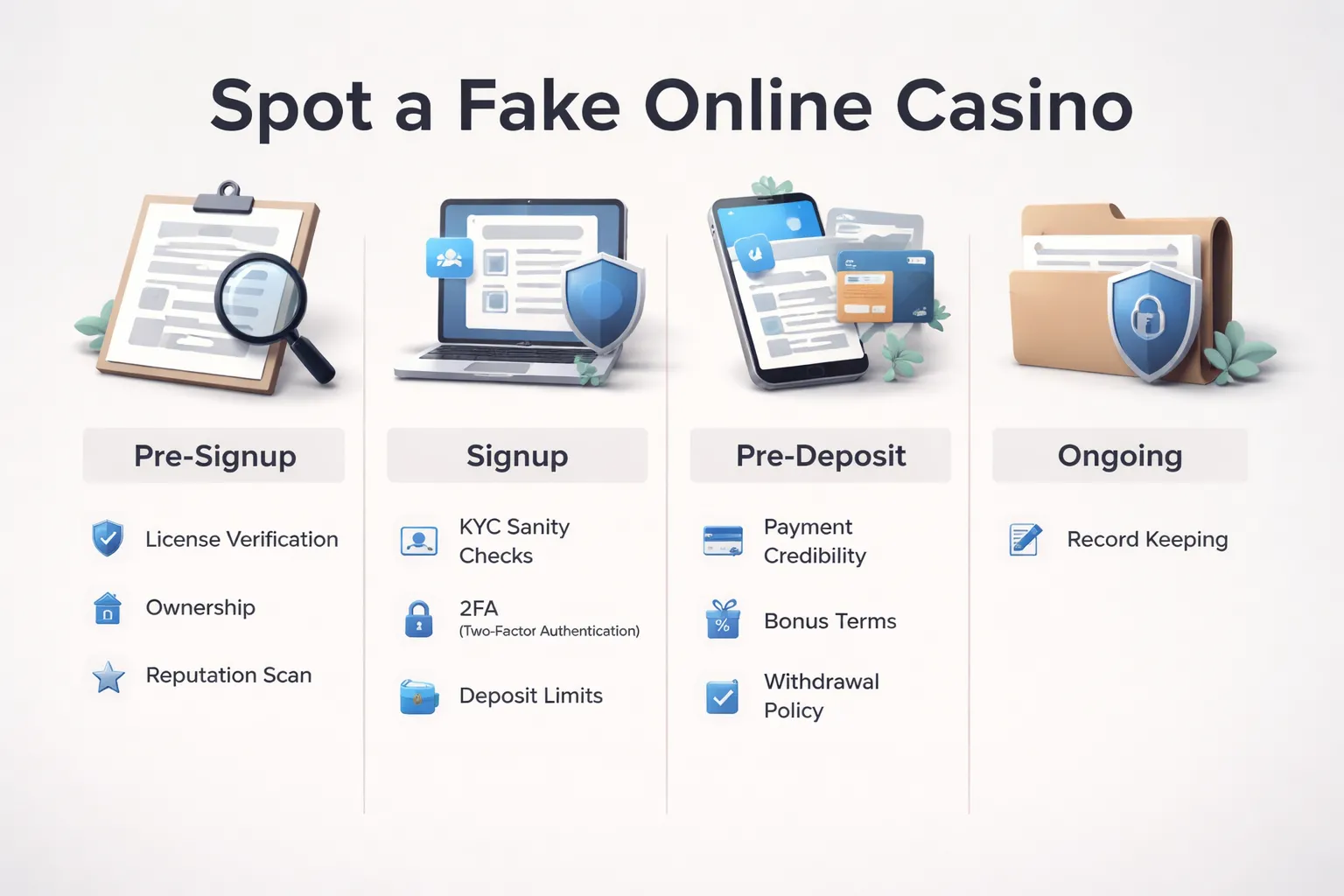
Pre-signup checklist, license verification, ownership, and reputation scan
- Find the license first. Scroll to the footer. Look for a regulator name and license number.
- Verify on the regulator site. Use the regulator’s license search. Match the brand name, company name, and domain. If the domain does not match, leave.
- Check the regulator quality. Prioritize UKGC, MGA, SGA, DGOJ, AGCO. Treat unknown “paper” licenses as higher risk.
- Confirm the legal owner. Open the Terms, About, or Responsible Gambling page. You should see a registered company name, address, and jurisdiction.
- Cross-check the company. Search the company name plus “complaint”, “non-payment”, “withdrawal blocked”, “license revoked”. Look for repeated, recent patterns.
- Scan the domain history. A brand new domain with aggressive bonuses and no footprint is a risk signal.
- Check the HTTPS lock. Your browser should show a secure connection. If the site throws certificate warnings, do not sign up.
- Test support before you join. Ask one clear question about withdrawals or KYC. Keep the transcript. Slow, vague, or evasive answers predict future problems.
Signup checklist, KYC sanity checks, password and security setup, and deposit limits
- Expect basic KYC, not excessive KYC. A legit casino asks for identity and address checks. It does not ask for your full banking login, crypto seed phrase, or remote access to your device.
- Match your details to your payment method. Use your real name, real address, and the same email you control. Mismatches create “failed verification” delays later.
- Set a unique password. Use a password manager. Do not reuse an old password from email or social accounts.
- Turn on 2FA if offered. Prefer an authenticator app. Avoid SMS if you can.
- Enable login alerts. You want a message when a new device signs in.
- Set limits now. Set deposit, loss, and session limits at signup. Scams and shady sites rely on impulse deposits.
- Read the account closure rules. You need a clear self-exclusion option and a clear process to close your account.
Pre-deposit checklist, payment method credibility, bonus T&Cs, and withdrawal policy review
- Use normal payment rails. Cards, bank transfer, and known e-wallets reduce risk. Treat “crypto only” plus no license as a red flag.
- Check the cashier consistency. The deposit method you pick should also support withdrawals. If the site pushes you to deposit one way and withdraw another, expect delays.
- Confirm withdrawal timelines. You need clear ranges for approval and payment. “Up to 30 business days” for all methods is a warning.
- Check withdrawal limits. Look for per day, per week, and per month caps. Low caps can trap a big win. Compare options in our best online casinos with high withdrawal limits guide.
- Read the bonus rules like a contract. Check wagering, max bet, eligible games, and time limits. Avoid bonuses that cap withdrawals to a small amount.
- Look for vague discretion clauses. If the casino can void winnings for “irregular play” without defining it, you have no leverage.
- Check fees. Watch for “processing fees”, “inactive account fees”, and “verification fees”. Legit operators keep this simple and explicit.
- Confirm payout method rules. Many casinos lock withdrawals to the method used for deposit. That is normal. The rule should appear in plain language.
Ongoing monitoring, keeping records, screenshots, and transaction logs
- Keep a simple log. Record dates, amounts, game sessions, bonuses accepted, and any limit changes.
- Screenshot key pages. Save the bonus offer, the Terms page, the withdrawal policy, and your account verification status.
- Save every support chat and email. Keep timestamps. Store them outside your casino inbox.
- Track every transaction. Keep deposit receipts, withdrawal requests, and approval notices. Match them to your bank or wallet statements.
- Watch for rule changes. If terms change after you deposit, screenshot the new version and the date you saw it.
- React fast to withdrawal friction. If withdrawals stall, stop depositing. Request a clear reason, a document list, and a timeline in writing.
- Escalate through official channels. Use the regulator complaint path if you have a verified license and a documented dispute trail.
What to do if you’ve been scammed by an online casino
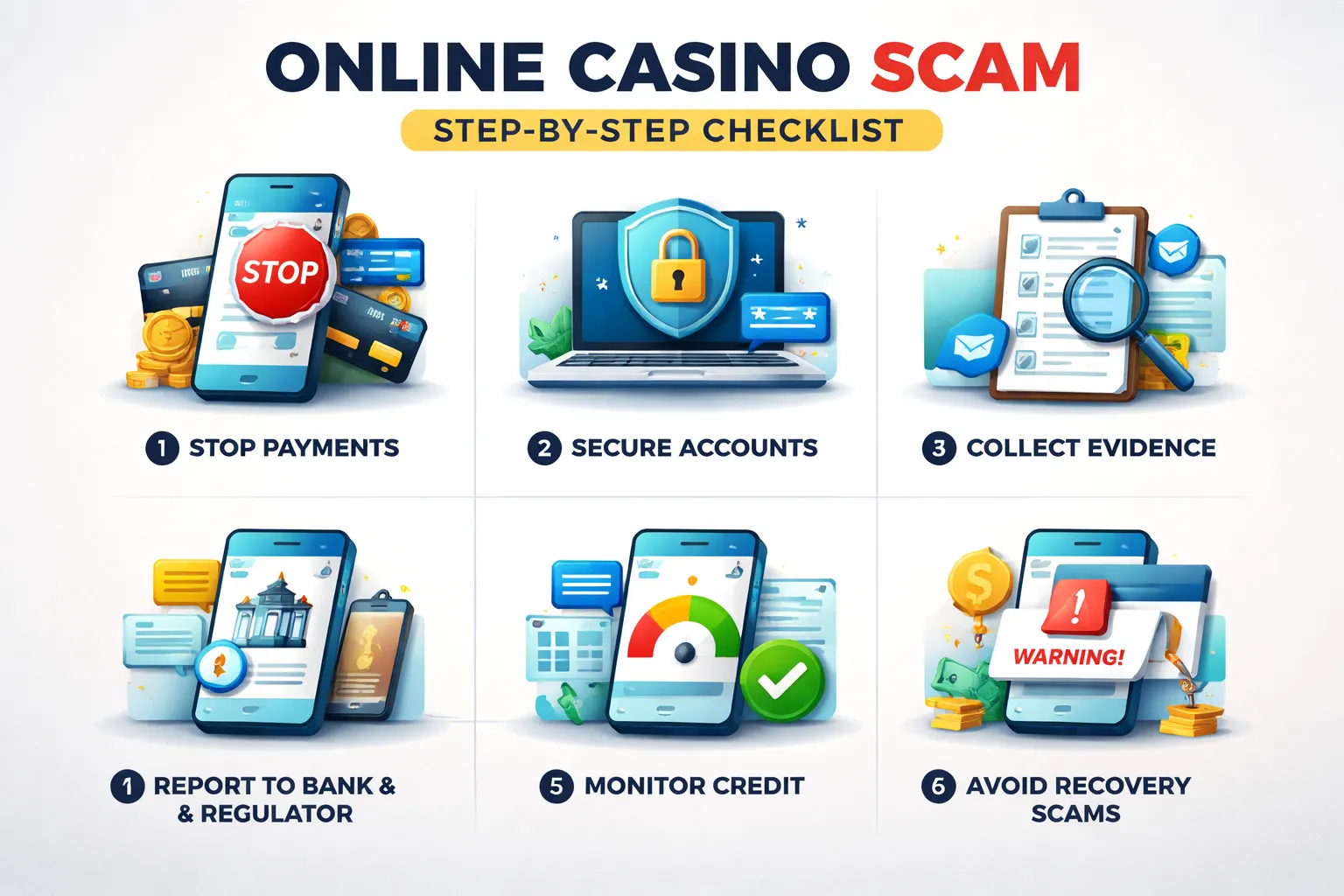
Immediate steps, stop payments, secure accounts, collect evidence
- Stop all deposits now. Do not “verify” by sending more money. Do not accept bonus offers tied to new deposits.
- Cut off future charges. Remove saved cards from the casino. Cancel subscriptions. Ask your bank to block the merchant and any related merchant IDs.
- Secure your accounts. Change your casino password and the email password tied to it. Turn on 2FA for email, banking, and crypto apps. Log out of all sessions where possible.
- Freeze your payment rails. If you used a card, lock it in your banking app. If you used e-wallets, change passwords and revoke connected apps.
- Collect evidence. Save screenshots and PDFs of deposits, withdrawals, balances, error messages, chat logs, emails, and the terms you agreed to. Capture dates and times.
- Build a simple timeline. List what happened in order, include amounts, transaction IDs, wallet addresses, and support ticket numbers.
- Preserve device evidence. Keep SMS codes, call logs, and browser history. Do not “clean” your phone until you save what you need.
Reporting routes, regulator, payment provider, bank, cybercrime channels
- If the casino claims a license, verify it on the regulator site. If it is real, file a complaint with the regulator and attach your timeline and screenshots.
- File a chargeback or dispute fast. Contact your card issuer or bank. Use the wording “services not provided” or “merchant dispute” and share your evidence pack.
- Report to the payment processor. For e-wallets and card gateways, open a fraud ticket. Ask for the merchant name, descriptor, and processor details used on your charge.
- Report wire transfers as fraud. Ask your bank for a recall or fraud recall. Speed matters. Many banks stop recovery once funds settle.
- Report crypto transactions. Notify the exchange you used. Share the transaction hash, destination address, and any chat logs. Ask for an account review and a flag on the receiving address.
- File a cybercrime report. Use your national reporting portal and local police if required for bank disputes. In the US, use IC3. In the UK, use Action Fraud. In the EU, use Europol guidance and your national cyber unit.
Identity protection, credit monitoring, document replacement, breach precautions
- Assume your KYC files may leak. Treat your passport, ID card, and proof of address as exposed if you uploaded them.
- Monitor your credit. Turn on alerts with your credit bureau where available. Consider a credit freeze if your country supports it.
- Replace documents when risk is high. If scammers have full ID images, ask your issuing authority about replacement and fraud markers.
- Lock down your email. Email takeover drives most follow-on fraud. Change password, enable 2FA, and review forwarding rules.
- Watch for targeted follow-ups. Expect fake “VIP support” emails, WhatsApp messages, and calls. Scammers reuse your details to look legitimate.
Recovery expectations, chargebacks, crypto limits, avoiding “recovery scam” companies
- Chargebacks can work, but timing and evidence decide. File as soon as you spot the scam. Keep your claim focused on provable facts, not opinions.
- Bank transfers and wires have low recovery rates after settlement. Ask for a recall anyway, but plan for a slow process and limited outcomes.
- Crypto is hard to recover. Transactions usually stay final. Your best path is exchange reporting, wallet address flagging, and law enforcement reports that support future seizures.
- Avoid “fund recovery” firms that ask for upfront fees. Many are second-stage scams. Do not pay for “blockchain unlocking,” “tax clearance,” or “account reactivation.”
- Do not share new documents with unknown handlers. Extra KYC requests after a dispute often fuel identity theft.
- Reset your casino shortlist. Use a verified safety checklist before you play again. Start with how to choose a safe online casino.
Safer alternatives and responsible gambling resources
How to choose a reputable casino, minimum standards
- License first. Verify the license number on the regulator site, not on the casino site. Skip casinos that list no regulator, no license ID, or a “pending” license.
- Match the license to your location. You get real protections only when the operator can legally serve you. If the casino blocks your country but still takes your deposit, treat it as a red flag.
- Clear ownership and contacts. You should find the legal company name, registration number, and a real address. Avoid sites that hide the operator behind vague brand pages.
- Transparent terms. Read withdrawal rules, bonus wagering rules, max cashout limits, and “restricted games” lists. Avoid terms that let the casino void winnings for “discretion,” “irregular play,” or “management decision.”
- Payments you can trace. Use methods with chargeback or dispute paths where possible, like cards and regulated e-wallets. Avoid casinos that push crypto only, ask for manual bank transfers to individuals, or require a “processing fee” to withdraw.
- Published audit and RTP data. Look for independent testing names like eCOGRA, iTech Labs, GLI, or BMM, plus current certificates. Avoid sites that show only logos without links or certificates.
- Real withdrawal system. A legit casino states timeframes, KYC steps, and limits before you deposit. If a site promises “instant withdrawals” but adds fees, delays, or new steps after you win, walk away.
- Support that works. Test live chat and email before you deposit. Save transcripts. Avoid casinos that hide support, refuse ticket numbers, or push you to Telegram or WhatsApp.
If you want a lower-friction option, start with vetted lists such as Best Online Casinos (2026): Top-Rated, Safe & Trusted Picks, then verify each license yourself.
Tools that reduce risk, set limits before you play
- Deposit limits. Set a daily and monthly cap. Use a number you can lose without changing your bills or savings.
- Loss limits. Stop after a fixed loss. Do not increase the limit to “get back” to even.
- Time limits and reality checks. Turn on session timers and pop-up reminders. Treat the timer as a stop signal, not a suggestion.
- Cool-off periods. Use 24 hours to 30 days if you feel pressure to keep playing. Do it before you chase.
- Self-exclusion. Use multi-month or permanent exclusion if you cannot stick to limits. Choose operator-level plus local registry options when available.
- Account controls. Disable promos, disable VIP contact, and block marketing emails and SMS. Promos can trigger impulse deposits.
- Payment hygiene. Use a separate bank card or e-wallet for gambling. Keep it funded only for your set limit.
When to seek help, signals and confidential support
- Money signals. You borrow to gamble, miss payments, or use credit for deposits. You hide spending from family or partners.
- Control signals. You break limits, chase losses, or feel unable to stop. You keep playing longer than planned.
- Mood signals. You feel panic, irritability, shame, or numbness tied to gambling. You gamble to escape stress.
- Fraud exposure. You sent documents to an unknown “agent,” paid extra fees to unlock withdrawals, or shared remote access to your device.
- US. Call or text 1-800-GAMBLER for confidential support and local referrals.
- UK. Contact GamCare, use the National Gambling Helpline, and register with GAMSTOP for multi-operator self-exclusion.
- Canada. Use provincial problem gambling helplines and self-exclusion programs. Options vary by province.
- EU and other regions. Look for national addiction helplines plus regulator-backed dispute and exclusion tools.
If you face immediate risk of self-harm, contact your local emergency number or crisis line. Keep it simple. Get help now.
Regional considerations, laws change your protections
- Regulated markets give you leverage. You can file regulator complaints, use mandated dispute steps, and rely on standard KYC and AML rules.
- Offshore casinos limit recourse. Even with a license, enforcement can be weak, slow, or unavailable to you. You may not get help from your local regulator or bank.
- Dispute paths differ. Some jurisdictions require ADR services. Others push everything to internal support. Know the complaint process before you deposit.
- Tax and reporting differ. Some countries tax winnings, some tax deposits, some tax operators. A casino cannot demand random “tax clearance” fees to release funds.
- Payment protections differ. Card chargebacks and bank recall options vary by country, bank, and merchant coding. Crypto transfers usually stay final.
- Geo-blocking matters. If a casino should not serve your region, you risk account closure and forfeiture under its terms. You also risk weaker consumer protections.
FAQ
What are the biggest red flags of a fake online casino?
No real license details. No verifiable company name or address. New domain with hidden WHOIS. Bonuses with vague terms. Withdrawal rules that change after you deposit. “Verification” that never ends. Support that avoids direct answers. Payment pages that look off or redirect.
How can you verify a casino license fast?
Find the license number and regulator name in the site footer. Open the regulator site and search the license register. Confirm the brand name, domain, and status match. If the license link goes to a PDF or image only, treat it as unverified.
Which gambling regulators tend to offer stronger player protection?
It depends on your country, but stricter regulators usually publish clear rules, complaint paths, and enforcement actions. Look for an active public license register and real sanctions history. If you cannot find dispute steps on the regulator site, protection stays weak.
What withdrawal rules signal a scam?
Extra fees to “unlock” withdrawals. Requests for crypto “gas” sent to a personal wallet. New rollover rules after you win. Low daily caps not shown before deposit. Forced conversion rates. Delays with no ticket number. Terms that let the casino void wins for “abuse” without proof.
Can a casino demand taxes or clearance fees before paying you?
No. A casino may ask for identity checks. It may deduct approved fees disclosed in its terms. It cannot demand random “tax,” “anti money laundering,” or “clearance” payments to release funds. If it does, stop paying and document everything.
How do fake casinos use KYC to stall payouts?
They ask for new documents in small batches. They reject files for minor reasons. They require notarized copies without warning. They demand selfies with changing poses. They reset the review timer each time you upload. Legit casinos set clear requirements and timelines.
Are crypto casinos riskier for scams?
Yes, because crypto transfers usually stay final. Scammers push crypto to prevent chargebacks. If you use crypto, verify the license, test a small withdrawal first, and avoid sites that require off site wallet transfers or Telegram only support. See our Best Crypto Casinos.
What should you do if you already deposited on a scam casino?
Stop depositing. Save receipts, chats, emails, and wallet addresses. Contact your bank or card issuer fast and ask about dispute options. Report the site to its host, payment provider, and the listed regulator. Change passwords and enable 2FA on email and crypto accounts.
How can you check if a casino is geo blocked or illegal in your region?
Check the casino terms for restricted countries and accepted jurisdictions. Confirm the license covers your location. If the site uses VPN advice or location spoofing tips, leave. If a casino should not serve you, it can close your account and void funds under its terms.
Do user reviews help spot scams?
They help if you read patterns, not star ratings. Look for repeated reports of stalled withdrawals, changing terms, and KYC loops. Treat affiliate review pages as marketing. Trust sources that show timestamps, screenshots, and resolution details. One bad review means little, many similar ones matter.
What is the safest way to test a new casino?
Deposit the minimum. Skip big bonuses. Play low stakes. Request a withdrawal the same day. Measure response speed and document the process. If support refuses clear answers or adds new requirements, stop. A fast small payout tells you more than any promotion.
Conclusion
Conclusion
Fake casinos win by rushing you. Slow down. Verify first.
- Check the license, then confirm it on the regulator site. Match the casino name and domain.
- Read the rules that block cashouts, KYC, withdrawal limits, bonus wagering, max win caps, and time limits.
- Test support with one direct question about withdrawals and verification. Save the reply.
- Run a small payout test. Minimum deposit, low stakes, same day withdrawal request. Track time to approval and payment.
- Walk away fast if they change terms, delay KYC until you withdraw, demand extra deposits, or push crypto only.
Your best protection is a repeatable routine. Verify, test, withdraw. If you want fewer surprises, start with fast payout casinos that list clear payment methods and publish realistic processing times.
-
Best Online Casinos for Blackjack: Best Tables, Rules & Bonuses
4 weeks ago -
Fast Payout Online Casinos: Best Sites for Quick Withdrawals
3 weeks ago -
Best Online Casinos for Roulette: Best Wheels, Limits & Live Options
4 weeks ago -
Best PayPal Online Casinos: Top Sites That Accept PayPal Deposits & Withdrawals
4 weeks ago -
Best Online Casinos for High Rollers: VIP Perks, High Limits & Exclusive Bonuses
3 weeks ago
-
- RNG and fairness auditing, what certificates matter and where to verify them
- Reputable software providers vs unknown “in-house” libraries
- Provably fair and crypto casinos, what it is and what it doesn’t guarantee
- Gameplay warning signs, odd payout behavior, frequent disconnects, and unexplained balance changes
-
- Impersonation scams, fake casino support on Telegram, WhatsApp, and spoofed emails
- Fake apps and malware, how scam “casino apps” steal data and funds
- Streamers and tipster groups, giveaway fraud, referral traps, and fixed-match claims
- Phishing and credential stuffing, how leaked passwords lead to account takeovers
-
- Pre-signup checklist, license verification, ownership, and reputation scan
- Signup checklist, KYC sanity checks, password and security setup, and deposit limits
- Pre-deposit checklist, payment method credibility, bonus T&Cs, and withdrawal policy review
- Ongoing monitoring, keeping records, screenshots, and transaction logs
-
- Immediate steps, stop payments, secure accounts, collect evidence
- Reporting routes, regulator, payment provider, bank, cybercrime channels
- Identity protection, credit monitoring, document replacement, breach precautions
- Recovery expectations, chargebacks, crypto limits, avoiding “recovery scam” companies
-
- What are the biggest red flags of a fake online casino?
- How can you verify a casino license fast?
- Which gambling regulators tend to offer stronger player protection?
- What withdrawal rules signal a scam?
- Can a casino demand taxes or clearance fees before paying you?
- How do fake casinos use KYC to stall payouts?
- Are crypto casinos riskier for scams?
- What should you do if you already deposited on a scam casino?
- How can you check if a casino is geo blocked or illegal in your region?
- Do user reviews help spot scams?
- What is the safest way to test a new casino?
-
- RNG and fairness auditing, what certificates matter and where to verify them
- Reputable software providers vs unknown “in-house” libraries
- Provably fair and crypto casinos, what it is and what it doesn’t guarantee
- Gameplay warning signs, odd payout behavior, frequent disconnects, and unexplained balance changes
-
- Impersonation scams, fake casino support on Telegram, WhatsApp, and spoofed emails
- Fake apps and malware, how scam “casino apps” steal data and funds
- Streamers and tipster groups, giveaway fraud, referral traps, and fixed-match claims
- Phishing and credential stuffing, how leaked passwords lead to account takeovers
-
- Pre-signup checklist, license verification, ownership, and reputation scan
- Signup checklist, KYC sanity checks, password and security setup, and deposit limits
- Pre-deposit checklist, payment method credibility, bonus T&Cs, and withdrawal policy review
- Ongoing monitoring, keeping records, screenshots, and transaction logs
-
- Immediate steps, stop payments, secure accounts, collect evidence
- Reporting routes, regulator, payment provider, bank, cybercrime channels
- Identity protection, credit monitoring, document replacement, breach precautions
- Recovery expectations, chargebacks, crypto limits, avoiding “recovery scam” companies
-
- What are the biggest red flags of a fake online casino?
- How can you verify a casino license fast?
- Which gambling regulators tend to offer stronger player protection?
- What withdrawal rules signal a scam?
- Can a casino demand taxes or clearance fees before paying you?
- How do fake casinos use KYC to stall payouts?
- Are crypto casinos riskier for scams?
- What should you do if you already deposited on a scam casino?
- How can you check if a casino is geo blocked or illegal in your region?
- Do user reviews help spot scams?
- What is the safest way to test a new casino?
-
Online Casino Licensing Explained: Authorities, Licenses & How to Check One
3 weeks ago -
Best Live Dealer Casinos: Where to Play Live Blackjack, Roulette & More
3 weeks ago -
Best Online Casinos for High Rollers: VIP Perks, High Limits & Exclusive Bonuses
3 weeks ago -
Fast Payout Online Casinos: Best Sites for Quick Withdrawals
3 weeks ago -
What Is an Online Casino? How They Work, Games, Bonuses & Safety
4 weeks ago
-
Best Online Casinos for Blackjack: Best Tables, Rules & Bonuses
4 weeks ago -
Online Casino Bonuses Explained: How They Work + Terms You Must Know
4 weeks ago -
Fast Payout Online Casinos: Best Sites for Quick Withdrawals
3 weeks ago -
Online Casino Licensing Explained: Authorities, Licenses & How to Check One
3 weeks ago -
Best Online Casinos for Roulette: Best Wheels, Limits & Live Options
4 weeks ago
Social engineering and “off-site” scams tied to online casinos
Impersonation scams, fake casino support on Telegram, WhatsApp, and spoofed emails
Scammers copy a real casino brand and move you off-site. They claim to be VIP support, KYC staff, or a payments agent. They push Telegram and WhatsApp because it is harder to trace and easier to delete.
Fake apps and malware, how scam “casino apps” steal data and funds
Fake casino apps target Android more often than iOS. They spread through ads, fake “APK download” buttons, and cloned sites. Some ask you to sideload an APK, which bypasses store checks.
Streamers and tipster groups, giveaway fraud, referral traps, and fixed-match claims
Scammers use live streams, Discord, Telegram, and “VIP” groups to push casino codes and fake wins. They aim to get your deposit, your identity documents, or both.
Phishing and credential stuffing, how leaked passwords lead to account takeovers
Scammers do not need to hack the casino to hack you. They use leaked email and password pairs from past breaches, then try them on casino logins. This is credential stuffing. If you reuse passwords, you are a target.
For a baseline on normal support and security practices, compare operators in our online casino reviews.