Best Online Casinos for Poker: Best Rooms, Tournaments & Software

You want an online casino with a poker room that runs clean games, pays fast, and has enough traffic to keep tables and tournaments active. This guide ranks the best options for 2026. You will learn which rooms suit cash games vs MTTs, where you get the softest fields, and which sites offer the best software for multi-tabling on desktop and mobile.
- Room strength. Player traffic, game selection, and peak-hour table availability.
- Tournaments. Schedule volume, guarantees, satellites, and late reg rules.
- Software. Stability, HUD policy, hand histories, and usability.
- Costs. Rake, fees, rewards value, and bonus terms that affect EV.
- Safety. Licensing, RNG testing, security, and withdrawal reliability.
If you also need a broader shortlist across all casino games, use our best online casinos guide.
- In het kort:
- Pick rooms with steady traffic, your main game formats, and enough tables at your stake.
- Check tournament volume, guarantees, late registration, and satellite paths before you deposit.
- Prioritize stable software, clear HUD rules, and easy access to hand histories.
- Measure real cost, rake, tournament fees, reward rates, and bonus wagering that cuts your EV.
- Demand safety signals, strong licensing, RNG testing, secure accounts, and consistent cashouts.
Start with your format. Cash grinders need traffic and soft lineups at peak hours. Tournament players need a schedule that fits your time zone and bankroll. Mixed game players need enough tables to avoid waiting.
Read the tournament lobby like a spec sheet. Track average field size, overlays, re-entry rules, and payout structure. Look for satellites that let you step up without taking big shots.
Software affects win rate. You need fast dealing, clean multi-tabling, and few disconnects. Confirm the site policy on HUDs, trackers, and hand history downloads, so your tools match the rules.
Costs decide your long-term results. Compare cash rake caps and tournament fee percentages. Treat rewards and bonuses as math, clear terms, clear release, and no hidden exclusions.
Do basic risk checks every time. Verify the license, RNG audits, and withdrawal track record. Use strong passwords and 2FA. If you want a room-by-room breakdown, use our online casino reviews.
Best Online Casinos for Poker: Top Picks (Quick Comparison)
Snapshot: Top Picks (Quick Comparison)
| Pick | Best for | Why you pick it | Watch-outs |
|---|---|---|---|
| PokerStars | Tournaments | Deep schedule. Strong MTT ecosystem. Smooth multi-tabling. | Tough fields. Bonus value depends on volume. |
| GGPoker | High-volume MTTs and series | Big guarantees. Modern client. Large player pool in many regions. | Rake and fees vary by market. Some features differ by country. |
| 888poker | Beginners | Softer entry-level pools. Simple software. Frequent low buy-ins. | Lower traffic at some stakes and off-peak hours. |
| partypoker | Cash games | Solid cash focus in supported markets. Clean table layout. | Availability and liquidity depend on your country. |
| WPT Global | Mobile-first play | Phone-friendly experience. Simple table controls. | Smaller pool than the biggest networks in some regions. |
| Ignition Casino | Low-stakes grinders (US) | US-friendly access. Anonymous tables can reduce targeting. | Limited tracking and HUD use. Cashout method options vary. |
Where Each Room Works: US States vs Rest of World
- PokerStars. Best coverage outside the US. In the US, access depends on state-regulated launches. Check your state list before you deposit.
- GGPoker. Strong international footprint. Limited or blocked in some countries and regions. Always confirm local availability in the cashier.
- 888poker. Available in many global markets. In the US, it appears in select regulated states under local skins.
- partypoker. Available in parts of Europe and other approved jurisdictions. Not a default option for most US players.
- WPT Global. International access in many regions. Restrictions apply in some markets. Confirm before sign-up.
- Ignition Casino. Built for US players in most states that allow offshore play. Not a fit for regulated state-only players.
Language and Currency Support: What You Should Check
- Language. Confirm the lobby, support, and cashier language you need. This matters for bonus terms and withdrawal steps.
- Currency. Pick a room that supports your base currency to avoid conversion costs. If the site uses USD only, your bank may add fees.
- Payments. Match the room to your method. Cards, e-wallets, bank transfers, and crypto vary by region.
- Local limits. Deposit and withdrawal limits can change by country and method. Verify before you chase a bonus.
Who Should Choose Which Poker Room
- You play MTTs 4 to 6 nights per week. Choose PokerStars if you want depth and structure variety. Choose GGPoker if you want large series and high liquidity in your region.
- You grind cash and care about table selection. Choose partypoker where available. Track your net win rate after rake and promos, not your raw bb per 100.
- You are new and want fewer moving parts. Choose 888poker. Focus on low buy-ins, simple formats, and clear bankroll rules.
- You play on your phone first. Choose WPT Global. Use it when you need short sessions and fast re-entry without a desktop setup.
- You live in the US and need an offshore option. Choose Ignition Casino for low to mid stakes access in many states. Accept the tradeoff on tracking and HUDs.
For deeper details on licensing, cashier speed, and past payout performance, use our online casino reviews.
In-Depth Reviews of the Best Poker Rooms (What to Expect in 2026)
Our review template, and how to read the ratings
You need four signals before you deposit, traffic, value, software, safety. We score each one and then weigh them based on what most poker players need in 2026.
- Traffic. You want games at your stakes, at your hours. We look at liquidity by region, peak hours, and how fast cash tables fill.
- Value. You want returns you can measure. We look at rake and fees, rakeback or rewards, deposit bonuses, freerolls, and promo terms that change EV.
- Software. You need stability and speed. We check mobile performance, multi-tabling limits, hand history access, filters, disconnect handling, and update cadence.
- Safety. You need clean games and paid withdrawals. We check licensing and corporate ownership, game integrity tools, KYC process, cashier options, and payout track record.
PokerStars, tournament ecosystem, software polish, player pool notes
You play PokerStars for volume tournaments and structured series. You get deep schedules, many buy-in bands, and frequent satellites. You also get strong client performance on desktop, with solid table controls and tournament lobbies.
- What you get in 2026. Large MTT calendars, fast formats, and steady satellites into flagship events. Good late-reg structure across many events.
- Software. Stable client, strong table management, good search and filters. Mobile runs clean for single table and light multi-table.
- Player pool. Tougher at mid to high stakes, softer at micro and low stakes during peak hours. Regional pools vary by regulation and ring-fencing.
- Watch-outs. Rewards and game offerings can differ by country and state. Some formats draw more reg-heavy fields.
GGPoker, flagship series, staking and rail features, smart HUD restrictions
You play GGPoker for massive series and built-in social tools. You get staking, built-in rails, and integrated event discovery. You also get strict controls around third-party tools.
- What you get in 2026. High-profile online series, frequent daily guarantees, and strong satellite paths. You see constant format rotation.
- Staking and rail. You can sell action inside the client and follow friends and events from the rail without juggling extra apps.
- HUD policy. You rely less on external HUDs. Expect restrictions on third-party tracking and more emphasis on in-client data and responsible tooling.
- Software. Feature rich, sometimes heavier on older devices. Keep your app updated and test your device before long sessions.
- Watch-outs. Tool restrictions change your edge if you come from a HUD-heavy grind.
888poker, soft games, promos, beginner-friendly formats
You play 888poker when you want softer pools and simple formats. You get beginner lanes, frequent promos, and low-friction navigation.
- What you get in 2026. Low to mid buy-in MTTs, beginner formats, and casual-friendly lobbies. Good for learning bankroll control.
- Promos. You often see easy missions and ticket-based offers. Read the opt-in steps and time windows.
- Software. Clean and simple. Good for a few tables, less built for heavy mass multi-tabling.
- Watch-outs. Traffic can dip off-peak. You may need to time your sessions for faster fills.
If you want a smoother first deposit flow and less setup friction, also use our guide to online casinos for beginners.
partypoker, cash game focus, VIP approach, reliability checks
You play partypoker when you want cash games and straightforward rewards. You get steady ring games in key markets and a rewards approach that aims for clarity over gimmicks.
- What you get in 2026. Solid cash game offering, regular series, and structured promos. A practical choice if you play mostly ring.
- VIP and rewards. Focus on transparent earning. Track your effective rakeback after you factor in promo requirements.
- Reliability checks. Verify your region, payment rails, and withdrawal method before you grind volume. Do a small test cashout early.
- Watch-outs. Liquidity varies by country. Some pools feel smaller outside peak times.
WPT Global, tour integrations, liquidity considerations, usability
You play WPT Global for mobile-first poker and direct links to the live tour brand. You get fast re-entry and a simple experience that fits short sessions.
- What you get in 2026. WPT-branded paths and promotions tied to tour stops. A schedule built for quick play.
- Liquidity. Player pool size can swing by region and promo cycles. Check peak-hour fills at your stakes before you commit.
- Usability. Strong for phone play and quick navigation. Desktop features can feel lighter if you need deep filters and heavy multi-tabling.
- Watch-outs. Smaller pools can mean fewer table options at niche stakes and variants.
bet365 Poker, casino ecosystem fit, banking, service standards
You play bet365 Poker when you already use the bet365 casino and sportsbook. You get one wallet, familiar cashier flows, and consistent account service.
- What you get in 2026. A poker product that fits inside a larger gambling account. Useful if you want one login and one balance.
- Banking. Smooth deposits and withdrawals in supported regions. Cashier options depend on your country.
- Service standards. Strong brand processes around verification and support. Expect standard KYC if you move larger amounts.
- Watch-outs. Poker traffic can lag behind the biggest dedicated rooms in some markets.
US-only options, WSOP Online, BetMGM, Borgata, BetRivers
You play these when you need regulated, state-legal poker. Your experience depends on your state, your network, and whether your pool shares liquidity with other states.
- WSOP Online. Best fit if you want bracelet events and official series branding. Traffic spikes during major festival windows. Availability and shared liquidity depend on your state.
- BetMGM Poker. Best fit if you want a major US operator with integrated promos. Network sharing varies by state and licensing. Check if your state pool links to others.
- Borgata Poker. Best fit if you play in New Jersey and want a familiar casino brand. Often aligns with the same network structure as partner skins in the state.
- BetRivers Poker. Best fit if you sit in a supported state and want a straightforward regulated room. Traffic depends on local adoption and network reach.
Before you sign up, confirm your state rules, geolocation requirements, and ID checks. Keep your address and documents consistent to avoid payout delays.
Pros and cons summary, who each room fits
| Poker room | Best for | Main tradeoffs |
|---|---|---|
| PokerStars | MTT volume, structured series, polished desktop client | Tougher fields at many stakes, region-based differences |
| GGPoker | Flagship series, staking, social features, big guarantees | Stricter third-party HUD environment, heavier client on some devices |
| 888poker | Beginners, soft low stakes, simple formats and promos | Lower traffic off-peak, fewer tools for high-volume grinders |
| partypoker | Cash game focus, clear rewards, practical promos | Liquidity varies by market, smaller pools in some regions |
| WPT Global | Mobile-first play, short sessions, WPT tie-ins | Pool depth varies, lighter desktop controls for power users |
| bet365 Poker | One-wallet casino ecosystem, banking consistency, support processes | Poker traffic can be thinner than top standalone rooms |
| WSOP Online | Regulated US play, bracelet events, seasonal traffic spikes | State availability limits, geolocation and KYC friction |
| BetMGM, Borgata, BetRivers | Regulated state play, familiar US brands, localized promos | Network and liquidity differ by state, fewer games outside peak hours |
How We Rank the Best Online Casinos for Poker (Methodology + E-E-A-T Signals)
We rank poker casinos with a repeatable scorecard. We test the same items every time. We log results, dates, and versions. We also check E-E-A-T signals, who runs the room, who regulates it, and how it handles player funds and disputes.
| Category | What we measure | Why it matters to you |
|---|---|---|
| Licensing and audits | License status, regulator, audit firms, RNG and security proofs | You avoid unregulated games and weak controls |
| Game integrity | Collusion tools, bot policy, fraud systems, enforcement history | You get fairer games and fewer compromised tables |
| Traffic and liquidity | Lobby volume by stakes, peak vs off-peak, tournament schedules | You find games faster and see bigger prize pools |
| Value | Rake, caps, promos, rakeback, VIP terms, hidden costs | You keep more of your win rate |
| Software | Stability, speed, table tools, HUD rules, hand histories | You multi-table with fewer errors and better control |
| Payments | Methods, withdrawal times, limits, fees, verification friction | You cash out reliably and plan bankroll moves |
| Support | Channels, response times, resolution quality, escalation options | You fix account and payout issues faster |
| Responsible gaming | Limits, self-exclusion, timeouts, reality checks, help links | You control spend and session time |
Licensing, regulation, and third-party auditing
- License check. We confirm the operator and poker skin match the listed license holder. We record the regulator and license number when shown.
- Jurisdiction fit. We separate regulated US state rooms from offshore networks. We score state rooms higher for player protections, even when traffic runs thinner.
- RNG and fairness audits. We look for published testing from recognized labs and clear statements on game certification. We do not treat vague “certified RNG” claims as proof.
- Security signals. We look for current TLS, clear privacy policies, and strong account security options like 2FA where offered.
- E-E-A-T signals. Clear ownership, clear license details, clear complaint process, and transparent terms raise trust.
Game integrity: collusion detection, bot policies, and anti-fraud systems
- Collusion controls. We check for shared device detection, IP checks, and network policies on group play. We also look for restrictions on seating scripts and prohibited tools.
- Bot policy. We review the stated bot rules, reporting path, and enforcement language. “Zero tolerance” without process detail scores lower.
- Anti-fraud posture. We look for account takeover controls, withdrawal risk checks, and clear rules on bonus abuse and chip dumping.
- Evidence of action. We score higher when the room publishes security updates or enforcement reports, or provides detailed outcomes in support tickets.
Traffic and liquidity: why it affects game quality, formats, and prize pools
- Seat availability. We log how long it takes to find cash games at common stakes. Low liquidity creates longer waits and forces you into fewer table choices.
- Table selection. Thin lobbies reduce game variety and limit your ability to avoid tough lineups.
- Tournament health. We track guarantee coverage, late reg length, and average field size. Strong liquidity supports more formats and steadier prize pools.
- Peak-hour swings. We note when networks spike, such as bracelet series windows in regulated markets, and when games dry up outside prime time.
Value metrics: rake, rakeback, VIP programs, and hidden costs
- Cash game rake. We compare rake by stake and game type, plus caps. Small differences matter over volume.
- Tournament fees. We check buy-in plus fee structure and how it scales across events.
- Rakeback and VIP. We model realistic returns for low, mid, and high volume players, based on published earn rates and redemption options.
- Bonus terms. We read wagering or points requirements, expiry, game contribution, and max cashout limits. We flag promos that look good but convert poorly.
- Hidden costs. We note currency conversion spreads, withdrawal fees, inactivity fees, and banking minimums that change your real cost.
Software quality: stability, table features, hand histories, and multi-tabling
- Stability under load. We test during busy windows and log crashes, disconnects, and reconnect speed.
- Core table tools. We score betting controls, time bank behavior, auto-rebuy, sit-out options, and hotkeys if supported.
- Hand histories. We check if you can export hands, how fast they generate, and whether the format works with common trackers when permitted.
- Multi-tabling. We test table limits, layout options, and performance on mid-range hardware.
- Device coverage. We note feature gaps between desktop and mobile, since many apps cut key tools.
Payments performance: deposit options, withdrawal speed, limits, and fees
- Deposit methods. We list cards, bank transfer, e-wallets, prepaid, and any local rails, then score based on coverage and reliability.
- Withdrawal speed. We compare stated times vs real support guidance and user-facing status steps. We penalize rooms that stall with unclear review timelines.
- Limits. We record minimum and maximum withdrawals and how limits change by method.
- Fees. We check both operator fees and common processor fees. We flag conversion costs and repeated withdrawal charges.
- KYC friction. We score higher when the room explains required documents up front and finishes verification before your first cashout request.
Customer support tests: channels, response times, and dispute handling
- Channel coverage. We test live chat, email, and phone where offered. We note support hours and language options.
- Response time logs. We record first reply times and time to resolution for common issues like bonus clarity, withdrawal holds, and account verification.
- Answer quality. We score higher when agents cite specific terms and give clear next steps, not canned lines.
- Dispute path. We check for escalation steps, regulator complaint links for licensed rooms, and a documented complaints process.
Responsible gaming tools: deposit limits, self-exclusion, reality checks
- Limits that work. We check deposit limits, loss limits, and session limits, plus how fast changes apply.
- Timeouts and self-exclusion. We look for short breaks and longer exclusions, with clear reactivation rules.
- Reality checks. We score higher when the client can show session time and spend prompts.
- Support links. We look for direct links to help organizations and in-client guidance, not buried PDF text.
If you want the wider framework we use across all casino products, see our online casino reviews methodology and scoring standards.
Poker Formats You Can Play Online (And Which Rooms Excel)
Online poker is not one game. Formats play differently, run at different speeds, and punish mistakes in different ways. Pick a room that matches how you play, not a room that just has a big bonus.
Texas Hold’em: cash tables, fast-fold pools, and stake selection
- Cash games. Look for full stake ladders, stable traffic, and clear table filters. The best rooms keep tables running at every common blind level, with enough seats to avoid long waits.
- Fast-fold pools. Fast-fold needs volume to feel smooth. Prioritize rooms with large shared pools and simple pool selection, so you can multitable without constant lobby hunting.
- Stakes. If you move between micro, low, and mid stakes, choose a room with tight spacing between levels. This lets you step up or step down without forcing a big bankroll jump.
- Who excels. Big networks tend to win here. They offer more running tables, more stake depth, and better fast-fold liquidity.
Omaha and PLO variants: action levels, table availability, and bankroll swinginess
- Action and edge. PLO produces larger pots and more multiway hands. Your win rate will swing more, even if you play well.
- Table availability. Many rooms show plenty of Hold’em but only a few PLO tables outside peak hours. Favor rooms with consistent PLO traffic across time zones.
- Variants. If you play 5-card PLO, PLO hi-lo, or short-deck, network size matters more than rake promos. Small rooms often run these only at limited stakes.
- Bankroll. Expect deeper downswings. If you play PLO cash, you need more buy-ins than Hold’em for the same stake level.
- Who excels. Rooms with high overall traffic and strong mobile lobbies do best, since you can always find a game when lineups break.
Sit & Go, Spin formats, and jackpot SNGs: variance and ROI expectations
- Classic Sit & Go. These reward solid push-fold and ICM discipline. They run best on rooms with reliable seat filling and low-lag client performance.
- Spins and jackpot SNGs. You trade ROI for speed and volume. Prize multipliers drive huge variance, so results come in streaks.
- What to expect. Even strong players can face long breakeven stretches in jackpot formats. Pick rooms with clear prize rules, transparent jackpot odds, and enough traffic to keep games popping.
- Who excels. High-traffic rooms win. If a room cannot keep games starting every minute at your buy-in, you lose the main reason to play this format.
Multi-table tournaments (MTTs): structures, late reg, and guarantee reliability
- Structures. Favor rooms that publish blind schedules, starting stacks, and level lengths in the lobby. You need this to compare true value between events.
- Late registration. Long late reg increases field size and prize pools, but it also changes optimal strategy. Pick rooms that show late reg length and entry cap rules clearly.
- Guarantees. Do not chase flashy numbers. Track whether a room regularly meets guarantees without constant overlays, and whether it edits guarantees last minute.
- Series value. Big series can offer better structures and deeper fields, but only if the software stays stable at peak load.
- Who excels. Established rooms with proven tournament schedules and stable clients tend to deliver the best mix of guarantees, satellites, and consistent start times.
Mixed games and niche variants: when to prioritize network size
- Liquidity first. Mixed games die fast when a couple of regulars leave. Prioritize rooms with large player pools and multiple time zones in play.
- Game selection. If you play HORSE, 8-game, draw, stud, or short-deck, you need a lobby that supports filters, limits, and table notes that do not reset.
- Schedule. Look for fixed mixed-game rotations and recurring niche MTTs. Random one-off events do not build a playable ecosystem.
- Who excels. The biggest networks and long-running poker brands usually offer the only reliable mixed-game traffic.
Freerolls and micro-stakes: best places to build a bankroll
- Freerolls. Target rooms with frequent freerolls, clear entry rules, and reasonable field sizes. Avoid rooms where freerolls exist but rarely run, or require heavy wagering to unlock.
- Micros. You need many stake steps, plenty of tables, and low buy-in tournaments that actually fill. This helps you learn without jumping limits too fast.
- Rake impact. At micro stakes, rake matters more. Choose rooms with fair micro pricing and straightforward rewards.
- Beginner fit. If you are still learning rules, table flow, and bankroll basics, start with a room built for simple onboarding and low-pressure play. See our best online casinos for beginners guide for platforms that keep setup and navigation simple.
| Format | What matters most | Rooms that usually excel |
|---|---|---|
| Hold’em cash | Stake depth, steady traffic, table filters | Large networks, established cash ecosystems |
| Fast-fold | Pool size, stability, quick seating | Highest liquidity rooms |
| PLO | Consistent tables, variant coverage, swing tolerance | High-traffic rooms with broad game menus |
| Sit & Go | Fast fills, clean ICM-friendly structures | Rooms with strong SNG populations |
| Spins and jackpots | Traffic, clear jackpot rules, acceptance of variance | Top-traffic rooms that start games nonstop |
| MTTs | Structure quality, late reg clarity, guarantee integrity | Brands with proven schedules and stable software |
| Mixed games | Network size, recurring schedules | Largest pools, long-running poker rooms |
| Freerolls and micros | Frequency, low barriers, fair micro rake | Beginner-friendly rooms with real volume |
Tournaments: Finding the Best Series, Guarantees, and Value
Daily and weekly tournament schedules, what to look for beyond guarantees
Guarantees drive headlines. Structure and pricing decide your long-term results.
- Start times and cadence: Pick rooms with steady start times, plus hourly or 2-hourly events. You want a reliable grind, not gaps.
- Buy-in ladder: Look for the same event at multiple price points. This lets you move up without changing format.
- Fee and rake: Compare the fee line, not the prize pool. A $10+$1 beats $10+$2 over volume.
- Average stack depth: Favor events that stay deep early. Shallow structures turn into flips fast.
- Field size stability: Stable fields help you plan. Wild swings usually track poor scheduling or unstable traffic.
- Final table timing: Check when events end in your time zone. Late finishes hurt decisions and volume.
Major online series, qualification paths, satellites, and overlays
Series weeks can offer the best value, or the worst. You need to track how rooms fill guarantees.
- Satellite step systems: Step formats reduce cost but add variance. Direct satellites give cleaner math and fewer dead steps.
- Seat vs cash satellites: Seats lock you into one event. Cash pays flexibility and usually carries more utility if you multi-table.
- Target events with many feeders: When a room runs constant satellites into one tournament, it often inflates the field with weaker players.
- Overlay spotting: Watch low-satellite uptake, tough start times, and competing series on other networks. These factors raise overlay odds.
- Do not chase overlays blindly: An overlay helps, but late reg behavior, re-entry volume, and bounty formats can erase the edge.
Tournament structure explained, blind levels, antes, and starting stacks
Structure tells you how much poker you get before all-in pressure takes over.
- Blind level length: Longer levels reward skill and reduce shove-fest play. Short levels reward volume and aggression.
- Starting stack in big blinds: Convert chips to big blinds at level one. Stack size means nothing without blinds.
- Ante type: Big blind ante speeds action and increases pot size. It also raises steal value and punishes tight play.
- Blind jumps: Smooth progressions keep decisions consistent. Big jumps create forced all-ins and reduce postflop edge.
- Break schedule: Frequent breaks reduce hands per hour. That matters in turbos and hyper formats.
Late registration strategy and re-entry rules, when it’s +EV
Late reg can improve your hourly. It can also kill your edge if you enter too short.
- Use big blinds, not time: Register when you still get a workable stack. Many players set a floor like 25 to 40 big blinds, then adjust by format.
- Check payout and bubble timing: Late reg near the bubble often creates ICM traps. Your chips lose flexibility fast.
- Understand re-entry caps: Unlimited re-entry changes incentives. Strong players fire more bullets. That can tighten your edge.
- Budget bullets upfront: Decide your max entries before you click register. Do not improvise after a bad beat.
- Prefer clear rules: You want exact cutoffs for late reg and re-entry. Ambiguity leads to missed value and bad planning.
PKO and bounty tournaments, payout dynamics and strategy notes
PKOs shift value from the final table to every knockout. Your decisions must price in bounty equity.
- Know the split: Many PKOs split each bounty between cash now and your head bounty. This changes how fast incentives grow.
- Early game: Small bounties rarely justify big gambles. You still need chips for later high leverage spots.
- Middle stages: Bounties start to matter. You can call wider when you cover, since you can win cash plus chips.
- Late stages: ICM and bounty value collide. Big bounties can justify risk, but payout jumps still dominate in many spots.
- Table composition: PKOs often attract action players. That can soften fields, but it also increases variance.
Soft-field signals, identifying beatable events without relying on myths
You can find better fields with simple checks. You do not need rumors or forum talk.
- Recreational timing: Look for weekend evenings and local prime time for your region. Casual traffic rises, and play loosens.
- Lower buy-ins with real volume: Softness matters less if fields do not run. Pick stakes where events start reliably and fill.
- High satellite conversion: More qualifiers usually means more uneven skill distribution in the target event.
- Smaller networks with stable schedules: They can have softer pools if they avoid predatory rake and keep games running.
- Behavior at the table: Limping, odd sizings, and fast-call lines beat any lobby myth. Take notes and tag players.
- Software clarity: Clear lobby filters, blind schedules, and payout views help you select well and avoid mistakes. If you play on a phone, check the room’s mobile performance and tools via our best mobile casino apps guide.
Cash Games: Rake, Game Selection, and Long-Term Win Rate
Understanding rake and caps, why small differences matter over volume
Rake is your main cash game cost. You pay it every time you see a flop in most games. Some rooms also add jackpot drops or promo fees. Those fees lower your true win rate.
Track rake in big blinds per 100 hands, bb/100. That number scales with volume and shows the real damage.
- Rake rate. Often 3% to 6% of the pot. Higher hurts small and mid stakes the most.
- Cap. The maximum rake per hand. A low cap helps deep games and bigger pots.
- Rake structure. Some rooms take rake preflop in certain formats, some only postflop. Preflop rake kills win rates.
- Extra drops. Bad beat jackpots and promo drops come from your pots. Treat them as rake.
Small differences add up fast. If your edge is 3 bb/100 and rake costs 7 bb/100, you lose long term. If rake costs 5 bb/100, you can win. You do not beat the cashier, you beat the total cost.
Fast-fold vs regular tables, impact on variance and learning
Fast-fold gives you more hands per hour. That boosts rake paid per hour and increases short term swings. It also changes how players defend, 3-bet, and bluff.
- Variance. More hands means bigger daily swings. Your bankroll needs more padding.
- Player pool. Fast-fold pools tend to be tighter and more aggressive. Recreational players show up, but good regs sit there too.
- Edge. Table selection is limited. You win more from solid preflop and low mistake rates.
- Learning. You see more spots, but you get fewer repeated reads. You improve patterns, but you learn less about specific players.
If you rely on targeting one weak player, play regular tables. If you rely on clean ranges and volume, fast-fold can work.
Table selection fundamentals, seat selection, stack depths, and player profiles
Your win rate comes from game selection. Start with traffic. Then pick the softest table. Then pick the best seat.
- Seat selection. Put the aggressive regular on your right. Put the loose caller on your left. You want position on the players who apply pressure.
- Stack depth. Deep stacks reward postflop skill and value betting. Short stacks reduce edge and raise all-in variance.
- Buy-in behavior. Tables with many players sitting at 40 to 70 big blinds often mean short stack tactics and higher variance. Tables with many 100 big blind stacks tend to play more standard.
- Player profiles. Target limp-heavy tables, high VPIP players, and players who show down weak hands. Avoid tables where pots stay small and 3-bets stay constant.
- Table flow. Watch two orbits. If nobody fights for pots and everyone snap-folds to c-bets, move.
If you are new to real money poker, lower the complexity. Use fewer tables. Focus on clear spots. Use a room with simple navigation and support, see our best casinos for beginners guide.
Short-deck and other high-variance games, suitability checklist
Short-deck, splashy ante games, and exotic variants can print or punish. They also magnify mistakes.
- You should play if you know the hand rankings and equity shifts, you accept bigger bankroll swings, and you can quit games that turn reg-heavy.
- You should avoid if you tilt after coolers, you chase losses, or you do not study the variant away from the table.
- Table quality test. If you see many multiway pots, loose opens, and wide calls, stay. If you see lots of isolation raises and thin value lines, leave.
In these games, position and initiative matter more. Your edges come from value betting, not from fancy bluffs.
Bankroll guidelines by format and stake, practical ranges
Use bankroll rules that match variance and rake. Keep it simple. Move down fast when you hit a downswing.
A buy-in means 100 big blinds. If the table is deep and you routinely play 150 to 200 big blinds, scale your bankroll up.
Common leaks online players develop, and how to fix them
- Playing too many tables. You miss value bets and make thin calls. Fix it by cutting tables until you can tag players and review hands.
- Autopilot in blind defense. You call too wide and bleed rake. Fix it by 3-betting more with hands that play poorly multiway, and folding more vs tight opens.
- Over-bluffing dry pools. Many online pools call too much at small stakes. Fix it by shifting bluffs to spots with clear fold pressure, and value betting thinner.
- Ignoring rake in small pots. You chase tiny edges in single raised pots and pay a large share of the pot in fees. Fix it by tightening marginal opens and reducing thin flop floats.
- Bad sizing. You bet sizes that do not match your goal. Fix it by using larger sizes for value on wet boards, and smaller sizes when you target wide folds.
- Tilting after coolers. You play bigger pots with worse hands. Fix it with hard stop-loss rules and short sessions.
Cash games reward consistency. Track your win rate in bb/100, track rake paid, and keep moving to the best tables.
Poker Software and App Experience (Desktop + Mobile)
Key features that matter
Your win rate depends on volume and focus. Software features control both.
- Multi-tabling controls: Look for easy table tiling, table stacking, and one click to bring action tables to the front. You want clear turn indicators and fast time-bank access.
- Hotkeys: Prioritize fold, call, bet, raise, and check hotkeys. Add preset bet sizes for common lines like c-bet, turn barrel, and river value. If the room blocks hotkeys, you will click more and time out more.
- Built-in replayer: Use it to review big pots, missed value, and river decisions. A good replayer shows full action, stack sizes, and street by street betting.
- Notes and labels: You need fast player notes, color tags, and a search function. Notes must sync across devices if you play both desktop and mobile.
- Filters and search: Strong lobbies let you filter by stakes, game type, table size, speed format, and buy-in. For tournaments, you want filters for late reg, guarantee, and structure speed.
Mobile poker experience, stability, battery use, UI speed under load
Mobile play fails when the app lags or drops hands. Treat performance as a core feature.
- Stability: Track how often the app disconnects, especially on Wi-Fi to LTE switches. A good app reconnects fast and restores your seat without forcing a full login.
- Battery and heat: Multi-tabling, animations, and constant lobby refresh drain power. Turn off animations and reduce background tables if your phone heats up or throttles.
- UI speed under load: Test late registration periods and peak traffic. You want instant bet slider response, no delayed card reveal, and no lag when you open cashier, settings, or notes.
- Session safety: Use apps that keep you logged in through short network drops but still lock actions behind a quick re-auth step for cashier and withdrawals.
If you are new to real money play on apps, start with a simpler setup and fewer tables. Use a beginner-friendly room with clean navigation and quick support, see beginner-friendly online casinos.
HUDs, trackers, and hand histories, what’s allowed and what’s restricted
Poker rooms split into two camps. Some allow third party tracking tools. Some restrict them hard.
- Hand histories: You need downloadable hand histories to study and to run a tracker. Check if the room saves them by default, how long it stores them, and if mobile hands export cleanly.
- HUD policy: Many networks allow HUDs on desktop but not on mobile. Some ban real time HUD overlays, require built-in stats only, or block datamining.
- Seating scripts and automation: Most rooms ban scripts that automate actions, table selection, or bet sizing beyond basic hotkeys. If you break rules, you risk confiscation or account closure.
- Fair play tools: Rooms that restrict HUDs often push built-in graphs, session stats, and basic opponent labels. You get less edge but a cleaner ecosystem.
Security features, 2FA, device management, session controls
You protect your bankroll with controls, not trust.
- 2FA: Enable app based authenticator or SMS if that is the only option. Require 2FA for login and for withdrawals if the room supports it.
- Device management: Use rooms that show recent logins, device list, IP history, and active sessions. You should be able to revoke sessions fast.
- Session controls: Set timeouts, auto-lock on idle, and login alerts. Use withdrawal address whitelists or cooling periods if available.
- Responsible gaming locks: Use deposit limits and loss limits as default. Add a stop-loss rule that matches your stake level and volatility.
Accessibility and customization, themes, bet sizing presets, auto-post blinds
Small settings reduce errors and speed up decisions.
- Themes and contrast: Pick a high contrast table, readable pot size, and clear action buttons. Bad contrast causes misclicks and missed action.
- Bet sizing presets: Use fixed buttons for 33%, 50%, 75%, and pot. Add preflop sizes you use often, like 2x, 2.2x, 2.5x, and 3x.
- Auto-post blinds: Turn it on to avoid sitting out. Pair it with a seat change rule so you do not auto-post into bad positions if you table hop.
- Misclick protection: Use confirm buttons for all-in, large raises, and rebuys. Disable swipe gestures that can trigger bets on mobile.
- Font and table scaling: On desktop, scale tables so bet buttons stay large enough for fast clicks. On mobile, keep one or two tables max if the buttons shrink.
Bonuses, Promotions, and VIP: How to Compare Real Value
Welcome bonuses explained, match %, caps, and release mechanics
Ignore the headline number. Price the bonus by how fast you can unlock it with poker rake.
- Match percentage: A 100% match just means the site mirrors your deposit up to a cap. It does not mean you will cash it out.
- Cap: The max bonus you can earn. A $1,000 cap is useless if you will only clear $50 before it expires.
- Release style: Poker bonuses usually clear in one of two ways.
- Instant or fixed chunks: You earn $X each time you hit a rake milestone, for example $5 per 100 points.
- Percentage back: You earn a percent of contributed rake back until you hit the cap.
Ask one question before you claim. How many points or how much rake does it take to unlock each $1 of bonus.
Wagering and playthrough terms, what applies to poker and what does not
Many casino welcome offers exclude poker. Some include poker but at a reduced contribution rate.
- Poker contribution: Terms may count poker at 0%, 5%, 10%, or 100% toward playthrough. If poker counts at 10%, you need 10x the rake you expect.
- Game restrictions: Some promos only apply to cash games, or only to MTT fees, or exclude fast-fold tables.
- Fees vs rake: Tournament entry splits into buy-in and fee. Sites often count the fee only. That makes clearing slower than you expect.
- Net winnings clauses: Some bonus systems reduce your remaining bonus if you cash out early or if you win before you clear.
Do not compare two offers unless you compare the same metric. Use “$ bonus earned per $100 in contributed rake or fees.”
Rakeback and cashback programs, effective rates and eligibility
Rakeback beats most deposit bonuses if you play every week. It also tells you the room’s long-term value.
- Know the base: Some programs pay on contributed rake. Others use dealt rake. Contributed is usually better for tight players.
- Calculate effective rakeback: Effective rate = total rewards value divided by your rake and fees for the period.
- Check payment method: Cash paid to your wallet is clean. “Bonus money” that needs more playthrough is not true rakeback.
- Eligibility: Some rooms exclude certain tables, private games, short-handed formats, or specific stakes from rewards.
- Caps: Weekly and monthly caps matter. A high advertised percent with a low cap collapses for volume players.
Track one month. Log rake, fees, and total rewards. Your spreadsheet beats any marketing claim.
Tournament tickets and leaderboards, when they outperform cash bonuses
Tickets and leaderboard prizes can beat cash if you already play those events and you can use the rewards before expiry.
- Use-case fit: A $50 ticket is worth $0 if it forces you into a format you do not play.
- Fee value: Tickets often cover the full buy-in. If the promo replaces a tournament you would enter anyway, the value is close to face value.
- Overlay and added money: Leaderboards and series pools add EV if the prize pool is guaranteed and the field size stays modest.
- Volume requirement: Many leaderboards reward top volume, not best results. If you cannot hit the required hands or tournaments, the value drops to zero.
Compare tickets to cash with one rule. Count only the part you will use without changing your normal schedule.
VIP tiers, benefits that matter
VIP sounds big. Most perks do not change your win rate. Focus on the perks that cut costs and friction.
- Reduced fees: Lower tournament fees or reduced rake at certain limits is direct value.
- Higher reward rate: A real tier system increases your effective rakeback without adding restrictions.
- Faster withdrawals: Priority cashouts matter if you move bankroll often or play across sites.
- Event perks: Seat draws, satellites, or live event packages only matter if the qualification path fits your stakes and schedule.
- Support priority: Useful when you deal with confiscations, bonus disputes, or withdrawal checks.
Ignore merch and badges. Price VIP by dollars saved per month on rake, fees, and cashout time.
Red flags in promo terms
Bad terms turn a good bonus into dead money.
- Short expiry: A 7 to 30 day timer kills value for low and mid volume players.
- Minimum stakes: Terms may require higher blinds or higher buy-ins than your bankroll plan.
- Restricted games: Exclusions for fast-fold, heads-up, or certain variants can remove the formats you play most.
- Country and payment limits: Some promos exclude specific regions or deposit methods.
- Confusing definitions: If the site will not define points, rake calculation, and eligible games in plain terms, treat the promo as high risk.
- Withdrawal traps: Clauses that void bonuses and winnings after a cashout, or that require “verification” after you clear, raise risk.
If you see multiple red flags, skip the promo and vet the room first. Use this guide on how to spot a fake online casino before you deposit.
Payments and Payouts: Banking Options for Poker Players
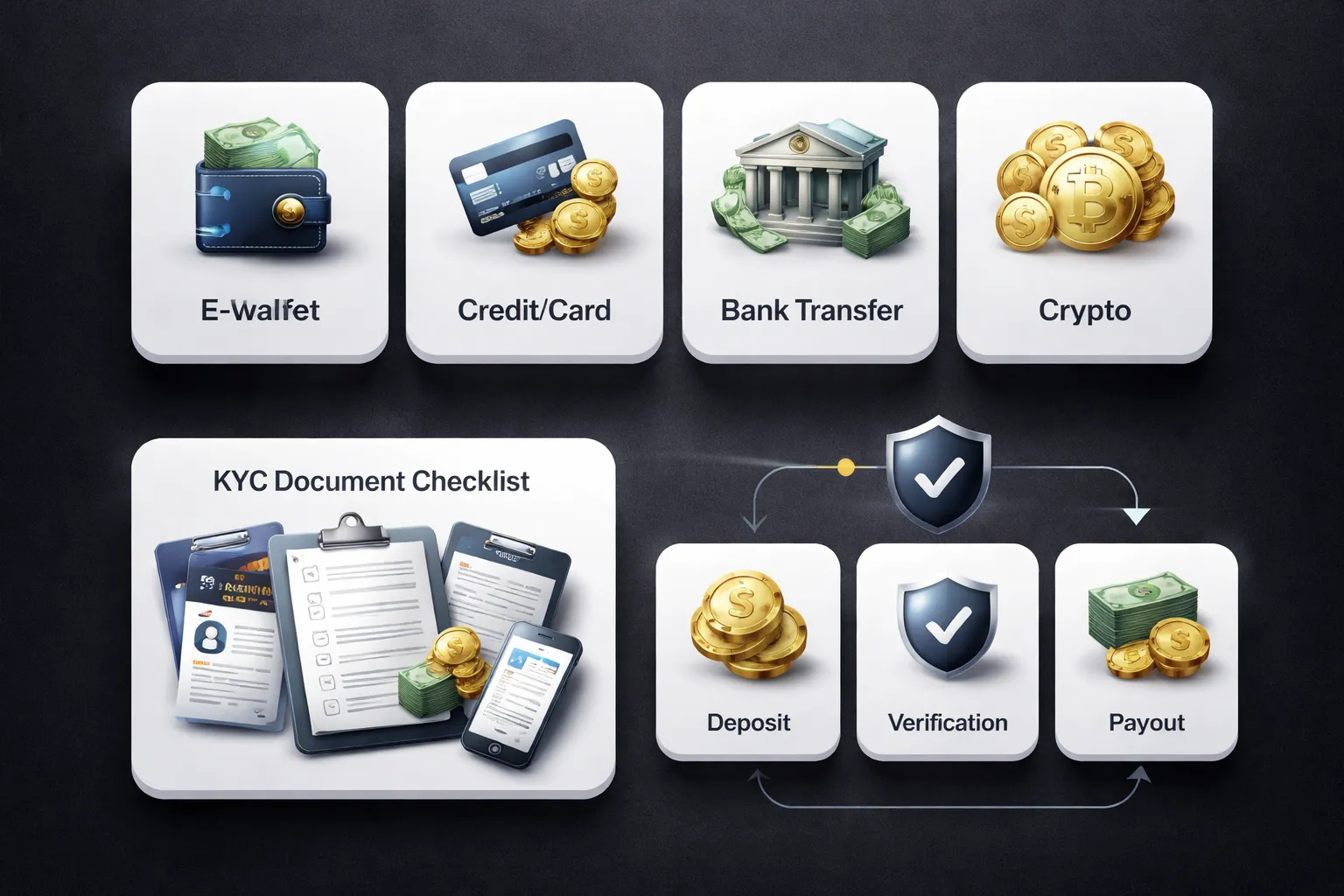
Fastest withdrawal methods by region
Cashouts vary by country, payment rail, and the room’s processing schedule. Pick methods with predictable settlement and low reversal risk.
| Method | Typical speed after approval | Best for | Common issues |
|---|---|---|---|
| E-wallets | Minutes to 24 hours | EU and many international markets, frequent cashouts | Name mismatch, wallet not available in your country, fees on wallet side |
| Cards | 1 to 5 business days | Small to mid cashouts, wide coverage | Many rooms do not support card withdrawals, bank posting delays, partial returns only |
| Bank transfer | 1 to 7 business days | High limits, stable settlement | Higher fees, more KYC, IBAN and SWIFT errors cause returns |
| Crypto | 10 minutes to 24 hours | Fast global cashouts, fewer banking frictions | Network fees, wrong chain, confirmations, price volatility |
In the US, many poker rooms route banking through card rails, ACH style transfers, or partner wallets. In the EU, e-wallets and SEPA transfers usually clear fastest. In LATAM, local bank methods and vouchers vary by country, so confirm withdrawal support before you deposit.
Verification (KYC) checklist, how to avoid payout delays
Most payout delays come from incomplete KYC or mismatched payment details. Do KYC before you play high volume.
- Identity: government ID, clear photo, no glare, all corners visible.
- Address: utility bill or bank statement, usually dated within 90 days.
- Payment proof: screenshot or statement showing your name and account details. For cards, mask middle digits and CVV.
- Ownership match: your casino profile name must match your bank or wallet name.
- Source of funds: be ready for payslips, tax docs, or bank statements if you move large amounts.
- One method rule: deposit and withdraw with the same method when possible. Mixed methods often trigger checks.
- Update limits: if you change address, phone, or device, expect a review. Submit updated documents first.
If a room asks for new documents after you request a withdrawal, pause deposits. Escalate through support and keep records. If the pattern repeats, treat it as a risk signal and review this guide on how to spot a fake online casino.
Deposit and withdrawal limits, planning for volume and cashouts
Limits affect grinders and tournament players the most. You need enough headroom to reload, register, and cash out without forced delays.
- Method limits: cards often cap lower than bank transfer and crypto. E-wallets sit in the middle.
- Per transaction vs per day: a room can allow a large single cashout but cap daily total, or the reverse.
- Withdrawal queues: some rooms process one withdrawal at a time. Plan fewer, larger cashouts if fees stay flat.
- Tournament bankroll swings: if you play MTTs, set a cashout plan that leaves a buffer for late reg and re-entry.
- VIP and account tiers: higher tiers may raise limits, but you still need KYC cleared.
Before you deposit, check the cashier page for maximum withdrawal per request and any weekly caps. If the room hides limits until you cash out, treat it as a red flag.
Currency conversion and fees, how to reduce hidden costs
Small fees add up fast when you move money often. Control your base currency and avoid double conversion.
- Match account currency to your bankroll currency: pick USD, EUR, or GBP based on where you hold funds.
- Avoid two-step FX: if your bank converts to EUR and the room converts to USD, you pay twice.
- Watch DCC: some card payments push dynamic currency conversion. Decline it and pay in the room’s currency when possible.
- Track network and wallet fees: wallets can charge withdrawal fees, and crypto networks charge miner fees.
- Check poker specific charges: some rooms add fees for bank wires or apply minimum withdrawal amounts.
Read the cashier terms. If the room lists vague “processing fees” without numbers, expect expensive cashouts.
Crypto poker considerations, volatility, confirmations, and compliance
Crypto can speed up withdrawals, but it adds technical and compliance risks.
- Volatility: your cashout value can change between approval and receipt. Use stablecoins if the room supports them.
- Confirmations: rooms wait for a set number of confirmations. Faster chains settle quicker, congested networks slow down.
- Correct chain: send and receive on the same network. A USDT cashout on the wrong chain can get lost.
- Address hygiene: withdraw to a wallet you control. Exchanges can reject deposits from gambling merchants.
- Compliance: expect KYC even with crypto. Larger withdrawals can trigger source of funds checks.
- Tax records: keep timestamps, transaction IDs, and fiat value at the time of receipt.
If you use crypto, test with a small withdrawal first. Confirm speed, fees, and chain support before you move a full tournament score.
Legality & Safety: Playing Poker Online Without Unnecessary Risk
How to tell if an online poker casino is legal where you live
Start with the regulator, not the lobby.
- Check the license name and number in the footer. Click it. A real license record opens on the regulator site.
- Match the license to your location. A Malta or Curaçao license does not make a site legal everywhere.
- Read the restricted countries list in the Terms. If your country or state sits on the list, you risk closure and confiscated bonuses.
- Check payment availability. Legal sites usually offer local rails. Offshore sites often push crypto, wire, or third party processors.
- Confirm dispute options. Regulated rooms list an ADR or regulator complaint path. Offshore rooms often do not.
If you cannot verify the license on a regulator site, treat the room as unregulated.
US overview: regulated states vs offshore sites
US online poker splits into two lanes. State regulated rooms. Offshore rooms.
- Regulated states include New Jersey, Pennsylvania, Michigan, Nevada, Delaware, and West Virginia. Availability depends on your exact location and geolocation checks.
- Regulated rooms give you clearer rules, audited games, and a state agency to escalate complaints.
- Offshore rooms may accept more states and offer softer onboarding, but you trade away legal clarity and regulator-backed enforcement.
Key tradeoffs you feel in real play.
- Payout risk runs lower on regulated rooms, higher on offshore rooms during disputes, chargeback claims, or policy changes.
- Account action risk runs lower when you stay in-state on regulated rooms. It rises fast if you travel, use a VPN, or fail verification on any room.
- Game ecology differs. Offshore networks can have more traffic in some formats, but also stricter anti-tool rules and more security checks on winners.
EU, UK, Canada, Australia: common regulatory models
Most regions use a licensing model. The details change. Your risk profile changes with them.
- UK uses the UK Gambling Commission. Expect strict KYC, safer consumer standards, and stronger enforcement on advertising and bonuses.
- EU often runs country-level licensing. Malta licenses many operators, but your country can still require a local license. Always check your local regulator list.
- Canada mixes provincial approaches. Ontario runs a regulated market for many brands. Other provinces may rely on government platforms or different rules.
- Australia heavily restricts online poker offered to Australians. Many major operators do not serve the market. Playing anyway can create account and payout problems.
Rule of thumb. The more local the license, the more leverage you have if something goes wrong.
Fairness and RNG: what audits can and can’t guarantee
Poker rooms use a random number generator to shuffle and deal. Audits help, but they do not solve every risk.
- What audits can guarantee. The shuffle logic matches the published RNG design, and the output passes statistical tests over large samples.
- What audits cannot guarantee. That every hand you play stays free of collusion, bot rings, real-time assistance, or chip dumping.
- What you should look for. Named test labs, published compliance statements, and clear security pages that explain anti-collusion and bot detection.
Use your own signals too.
- Security tools like device fingerprinting, geolocation, and two-factor support reduce fraud.
- Game integrity teams that publish enforcement stats and refund policies usually react faster when patterns show up.
Account safety: avoiding phishing, bonus abuse flags, and locked accounts
Most player losses come from account mistakes, not bad beats.
- Use a unique password and turn on 2FA if offered.
- Never install “helpers” from Telegram, Discord, or email links. Many are credential stealers.
- Type the URL or use a saved bookmark. Do not log in from search ads.
- Keep your documents ready before you deposit big. ID, proof of address, and payment ownership checks can hit right after a cashout request.
- Keep one account per person per site and per household where required. Duplicate accounts trigger closures.
Bonuses create the most avoidable lockouts.
- Follow wagering rules and game contribution rules. Poker often counts differently than slots or table games.
- Avoid bonus stacking across multiple accounts, family members, or shared devices if the Terms forbid it.
- Do not charge back deposits. Many rooms freeze funds and permanently ban accounts after a chargeback.
If a room locks your account, stay calm and stay consistent. Provide requested documents in one reply. Keep screenshots of the request and your submission.
VPNs and terms of service: consequences and safer alternatives
Most poker rooms ban VPN use for location bypass. They enforce it with geolocation, device checks, and payment signals.
- Common consequences include voided bonuses, confiscated promo winnings, withdrawal delays, or full account closure.
- Worst case includes funds held until extended review finishes, especially after a big tournament score.
Safer alternatives exist.
- Play where the room explicitly allows play and where you physically sit. Let geolocation run.
- If you travel stop playing until you return to an approved region, or use a locally licensed operator in that region.
- Ask support in writing before you deposit if your situation looks complex, like frequent travel, dual residency, or military posting.
If you want a broader baseline on licensing, audits, and operator history, use our safe and trusted online casino picks as a cross-check before you commit bankroll.
How to Choose the Best Online Casino for Poker (Step-by-Step)

1) Define your goal first
Pick one main goal. It decides everything that matters next.
- Casual fun: simple lobby, fast deposits, low minimum tables, decent mobile play.
- Profit grinding: strong liquidity, soft games, low rake, solid rewards, stable software.
- Learning: micro-stakes, clear hand histories, basic stats, responsive support, low-risk promos.
- Tournament chasing: big guarantees, frequent series, good late reg rules, clear payout info, smooth multi-table play.
2) Shortlist by availability and liquidity first, then features
Start with what you can legally access in your region. Then check game volume.
- Licensing match: the site must accept your country, state, or province. Confirm before you deposit.
- Network size: more active players means more tables, more stakes, and faster starts.
- Peak-time traffic: check evenings and weekends in your time zone, not the operator’s.
- Game spread: confirm your formats, like NLHE, PLO, mixed games, fast-fold, sit and gos, MTTs.
- Table availability at your stakes: you want multiple options, not one running table.
3) Compare total cost of play, rake plus fees minus promo value
Look at your true cost per 100 hands and per tournament entry. Donors ignore this. Winners track it.
- Cash game rake: review rake caps at your stakes, plus any jackpot drop or extra deductions.
- Tournament fees: compare buy-in splits, like $10+$1, across similar events.
- Rakeback and rewards: convert points and tiers into a real percentage based on your volume.
- Bonus clearing rules: check wagering, expiry dates, game contribution, and max cashout limits.
- Withdrawal friction: fees, minimum cashouts, and processing times change your real value.
| What to check | What to record | Why it matters |
|---|---|---|
| Cash rake and cap | Rake %, cap at your stake | Caps decide if small-stakes grinders get crushed |
| MTT fee rate | Fee as % of buy-in | High fees cut ROI fast |
| Rewards value | Estimated % back | Turns “points” into real money |
| Bonus terms | Time limit, contribution, rollover | Bad terms turn bonuses into traps |
| Cashout terms | Fees, limits, average time | Slow payouts create bankroll risk |
4) Test the software before you commit
Run a short trial. Use free play, then micro-stakes. Treat it like a product test.
- Install and stability: check crashes, lag, and reconnect behavior.
- Lobby and filters: you should find the right stakes and formats fast.
- Multi-tabling tools: hotkeys, bet sizing, timebank, table layout, and alerts.
- Hand history and tracking: export options, clarity, and reliability.
- Mobile performance: test on your device and network, not just Wi-Fi.
- Support responsiveness: ask one specific question, then time the first useful reply.
If you prefer simpler onboarding and fewer setup steps, use our best online casinos for beginners guide as a baseline for sign-up flow and support quality, then apply the poker checks above.
5) Make a responsible gaming plan before you deposit
Set limits that match your bankroll and your schedule. Put them in place first, not after a bad session.
- Deposit limit: set a weekly or monthly cap you can afford to lose.
- Loss limit: define a hard stop for a day and for a week.
- Session time limit: set a max length, then take a break.
- Table count limit: cap the number of tables until you prove you can play well at volume.
- Cool-off or timeout: use it after tilt sessions, travel stress, or schedule changes.
- Cashout rule: schedule withdrawals, like a weekly cashout of a fixed amount or percentage.
Best Online Casinos for Poker by Player Type (Recommendations)
Best for beginners
Pick a room that makes it easy to find games, understand actions, and review hands. Your priority is low stakes and low friction.
- Look for low-stakes cash and micro MTTs: blinds from $0.01/$0.02 and tournaments with $1 to $10 buy-ins.
- Choose a simple lobby and clean table UI: clear bet sizing, auto-post blinds, and obvious time bank.
- Use built-in learning tools: hand replays, basic stats, and starter missions. Avoid rooms that require third-party setup on day one.
- Prioritize softer pools: smaller networks, recreational-heavy traffic windows, and fewer full-time regulars at micro stakes.
- Start with fewer tables: one to two tables until you track your win rate and tilt control.
Best for high-volume grinders
You need liquidity, a stable client, and predictable rewards. You also need rules that allow multi-tabling without constant friction.
- Strong cash-game traffic: fast seat filling at your main stakes, across multiple formats.
- Client stability: low crash rates, fast reconnect, smooth table cycling, and reliable hand histories.
- Rake and rewards you can model: clear rake caps, transparent rakeback or points value, and no surprise reductions.
- Multi-table tools: hotkeys, preferred seating options where allowed, table sorting, and layout presets.
- Game selection options: filters, stake caps, and clear table stats so you waste less time hunting.
Best for tournament specialists
You win with volume, structure, and a schedule that matches your time zone. Choose a room that runs deep events and enough satellites to lower your average buy-in.
- Deep schedule: daily majors, multiple buy-in tiers, and enough events to register late without forcing bad choices.
- Good structures: slower blind levels, solid starting stacks, and reasonable late registration length.
- Satellites that matter: step satellites, target satellites into majors, and frequent feeders that run even off-peak.
- Series calendar: recurring festival weeks with guarantees and leaderboard value.
- Final table usability: clean payout info, ICM and deal tools if offered, and stable streaming mode if you create content.
Best for mobile-only players
Mobile poker needs fast actions, clean sizing, and low misclick risk. If the app fights you, your edge drops.
- One-handed usability: large action buttons, simple bet slider, and clear pot size.
- Connection handling: quick reconnect, no forced re-login loops, and stable performance on cellular data.
- Battery and heat control: efficient app that does not drain your phone in long sessions.
- Fast lobby search: filters that work on a small screen, plus favorites for your common stakes and formats.
- Safe table count: cap yourself to what you can play cleanly on a phone, usually one to four tables.
If you plan to play mostly on iOS or Android, use this guide to compare app performance and features: best mobile casino apps.
Best for privacy-focused banking
Privacy comes from fewer intermediaries, clear withdrawal rules, and payment methods that do not trigger constant reviews. You still need compliance, so keep your documents ready.
- E-wallet support: deposits and withdrawals through major e-wallets, with consistent processing times.
- Crypto-friendly routes: BTC and stablecoin options where legal, with clear minimums and network fee handling.
- Transparent withdrawal limits: daily and monthly caps published in the cashier, not hidden in support chats.
- Clean KYC flow: one verification pass, then fewer friction checks later if your activity stays consistent.
- Separation of funds: use a dedicated wallet or e-wallet account to simplify records and reduce errors.
Best for US players
In the US, your best option depends on your state. Focus on regulated rooms first. They protect your funds and run audited games.
- New Jersey, Michigan, Pennsylvania: regulated operators run real-money poker inside state rules. Game selection and traffic vary by state.
- Nevada: regulated poker exists, with traffic that often spikes around major live series.
- Shared liquidity notes: some states share player pools through multi-state compacts, which increases traffic and improves tournament guarantees.
- Banking: regulated sites usually support ACH and major cards, with clearer withdrawal timelines than offshore rooms.
- Travel rule: you must play while physically located in the state that permits it, geolocation enforcement is strict.
FAQ
What makes an online casino good for poker?
Look for traffic, game selection, and stable software. Check tournament guarantees, rake, and rakeback. Confirm security tools like 2FA and geolocation where required. Read withdrawal terms. Pick a room that matches your stakes and peak play hours.
Are online poker sites legal in the US?
It depends on your state. Regulated rooms operate only in approved states and use geolocation. You must play while physically inside that state. Some states share liquidity through compacts, which boosts traffic and tournament prize pools.
What is shared liquidity and why does it matter?
Shared liquidity links player pools across multiple states. More players means more tables, faster seat fills, and larger tournament guarantees. It also reduces off-peak dead zones where lobby traffic drops and good game selection disappears.
How do online poker tournaments work?
You pay a buy-in plus a fee. Chips have no cash value. Blinds rise on a set schedule until one player wins. Multi-day events often pause and resume. Re-entries let you buy back in during a defined late registration period.
What poker variants should you expect on top sites?
No-Limit Hold’em and Pot-Limit Omaha lead. Many rooms add Omaha Hi-Lo, 6+ Hold’em, and mixed games at limited stakes. If you want niche formats, check the lobby at your usual hours before you deposit.
How do deposits and withdrawals work for poker casinos?
Regulated sites often support ACH, debit cards, and bank transfers. Withdrawals usually go back to the same method when possible. Processing times vary by operator and verification status. Keep your ID documents ready to avoid delays.
How do I choose the right stakes and bankroll?
Use simple rules. For cash games, keep at least 20 to 40 buy-ins for your stake. For tournaments, keep 100 or more buy-ins due to variance. Move down fast if your bankroll drops.
Do poker bonuses and promos affect your win rate?
Yes. Rakeback, deposit matches, and leaderboard rewards can swing your long-term results. Track the effective value after wagering or point requirements. Avoid promos that force you into higher rake games or unprofitable formats.
Can I use HUDs or tracking software?
Rules vary by room. Some sites allow HUDs, others ban them or restrict features like seating scripts and real-time assistance. Check the poker client terms before you install tools. Violations can lead to confiscated funds.
Is mobile poker worth it?
Mobile works well for cash games and small-field tournaments. Expect fewer tables and fewer advanced features than desktop. Use Wi-Fi, disable battery savers, and turn on notifications for time banks. Avoid playing deep runs on unstable connections.
How do I spot soft games?
Look for high flop percentages, short stacks, and frequent limping in cash games. In tournaments, target large-field low buy-ins with fast late registration traffic. Play during peak local hours. Avoid reg-heavy lobbies with many similar screen names.
Where can beginners start with simpler casino sign-up and support?
If you want an easier start before committing to a poker grind, use this guide to online casinos for beginners. It covers sign-up flow, basic games, and support quality.
Conclusion
Conclusion
Pick a poker casino that fits how you play. Start with one room. Learn its traffic, rake, tournament schedule, and software. Then decide if you need a second option.
- Cash games. Prioritize soft traffic, stable software, and clear rake terms. Track your win rate and rakeback after 10,000 hands before you move up.
- Tournaments. Chase value in large fields with low buy-ins and fast late registration. Build a schedule around peak hours in your region.
- Software and tools. Use a room with clean tables, solid mobile play, and support that answers fast. Avoid setups that create downtime or confusion.
Final tip. Set your bankroll rules first, then choose the room that best matches them. If you want a wider list of vetted operators beyond poker, use our best online casinos guide to compare safety, payouts, and support in one place.
-
Best Online Casinos for Blackjack: Best Tables, Rules & Bonuses
4 weeks ago -
Fast Payout Online Casinos: Best Sites for Quick Withdrawals
3 weeks ago -
Best Online Casinos for Roulette: Best Wheels, Limits & Live Options
4 weeks ago -
Best PayPal Online Casinos: Top Sites That Accept PayPal Deposits & Withdrawals
4 weeks ago -
Best Online Casinos for High Rollers: VIP Perks, High Limits & Exclusive Bonuses
3 weeks ago
-
- Our review template, and how to read the ratings
- PokerStars, tournament ecosystem, software polish, player pool notes
- GGPoker, flagship series, staking and rail features, smart HUD restrictions
- 888poker, soft games, promos, beginner-friendly formats
- partypoker, cash game focus, VIP approach, reliability checks
- WPT Global, tour integrations, liquidity considerations, usability
- bet365 Poker, casino ecosystem fit, banking, service standards
- US-only options, WSOP Online, BetMGM, Borgata, BetRivers
- Pros and cons summary, who each room fits
-
- Licensing, regulation, and third-party auditing
- Game integrity: collusion detection, bot policies, and anti-fraud systems
- Traffic and liquidity: why it affects game quality, formats, and prize pools
- Value metrics: rake, rakeback, VIP programs, and hidden costs
- Software quality: stability, table features, hand histories, and multi-tabling
- Payments performance: deposit options, withdrawal speed, limits, and fees
- Customer support tests: channels, response times, and dispute handling
- Responsible gaming tools: deposit limits, self-exclusion, reality checks
-
- Texas Hold’em: cash tables, fast-fold pools, and stake selection
- Omaha and PLO variants: action levels, table availability, and bankroll swinginess
- Sit & Go, Spin formats, and jackpot SNGs: variance and ROI expectations
- Multi-table tournaments (MTTs): structures, late reg, and guarantee reliability
- Mixed games and niche variants: when to prioritize network size
- Freerolls and micro-stakes: best places to build a bankroll
-
- Daily and weekly tournament schedules, what to look for beyond guarantees
- Major online series, qualification paths, satellites, and overlays
- Tournament structure explained, blind levels, antes, and starting stacks
- Late registration strategy and re-entry rules, when it’s +EV
- PKO and bounty tournaments, payout dynamics and strategy notes
- Soft-field signals, identifying beatable events without relying on myths
-
- Understanding rake and caps, why small differences matter over volume
- Fast-fold vs regular tables, impact on variance and learning
- Table selection fundamentals, seat selection, stack depths, and player profiles
- Short-deck and other high-variance games, suitability checklist
- Bankroll guidelines by format and stake, practical ranges
- Common leaks online players develop, and how to fix them
-
- Key features that matter
- Mobile poker experience, stability, battery use, UI speed under load
- HUDs, trackers, and hand histories, what’s allowed and what’s restricted
- Security features, 2FA, device management, session controls
- Accessibility and customization, themes, bet sizing presets, auto-post blinds
-
- Welcome bonuses explained, match %, caps, and release mechanics
- Wagering and playthrough terms, what applies to poker and what does not
- Rakeback and cashback programs, effective rates and eligibility
- Tournament tickets and leaderboards, when they outperform cash bonuses
- VIP tiers, benefits that matter
- Red flags in promo terms
-
- How to tell if an online poker casino is legal where you live
- US overview: regulated states vs offshore sites
- EU, UK, Canada, Australia: common regulatory models
- Fairness and RNG: what audits can and can’t guarantee
- Account safety: avoiding phishing, bonus abuse flags, and locked accounts
- VPNs and terms of service: consequences and safer alternatives
-
- What makes an online casino good for poker?
- Are online poker sites legal in the US?
- What is shared liquidity and why does it matter?
- How do online poker tournaments work?
- What poker variants should you expect on top sites?
- How do deposits and withdrawals work for poker casinos?
- How do I choose the right stakes and bankroll?
- Do poker bonuses and promos affect your win rate?
- Can I use HUDs or tracking software?
- Is mobile poker worth it?
- How do I spot soft games?
- Where can beginners start with simpler casino sign-up and support?
-
- Our review template, and how to read the ratings
- PokerStars, tournament ecosystem, software polish, player pool notes
- GGPoker, flagship series, staking and rail features, smart HUD restrictions
- 888poker, soft games, promos, beginner-friendly formats
- partypoker, cash game focus, VIP approach, reliability checks
- WPT Global, tour integrations, liquidity considerations, usability
- bet365 Poker, casino ecosystem fit, banking, service standards
- US-only options, WSOP Online, BetMGM, Borgata, BetRivers
- Pros and cons summary, who each room fits
-
- Licensing, regulation, and third-party auditing
- Game integrity: collusion detection, bot policies, and anti-fraud systems
- Traffic and liquidity: why it affects game quality, formats, and prize pools
- Value metrics: rake, rakeback, VIP programs, and hidden costs
- Software quality: stability, table features, hand histories, and multi-tabling
- Payments performance: deposit options, withdrawal speed, limits, and fees
- Customer support tests: channels, response times, and dispute handling
- Responsible gaming tools: deposit limits, self-exclusion, reality checks
-
- Texas Hold’em: cash tables, fast-fold pools, and stake selection
- Omaha and PLO variants: action levels, table availability, and bankroll swinginess
- Sit & Go, Spin formats, and jackpot SNGs: variance and ROI expectations
- Multi-table tournaments (MTTs): structures, late reg, and guarantee reliability
- Mixed games and niche variants: when to prioritize network size
- Freerolls and micro-stakes: best places to build a bankroll
-
- Daily and weekly tournament schedules, what to look for beyond guarantees
- Major online series, qualification paths, satellites, and overlays
- Tournament structure explained, blind levels, antes, and starting stacks
- Late registration strategy and re-entry rules, when it’s +EV
- PKO and bounty tournaments, payout dynamics and strategy notes
- Soft-field signals, identifying beatable events without relying on myths
-
- Understanding rake and caps, why small differences matter over volume
- Fast-fold vs regular tables, impact on variance and learning
- Table selection fundamentals, seat selection, stack depths, and player profiles
- Short-deck and other high-variance games, suitability checklist
- Bankroll guidelines by format and stake, practical ranges
- Common leaks online players develop, and how to fix them
-
- Key features that matter
- Mobile poker experience, stability, battery use, UI speed under load
- HUDs, trackers, and hand histories, what’s allowed and what’s restricted
- Security features, 2FA, device management, session controls
- Accessibility and customization, themes, bet sizing presets, auto-post blinds
-
- Welcome bonuses explained, match %, caps, and release mechanics
- Wagering and playthrough terms, what applies to poker and what does not
- Rakeback and cashback programs, effective rates and eligibility
- Tournament tickets and leaderboards, when they outperform cash bonuses
- VIP tiers, benefits that matter
- Red flags in promo terms
-
- How to tell if an online poker casino is legal where you live
- US overview: regulated states vs offshore sites
- EU, UK, Canada, Australia: common regulatory models
- Fairness and RNG: what audits can and can’t guarantee
- Account safety: avoiding phishing, bonus abuse flags, and locked accounts
- VPNs and terms of service: consequences and safer alternatives
-
- What makes an online casino good for poker?
- Are online poker sites legal in the US?
- What is shared liquidity and why does it matter?
- How do online poker tournaments work?
- What poker variants should you expect on top sites?
- How do deposits and withdrawals work for poker casinos?
- How do I choose the right stakes and bankroll?
- Do poker bonuses and promos affect your win rate?
- Can I use HUDs or tracking software?
- Is mobile poker worth it?
- How do I spot soft games?
- Where can beginners start with simpler casino sign-up and support?
-
Online Casino Licensing Explained: Authorities, Licenses & How to Check One
3 weeks ago -
Best Live Dealer Casinos: Where to Play Live Blackjack, Roulette & More
3 weeks ago -
Best Online Casinos for High Rollers: VIP Perks, High Limits & Exclusive Bonuses
3 weeks ago -
Fast Payout Online Casinos: Best Sites for Quick Withdrawals
3 weeks ago -
What Is an Online Casino? How They Work, Games, Bonuses & Safety
4 weeks ago
-
Best Online Casinos for Blackjack: Best Tables, Rules & Bonuses
4 weeks ago -
Online Casino Bonuses Explained: How They Work + Terms You Must Know
4 weeks ago -
Fast Payout Online Casinos: Best Sites for Quick Withdrawals
3 weeks ago -
Online Casino Licensing Explained: Authorities, Licenses & How to Check One
3 weeks ago -
Best Online Casinos for Roulette: Best Wheels, Limits & Live Options
4 weeks ago