Sign Up for an Online Casino: Create an Account in Minutes

Creating an online casino account takes minutes, but your choices matter. You share personal data, confirm your identity, and link a payment method. You also accept the site’s rules on bonuses, withdrawals, and verification.
This guide shows you how to sign up step by step. You will learn what details casinos ask for, how age and identity checks work, which documents to prepare, and how to avoid delays that block withdrawals. You will also learn the key safety checks to run before you register, including how to verify a site’s license. Use this quick primer on online casino licensing to confirm you are joining a regulated operator.
- In het kort: Pick a licensed casino. Confirm the regulator, license number, and operator name before you register.
- Fill in your real details. Your name, address, and date of birth must match your ID and bank records.
- Expect age and identity checks. Many casinos block withdrawals until you pass KYC.
- Prepare documents upfront. Keep a valid ID, proof of address, and payment proof ready to avoid delays.
- Use one payment method in your name. Mixed or third-party payments often trigger extra reviews.
- Secure your account. Use a strong password and turn on 2FA if the casino offers it.
- Set limits early. Use responsible gambling tools like deposit limits and time-outs before you start playing.
What it means to sign up for an online casino (and what you need first)
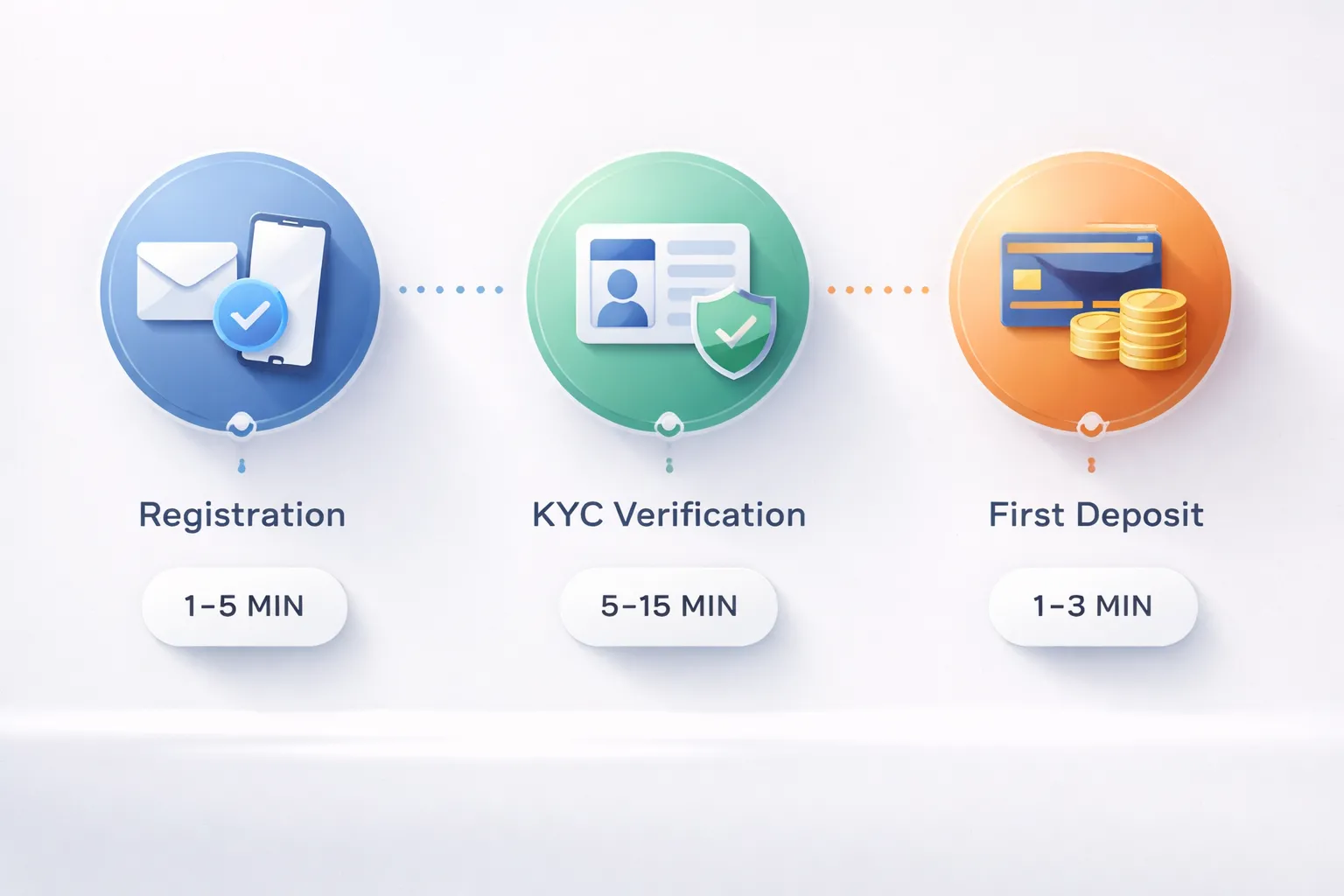
What “sign up” means in practice
Signing up creates your player account. You enter your details, set login credentials, and accept the casino’s terms. After that, most casinos run identity and fraud checks before they let you withdraw, and sometimes before they let you deposit or claim a bonus.
You also confirm legal eligibility. Casinos block sign-ups that fail age, location, or licensing rules. You can learn how licensing affects access in online casino licensing explained.
Typical account requirements: age, location, and legal eligibility
- Minimum age: You must meet the legal gambling age in your jurisdiction. Most regulated markets require 18+ or 21+.
- Location: You must play from an allowed region. Many operators use IP and GPS checks to enforce this.
- One account per person: Duplicate accounts often trigger closures, bonus removal, or verification holds.
- Accurate personal details: Your name and address must match your documents and your payment method.
Information to prepare before you start
- Email address: Use one you control. You will need it for confirmations and security alerts.
- Phone number: Some casinos use SMS codes for login, deposits, or withdrawals.
- Home address: Enter it exactly as it appears on your proof of address.
- Date of birth: Must match your ID.
- Payment details: Card, bank, or wallet in your name. Keep the account holder name consistent.
- Device access: You may need camera access to upload photos of documents.
Understanding KYC: why casinos ask for ID and proof of address
KYC means “Know Your Customer.” It is a standard compliance process in regulated gambling. Casinos use it to confirm identity, prevent underage play, and reduce fraud and money laundering risk.
- Identity check: Passport, national ID, or driver’s license. The casino verifies your name, date of birth, and document validity.
- Address check: Utility bill, bank statement, or government letter. Many casinos require a recent document, often within the last 90 days.
- Payment method check: A screenshot or statement may be required to confirm you control the funding source. Some casinos also ask for a card photo with part of the number hidden.
- Source of funds checks: Higher deposits or unusual patterns can trigger extra requests. This can include payslips or bank statements.
If your details do not match, verification slows down. Small mismatches cause most delays, different spelling, old addresses, or third-party payment names.
Time estimate: registration vs verification vs first deposit
| Step | What you do | Typical time |
|---|---|---|
| Registration | Enter details, set password, confirm email or SMS | 2 to 5 minutes |
| KYC verification | Upload ID and proof of address, wait for review | 10 minutes to 48 hours, longer if documents fail |
| First deposit | Select payment method, confirm amount, complete security checks | Instant to 10 minutes, bank transfers can take longer |
Verify early if you can. Many casinos allow play before KYC, but they often block withdrawals until you pass checks.
How to sign up for an online casino: step-by-step walkthrough
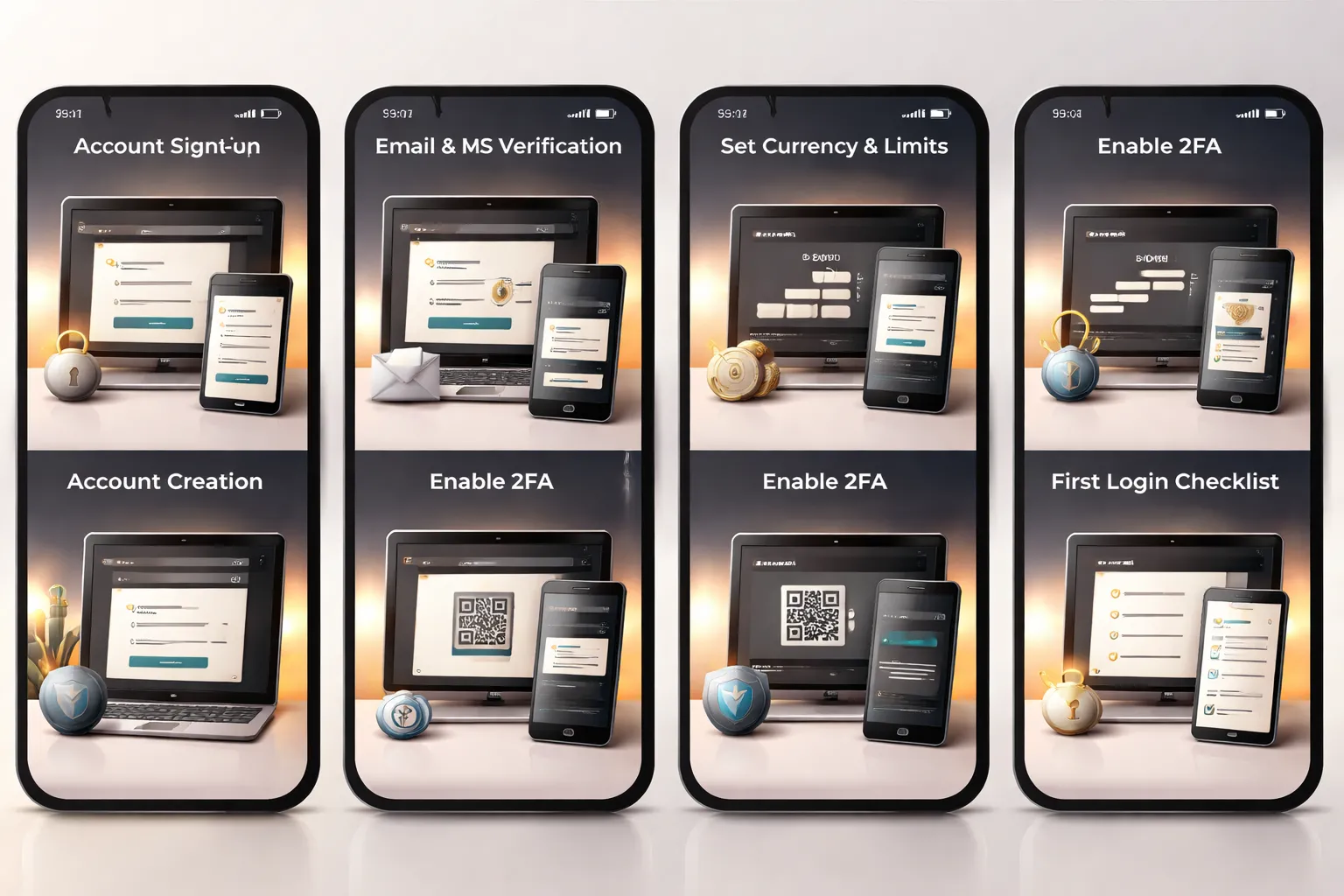
Picking the right registration route: desktop vs mobile app vs browser
Choose the route that matches how you will play and pay.
- Mobile browser: Fastest start. No install. Good for quick sign-ups and one-off deposits.
- Mobile app: Best for regular play. You often get easier biometric login and smoother ID scanning for KYC.
- Desktop browser: Best for form accuracy. Easier to type long addresses and review terms, limits, and documents.
Before you register, confirm the site runs under a real license. Use this guide on how to check a casino license.
Creating login credentials: strong passwords and safer authentication
- Use a unique password. Do not reuse your email password.
- Use 12 to 16+ characters. Mix words, numbers, and symbols.
- Store it in a password manager. Do not save it in a shared browser profile.
- Turn on 2FA if the casino supports it. Use an authenticator app when possible. Use SMS only if you must.
- Set a separate banking PIN if offered. Do not match it to your card PIN.
Completing the registration form: accuracy tips to prevent payment blocks
Most payment and withdrawal issues start with bad data. Enter details that match your legal documents and bank records.
- Use your full legal name. Match your ID, including middle name if your ID shows it.
- Use your real date of birth. Age checks can block access and cashouts.
- Enter your address exactly as shown on your proof of address. Keep formatting consistent.
- Use a personal email and phone number you control. Avoid work or shared accounts.
- Pick one country and one state. Do not use VPNs during sign-up. Risk teams flag location mismatches.
Confirming email and phone: verification links, OTP codes, and troubleshooting
- Email link: Open the message and click the verification link. If it fails, copy the link into your browser.
- OTP code by SMS: Enter the code before it expires. Request a new code if the timer runs out.
- No email: Check spam and promotions tabs. Search your inbox for the casino name. Whitelist the sender, then resend.
- No SMS: Check you entered the right country code. Toggle airplane mode, then retry. Use voice call OTP if offered.
- Link or OTP keeps failing: Disable VPN and ad blockers. Switch network from Wi-Fi to mobile data. Try a different browser.
Setting currency and preferences: limits, communication opt-ins, and privacy choices
Make these choices early. Some casinos lock currency after the first deposit.
- Currency: Pick the one you will deposit in. Avoid FX fees and conversion spreads.
- Deposit limits: Set a daily, weekly, or monthly cap before you fund the account.
- Loss and session limits: Use them if available. They reduce impulsive reloads.
- Marketing opt-ins: Opt out if you do not want promo emails and SMS. You can still check offers inside your account.
- Privacy choices: Review data sharing and tracking settings. Turn off non-essential personalization where you can.
First login checklist: profile details, security settings, and bankroll plan
- Fill any missing profile fields. Keep everything consistent with your ID.
- Enable 2FA and any login alerts. Log out of old devices you do not use.
- Add your preferred payment method, but avoid saving card details on shared devices.
- Start KYC early if the casino allows it. Upload clear images, no glare, no cropped corners.
- Set a bankroll plan before you deposit. Decide your max spend for the week and stop when you hit it.
Choosing a safe and legit casino before you create an account
Licensing and regulation, what to look for and where to verify it
Start with the license. If you cannot confirm it, do not sign up.
- Find the license details in the website footer or the Terms and Conditions. You should see the operator name, license number, and the regulator.
- Match the legal entity to the company name on the license. Brand names can differ, the licensed company should not.
- Verify on the regulator site. Use the license number or operator name in the public register. Confirm status shows active and covers online casino.
- Check the domain scope if the regulator lists approved URLs. Your exact site address should appear.
If you want a deeper checklist, use this guide on how to check an online casino license.
Reputation signals, audits, responsible gambling policies, and player reviews
Look for proof. Skip marketing claims.
- Third-party audits. Check if the site names an independent test lab and links to reports or certificates. Confirm the certificate shows the same operator or domain.
- Responsible gambling tools. You should see deposit limits, loss limits, session limits, time-outs, and self-exclusion. Tools should sit in your account settings, not buried in a PDF.
- Clear rules. Read bonus terms, withdrawal limits, and restricted countries before you deposit. Focus on maximum cashout, wagering rules, and game weighting.
- Player reviews. Use them to spot patterns, not to judge payouts. Repeated issues like delayed withdrawals, sudden KYC requests, and closed accounts matter.
Game portfolio fit, slots, live casino, table games, and RTP transparency
Pick a casino that fits how you play. Do this before you create your account.
- Providers list. A strong catalog names the studios that supply the games. You should recognize at least a few major developers in your market.
- Live casino coverage. Check if it offers the tables you want, plus limits that match your bankroll. Look for blackjack, roulette, baccarat, and game shows if you play them.
- Table game variants. Confirm rules and limits. Small rule changes can affect odds.
- RTP transparency. Good casinos show RTP per game in the info panel or help pages. If RTP stays hidden, treat that as a weak signal.
Payments and banking, deposit and withdrawal methods, fees, and processing times
Banking issues cause most account friction. Check the cashier page first.
- Supported methods. Confirm cards, bank transfer, e-wallets, and any local options you use. Do not assume your method works in your country.
- Fees. Look for deposit fees, withdrawal fees, and currency conversion costs. Some casinos charge on withdrawals or set free withdrawal limits.
- Processing times. Separate approval time from bank time. Many casinos process withdrawals in hours or days, then your provider adds extra time.
- Limits. Check minimum deposit, minimum withdrawal, and weekly or monthly withdrawal caps. Compare these to your expected play.
- Name matching. Your payment name should match your ID name. Mismatches can delay withdrawals.
Customer support quality, live chat availability, languages, and response times
Test support before you deposit. You need fast answers when money sits in review.
- Live chat. Prefer 24/7 chat. If chat runs only at set hours, confirm it matches your time zone.
- Languages. Make sure support serves your language, not just the website content.
- Response times. Ask two basic questions, one about withdrawal timing, one about KYC documents. Track how long it takes to get a clear answer.
- Help center quality. You want specific policies, not vague summaries. Look for pages on withdrawals, verification, bonuses, and account limits.
Fairness and security, RNG certification, SSL encryption, and data handling
Security and fairness should show up in the site’s documentation. You should not need to guess.
- RNG certification. Slots and digital table games should state they use certified random number generation. Check for a testing lab name and a current certificate.
- SSL encryption. Your address bar should show HTTPS on login and cashier pages. Do not enter personal data on non-HTTPS pages.
- Data handling. Read the privacy policy for what data they collect, why they collect it, and who they share it with. Look for retention periods and how you request deletion.
- Account controls. You should see 2FA support, login history, device management, and email or SMS alerts for withdrawals and password changes.
Bonuses during signup: how to claim offers without getting trapped by terms
Common signup offers you will see
- Welcome bonus (deposit match). The casino matches part of your first deposit, sometimes across several deposits.
- Free spins. Spins on selected slots. Winnings often convert to bonus funds, with wagering rules.
- Cashback. A percentage of your net losses over a set period. It may pay as bonus money, not cash.
- No-deposit bonus. Small bonus funds or free spins for registration and verification. It usually has strict caps and short deadlines.
Wagering requirements, rollover in real money terms
Wagering, or rollover, is the amount you must bet before you can withdraw bonus funds, and often before you can withdraw winnings from that bonus.
| Term | What it means | Simple example |
|---|---|---|
| Bonus wagering | You must wager the bonus amount X times. | $100 bonus with 35x. You must place $3,500 in bets. |
| Deposit + bonus wagering | You must wager deposit plus bonus X times. | $100 deposit + $100 bonus with 35x. You must place $7,000 in bets. |
| Wagering on free spins wins | Free spins winnings convert to bonus funds with their own rollover. | $20 won from spins with 30x. You must place $600 in bets. |
Rollover tracks total stakes, not your profit. You can complete wagering and still end down. You can also fail wagering even if you win, if you break a rule.
Key restrictions to check before you click “claim”
- Max bet rule. Many bonuses cap your stake per spin or per hand while the bonus is active. Exceed it once and the casino can void winnings.
- Eligible games. Some offers apply to slots only, or exclude jackpots, live casino, and table games.
- Time limits. Common windows range from 24 hours to 30 days. You lose the bonus when the timer ends.
- Withdrawal caps. No-deposit promos often cap cashout. Example, max withdrawal of $50 or $100, even if you win more.
- Sticky vs non-sticky bonus. Sticky bonuses get removed before withdrawal. Non-sticky bonuses let you withdraw remaining balance after wagering. Terms usually state this clearly.
- Verification and payment rules. Some bonuses require ID checks before withdrawal. Some exclude certain payment methods like specific e-wallets or prepaid cards.
Game contribution rules, why some games count less
Casinos weight games because house edge and volatility differ. Slots usually count 100% toward wagering. Table games often count 0% to 20%. Some live dealer games count 0%.
This changes your real wagering load. If you need $3,500 of wagering and a blackjack game contributes 10%, you must place $35,000 in blackjack bets to clear it. Check the contribution table in the bonus terms before you play.
Bonus opt-in vs opt-out, when skipping can be smarter
- Skip the bonus if you want fast withdrawals and fewer rules.
- Skip the bonus if you play table games and the contribution rate sits below 20%.
- Skip the bonus if the max bet cap conflicts with your normal stakes.
- Skip the bonus if the promo forces a short deadline you cannot meet.
Many casinos let you opt out at signup, or remove the bonus in your cashier or promotions page. Set a spend limit first, then decide. Use your own numbers and follow a gambling budget you will actually stick to.
How to claim offers without getting trapped
- Read the promo’s short terms before deposit, then open the full bonus terms page.
- Confirm three items, wagering basis, max bet, and withdrawal cap.
- Check eligible games and contribution rates, then pick games that count 100% if your goal is clearance.
- Track progress in the bonus panel. Stop if the casino does not show clear wagering status.
- Do not mix promos unless terms allow it. Stacking rules often block withdrawals.
VIP and loyalty programs, how points and tiers work
Most casinos run loyalty points alongside promos. You earn points from real-money wagering, sometimes from bonus play at a reduced rate.
- Points. Usually based on wagered amount, and converted to cash, bonus funds, or free spins.
- Tiers. Bronze to VIP levels. Higher tiers raise earning rates and unlock benefits.
- Perks. Typical perks include higher withdrawal limits, faster withdrawals, dedicated support, and occasional cashback.
- Expiry and resets. Points can expire. Tiers can reset monthly or quarterly if you do not maintain play.
Treat VIP as a rebate, not a reason to chase losses. Read the earning rate and redemption value, then compare it to the wagering you plan to do.
Depositing after signup: fastest ways to fund your account
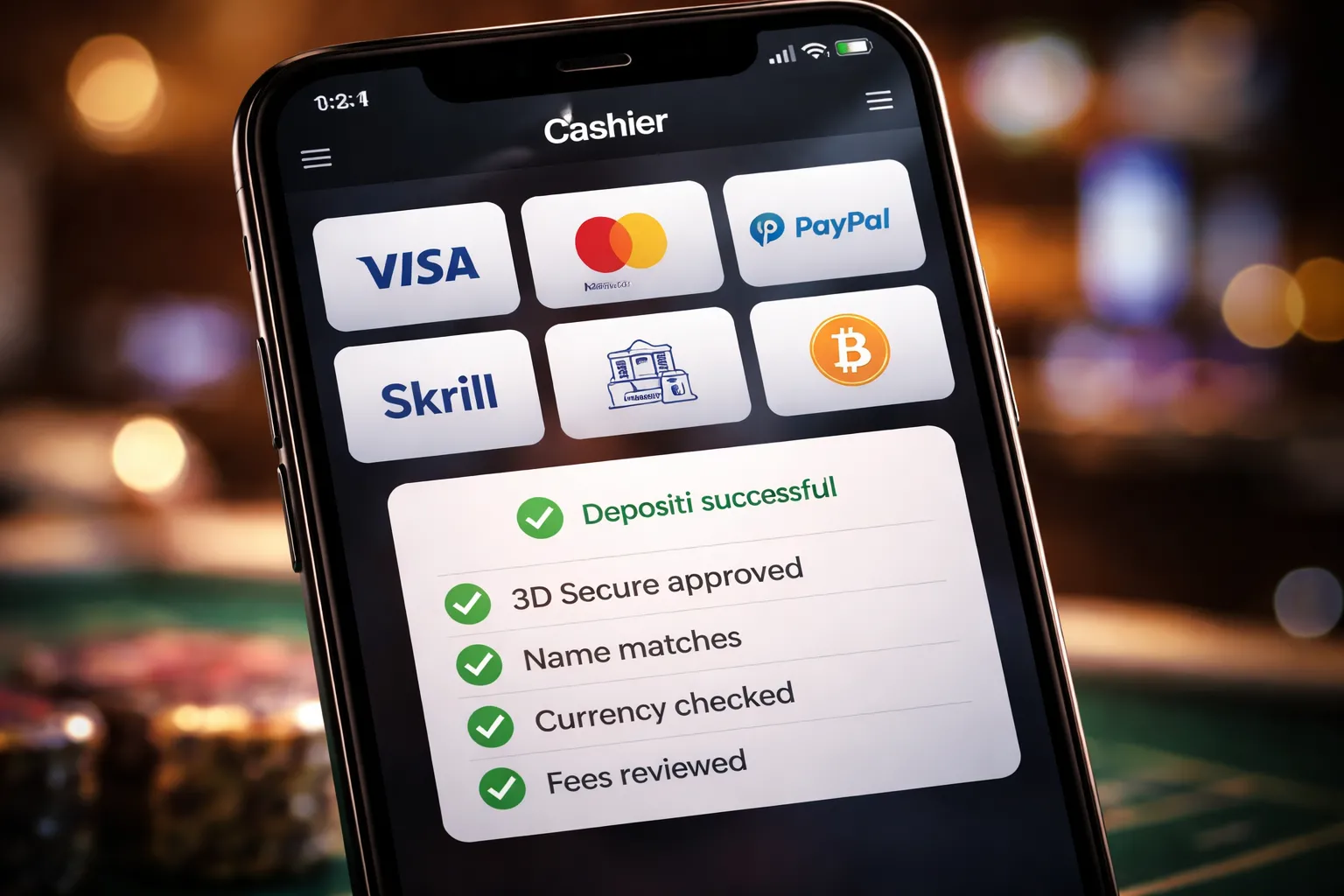
Payment options overview
After signup, open the cashier and choose a funding method. Speed and approval rates vary by provider, bank, and country.
- Debit and credit cards. Visa and Mastercard usually credit instantly. Some banks block gambling transactions or require extra approval.
- E-wallets. PayPal, Skrill, Neteller, and similar services often process fast and reduce bank declines. Some casinos restrict bonuses on certain wallets.
- Bank transfers. Useful for higher amounts. They can take hours to several business days, and you may need to confirm account details.
- Crypto. Bitcoin and other coins can credit after network confirmations. You still need to pass identity checks to withdraw at most licensed sites.
- Prepaid vouchers. Paysafecard and similar products work well if you want fixed spend. Withdrawals still require a bank account or verified wallet in most cases.
Minimum and maximum deposit limits, bonus eligibility
Limits affect how you trigger a welcome offer and how you manage bankroll. Check the cashier and bonus terms before you deposit.
- Minimum deposit. Many bonuses require a minimum, often a fixed amount. If you deposit less, you may miss the offer or get a reduced match.
- Maximum bonus cap. Your deposit can exceed the amount that earns a match. Example, a 100% match up to $200 only matches the first $200.
- Method limits. Cards and wallets often have lower max limits than bank transfer or crypto. High deposits can trigger extra checks.
- Deposit limits you set. If you want hard caps, use responsible gambling deposit limits in your account settings. Read responsible gambling tools before you fund large amounts.
Avoiding failed deposits
Most failed deposits come from authentication, bank rules, or mismatched details. Fix these first.
- 3DS checks. Many card deposits require 3D Secure approval in your banking app or via SMS. If you do not complete it, the deposit fails.
- Card declines. Banks often block gambling merchant codes, foreign transactions, or repeated attempts. Call the bank, lower the amount, or switch to an e-wallet.
- Name mismatches. Use the same legal name on your casino profile and payment method. A mismatch can block deposits now and withdrawals later.
Fees and exchange rates
Hidden costs usually sit in conversion and third-party fees. You can spot them in the cashier before you confirm.
- Currency conversion. If your card runs in a different currency, the bank sets the rate and may add a conversion fee. Using the casino account currency that matches your bank currency reduces leakage.
- Wallet fees. Some wallets charge for funding the wallet, converting currency, or sending funds. Check your wallet fee schedule, not just the casino.
- Crypto spreads. Exchanges and payment gateways can add a spread plus a network fee. Compare the received amount to what you sent.
- What to check before you click Pay. Deposit amount, credited amount, fee line items, exchange rate, and the final balance increase.
Mobile payments, Apple Pay and Google Pay
Mobile wallets can speed up deposits, but casinos and banks apply constraints.
- Availability. Apple Pay and Google Pay depend on your country, device, and the casino payment processor. You may see them only in the mobile browser or only in the app.
- Underlying card rules still apply. Your wallet uses a linked card. If the bank blocks gambling transactions, the wallet deposit can still fail.
- Verification and limits. Some casinos require ID checks before enabling wallet deposits. Wallet deposits may have lower max limits than bank transfer.
Account verification (KYC) made simple: upload documents in minutes
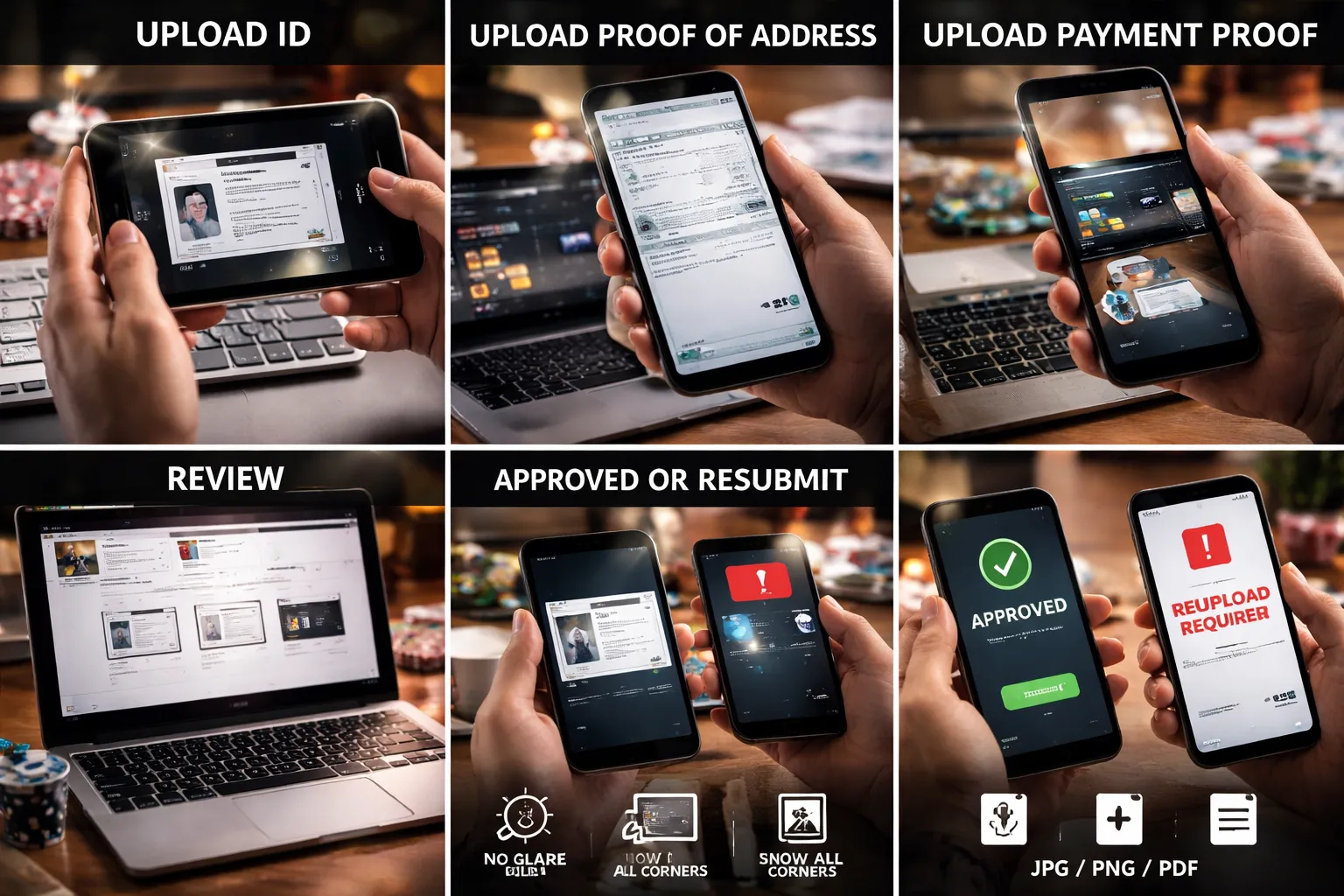
When verification is required
Online casinos use KYC to confirm your identity, age, and payment details. You can see it at three points.
- At signup. Some brands verify before they enable deposits, bonuses, or wallet payments.
- Before your first withdrawal. Many casinos let you deposit and play, then lock withdrawals until you pass KYC.
- After thresholds. Expect extra checks after certain deposit, withdrawal, or lifetime spend levels, or if your account triggers a risk review.
Accepted documents
Most casinos ask for two or three categories. Upload clear, full images. Use the same name and address as your account profile.
- Photo ID. Passport, driver’s license, national ID card. Some casinos accept both sides for cards.
- Proof of address. Utility bill, bank statement, tax letter, government mail. Many casinos require a recent document, often within 90 days.
- Payment method proof. Card photo, card statement, e-wallet account screenshot, or bank transfer proof. Mask sensitive data if the casino instructs it, keep last 4 digits visible when needed.
How to take compliant photos
- Cut glare. Use bright room light, turn off flash if it causes reflection, tilt the document slightly.
- Do not crop too tight. Show all four corners. Keep the full document in frame.
- Check dates. Do not upload expired ID. Make sure the issue and expiry dates show.
- Match your details. Your account name, DOB, and address must match your documents. Fix profile typos before you upload.
- Use common formats. JPG, PNG, or PDF. Keep files sharp and readable. Avoid heavy filters and compressed images.
Typical approval times and what slows them down
Many casinos approve in minutes to a few hours when your files read clean and your details match. Some reviews take 24 to 72 hours, longer on weekends or during high-volume events.
- Slowdowns you can control. Blurry photos, cropped edges, glare, expired documents, mismatched address, different names, missing back side of an ID card.
- Slowdowns the casino controls. Manual review queues, enhanced checks for large withdrawals, payment method ownership checks, jurisdiction rules.
What happens if KYC fails
You usually get a rejection note that lists what to fix. Act fast. Do not upload random files.
- Step 1. Read the reason code and re-upload the exact document type requested.
- Step 2. Update account details to match your document, then submit again.
- Step 3. Provide an alternate document if the first one does not qualify, for example a different proof of address.
- Step 4. Escalate to casino customer support with your case ID, upload timestamps, and the rejection message.
If you cannot pass KYC, the casino can restrict withdrawals and may close the account. Ask support about refund options for remaining balances, and follow their instructions.
Responsible gambling and account controls to set immediately
Deposit, loss, and session limits: set numbers that protect your bankroll
Set limits before your first deposit. Do it while you feel calm. Limits work best when they match your real cash flow and your risk tolerance.
- Deposit limit. Start with a weekly cap. Use an amount you can lose without affecting rent, bills, food, or debt payments. If your income changes, update the cap. Do not raise it mid-week.
- Loss limit. Set it lower than your deposit limit. This forces a stop even if you reload. Use a number that you can accept as a full-session outcome.
- Session limit. Use time, not feelings. Common options include 30, 60, or 90 minutes. Pick one and commit. When the timer ends, log out.
Use casino limits plus a personal bankroll rule. Split your bankroll into small units. Many players use 50 to 100 units, then risk 1 to 2 units per bet. This reduces the chance of a fast wipeout.
Set a gambling budget that fits your pay cycle, then mirror it with deposit limits.
Reality checks and cool-off periods: stop chasing losses
Turn on reality checks. Set them for 15 or 30 minutes. Use them as hard interrupts, not reminders.
- When the pop-up appears, read your net result, time played, and deposits. Then close the game and leave the app for at least 5 minutes.
- If you feel pressure to win back money, start a cool-off period. Choose 24 hours if you need a reset. Choose 7 days if you keep reopening games the same day.
- Do not reverse a cool-off. If the casino allows reversal, treat that as a warning sign and extend the break instead.
Self-exclusion options: what they do and how long they last
Self-exclusion blocks you from gambling on that casino, and often across a wider operator network in the same jurisdiction. It also blocks marketing messages in many regulated markets.
- Short exclusions. 24 hours to 6 weeks. Use this when you need a hard stop now.
- Long exclusions. 6 months to 5 years. Use this when gambling starts to affect work, relationships, or finances.
- Permanent exclusions. Some regulators offer open-ended bans. Reversal can require a formal process and a waiting period.
After you activate self-exclusion, remove saved payment methods, delete the app, and block the site at device level. Do not try to create a new account. Casinos can close it and withhold winnings under their terms.
Underage protection and household safety: device and account measures
Lock down access if you share devices or payment methods.
- Use a separate device profile. Create a user account with a password. Keep gambling apps off the shared profile.
- Turn on app store purchase controls. Require a password or biometrics for installs and payments.
- Use parental controls and site blockers. Block gambling categories and specific domains on home Wi-Fi and devices.
- Protect your casino login. Use a unique password. Enable two-factor authentication if available. Do not save passwords on shared browsers.
- Separate your payments. Avoid saving cards on the casino. Use a dedicated e-wallet with its own PIN if you need tighter control.
Where to get help: support organizations and crisis resources
If gambling stops feeling controllable, get support early. Use confidential, free services where available.
- United States. National Problem Gambling Helpline, call or text 1-800-GAMBLER, https://www.1800gambler.net
- United Kingdom. GamCare, https://www.gamcare.org.uk. National Gambling Helpline 0808 8020 133
- Canada. ConnexOntario (Ontario), 1-866-531-2600, https://www.connexontario.ca. For other provinces, check your local health authority listings.
- Australia. Gambling Help Online, https://www.gamblinghelponline.org.au, 1800 858 858
- International. Gamblers Anonymous, https://www.gamblersanonymous.org
- Immediate danger or self-harm. Call your local emergency number. In the US and Canada, call or text 988 for the Suicide and Crisis Lifeline.
Common signup problems (and quick fixes)
Not receiving the verification email or SMS
Most signups fail at the one time code step. Fix it fast.
- Check spam and promotions folders. Search your inbox for the casino name and for “verification” or “OTP”.
- Wait 2 to 5 minutes, then resend once. Repeated resends can trigger rate limits.
- Use the right inbox. Avoid work and school emails. They often block automated messages.
- Whitelist the sender. Add the casino sender domain to safe senders. If you use iCloud, check “Hide My Email” aliases.
- For SMS, confirm your number format. Use country code. Remove leading zeros where required.
- Carrier filters can block short codes. Some networks block 5 to 6 digit short codes by default. Ask your carrier to allow them, or switch to email verification if the site offers it.
- Use a different delivery route. If SMS fails, try voice call OTP. If email fails, try SMS.
Account already exists
Duplicate profiles cause login loops and blocked verification.
- Try password reset first. Use the “Forgot password” link with every email you might have used.
- Check old inboxes. Many players forget accounts created during a promo, a free spins offer, or a past sportsbook signup.
- Search your email for receipts. Look for “welcome”, “verify”, “deposit”, and “withdrawal”.
- Do not create a second account. Most operators treat this as a bonus abuse risk and can restrict both accounts.
- Contact support with exact details. Share your full name, date of birth, and the email or phone you think you used. Ask them to merge or close the duplicate profile.
Geo-blocking or VPN errors
Casinos must follow location rules. Automated checks can block you even when you travel within the same country.
- Turn off VPN, proxy, and iCloud Private Relay. Many sites block masked IPs by default.
- Enable location permissions. On mobile, allow location access in your browser or app settings.
- Switch networks. Try mobile data instead of Wi-Fi, or the reverse. Some corporate Wi-Fi routes traffic through other regions.
- Check you are in a permitted region. Some operators allow play only in specific states or provinces. Licensing terms control this, see how to check a casino license.
- Avoid remote desktop tools. Services like TeamViewer can trigger fraud and location flags.
- If you travel, expect extra checks. The site may ask for address proof or a selfie to confirm you.
Promo code not working
Promo failures usually come from eligibility rules and timing.
- Match the promo to the right product. Some codes work only for casino, sportsbook, or live dealer.
- Check new player rules. “New customer” often means no prior account, no prior deposits, and one account per household and device.
- Confirm the code format. Codes can be case sensitive. Remove spaces.
- Check the time window. Many promos expire by date, local time zone, or after a limited number of redemptions.
- Meet deposit and payment method rules. Some bonuses exclude e-wallets, prepaid cards, or certain banks.
- Know the wagering prerequisites. You may need to opt in before you deposit, or place a first wager within a set period.
- Read max bet and game weighting rules. Slots may count 100%, table games may count less, some games may not count at all.
Locked or restricted accounts
Locks happen when the site sees a compliance or fraud risk. Fast action helps.
- Identity checks. Expect a lock if your name, date of birth, or address does not match public records or your ID.
- Payment and chargeback risk. Multiple failed deposits, chargebacks, or mismatched card names trigger restrictions.
- Security triggers. Too many login attempts, new device sign-ins, or rapid IP changes can force a lock.
- Duplicate account signals. Shared devices, shared payment methods, or similar details across accounts can flag you.
- Fix steps. Submit clear photos of your government ID. Provide proof of address dated within 90 days if requested. Use a bank statement or utility bill. Upload a selfie if the site asks.
- Use exact matching details. Your account name and address should match your documents. Update typos before you upload.
- Ask for the reason and the next step. Request the specific document needed and the expected review time.
- Appeal in writing. Use email or chat transcript so you have a record. Keep screenshots of upload confirmations.
- If the lock relates to responsible gambling limits. The operator may not remove it on request. That is the point of a limit or exclusion.
Pros and cons of creating an online casino account
Advantages of creating an online casino account
- Bonus access. Most welcome offers, free spins, and reload promos require an account. Expect limits. Many bonuses cap the max cashout and restrict eligible games.
- Larger game libraries. Logged-in users usually get the full lobby. That includes live casino tables, jackpots, and provider titles that need location or age checks.
- Faster payouts after KYC. Once you finish identity checks, future withdrawals often move faster because the casino can approve your account without repeat reviews. You also reduce the risk of a payout pause when you win and try to cash out.
- Account tools. You can set deposit limits, time limits, and session reminders. If you use them, they help control spend.
Drawbacks you accept when you sign up
- Wagering requirements. Bonuses usually lock your funds behind playthrough. You may need to wager a multiple of the bonus or bonus plus deposit before you can withdraw. Some games count less toward clearing.
- Data sharing and storage. You hand over personal data and payment data. KYC adds ID scans, proof of address, and sometimes source of funds. The casino may share data with payment processors, KYC vendors, and group brands under its privacy policy.
- Overspending risk. Friction drops after you save payment methods. Deposits become fast. Losses can stack before you feel the total.
- Marketing pressure. Email, SMS, and push promos can trigger impulse deposits if you do not opt out.
Who should avoid signing up
- You chase losses or raise stakes to win back money.
- You hide gambling from family or creditors.
- You borrow to deposit, use payday loans, or use credit you cannot repay.
- You miss bills, rent, or repayments due to gambling.
- You feel irritated or restless when you try to stop.
- You already used self-exclusion or a hard limit and you plan to bypass it with a new account.
- You gamble to escape stress, anxiety, or depression.
- You cannot accept slow withdrawals without getting angry or making bigger bets.
- You live in a jurisdiction where online casino play is not legal for you.
If any of these fit, pause. Get support before you deposit. Use this guide on problem gambling signs to check risk early.
How to decide, a safety checklist before you commit funds
- Verify the license. Find the license number and regulator on the site footer. Cross-check it on the regulator register.
- Read payout rules. Check minimum and maximum withdrawal limits, processing times, and fee notes for your method.
- Check KYC triggers. Confirm what documents they ask for and when. Assume you must verify before your first withdrawal.
- Review bonus terms. Look for wagering multiple, time limit, max bet, game contributions, and cashout cap.
- Test support before depositing. Ask a simple question and time the response. Save the transcript.
- Set limits now. Set a deposit limit and a time limit before your first session. Do not raise them when you feel tilted.
- Use a dedicated payment method. Keep gambling spend separate from bills. Avoid funds you need for essentials.
- Start small. Make one small deposit. Withdraw once to test the process before you scale up.
- Secure your account. Use a unique password and enable 2FA if offered.
FAQ
What do you need to sign up for an online casino?
You need a legal age, a valid ID, and basic personal details. Most sites also ask for an email, a phone number, and a payment method. Some require a Social Security Number or last four digits for age and identity checks, depending on your location.
How long does it take to create an account?
Account creation usually takes 2 to 5 minutes. Verification can be instant or take up to 24 to 48 hours if the site reviews documents manually. Upload clear photos and use matching details to avoid delays.
Why do casinos ask for verification?
Verification supports KYC and AML rules. It helps confirm your identity, age, and address. It also reduces fraud, chargebacks, and bonus abuse. If you plan to withdraw, expect verification before or during your first cashout.
What documents do you need for KYC?
Most casinos accept a government ID, plus proof of address like a utility bill or bank statement. Some ask for a selfie or video check. If you use a card, they may request a masked photo of the card.
How do you check if an online casino is licensed?
Scroll to the footer and find the license number and regulator name. Click through to the regulator site when possible. If details look vague or untraceable, do not deposit. Use this guide on how to check a casino license.
Can you open more than one account?
Most casinos ban multiple accounts per person or household. It can void bonuses and delay withdrawals. If you need to change details, contact support instead of creating a new profile.
What should you do before your first deposit?
Set deposit and time limits. Use a dedicated payment method. Start with a small amount and test one withdrawal. Turn on two-factor authentication if available. Review your options in responsible gambling tools before you play.
Why is your bonus not showing after sign-up?
Common causes include not opting in, using an excluded payment method, or failing eligibility rules. Some bonuses activate only after a first deposit. Check wagering requirements, game contribution, and max bet limits before you start.
How do withdrawals work after you register?
Withdrawals usually require a verified account and a matched payment method. Processing often has two steps, casino approval, then payment provider transfer. E-wallets tend to be faster than bank transfers. Expect delays if your documents or payment details do not match.
How do you keep your casino account secure?
Use a unique password and a password manager. Enable 2FA. Do not share your login. Avoid public Wi-Fi for deposits and withdrawals. Log out on shared devices and check your account history for unknown activity.
Conclusion
You can create a casino account in minutes, but you should verify it the same day. Upload clear documents, match your name and address to your payment method, and enable 2FA before you deposit. This cuts delays and blocks most account takeovers.
Your final step is control. Set a deposit limit and a loss limit now, then stick to them. Use a plan you can follow, see how to set a gambling budget.
-
Online Casino Customer Support: What to Look For (Live Chat, Email, Response Times)
8 months ago -
Online Casino Licensing Explained: Authorities, Licenses & How to Check One
8 months ago -
How to Set a Gambling Budget (That You’ll Actually Stick To)
8 months ago -
Responsible Gambling Tools Explained: Deposit Limits, Self-Exclusion & More
8 months ago -
Online Casino Self-Exclusion: How It Works and What Happens Next
8 months ago
-
- Picking the right registration route: desktop vs mobile app vs browser
- Creating login credentials: strong passwords and safer authentication
- Completing the registration form: accuracy tips to prevent payment blocks
- Confirming email and phone: verification links, OTP codes, and troubleshooting
- Setting currency and preferences: limits, communication opt-ins, and privacy choices
- First login checklist: profile details, security settings, and bankroll plan
-
- Licensing and regulation, what to look for and where to verify it
- Reputation signals, audits, responsible gambling policies, and player reviews
- Game portfolio fit, slots, live casino, table games, and RTP transparency
- Payments and banking, deposit and withdrawal methods, fees, and processing times
- Customer support quality, live chat availability, languages, and response times
- Fairness and security, RNG certification, SSL encryption, and data handling
-
- Common signup offers you will see
- Wagering requirements, rollover in real money terms
- Key restrictions to check before you click “claim”
- Game contribution rules, why some games count less
- Bonus opt-in vs opt-out, when skipping can be smarter
- How to claim offers without getting trapped
- VIP and loyalty programs, how points and tiers work
-
- Deposit, loss, and session limits: set numbers that protect your bankroll
- Reality checks and cool-off periods: stop chasing losses
- Self-exclusion options: what they do and how long they last
- Underage protection and household safety: device and account measures
- Where to get help: support organizations and crisis resources
-
- What do you need to sign up for an online casino?
- How long does it take to create an account?
- Why do casinos ask for verification?
- What documents do you need for KYC?
- How do you check if an online casino is licensed?
- Can you open more than one account?
- What should you do before your first deposit?
- Why is your bonus not showing after sign-up?
- How do withdrawals work after you register?
- How do you keep your casino account secure?
-
-
- Picking the right registration route: desktop vs mobile app vs browser
- Creating login credentials: strong passwords and safer authentication
- Completing the registration form: accuracy tips to prevent payment blocks
- Confirming email and phone: verification links, OTP codes, and troubleshooting
- Setting currency and preferences: limits, communication opt-ins, and privacy choices
- First login checklist: profile details, security settings, and bankroll plan
-
- Licensing and regulation, what to look for and where to verify it
- Reputation signals, audits, responsible gambling policies, and player reviews
- Game portfolio fit, slots, live casino, table games, and RTP transparency
- Payments and banking, deposit and withdrawal methods, fees, and processing times
- Customer support quality, live chat availability, languages, and response times
- Fairness and security, RNG certification, SSL encryption, and data handling
-
- Common signup offers you will see
- Wagering requirements, rollover in real money terms
- Key restrictions to check before you click “claim”
- Game contribution rules, why some games count less
- Bonus opt-in vs opt-out, when skipping can be smarter
- How to claim offers without getting trapped
- VIP and loyalty programs, how points and tiers work
-
- Deposit, loss, and session limits: set numbers that protect your bankroll
- Reality checks and cool-off periods: stop chasing losses
- Self-exclusion options: what they do and how long they last
- Underage protection and household safety: device and account measures
- Where to get help: support organizations and crisis resources
-
- What do you need to sign up for an online casino?
- How long does it take to create an account?
- Why do casinos ask for verification?
- What documents do you need for KYC?
- How do you check if an online casino is licensed?
- Can you open more than one account?
- What should you do before your first deposit?
- Why is your bonus not showing after sign-up?
- How do withdrawals work after you register?
- How do you keep your casino account secure?
-
-
Reload Bonus Explained: What It Is and When It’s Worth Claiming
6 months ago -
Online Casino Licensing Explained: Authorities, Licenses & How to Check One
8 months ago -
Best Live Dealer Casinos: Where to Play Live Blackjack, Roulette & More
8 months ago -
Best Online Casinos for High Rollers: VIP Perks, High Limits & Exclusive Bonuses
8 months ago -
Fast Payout Online Casinos: Best Sites for Quick Withdrawals
8 months ago
-
Online Casino Customer Support: What to Look For (Live Chat, Email, Response Times)
8 months ago -
Online Casino Payment Safety Tips: How to Deposit and Withdraw Securely
8 months ago -
What to Do If an Online Casino Won’t Pay Out: Step-by-Step Actions
8 months ago -
How to File a Complaint Against an Online Casino (Plus ADR Explained)
8 months ago -
Online Casino Licensing Explained: Authorities, Licenses & How to Check One
8 months ago